DbcultAccessing Vault...
4.8/10
Senior Film Conservator
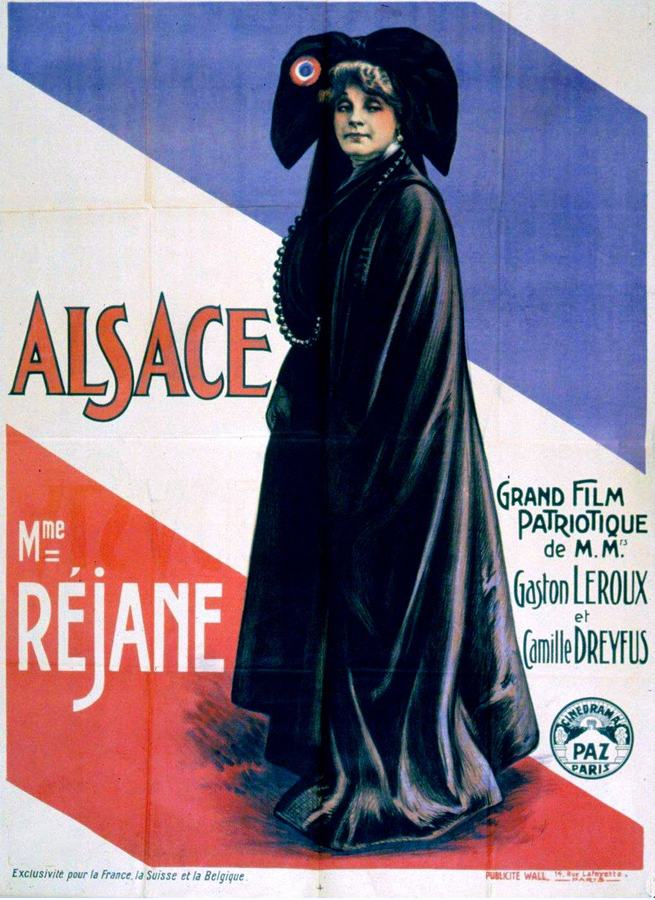
A definitive 4.8/10 rating for a film that redefined the boundaries of cult cinema. Alsace remains a cornerstone of transgressive art.
Stepping into the world of Gaston Leroux’s 1916 cinematic endeavor, Alsace, is to traverse a landscape both intimately personal and monumentally historical. This silent film, emerging amidst the throes of the First World War, is far more than a mere period piece; it is a profound meditation on the devastating collision of individual human affection with the relentless, impersonal forces of nationalism. At its core lies the poignant, almost unbearable, tale of Suzanne (Renée Lemercier), a young woman steeped in French culture and tradition, and Jacques (Albert Dieudonné), her German husband, whose marital bliss is tragically overshadowed by the escalating geopolitical tensions between their respective nations. Leroux, known for his intricate narratives and psychological depth, transports us to a region perpetually caught in the crossfire of identity, where the very soil is imbued with centuries of contested allegiance. The film doesn't merely depict conflict; it internalizes it, making the hearts of its protagonists the ultimate battleground.
The narrative commences with an almost idyllic grace, painting a picture of Suzanne and Jacques’ burgeoning romance. Their early scenes are imbued with a tender innocence, a portrayal of young love blossoming unencumbered by the looming shadows of political strife. Renée Lemercier’s Suzanne is a vision of youthful vivacity, her expressions conveying a spectrum of emotions from innocent joy to burgeoning anxiety with remarkable clarity, a testament to the nuanced art of silent film acting. Albert Dieudonné, as Jacques, complements her perfectly, his stoicism often betraying a deep, underlying tenderness. Their connection feels genuine, a testament to the director’s ability to extract authentic human emotion even within the expressive constraints of the era. The initial tranquility of their life in Alsace, a region of breathtaking natural beauty and rich cultural heritage, serves as a stark counterpoint to the turmoil that will inevitably engulf them. This early establishment of their profound bond is crucial; it provides the emotional bedrock that makes the subsequent unraveling so utterly heartbreaking. Without this initial investment in their happiness, the tragedy would feel less acute, the choices less agonizing. It’s a classic narrative technique, but executed with a sensitivity that elevates it beyond mere exposition.
As the film progresses, the idyllic facade begins to crack under the relentless pressure of external forces. The abstract concept of nationalism slowly but surely infiltrates the most intimate corners of their lives. What starts as whispers of political unrest, distant drumbeats of impending war, soon transforms into a deafening roar that demands allegiance above all else. Suzanne, fiercely proud of her French heritage, finds herself increasingly at odds with Jacques, whose loyalty, by virtue of his birth, is expected to lie with Germany. This isn't merely a disagreement; it's an existential crisis for their union. The film deftly illustrates how propaganda, societal expectations, and the very air of a nation preparing for war can seep into personal relationships, corrupting love with suspicion and duty. The supporting cast, including Michel, Gilbert Dalleu, Camille Bardou, and Francesca Flory, contribute significantly to this atmosphere of encroaching division. Their portrayals of townsfolk, officials, and family members, each grappling with their own allegiances, create a compelling tapestry of a community under duduress. Surgère, Berthe Jalabert, and Roux, though perhaps in smaller roles, help to solidify the social fabric that is being torn asunder. One cannot help but draw parallels to other films that explore the individual's struggle against overwhelming societal forces. While different in context, the emotional weight of personal conviction clashing with national duty echoes in the silent era's more melodramatic offerings, though Alsace grounds its drama in a stark realism that elevates it beyond mere sentimentality. The very air in the film becomes heavy with unspoken anxieties and burgeoning resentments, a masterclass in building tension through subtle implication rather than overt declaration.
The success of Alsace hinges significantly on the extraordinary performances of its lead actors. Renée Lemercier, as Suzanne, is a revelation. Her face, a canvas of shifting emotions, conveys the inner turmoil of a woman torn between her love for her husband and her unwavering devotion to her homeland. Her eyes, often glistening with unshed tears or flashing with defiant pride, communicate more than any intertitle could. Albert Dieudonné’s portrayal of Jacques is equally compelling. His character is burdened by a different kind of conflict: the expectation to choose a side when his heart belongs to a woman of the opposing nation. Dieudonné imbues Jacques with a quiet dignity, a man trapped by circumstances beyond his control, his internal struggle palpable through his subtle gestures and haunted gaze. The chemistry between Lemercier and Dieudonné is undeniably potent, making their shared moments of happiness all the more precious and their eventual separation all the more tragic. Their performances are a masterclass in the art of silent acting, relying on exaggerated yet heartfelt expressions, precise body language, and the power of their gaze to convey complex emotional landscapes. This level of emotional depth in silent cinema, particularly during a period when the medium was still evolving, is truly remarkable. It stands in contrast to some more overtly theatrical performances seen in other early films, showcasing a more refined approach to character portrayal. The raw honesty of their portrayals is what anchors the film, preventing it from devolving into mere political polemic.
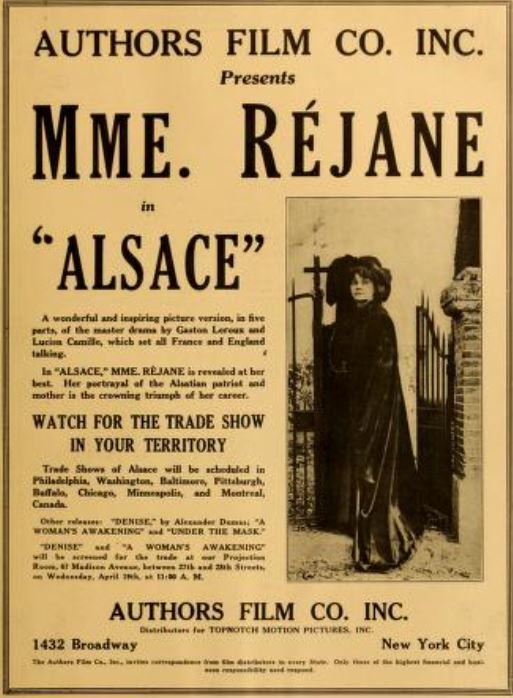
Gaston Leroux, the celebrated author of 'The Phantom of the Opera,' brings his characteristic flair for dramatic tension and psychological insight to the screenplay of Alsace. His narrative construction is meticulous, slowly tightening the screws of fate around Suzanne and Jacques. Leroux doesn't merely tell a story; he constructs an allegory for the broader European conflict, using the microcosm of one marriage to illustrate the macrocosm of nations at war. The film, released in 1916, served as a powerful piece of wartime cinema, resonating deeply with contemporary audiences grappling with similar dilemmas of loyalty and loss. However, its genius lies in its ability to transcend its immediate historical context. The themes of identity, belonging, and the destructive nature of unchecked nationalism remain profoundly relevant today. Leroux’s storytelling ensures that even without spoken dialogue, the moral quandaries and emotional stakes are crystal clear. His ability to weave intricate plots with underlying philosophical questions is evident here, much like his literary works. One might observe a similar thematic exploration of individual agency against overwhelming forces in films like The Nation's Peril, though Leroux's narrative in Alsace feels more acutely focused on the personal, almost intimate, devastation of conflict rather than its grander strategic implications. The script, even in its silent form, is rich with subtext, allowing the visual storytelling to carry the weight of its complex ideas.
While silent films often faced technical limitations by modern standards, Alsace demonstrates a sophisticated understanding of visual storytelling for its time. The cinematography, though perhaps not as complex as later works, effectively uses composition and framing to emphasize emotional states and narrative developments. Close-ups are employed judiciously to highlight the anguish on the actors' faces, while wider shots establish the grandeur of the Alsatian landscape and the scale of the encroaching military presence. The use of intertitles is particularly effective, not just to convey dialogue, but to provide crucial narrative context and to articulate the characters' innermost thoughts and feelings, often with poetic flair. The pacing of the film is deliberate, allowing the emotional weight of each scene to fully register before moving on. There’s a commendable restraint in the direction, avoiding overt melodrama where subtle pathos suffices, making the eventual dramatic climax all the more impactful. Comparing its visual rhetoric to other films of the period, such as The Battle of Gettysburg, one can appreciate Alsace's focus on the human element amidst conflict, using cinematic tools to amplify personal tragedy rather than grand-scale spectacle. The editing, while perhaps not as rapid as modern cinema, serves the story well, building suspense and emotional resonance. The film is a testament to the power of early cinema to convey complex narratives and profound human emotions with remarkable clarity and artistry.
Beyond the compelling central performances, the ensemble cast of Alsace plays a crucial role in grounding the narrative within a believable, albeit distressed, community. Figures like Barbier and Madame Villeroy-Got, even in their brief appearances, contribute to the tapestry of a village caught between two cultures, each character embodying a facet of the broader societal tension. Bosman and Gabrielle Réjane, alongside Yvonne Sergyl, flesh out the human experience of wartime, their faces reflecting the anxieties, hopes, and sorrows of ordinary people thrust into extraordinary circumstances. These portrayals, often without extensive character development, are nonetheless vital in creating a sense of a living, breathing world. They represent the collective consciousness of Alsace itself, a silent chorus echoing the personal agony of Suzanne and Jacques. Their presence reinforces the idea that the central couple’s struggle is not an isolated incident, but a deeply felt experience reverberating through every household. The nuanced reactions of these secondary characters, from expressions of quiet defiance to resignation, add layers of authenticity to the film's depiction of a society under immense pressure. It's a testament to the director's ability to orchestrate a cohesive vision, ensuring that every player, no matter how small their role, contributes meaningfully to the overall emotional landscape. The way the community interacts with the central conflict provides a powerful mirror to the internal struggles of the protagonists, demonstrating how personal allegiances are shaped and shattered by the external world.
More than a century after its release, Alsace continues to resonate with a quiet, yet profound, power. Its enduring relevance lies in its timeless exploration of human identity, loyalty, and the destructive folly of war. It reminds us that behind every geopolitical conflict are countless personal tragedies, individual lives irrevocably altered by forces far beyond their control. The film serves as a poignant historical document, offering a window into the anxieties and sentiments of a specific era, yet its core message transcends time and geography. It is a powerful argument for empathy and understanding across divides, a plea for the recognition of shared humanity over nationalistic fervor. In an increasingly interconnected yet often polarized world, the lessons embedded within Leroux’s narrative are as vital today as they were in 1916. It is a film that demands reflection, urging viewers to consider the profound cost of division. While other films of the silent era, such as Filibus or Sumerki zhenskoy dushi, explored different facets of societal tension or individual agency, Alsace carves out its unique niche by focusing on the devastating impact of national identity on the most sacred of bonds. Its legacy is not just as a piece of early cinema, but as a perpetual reminder of the fragility of peace and the enduring strength, and ultimate vulnerability, of love.
Ultimately, Alsace is a cinematic triumph, not just for its historical significance, but for its profound emotional resonance. It is a film that, despite its lack of spoken dialogue, screams against the futility of division and the tragic consequences of allowing political animosity to overshadow shared humanity. The final scenes, stripped bare of all but the rawest emotion, leave an indelible mark on the viewer, a lingering sense of loss and the profound understanding of sacrifice. It is a testament to the power of early filmmaking to tackle complex, sensitive subjects with grace and gravitas. For anyone interested in the history of cinema, the evolution of storytelling, or simply a deeply moving human drama, Alsace is an essential viewing experience. It compels us to remember that beneath the banners and borders, there are always individuals whose lives are irrevocably shaped by the tides of history, and whose loves, however strong, can be tragically undone by the clamor of nations. Its message, delivered through the exquisite performances and thoughtful direction, remains a powerful and poignant call for peace and understanding, a silent film with a voice that echoes across the decades.
IMDb —
1930
Community
Log in to comment.