DbcultAccessing Vault...
6.5/10
Senior Film Conservator
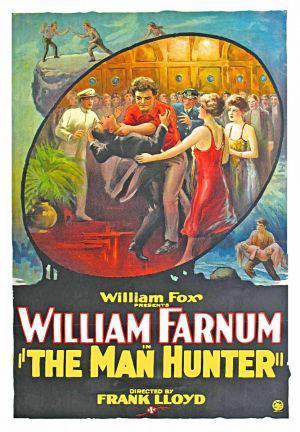
A definitive 6.5/10 rating for a film that redefined the boundaries of cult cinema. The Man Hunter remains a cornerstone of transgressive art.
In the nascent years of cinema, few directors possessed the architectural vision of Frank Lloyd. With The Man Hunter (1919), Lloyd constructs a narrative that is as much a geographical journey as it is a descent into the cavernous depths of the human soul. Unlike the gritty, urban realism found in The Young Lady and the Hooligan, Lloyd’s work here opts for a sprawling, almost Homeric scale. The film introduces us to a protagonist whose life is not merely disrupted but utterly eviscerated by the treachery of a close friend. This isn't the lighthearted social maneuvering one might find in The Secretary of Frivolous Affairs; this is a heavy, leaden tragedy that demands a visceral response.
William Farnum, an actor whose screen presence was often described as 'red-blooded' and 'virile,' brings a terrifying intensity to the role. His face becomes a map of his character’s internal devastation. In an era where histrionics were the norm, Farnum manages to convey a brooding, quiet menace that feels remarkably modern. His quest for vengeance takes him across two continents—a logistical feat for 1919 filmmaking that imbues the film with an authentic sense of scope. We see the transition from civilized drawing rooms to the rugged, untamed landscapes that mirror the protagonist's own moral erosion, a theme explored with less ferocity in Hesper of the Mountains.
The centerpiece of the film—the shipwreck—is a technical marvel that rivals the most ambitious sequences of the silent era. Lloyd utilizes the churning ocean as a symbol of the chaotic emotions driving his characters. When the ship sinks, the narrative shifts gears entirely. The ocean acts as a purgatorial filter, stripping away the titles, the wealth, and the social hierarchies that defined the characters in the first act. This transition from a global chase to the localized struggle of a desert island creates a pressure-cooker environment that tests the very nature of human ethics. It is a far cry from the stylized innocence of Sleeping Beauty, replacing fairy-tale logic with the harsh reality of survival.
Washed ashore with his nemesis and a beautiful young woman (played with luminous vulnerability by Leatrice Joy), the protagonist is forced to confront the futility of his rage. The island becomes a laboratory of human behavior. Does one maintain the moral high ground when the laws of man no longer apply? This question is central to the film’s enduring power. It echoes the themes of being Unjustly Accused, yet it pushes the stakes higher by removing the judicial system entirely. The conflict is no longer about proving innocence; it is about the soul's survival in the face of absolute proximity to one's tormentor.
The dynamic between the three leads is masterfully orchestrated. Charles Clary, as the treacherous friend, provides a perfect foil to Farnum’s rugged intensity. Clary’s performance is subtle, capturing the cowardice and desperation of a man who knows he has earned his fate. Meanwhile, Leatrice Joy serves as the moral compass of the piece. Her presence prevents the film from devolving into a mere exercise in brutality. Unlike the more passive female archetypes seen in The Light That Failed, Joy’s character is an active participant in the island’s shifting power dynamics. She represents the possibility of redemption, a theme that Lloyd would return to throughout his career.
The physical toll of their predicament is rendered with startling clarity. The cinematography captures the harsh sunlight, the abrasive sand, and the encroaching jungle with a documentary-like precision. This isn't the staged, theatrical world of The Master Cracksman; it is a palpable, breathing environment. The island is both a prison and a sanctuary, a place where the protagonist can finally achieve the vengeance he craves, only to realize that such a victory might be hollow. This psychological nuance is what elevates The Man Hunter above the standard revenge melodramas of its time, such as I Will Repay.
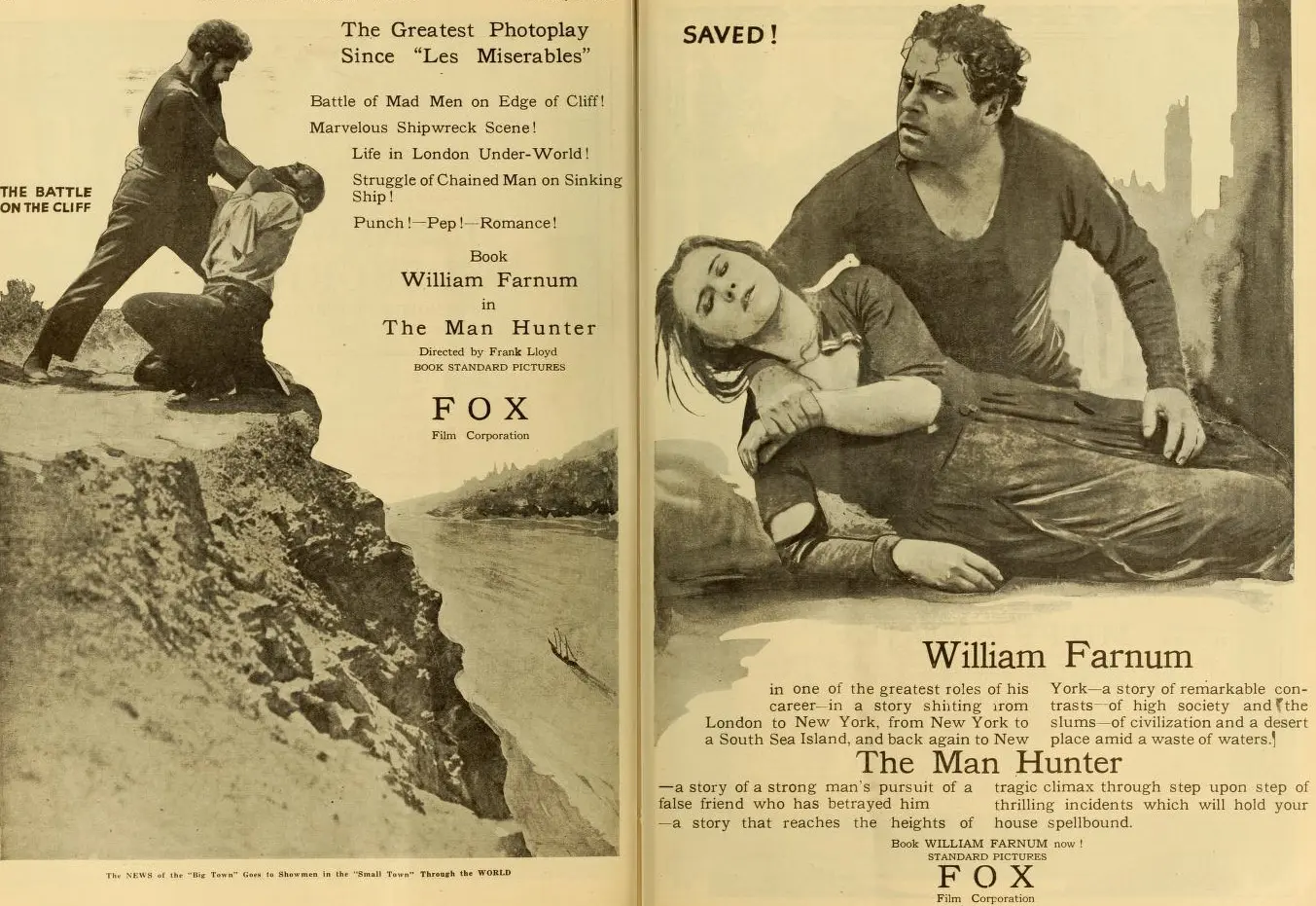
Lloyd’s use of the frame is sophisticated for 1919. He employs deep focus and dynamic blocking to emphasize the isolation of the characters. Even in moments of stillness, there is a vibrating tension. The film’s pacing is deliberate, allowing the audience to feel the agonizing passage of time on the island. This isn't the fast-paced, episodic thrill of Bound and Gagged; it is a slow-burn character study. The editing, particularly during the pursuit sequences, creates a sense of inexorable fate. The protagonist is less a man and more a force of nature, a juggernaut that cannot be stopped by oceans or continents.
One cannot discuss the film without acknowledging the influence of the 'Red-Blooded' school of cinema. The Man Hunter is a quintessential example of this genre, emphasizing physical prowess, moral clarity (or the struggle for it), and the triumph of the individual. Yet, Lloyd adds layers of ambiguity that were often missing from more straightforward action films. The protagonist’s obsession is depicted as a corrosive force, similar to the moral quagmires found in Quicksand. The film asks: at what point does the hunter become the monster he is hunting?
When viewed alongside its contemporaries, The Man Hunter stands out for its atmospheric consistency. While Mickey offered audiences lighthearted escapism, Lloyd offered a confrontation with the darker aspects of human nature. The film shares a certain pastoral harshness with Far from the Madding Crowd, but it replaces the English countryside with the unforgiving tropics. The raw physicality of the island struggle even brings to mind the kinetic energy of The Joe Gans-Battling Nelson Fight, though framed within a narrative of moral consequence rather than sport.
The emotional weight of the film is comparable to The Love Tyrant, yet Lloyd’s execution is more cinematic and less stage-bound. There is a mystery at the heart of the film that keeps the viewer engaged—not just the mystery of who will survive, but the mystery of who will remain 'human' by the end. In this regard, it functions as a spiritual precursor to the psychological depth of Swedish imports like Vem sköt?, which challenged audiences to look beyond the surface of the plot.
In the final analysis, The Man Hunter is a towering achievement of the silent era. It is a film that demands to be seen not just as a historical artifact, but as a living, breathing piece of art. Frank Lloyd’s direction, combined with William Farnum’s powerhouse performance, creates an experience that is both exhausting and exhilarating. It is a reminder that cinema, even in its infancy, was capable of exploring the most complex facets of the human condition with nuance and power. The film’s transition from a globe-trotting thriller to an intimate island drama remains one of the most effective narrative shifts in early film history.
For the modern viewer, the film offers a window into a world where the stakes were absolute and the heroes were flawed, rugged, and deeply human. It is a testament to the power of visual storytelling, proving that even without words, a story of betrayal and redemption can resonate across a century. The Man Hunter isn't just about a man looking for his enemy; it’s about a man looking for himself in the wreckage of his own life. It is, quite simply, essential viewing for anyone who wishes to understand the foundations of cinematic drama.
IMDb 6.3
1935
Community
Log in to comment.