DbcultAccessing Vault...
Cult Review
Senior Film Conservator
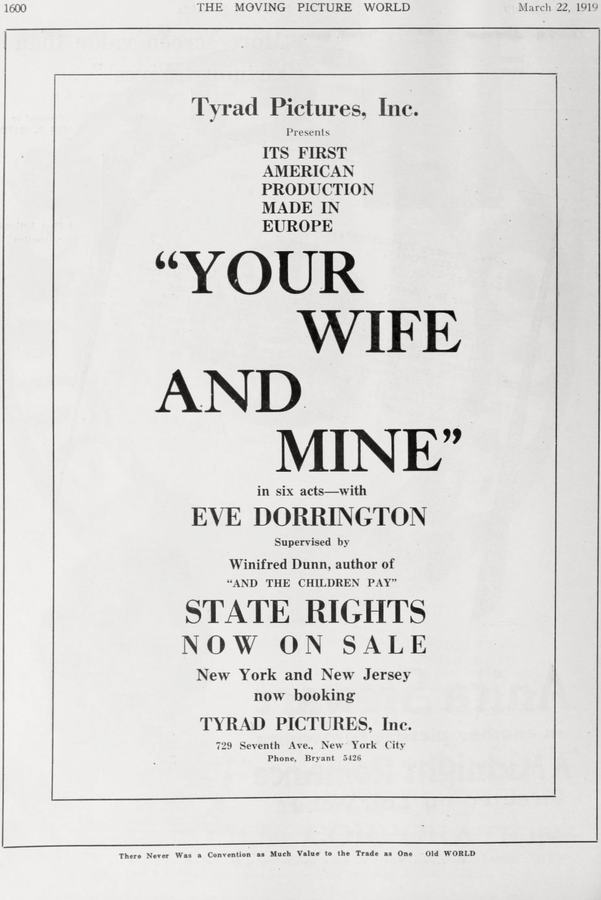
In the annals of early cinema, few narratives unfurl with the sheer, unyielding intensity of "Your Wife and Mine." This film, a veritable whirlwind of aristocratic intrigue, familial betrayal, and last-gasp heroism, stands as a testament to the power of silent-era storytelling to grip an audience in a vice-like embrace. From its deceptively tranquil opening to its breathtakingly chaotic climax, the picture rarely allows for a moment's respite, propelling viewers through a labyrinth of escalating peril and heart-stopping rescues. It's a cinematic experience that doesn't just entertain; it exhausts with its relentless parade of dramatic twists, each more audacious than the last.
The film commences with an idyllic tableau: an English aristocratic couple, basking in the sun-drenched splendor of the French Riviera, their protracted honeymoon a picture of marital bliss. The arrival of an heir only solidifies their happiness, cementing their lineage and promising a future of untroubled prosperity. Yet, this very joy, this symbol of continuation, becomes the unwitting catalyst for a maelstrom of malevolence. Far across the Channel, in the stately, perhaps somewhat dusty, confines of their ancestral estate, the husband's cousin and his sister have long harbored the comfortable assumption of their own imminent inheritance. The news of the newborn shatters this illusion, transforming their complacent expectations into a festering resentment. This pivotal moment sets the stage for a conflict rooted in the oldest of human vices: unbridled avarice. The film masterfully establishes this dichotomy early on, juxtaposing the innocent joy of the protagonists with the venomous machinations brewing in the shadows. It reminds one of the insidious family rivalries explored in films like The Writing on the Wall, where hidden agendas slowly erode the foundations of trust.
With their inheritance imperiled, the villainous duo wastes no time in executing their sinister agenda. Their arrival in France is not a cordial visit but a calculated invasion, designed to dismantle the very fabric of the honeymooners' happiness. The villainess, a master manipulator, seizes upon a seemingly innocuous encounter: the wife in conversation with a man who, unbeknownst to her aristocratic husband, is her acrobatic brother. With a whisper, a glance, and a carefully constructed lie, the villainess plants the poisonous seed of infidelity in the husband's mind. It's a classic melodramatic trope, yet executed with a chilling effectiveness that underscores the fragility of trust and the destructive power of suspicion. The husband, overwhelmed by despair and convinced of his wife's betrayal, makes a rash decision, ordering his yacht to sea, seeking escape from a perceived emotional shipwreck. This moment of profound vulnerability is expertly exploited by the antagonists, who have already ensured his watery retreat will be anything but peaceful. Their treachery extends to planting a time-bomb in the yacht's hold, transforming a journey of sorrow into a voyage of certain doom. The emotional depth conveyed here, even in the silent era, is palpable, relying on exaggerated gestures and facial expressions to communicate the husband's profound anguish. This intricate web of personal betrayal and high-stakes sabotage finds echoes in the complex plots of films such as Il mistero dei Montfleury, where family secrets and hidden identities drive much of the drama.
Just as the yacht sails towards its explosive fate, and the infant heir is cruelly snatched from its cradle, a new, unexpected hero emerges from the periphery: the wife's acrobatic brother. Previously an unknown quantity, his connection to the wife provides a crucial, organic link to the unfolding drama. His agility and knowledge, perhaps honed in the rough-and-tumble world of the circus, become the unlikely instruments of salvation. Learning of the bomb, he orchestrates a desperate, race-against-time warning, utilizing wireless technology – a symbol of modernity and rapid communication – to alert the imperiled husband. The yacht, miraculously, is brought back from the brink of destruction. This sequence is a masterclass in building suspense, with the ticking clock of the bomb providing an almost unbearable tension.
The immediate aftermath is a flurry of activity: the villainess, cornered and exposed, is forced to divulge the child's whereabouts. Yet, the villains are relentless. The husband, having survived the yacht explosion, is tragically incapacitated by a stabbing, leaving him vulnerable and bedridden. The narrative, refusing to allow any moment of peace, immediately thrusts the audience back into the heart of the conflict. The malevolent cousin, undeterred by the failure of the bomb plot, makes another chilling attempt on the child's life. He finds only the mother, alone but resolute, fiercely guarding her offspring. This moment, showcasing Eve Dorrington's character's indomitable spirit, highlights the primal strength of maternal protectiveness. The film uses these rapid shifts in fortune and location to keep the audience perpetually on edge, a technique that would be perfected in later thrillers but is already remarkably effective here. The relentless pursuit and dramatic reveals are reminiscent of the high-stakes action found in films like Smashing the Plot, where protagonists are constantly one step behind a cunning adversary.
"Your Wife and Mine" truly distinguishes itself in its final, harrowing act, escalating the stakes to almost unbearable levels. The child is, unbelievably, stolen for a second time, a testament to the villains' depravity and persistence. The mother, desperate and alone, is cruelly bound to a bedpost, her cries unheard amidst the growing inferno as the house is deliberately set ablaze. The scene is a visceral representation of ultimate helplessness and terror, designed to elicit maximum emotional response from the audience.
Just when all hope seems lost, the acrobats, hot on the villain's trail, arrive. The brother, embodying the ultimate act of self-sacrifice and courage, scales the burning edifice, a human ladder against the backdrop of consuming flames. His daring ascent and the subsequent liberation of the mother, who makes a desperate, death-defying leap from the window, form one of the film's most iconic and heart-stopping sequences. It’s a moment of pure, unadulterated spectacle, relying on practical effects and sheer nerve to create an unforgettable image. This type of dramatic, physical heroism harks back to the daring rescues seen in films such as Betty to the Rescue, where protagonists frequently found themselves in seemingly insurmountable physical predicaments.
But the villain's malice knows no bounds. In a final, unthinkable act of cruelty, he abandons the infant on a railroad track, leaving it to the mercy of an oncoming train. The image is stark, horrifying, and profoundly impactful – a baby, utterly vulnerable, facing an industrial behemoth. The tension here is almost unbearable, a testament to the film's ability to manipulate audience emotions with precision. Yet, in this darkest hour, salvation arrives from an unexpected quarter: a loyal canine companion, whose timely intervention snatches the child from the very jaws of death, just as the train thunders past in a blur of speed and noise. This moment of animal heroism is a potent emotional release, transforming despair into a surge of relief. It's a classic cinematic device, leveraging our innate love for animals and our desire for justice. The villain, his schemes utterly thwarted and his spirit broken, finally succumbs to his own depravity, choosing suicide over capture and accountability. This swift, decisive end to the antagonist provides a cathartic closure to his reign of terror, paving the way for the beleaguered family's hard-won, albeit emotionally scarred, happy ending. The sheer audacity of these final moments, from the burning house to the train track rescue, makes "Your Wife and Mine" a standout example of early cinematic thrills, demonstrating a fearlessness in pushing the boundaries of what could be depicted on screen.
Beyond its thrilling plot, "Your Wife and Mine" offers fertile ground for thematic exploration. At its core, it's a stark examination of the destructive nature of unchecked ambition and the enduring power of familial bonds. The film draws a clear line between the corrosive influence of greed and the resilience of love, even when tested by the most extreme circumstances. The aristocratic setting provides a veneer of civility that is brutally stripped away, revealing the raw, primal emotions beneath. It's a reminder that even in the most refined circles, human nature's darker impulses can fester and erupt with devastating consequences.
The portrayal of Eve Dorrington's character, the wife and mother, is particularly compelling. Initially presented as part of an idyllic couple, she undergoes a profound transformation, evolving from a figure of domestic bliss into a tenacious protector, fiercely defending her child against relentless assaults. Her journey encapsulates the film's emotional core, showcasing strength and resilience in the face of unimaginable adversity. The introduction of the acrobatic brother is also a brilliant narrative stroke, subverting aristocratic expectations by presenting heroism in an unexpected, working-class guise. His physical prowess and unwavering loyalty stand in stark contrast to the deceit and weakness displayed by the film's titled villains, subtly critiquing the moral decay that can accompany privilege.
As a piece of melodramatic craftsmanship, "Your Wife and Mine" excels. It adheres to the genre's conventions – exaggerated emotions, clear-cut good and evil, and a relentless series of crises – but executes them with a verve that prevents it from feeling formulaic. The pacing is breathless, each scene building upon the last with an almost manic energy. The film's reliance on visual storytelling, typical of the silent era, is particularly effective here. The dramatic close-ups conveying fear or despair, the dynamic action sequences, and the symbolic imagery (like the burning house or the train bearing down on the child) all contribute to a visceral experience that transcends the absence of dialogue. It’s a masterclass in how to communicate complex narratives and intense emotions without a single spoken word, relying instead on the universal language of action and reaction.
Comparisons to other films of its era often highlight its audacious plot. While films like The Other Side of the Door might have explored domestic secrets, "Your Wife and Mine" elevates the stakes to a grander, more physically perilous scale. It shares the relentless pursuit of justice found in For the Freedom of the World, but grounds it in a deeply personal, familial struggle. The sheer number of near-fatal incidents and last-minute saves might seem excessive to a modern audience, but for its time, it was a thrilling display of cinematic ingenuity designed to keep audiences on the edge of their seats, much like the serialized adventures popular in the period.
In conclusion, "Your Wife and Mine" is far more than a simple period piece; it is a vibrant, pulsating example of early cinema's capacity for raw, emotional storytelling. Its intricate plot, memorable characters, and relentless pace ensure that even without the benefit of sound, its dramatic impact remains undiminished. It's a film that asks its audience to suspend disbelief and surrender to the sheer spectacle of human villainy and heroic endurance. For enthusiasts of classic cinema, or anyone seeking a potent dose of vintage melodrama, this film offers a fascinating glimpse into the narrative ambitions and technical prowess of its era. It reminds us that the fundamental elements of compelling storytelling – conflict, character, and catharsis – are timeless, and that a well-crafted narrative, no matter how outlandish, can still resonate deeply. "Your Wife and Mine" stands as a testament to the enduring power of a good, old-fashioned thrilling yarn, spun with remarkable dexterity and an unwavering commitment to keeping its audience utterly captivated from its opening scene to its well-earned, albeit hard-fought, happy conclusion. Its legacy is one of pure, unadulterated cinematic excitement, a roller-coaster ride of emotions and events that continues to impress with its sheer narrative force.
IMDb —
1917
Community
Log in to comment.