DbcultAccessing Vault...
Cult Review
Senior Film Conservator
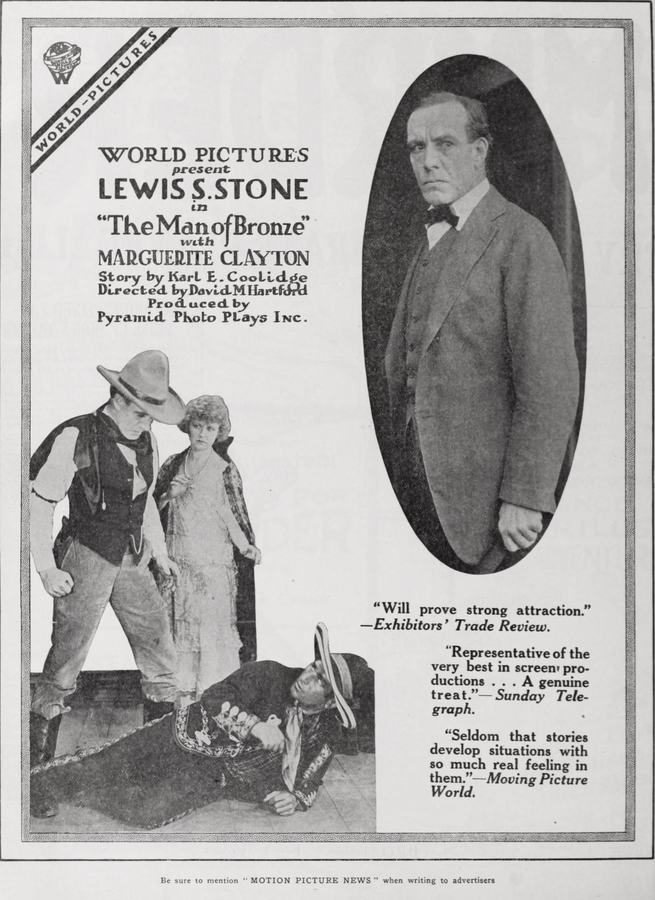
Step back in time, dear reader, to an era when stories unfolded not through spoken dialogue but through the eloquent language of gesture, expression, and the rhythmic flicker of celluloid. The silent film era, a period often romanticized yet frequently underestimated, gave birth to cinematic narratives of profound emotional depth and visual ingenuity. Among these, The Man of Bronze (1918) emerges as a fascinating artifact, a testament to the power of storytelling that transcends the spoken word. This isn't merely a quaint relic from yesteryear; it's a vibrant, pulsating drama that delves into the tumultuous currents of love, ambition, and the unforeseen catalysts that shape human destiny. Its narrative, woven with threads of yearning and disillusionment, offers a compelling lens through which to examine the societal mores and personal aspirations of a bygone age, yet its core themes remain strikingly resonant even today.
To truly appreciate The Man of Bronze, one must first immerse oneself in the unique grammar of silent cinema. Without the crutch of dialogue, filmmakers and actors were compelled to cultivate an exquisite reliance on visual cues – the subtlest shift in a character's gaze, the dramatic sweep of an arm, the intricate ballet of body language. Intertitles, far from being mere plot devices, became poetic pronouncements, encapsulating internal monologues or advancing the narrative with succinct elegance. This demanding artistic environment fostered a heightened sense of visual literacy in audiences and demanded an almost operatic level of performance from its stars. The result, when executed with skill, was a form of cinematic poetry, capable of conveying emotions with an intensity that often bypassed the intellect to strike directly at the heart. The Man of Bronze masterfully navigates this landscape, employing its visual lexicon to craft a tale brimming with passion, despair, and eventual redemption.
At the heart of this poignant drama lies Mary Lawton, portrayed with nuanced conviction by Marguerite Clayton. Her journey commences in the arid, yet perhaps comforting, familiarity of Arizona, where she is betrothed to the earnest and devoted John Adams (Richard Cummings) and lives under the watchful eye of her father, Mark Lawton. Her departure for New York, ostensibly to pursue art, is more than a geographical shift; it represents a burgeoning desire for self-determination, a yearning for experiences beyond the prescribed path. This initial act of independence sets the stage for a profound internal conflict, echoing the struggles of other cinematic heroines of the era, much like the titular character's pursuit of a different life in A Girl's Folly, or the weighty decisions faced by the protagonist in Joan the Woman.
New York, with its vibrant bohemian circles and intoxicating promise of artistic freedom, quickly becomes a crucible for Mary's identity. The city’s convivial whirl, a stark contrast to Arizona’s stark simplicity, seduces her, gradually eclipsing the memories of her past and the unwavering devotion of John. This period of artistic exploration and social immersion, while ostensibly enriching, also renders her somewhat oblivious to the emotional cost of her newfound liberty. When John makes his unexpected visit, hoping to rekindle their connection, he is met not with the Mary he remembers, but with a woman seemingly distant, absorbed in a world where he holds little sway. Clayton's performance here is critical, conveying Mary's complex state without resorting to caricature – she is not malicious, merely lost in the intoxicating haze of new experiences.
The true turning point in Mary’s narrative, and indeed the film’s most powerful symbolic moment, arrives in the studio of sculptor Trovio Valdez (Lewis Stone). On the verge of succumbing to Valdez’s advances, a testament to her temporary emotional drift, her gaze falls upon a bronze statue – a striking, meticulously rendered likeness of John. This isn't merely a portrait; it's an epiphany. The cold, immutable metal paradoxically ignites a fervent warmth within her, serving as a potent, tangible reminder of the love she had forsaken. It’s a masterful stroke of storytelling, where art itself becomes the catalyst for self-realization, pulling Mary back from the brink of a path she might later regret. This moment of profound clarity prompts an immediate and decisive shift: Mary abandons her Bohemian acquaintances and the transient glamour of her current life, seeking instead a position as a governess with the oil magnate, Frank Marsh (Harry von Meter).
Marsh, a character of intriguing moral ambiguity, desires John’s oil-rich lands. His offer to Mary – his relinquishment of the claim in exchange for her hand in marriage – presents a cruel dilemma. Mary agrees, a poignant sacrifice driven by her rekindled love for John and a profound sense of responsibility. This act of selflessness, reminiscent of the difficult choices explored in films like The Price She Paid or The Easiest Way, underscores the societal pressures and limited options often faced by women in that era, even as it highlights Mary's profound internal growth. Her journey from carefree artist to self-sacrificing woman illustrates a complex evolution, where the pursuit of personal freedom ultimately converges with the call of true affection.
Richard Cummings’ portrayal of John Adams is a study in steadfast devotion and profound emotional vulnerability. His character anchors the narrative, representing the enduring power of genuine affection against the fleeting temptations of worldly allure. John's initial journey to New York, filled with hopeful anticipation, is quickly marred by the painful realization that Mary has drifted beyond his grasp. Cummings masterfully conveys this heartbreak through his expressions and posture, a silent tableau of a man shattered by disillusionment. His return to Arizona, laden with sorrow, is met with a further blow: the news of Mark Lawton’s death. This double tragedy – the loss of his beloved and the death of his mentor/future father-in-law – plunges John into an abyss of despair.
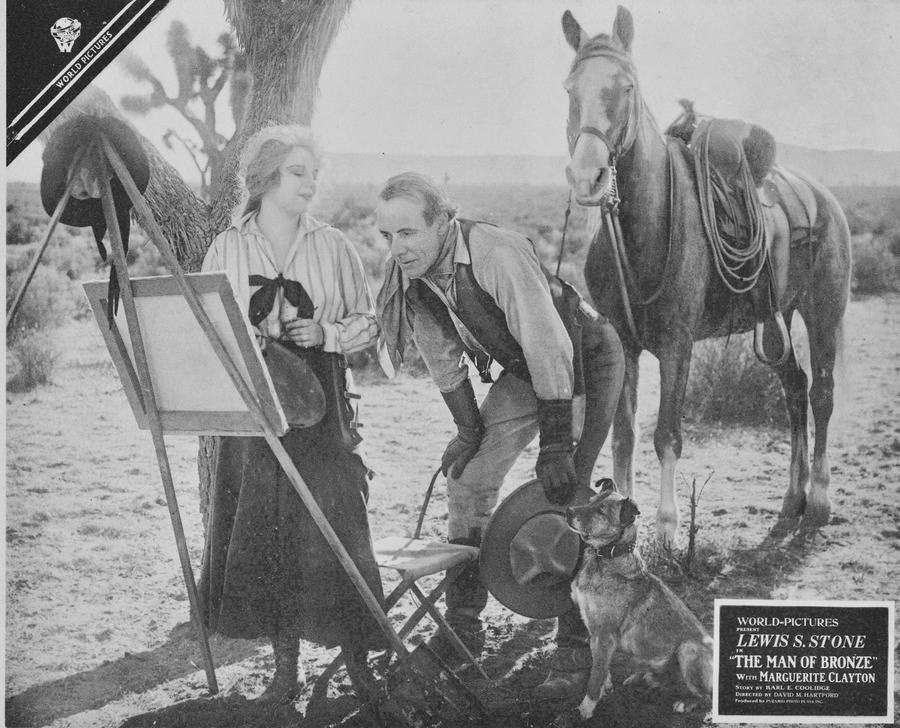
In a moment of raw, cathartic grief and disappointment, John sets fire to the very house he had painstakingly built for Mary. This act is far more than mere destruction; it is a powerful symbol of his shattered dreams, the immolation of a future that has now turned to ash. It speaks to a primal human response to unbearable loss, a desperate attempt to erase the physical manifestation of his pain. This dramatic explosion of emotion, a stark contrast to the more contained grief often seen in films like The Adopted Son or The Son of His Father, underscores the intensity of John's feelings and the depth of his character. His subsequent endurance, his continued presence despite such profound setbacks, solidifies his role as the unwavering "man of bronze" – resilient, steadfast, and ultimately, triumphant in love.
The supporting cast, under the uncredited but clearly skilled direction, plays crucial roles in shaping Mary and John's destinies. Lewis Stone's Trovio Valdez, the suave sculptor, is more than a romantic rival; he is an unwitting instrument of fate. His artistic talent, ironically, provides the very object – the bronze statue of John – that reawakens Mary's dormant affections. Without Valdez's creative output, Mary's journey of self-discovery might have taken a far more circuitous, perhaps even tragic, route. He embodies the superficial allure of the artistic world, a contrast to the deeper, more profound connection Mary shares with John.
Harry von Meter's Frank Marsh is another fascinating figure. Initially presented as a pragmatic, almost ruthless, oil magnate driven by acquisition, he ultimately reveals a surprising depth of character. His willingness to trade land for love, and more importantly, his eventual recognition that Mary's heart belongs irrevocably to John, elevates him beyond a simple antagonist. His chivalrous departure, riding out of their lives, is a testament to the film's nuanced portrayal of human nature, suggesting that even those driven by self-interest can possess a moral compass. This complexity in supporting roles is often a hallmark of well-crafted silent dramas, distinguishing them from simpler morality plays. The transactional nature of Marsh's proposal, though ultimately benevolent in its resolution, echoes the themes of material gain versus emotional fulfillment seen in films like The Taint or even the stark choices presented in Kiss or Kill, where personal desires clash with external pressures.
And then there's Teddy the Dog. While a minor presence, the inclusion of animal companions in silent films often served to ground the narrative in a relatable reality, providing moments of levity or unspoken loyalty that resonated deeply with audiences. Teddy’s brief appearances add a touch of warmth and authenticity, a subtle reminder of the simple comforts that can persist even amidst human turmoil. Mae Gaston also contributes to the narrative fabric, though her role is less central, her presence adding to the rich tapestry of characters that populate this world. Karl R. Coolidge's screenplay, while likely concise in its original form, clearly provided a robust framework for these character dynamics to flourish through visual storytelling.
The uncredited director of The Man of Bronze demonstrates a keen understanding of silent film aesthetics, orchestrating a narrative that flows with remarkable clarity and emotional impact. The visual compositions, though perhaps not as overtly experimental as some contemporaries, are effective in conveying mood and advancing the plot. The contrast between the stark Arizona landscape and the bustling New York scenes is particularly well-executed, serving as a visual metaphor for Mary's internal struggle. The pacing, crucial in silent cinema to maintain audience engagement, is judiciously managed, allowing moments of quiet introspection to breathe before accelerating into dramatic confrontations.
The performances are uniformly strong, a testament to the rigorous demands placed upon silent film actors. Marguerite Clayton, as Mary, carries the emotional weight of the film with grace and conviction. Her transformation from naive desert girl to sophisticated New Yorker, and then to a woman making profound sacrifices, is rendered believable through her expressive eyes and nuanced gestures. Richard Cummings, as John, embodies the archetype of the faithful lover, his despair palpable after Mary's initial rejection and his grief over Mark's death searingly conveyed. His ability to project such intense emotion without uttering a single word is a masterclass in silent acting, reminiscent of the raw, unbridled passion found in performances from films like Sperduti nel buio. Harry von Meter skillfully navigates the complexity of Frank Marsh, ensuring that his character's ultimate nobility feels earned rather than contrived. These actors, through their physical artistry, transform a relatively straightforward plot into a deeply affecting human drama.
The Man of Bronze, despite its age, grapples with themes that remain eternally pertinent. It explores the intoxicating allure of new experiences and the potential for losing oneself in the process, a timeless struggle for identity. It posits art not merely as decoration or entertainment, but as a powerful, almost spiritual, force capable of revealing profound truths and igniting forgotten passions. The bronze statue of John serves as a powerful metaphor – a fixed, unchanging image that paradoxically prompts a dynamic shift in Mary’s understanding of her own heart. This echoes the concept of art as a mirror, reflecting our deepest desires and forgotten selves, a theme explored across various artistic mediums throughout history.
Ultimately, the film champions the triumph of genuine, enduring love over fleeting infatuation and material gain. Mary's journey is one of self-discovery, culminating in the realization that true happiness lies not in the superficial glamour of the city or the transactional security of wealth, but in the unwavering affection of a man who represents her true home. John, the "man of bronze," symbolizes this enduring quality – resilient, strong, and ultimately, a foundation upon which a lasting love can be rebuilt. The graceful resolution, where Frank Marsh honorably steps aside, reinforces the idea that true love, when recognized and championed, can overcome even the most formidable obstacles. The Man of Bronze stands as a compelling example of silent cinema’s capacity to deliver rich, emotionally complex narratives that continue to resonate with audiences, reminding us of the timeless power of the human heart and the unexpected ways in which art can illuminate our path. It’s a quiet masterpiece that deserves rediscovery, a bronze echo from the past that still speaks volumes about the enduring quest for love and authenticity.
IMDb —
1919
Community
Log in to comment.