DbcultAccessing Vault...
Cult Review
Senior Film Conservator
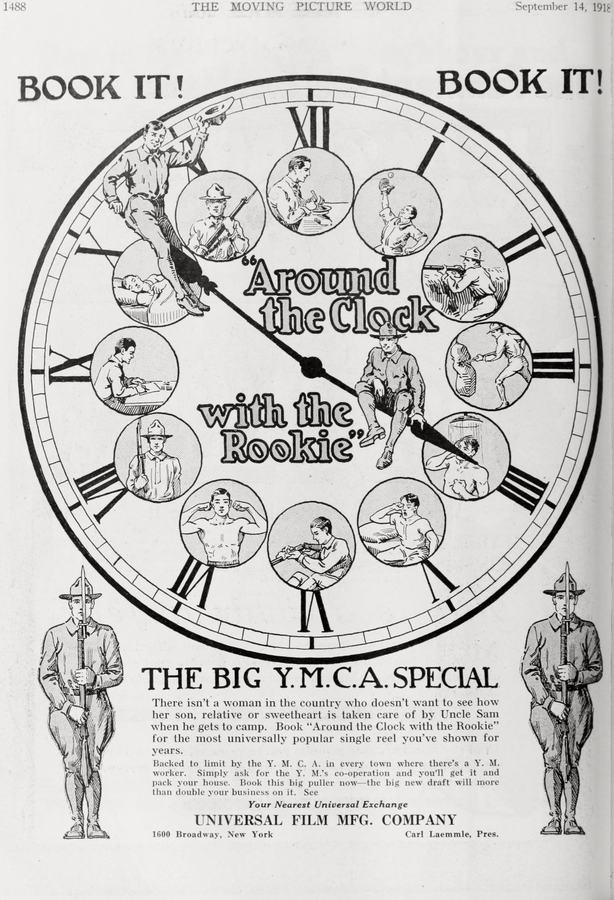
Stepping back into the annals of early cinema, one encounters a fascinating array of short films that served not only as entertainment but also as vital chroniclers of their time. Around the Clock with the Rookie, a title that might seem unassuming at first glance, is precisely one such gem. It’s a compelling, albeit brief, journey into the daily rhythm of a World War I training camp, offering more than just a procedural account. This film is, at its core, a testament to the comprehensive support systems established for the American soldier, with a particular spotlight on the indispensable role of the Young Men's Christian Association (YMCA). Far from being a dry, instructional piece, it weaves a narrative replete with human interest, demonstrating the profound impact of communal care on the individual spirit amidst the looming specter of global conflict.
The early 20th century was a period of immense social and political upheaval, and as the United States prepared to enter the Great War, the need for robust morale and welfare programs became acutely evident. This short film emerges from that very crucible, designed to reassure families, galvanize public support, and, perhaps most importantly, to foster a sense of brotherhood and belonging among the recruits. It positions the YMCA not merely as a charitable organization but as a foundational 'big brother' to the 'Yankee soldier boys,' a paternalistic yet deeply caring entity dedicated to the holistic well-being of its charges. The film doesn't just show what happened; it subtly articulates the ethos behind the actions, illustrating how a structured environment, coupled with compassionate support, could transform raw recruits into disciplined, yet grounded, fighting men. In an era when cinematic narratives were still finding their voice, Around the Clock with the Rookie stands out as an early example of how film could be leveraged for both educational and morale-boosting purposes, reflecting a broader societal effort to mobilize and unify a nation.
The film’s structure, tracing a rookie’s day from reveille to taps, is deceptively simple yet profoundly effective. It's a chronological unfolding that immerses the viewer in the minute details of camp life, transforming what could be mundane into a captivating exposition of character and institutional dedication. The initial moments, heralded by the piercing call of reveille, are more than just an alarm; they symbolize the abrupt transition from civilian slumber to military vigilance. We see the collective awakening, the rapid donning of uniforms, and the swift move from barracks to the parade ground. This sequence, even without spoken dialogue, conveys a potent sense of urgency and communal discipline. The visual language of silent film, relying heavily on expressive gestures, purposeful movement, and the occasional intertitle, is masterfully employed to communicate the swift, almost ritualistic, initiation into military routine. Each recruit, though an individual, becomes part of a larger, synchronized organism, a visual metaphor for the unity required in wartime.
Following the morning's stark awakening, the film transitions into the rigorous training regimen, illustrating the physical and mental conditioning deemed essential for combat readiness. We witness scenes of drilling, calisthenics, and perhaps even early forms of tactical instruction, all designed to hone the recruits' bodies and minds. The camera captures the sweat and exertion, the earnest concentration on the faces of these young men as they learn the ropes of soldiering. This segment is crucial for understanding the transformation from civilian to combatant, highlighting the arduous journey required to build resilience and proficiency. Yet, even amidst this demanding schedule, the film subtly interjects moments that underscore the human element. It’s not all relentless toil; there are glimpses of camaraderie forged in shared hardship, of instructors guiding with a stern yet understanding hand. The film avoids glorifying war itself, choosing instead to focus on the process of preparation and the foundational support that underpins it. This nuanced approach differentiates it from more overtly propagandistic works, positioning it instead as a document of a specific, critical phase in a soldier’s life.
Where Around the Clock with the Rookie truly distinguishes itself is in its meticulous depiction of the YMCA's pervasive influence throughout the soldier's day. After the physical demands of training, the film guides us into the welcoming embrace of the YMCA facilities. Here, the atmosphere shifts dramatically from the stark discipline of the drill ground to a haven of comfort and fellowship. We are shown soldiers engaging in a myriad of activities: writing letters home, reading newspapers and books, playing games like checkers or billiards, and simply conversing in a relaxed, convivial setting. These scenes are vital, painting a picture of an organization that understood the psychological toll of military life and actively sought to mitigate it. The YMCA huts, often equipped with pianos, stationery, and recreational equipment, served as surrogate homes, offering a crucial respite from the barracks and the parade ground. It was a place where the 'rookie' could momentarily shed the mantle of soldier and reconnect with his civilian self, fostering a sense of normalcy and continuity with the world he had left behind. The film’s portrayal of these spaces is deliberate, emphasizing their role in providing intellectual stimulation, emotional outlet, and spiritual guidance, thereby reinforcing the YMCA's 'big brother' image with tangible, compassionate services. This aspect of the film is particularly poignant, revealing a deep understanding of human needs beyond mere military training. It’s a powerful statement about the importance of holistic support, a concept that remains relevant in modern military welfare programs.
The 'rookie' himself, though an individual, functions as an everyman, representing the countless young men who answered the call to duty. The film doesn't delve into his personal backstory, nor does it give him a name; he is simply 'the rookie,' a blank canvas onto which the experiences of an entire generation are projected. This anonymity serves to broaden the film's appeal and message, allowing any viewer to identify with his journey. His transformation, from a fresh-faced recruit to a more seasoned, albeit still training, soldier, is observed through his interactions with the camp environment and, crucially, with the YMCA. The subtle changes in his demeanor, the growing confidence in his movements, and his engagement with the recreational offerings all contribute to a nuanced character arc, even within the confines of a short, silent film. This universalization of the rookie's experience elevates the film beyond a simple instructional video, imbuing it with a relatable human dimension that resonates even today. The film, in its quiet way, champions the individual spirit while simultaneously celebrating the collective effort to prepare for a monumental undertaking.
From a cinematic perspective, Around the Clock with the Rookie, while adhering to the rudimentary techniques of its era, employs them with commendable effectiveness. The reliance on clear, unembellished shots, straightforward editing, and expository intertitles ensures that its message is accessible and unambiguous. The pacing is deliberate, allowing viewers to absorb the rhythm of camp life, yet it maintains enough momentum to keep the narrative engaging. There’s an almost documentary-like quality to the cinematography, suggesting an intent to capture reality as faithfully as possible, even if the reality is curated to highlight the positive aspects of military life and the YMCA's contributions. This approach aligns with many non-fiction films of the period, which sought to inform and instruct as much as to entertain. Compared to more dramatic narratives of the time, such as the social commentary found in Within Our Gates, or the thrilling escapades of The Cold Deck, Around the Clock with the Rookie occupies a different cinematic niche. It prioritizes clarity and a sense of reassuring authenticity over elaborate plot twists or character development, a choice perfectly suited to its specific purpose.
The film also functions as a powerful piece of subtle propaganda, though 'informational advocacy' might be a more fitting term. It wasn't designed to ignite jingoistic fervor but rather to instill confidence in the war effort's support infrastructure. For families back home, it would have served as a comforting assurance that their sons were not only being trained rigorously but also cared for humanely. For the soldiers themselves, it reinforced the idea that they were part of a larger, supportive community, mitigating feelings of isolation or apprehension. This kind of morale-boosting cinema was crucial during wartime, as exemplified by other contemporary efforts to shape public perception and maintain national unity. While perhaps less direct than films overtly designed to rally support for specific campaigns, Around the Clock with the Rookie contributes significantly to the broader narrative of national preparedness and collective responsibility. Its focus on the ‘big brother’ role of the YMCA is a direct appeal to familial values, suggesting that the nation, through its institutions, was looking after its own.
As a historical document, the film offers invaluable insights into the daily lives of WWI recruits and the prevailing social attitudes towards military service and welfare. It provides a visual record of training methodologies, camp layouts, and the types of recreational activities available to soldiers. Beyond the practicalities, it illuminates the societal expectation of institutions like the YMCA to provide comprehensive support, extending far beyond spiritual guidance to encompass physical, mental, and social well-being. This multifaceted role was a hallmark of progressive-era social work, adapted to the extraordinary circumstances of wartime. Viewing Around the Clock with the Rookie today is akin to peering through a window into a bygone era, understanding not just the mechanics of war preparation but also the heart and soul of the nation that undertook it. It’s a testament to the resilience of the human spirit and the enduring power of community, even in the most challenging of times. Its simple narrative belies a rich tapestry of historical and sociological significance, making it a subject worthy of continued study and appreciation.
The concluding segment, marked by the solemn call of taps, brings the rookie's day to a contemplative close. It's a moment of reflection, not just for the soldiers settling down for the night, but for the viewer, invited to ponder the sacrifices and dedication embodied by these young men. The film doesn't end with a dramatic flourish or a call to arms; instead, it offers a quiet, dignified conclusion, underscoring the cyclical nature of military life and the constant readiness it demands. This understated ending leaves a lasting impression, emphasizing the profound commitment of these individuals and the institutions supporting them. In its entirety, Around the Clock with the Rookie transcends its modest origins as a short film. It evolves into a poignant historical artifact, a tribute to the unsung heroes of the home front – the YMCA – and a compelling narrative of the nascent stages of soldiering during a global conflict. Its legacy lies not in spectacular visuals or complex storytelling, but in its honest, heartfelt portrayal of a crucial aspect of American history, offering a timeless glimpse into the forging of a nation's resolve through the care of its people.
The film’s focus on the mundane yet vital aspects of soldier life, such as letter writing and recreational activities, highlights a crucial dimension often overlooked in more heroic narratives of war. It humanizes the soldiers, reminding us that beneath the uniform are individuals with families, hopes, and anxieties. The YMCA's role in providing these outlets was not merely supplementary; it was integral to maintaining psychological health and morale. This perspective is particularly valuable when contrasting it with films that focus solely on combat or grand strategic maneuvers. While a film like The War Extra might have galvanized public sentiment with more direct appeals, Around the Clock with the Rookie employed a subtler, more intimate approach, building confidence from the ground up, one rookie at a time. It’s a powerful reminder that the strength of an army is not solely in its weaponry or tactics, but equally in the well-being and spirit of its individual members. The film serves as a quiet, yet resonant, testament to this enduring truth, making it a significant contribution to the cinematic understanding of World War I.
Ultimately, what makes Around the Clock with the Rookie so compelling is its ability to communicate a profound message through simple means. It’s a masterclass in economy of storytelling, where every frame, every intertitle, and every depicted activity contributes to a larger narrative of service, support, and sacrifice. The absence of sound, a characteristic of its era, paradoxically amplifies the visual storytelling, forcing the viewer to pay closer attention to the nuances of expression and action. This silent narrative becomes a powerful canvas for projecting the emotional weight of the period, allowing the viewer to fill in the auditory gaps with their own imagination of bugle calls, marching boots, and the quiet murmur of camaraderie. For film historians, military enthusiasts, and anyone interested in the human dimension of conflict, this short film is an invaluable resource, offering a unique and deeply affecting perspective on a pivotal moment in global history. It stands as a humble yet potent reminder of the collective effort that underpinned the war, from the diligent training on the parade ground to the comforting presence of the YMCA, all working in concert to prepare a nation's youth for the challenges ahead.
IMDb 4.4
1934
Community
Log in to comment.