DbcultAccessing Vault...
6.6/10
Senior Film Conservator
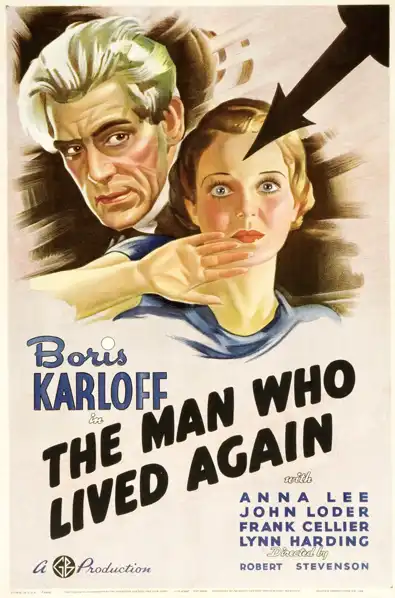
A definitive 6.6/10 rating for a film that redefined the boundaries of cult cinema. The Man Who Lived Again remains a cornerstone of transgressive art.
Alright, so you’re wondering about The Man Who Lived Again. Is it worth digging up today? Absolutely, if you’re into those quirky, old-school mad scientist movies. Folks who love classic Universal horror and enjoy seeing Boris Karloff chew scenery will probably have a grand old time. If you need slick modern effects or a tightly plotted thriller without any goofy bits, you might find it a bit slow or even silly, honestly. 😅
The whole setup is Dr. Laurience, played by Karloff. He’s this brilliant guy, obviously, but clearly a few screws loose. His big idea is transferring minds. Not just memories, but *entire personalities* from one person to another.
It sounds wild, and it is. The initial experiments are, well, they’re something. You see these flashing lights and a very dramatic lever being pulled. It’s all very 1930s high-tech, which means it’s charmingly clunky.
His wealthy patron, Sir Francis, decides this whole mind-swapping thing is maybe a bit much. He pulls the funding. This does *not* go over well with Laurience. He gets a real bad look in his eye.
And that’s when things go from eccentric science to outright revenge. Karloff’s portrayal here is just fantastic. He’s not just a villain; he’s a man consumed. He stalks about his lab, muttering, and you can practically feel the anger radiating off him.
There’s this one scene where he’s just staring at a beaker, almost lovingly, like it holds all his dark secrets. The lighting is just perfect, making his face look even more gaunt and determined. It’s a small moment, but it tells you everything you need to know about where his head is at. 🧪
The pacing, for an older film, moves along pretty well. It doesn’t waste too much time explaining the *how* of the science. It just dives right into the *what* it enables Laurience to do.
When he starts actually enacting his plan, it gets quite unsettling. He’s not subtle about his bitterness. The way he manipulates people, even those close to him, is chilling. You see the wheels turning behind his eyes. He’s a smart guy, just utterly warped.
The supporting cast does their part. John Loder as Frank, the romantic lead, is fine, if a little stiff. Anna Lee as the woman caught in the middle, Marjorie, has some good moments where she’s clearly terrified but trying to be brave. But let’s be real, Karloff is the main event here. He owns every scene he’s in.
One detail I found amusing: the lab equipment looks like a collection of repurposed radio parts and glass tubes. It’s not meant to be realistic, of course, but it has this wonderful, Heath Robinson-esque quality to it. You just know someone spent ages gluing all those wires on.
The film doesn’t try to be overly complex. It sets up the mad scientist, the impossible science, and the personal vendetta, then just runs with it. There’s a delightful simplicity to the plot.
You can tell it was made at a time when audiences were still figuring out what horror could be. It leans into the psychological terror of identity being stolen, rather than jump scares. Which, for me, makes it feel a bit more thoughtful than some contemporaries.
It’s not a perfect film, by any stretch. There are moments where the dialogue feels a little exposition-heavy. And the resolution, while fitting, ties things up maybe a *little* too neatly. But these are minor quibbles.
Honestly, watching The Man Who Lived Again feels like stumbling upon a cool, slightly dusty old book. It might not be sleek, but it’s got character. And Karloff. Always Karloff. His presence alone elevates it from a curiosity to something genuinely compelling. Definitely worth a watch on a rainy afternoon. 🌧️

IMDb —
1931
Community
Log in to comment.