DbcultAccessing Vault...
Cult Review
Senior Film Conservator
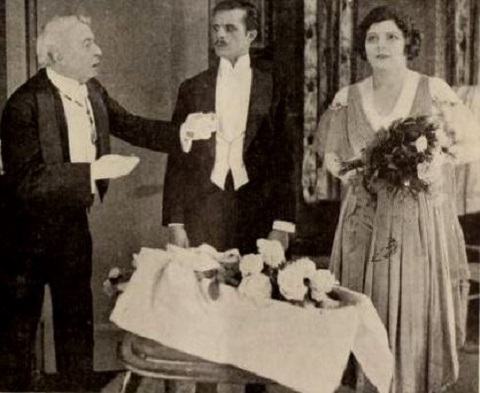
Cinema in 1918 was a medium grappling with its own adolescence, caught between the theatrical artifice of the past and a burgeoning realism that sought to document the grinding gears of the American Dream. Love's Law stands as a monumental, if often overlooked, testament to this transition. It is a film that dares to juxtapose the delicate vibrations of a violin string against the deafening roar of a steel mill, suggesting that the human spirit is the only currency capable of bridging the chasm between the two. Unlike the more pastoral explorations of morality seen in The Reclamation, this narrative dives headlong into the soot and grease of the industrial revolution, demanding a visceral response from its audience.
Gail Kane, as Sonia, delivers a performance of remarkable kinetic energy. In an era where many actresses relied on the exaggerated pantomime typical of early silents—a style explored with varying degrees of success in L'enfant prodigue—Kane opts for a localized, internal intensity. Her Sonia is not a victim of her circumstances but a captive of her own potential. The Polish-American immigrant experience is often portrayed through the lens of assimilation, but here, it is a struggle for preservation. Her violin is a physical manifestation of her heritage, a relic of a parental legacy that the grim reality of Ivan Jandoroff’s poverty seeks to erase. When Ivan, played with a desperate, jagged edge by Fred C. Jones, pawns the instrument, the act feels less like a theft and more like a spiritual amputation.
The introduction of Andrew Hamilton, the steel magnate, shifts the film from a domestic tragedy into a complex social critique. Hamilton is not the cartoonish villain often found in the melodramas of the decade; he is a man of systems. His decision to lower wages is presented not as malice, but as the 'law' of the market—a cold logic that mirrors the mechanical precision of his mill. This creates a fascinating parallel with the power dynamics found in The Master Key, where industrial secrets and personal agency are inextricably linked.
When Sonia enters Hamilton’s world to reclaim her violin, the film pivots into a discourse on the commodification of art. Hamilton’s offer to finance her education is the ultimate seductive trap. It suggests that the only way for the lower classes to achieve aesthetic transcendence is through the permission and purse of the ruling class. This theme of social mobility and its hidden costs is a recurring motif in early 20th-century cinema, frequently appearing in narratives like The Shop Girl, where the boundary between the counter and the carriage is perpetually policed by moral compromise.
The climax of the film’s second act—where Hamilton demands Sonia 'offer herself' to cancel her debt—is a moment of profound cinematic defiance. In many contemporary films, such as the darker explorations in The She Devil, the female protagonist might have turned to manipulation or vengeance. Sonia, however, chooses the path of the iconoclast. By smashing the violin, she destroys the very thing she loves to prevent it from becoming a tool of her subjugation. It is a heartbreaking scene, captured with a stark lighting palette that emphasizes the jagged wood and the sudden hollowness in Kane’s eyes. This act of self-destruction is her only means of reclaiming her soul from the ledger of Hamilton’s accounts.
Returning to the factory, Sonia transitions from the role of the ethereal artist to that of the pragmatic laborer. This shift is crucial. It rejects the 'cinderella' trope in favor of a more grounded, collective survival. The film’s depiction of the mill is harrowing; the cinematography captures the oppressive scale of the machinery, dwarfing the human figures who tend to it. This ruggedness echoes the harsh environments of Ben Blair, though transposed from the frontier to the furnace.
The inclusion of a sickness epidemic—a narrative choice that must have resonated deeply with 1918 audiences living through the Spanish Flu—serves as the ultimate equalizer. In the face of mortality, the hierarchies of the mill dissolve. Sonia’s role as a nurse allows her to move through the workforce as a unifying force, a bridge between the disgruntled laborers and the isolated owner. Her prevention of the strike is not portrayed as a betrayal of her class, but as an act of preservation for a community that would be destroyed by a violent confrontation.
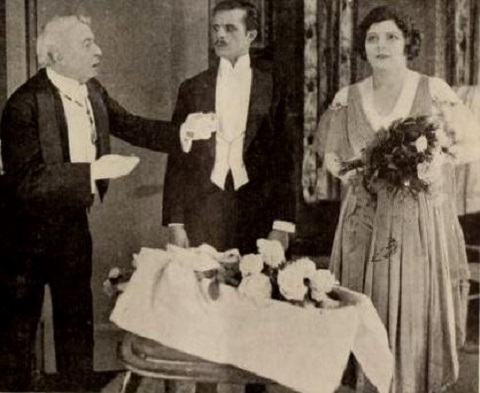
Hamilton’s transformation is the film’s final, and perhaps most ambitious, arc. It requires the viewer to believe that a man of iron could be softened by the sight of human suffering and the unwavering integrity of the woman he wronged. While this redemptive conclusion might feel rapid by modern standards, within the context of 1918, it served as a vital social allegory. It proposed a 'Love’s Law' that could regulate the excesses of capitalism, suggesting that the health of the mill is inextricably tied to the dignity of its workers. This thematic resolution bears a striking resemblance to the moral reconciliations found in The Inevitable, where the weight of destiny eventually forces a alignment with virtue.
Visually, Love's Law utilizes a sophisticated interplay of shadows. The scenes in the mill are drenched in high-contrast lighting, creating a sense of claustrophobia that contrasts sharply with the airy, opulent interiors of Hamilton’s estate. This visual language of class distinction is handled with more subtlety than in Suzanne, professeur de flirt, which relies more on social comedy than atmospheric tension. The directorial hand of J. Clarkson Miller and Joseph F. Poland ensures that the pacing never sags, even as the plot maneuvers through its more melodramatic turns.
The writers have crafted a script that avoids the simplistic dichotomies of 'good vs. evil.' Even Ivan, the guardian, is presented as a product of his environment—a man whose moral compass has been demagnetized by the sheer weight of his poverty. This nuance is reminiscent of the character studies in Søstrene Morelli, where familial bonds are tested by external pressures. The film understands that 'law' is not just a set of rules, but a prevailing atmosphere that dictates how individuals interact within a society.
While the film concludes with a proposal, the true 'happily ever after' is the promise of improved conditions at the mill. The romantic union is a secondary reward for the primary triumph of social consciousness. Sonia does not return to her violin in the final frames; instead, she has found a new instrument in the form of social influence. Her journey from the isolation of her dreams to the community of the mill is a powerful subversion of the typical artist’s journey. She does not escape her world; she transforms it.
In comparison to other films of the era, such as the mythic tragedies of Enoch Arden or the psychological depths of Die toten Augen, Love's Law feels remarkably modern in its concerns. It anticipates the labor dramas of the 1930s while maintaining the poetic sensibility of the silent era. It is a film that recognizes that the most beautiful music is not played in a concert hall, but in the harmonious functioning of a society that values the humanity of its members over the efficiency of its machines.
For the contemporary viewer, Love's Law offers a window into a world where the stakes of art and survival were inextricably linked. It reminds us that cinema has always been a tool for exploring the 'laws' that govern our hearts and our hearths. Whether viewed as a historical artifact or a timeless drama, the film resonates with a sincerity that is often missing from modern spectacles. It is a quiet, flickering masterpiece that deserves its place in the pantheon of early American cinema, standing alongside works like Madeleine or Jess as a study of female resilience in the face of institutional indifference.
The enduring power of Love's Law lies in its refusal to look away. It looks at the dirt, it looks at the disease, and it looks at the greed—but it also looks at the possibility of change. In the final analysis, it is a film about the courage required to break the things we love in order to save the things we believe in. Like the protagonist in Enhver, Sonia faces a reckoning that is both personal and universal, emerging not just as a survivor, but as a catalyst for a more compassionate world.
This review was penned by a critic who believes that the ghosts of 1918 still have much to teach us about the machinery of the present. Love's Law is more than a movie; it is an industrial elegy with a hopeful coda.
IMDb —
1916
Community
Log in to comment.