DbcultAccessing Vault...
Cult Review
Senior Film Conservator
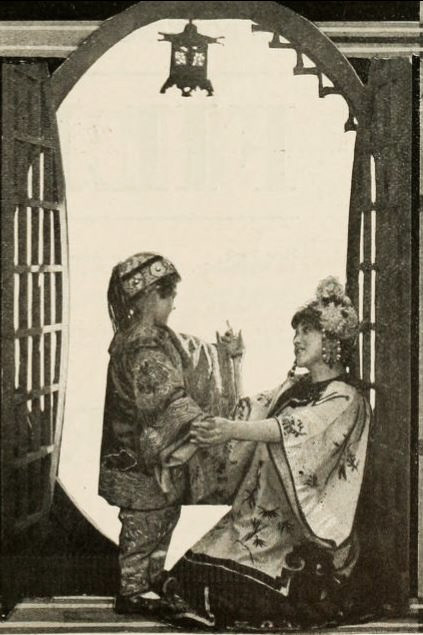
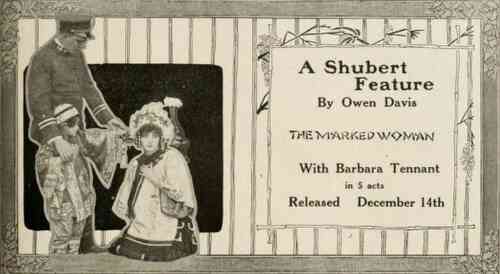
Strike a match and the celluloid of The Marked Woman flares like a kerosene-soaked flag: it burns, it illuminates, and it leaves scorched holes where history tried to write itself in ink. Owen Davis’s screenplay—adapted from an unproduced stage melodrama once banned in St. Petersburg—arrives on screen as a fever chart of revolutionary Russia, all frostbitten silhouettes and gunmetal desire. Director O.A.C. Lund, never lavish with tenderness, instead ladles violence in dollops so thick you could butter black bread with it. Yet beneath the sabre-rattling and the snow-muffled artillery, the film is a treatise on how vengeance, once commodified, becomes the only currency still negotiable in a country where the ruble has gone the way of the Romanovs.
Barbara Tennant, her cheekbones sharp enough to slice propaganda posters, embodies Olga Petcoff as a woman who has replaced her pulse with a metronome of reprisal. She enters through a railway tunnel back-lit by magnesium flares, the camera dollying backward as if even the lens fears collision. From the first intertitle—“Soror mea, soror mea, cur non es hic?”—we understand that Latin is not affectation but necromancy; she is summoning the dead to testify.
Her kid sister, seen only in monochrome photographs clutched against bosoms, functions as the film’s absent conscience. The murder itself occurs off-screen, a narrative vacuum that sucks everyone into speculation: was it a White officer’s drunken sport, a Red tribunal’s bullet-point efficiency, or something older, something pre-Soviet, a feud that began when Pushkin still had all his duels ahead of him? By refusing exposition, Lund turns absence into the film’s loudest character, a ghost note droning under every reel.
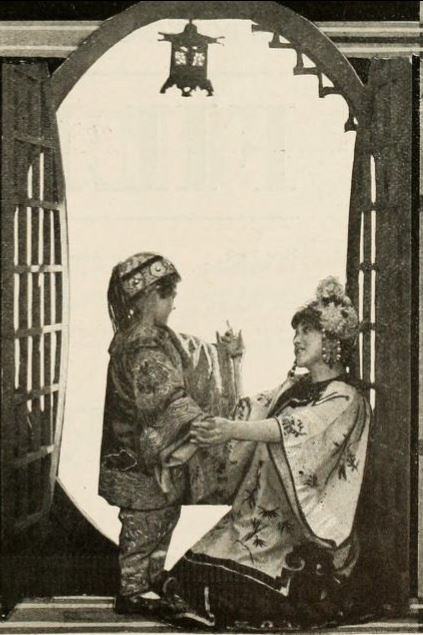
Rawland Ratcliffe’s Colonel Mikhail Varkov arrives first, astride a charger the color of tarnished pewter. His mustache telegraphs cavalry charges even when he is merely ordering tea. Ratcliffe plays him like a man who has read too much Tolstoy and understood too little, convinced that love is a cavalry skirmish you win by out-flanking. When he swears to avenge Olga’s sister, the promise lands with the thud of a sabre still sheathed—impressive but useless.
Walter Connolly’s Commissar Andrei Krasnin, gaunt from too many committee meetings, counters with the icy arithmetic of the new regime. Where Varkov offers protection, Krasnin offers jurisdiction; where the colonel whispers gallantries, the commissar recites penal codes. Connolly lets a tremor of loneliness flicker behind bureaucratic eyes, suggesting that even apparatchiks dream of thaw. His courtship of Olga is conducted via requisition forms: one for bullets, one for redemption, one for a future that keeps getting redrafted.
Joseph Baker’s foreign correspondent, credited only as “the American,” arrives with a Graflex camera and the irritating certainty of a man whose country has not yet imploded. Baker, all elbows and ethics, photographs corpses by day and develops Olga’s portrait by night, believing that truth can be fixed in hypo like silver halide. His arc is the shortest—war correspondents die faster than metaphors in this film—but the most self-aware; he alone recognizes that the shutter click is just a softer gunshot.
Cinematographer Jane Stuart (one of the era’s unsung women behind the lens) shoots winter like a crime scene. Snow is not festive but forensic; every footprint becomes evidentiary. She favors low-contrast greys that make blood register as a moral affront rather than mere color. When fire blooms—whether from artillery or from the candles Olga lights beside her sister’s photograph—it arrives in tungsten yellow (#EAB308) so saturated it feels like someone has opened a vein in the spectrum itself.
Stuart’s camera movement is sparse but surgical. A 360-degree pan around a bombed ballroom reveals dancers turned mannequins, their gowns still twirling though the music has died. A match-cut from Olga’s unblinking eye to the moon turns the satellite into a surveillance state, an orbiting commissar taking notes on human folly. These flourishes feel modern even now; imagine how they must have landed in 1917, when most films still treated the camera like a theater seat with better sightlines.
No synchronized score survives, but contemporary accounts describe a live orchestra instructed to weave Tchaikovsky’s Pathétique with the machine-gun rhythms of The Last Volunteer. The effect, according to a 1918 Moving Picture World review, “made grief indistinguishable from gunfire, so that the audience wept and flinched in the same breath.” Today, silence amplifies other frequencies: the creak of leather boots, the wet crunch of snow under carriage wheels, the metallic rasp of Olga’s breath when she discovers yet another lover’s letter stained with someone else’s blood.
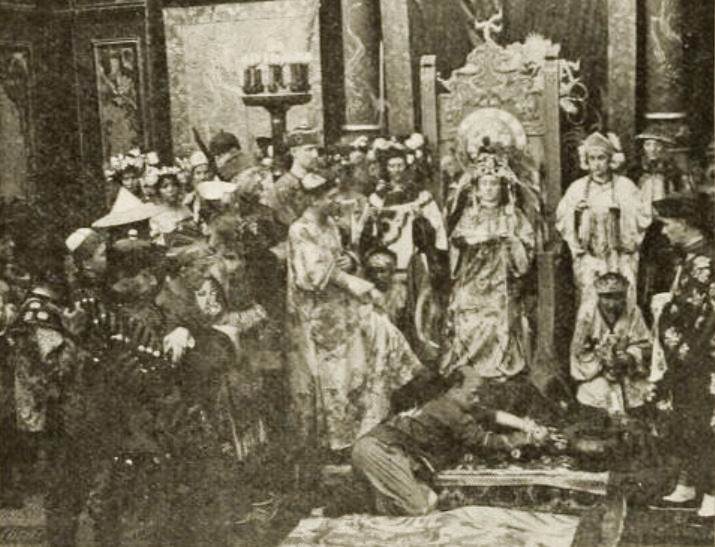
Place The Marked Woman beside The Strangler’s Grip and you see two philosophies of violence: one operatic, one forensic. Where Strangler fetishizes the garrote, Marked Woman eroticizes the pause before the trigger is squeezed. Compare it to Frank Gardiner, the King of the Road and the difference between outlaw romance and revolutionary nihilism snaps into focus: bushrangers swagger; Bolsheviks bleed ideology.
Yet the film it most eerily anticipates is Madame Butterfly, another tale of desire weaponized by geopolitics. Both heroines are marked—one by marriage contract, one by death warrant—and both discover that devotion is just imperialism in lingerie. The difference is tonal: Butterfly’s tragedy unfolds under cherry blossoms; Olga’s under artillery flashes that bloom like lethal chrysanthemums.
1917 was the year Russia licensed female death squads; the film capitalizes on that novelty without ever titillating. Olga’s sexuality is not a prize but a battlefield. When she disrobes—strategically, to seduce a guard into lowering his rifle—the camera cuts to her eyes, not her body, insisting that the power lies in surveillance, not nudity. Later, when she refuses Varkov’s marriage proposal, the intertitle reads: “I have already wed—my witness is the grave.” The line could play as melodrama, but Tennant delivers it with the exhausted finality of someone who has calculated the cost of every future and found them all overdrawn.
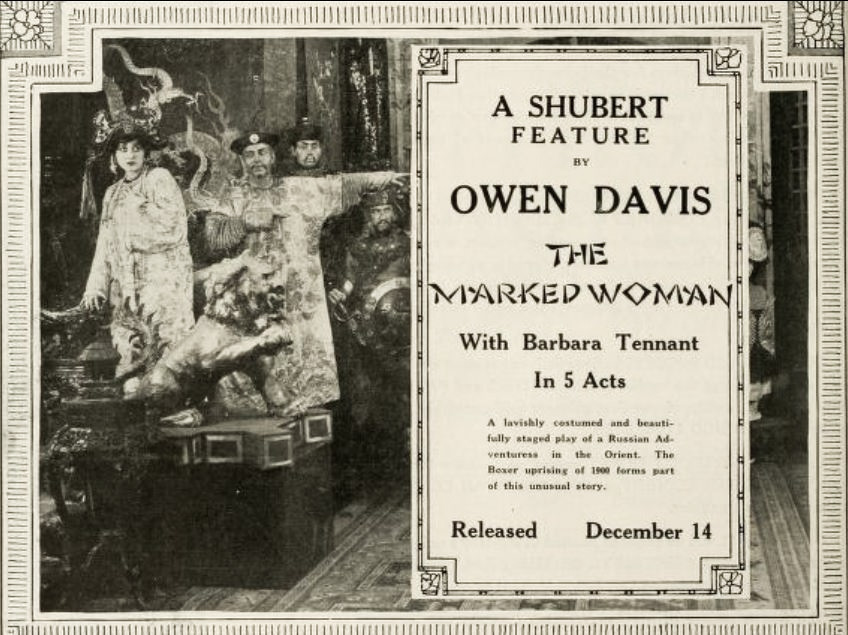
Spoilers are irrelevant; the film itself spoils closure. Olga finally corners her sister’s killer—only to discover he is already a corpse, executed by a firing squad whose allegiance shifts with every reel. She stands in the snow, revolver useless at her side, while the three remaining men form a ragged triangle of competing rescues. A mortar shell lands, not close enough to kill, but near enough to blind them with crystalline debris. Fade to white. No intertitle explains who survives; instead, the projectionist was instructed to burn the final 20 feet, creating a literal white-out that forces the audience to write its own aftermath.
That aporia is the film’s masterstroke. It transforms viewers into co-conspirators, each exit poll a referendum on whether vengeance can ever be satiated. Ninety minutes of narrative implode into a singularity where catharsis and cliffhanger swap clothes.
Most prints were melted for their silver nitrate during WWI economies; only one imperfect copy survives, archived at a Montenegrin monastery whose monks screened it on feast days, believing the snow in the film to be a miracle of St. Panteleimon. In 1972, a crate marked “Petcoff” surfaced in a Trieste flea market, containing a reel whose final scene ends not in white but in a freeze-frame of Olga’s half-smile—an alternate version that cine-scholists still knife-fight over. Whether Lund sanctioned it or some rogue editor spliced it in defiance of studio dictates remains as unanswerable as Olga’s fate.
What endures is iconography: Tennant’s silhouette, coat billowing like black flame, has been appropriated by punk albums, perfume ads, even a Ukrainian protest mural where Olga’s face was replaced by a Molotov-carrying student. Each iteration proves that the film’s true subject is not Russia past but contagion present—how grievance, once aestheticized, becomes a fashion you wear to the next revolution.
Watch The Marked Woman for the same reason you stare at car crashes: to calibrate your own appetite for damage. It offers no comfort, only calibration. When the screen whites out, you will taste cordite on your tongue and realize the film has not ended; it has merely moved into you, a splinter of ice lodged so deep only another viewing can melt it—and even then, the puddle reflects your own face, hungry for what happens next.
If you hunger for more silents where love and gunpowder share the same cigarette, stalk our reviews of The Fugitive and The Land of the Lost. But be warned: after Olga Petcoff, every other femme fatale feels like a campfire story told too far from the front.

IMDb —
1936
Community
Log in to comment.