DbcultAccessing Vault...
Cult Review
Senior Film Conservator
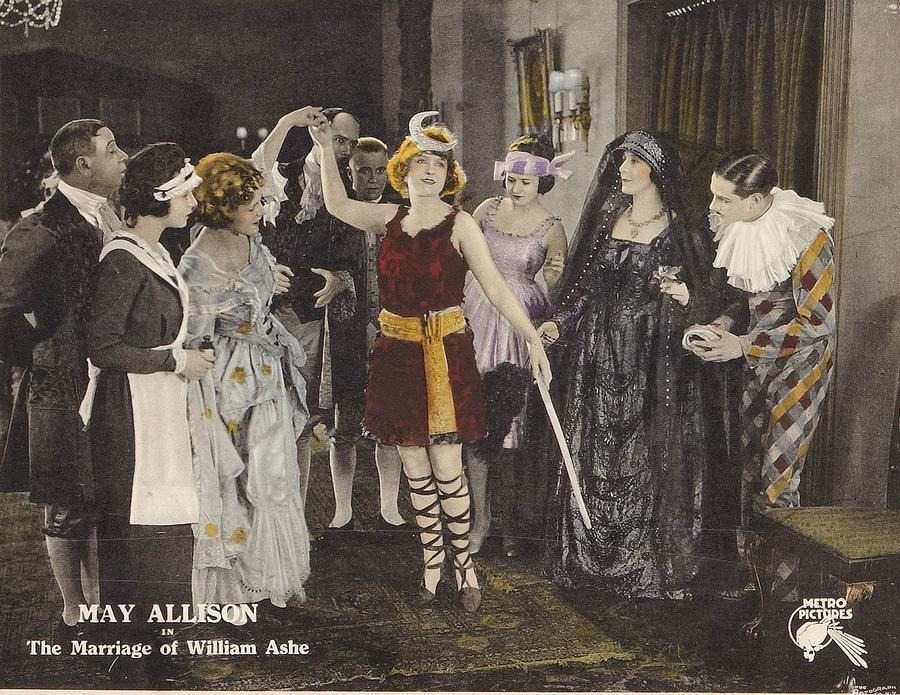
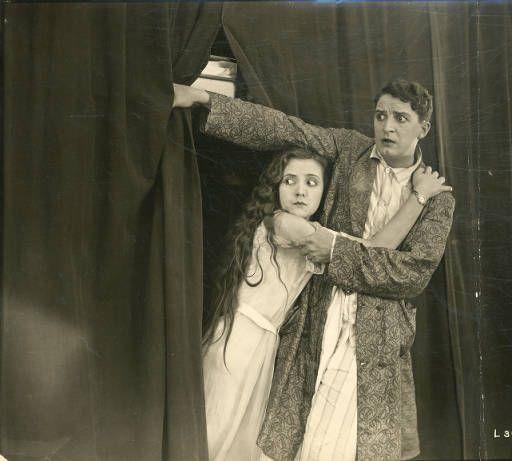
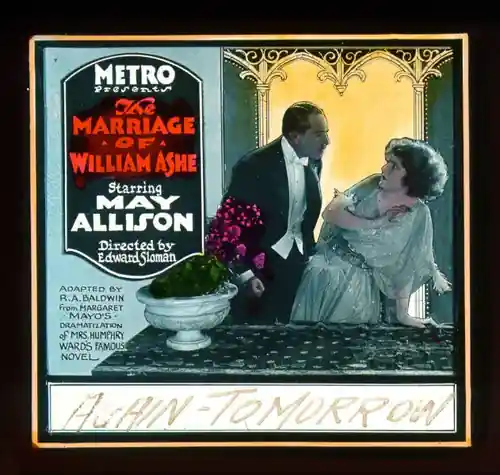
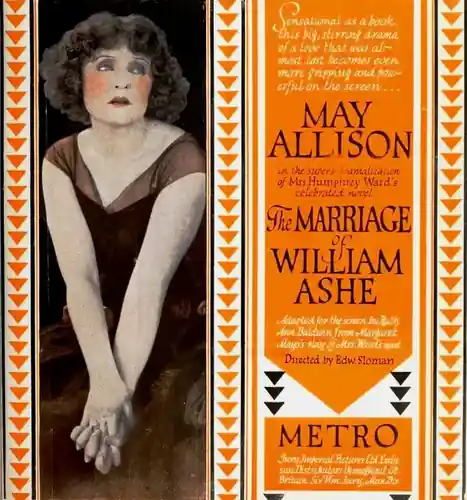
In the shadowed grandeur of post-Victorian England, The Marriage of William Ashe emerges as a cinematic relic that crackles with the tension between tradition and transgression. This 1921 melodrama, helmed by Margaret Mayo and Ruth Ann Baldwin with script contributions from the formidable Mrs. Humphrey Ward, isn’t merely a period piece—it’s a searing dissection of the paradoxes inherent in female autonomy. As Lady Kitty Bristol (Clarissa Selwynne) steps out of her convent’s cloistered halls, her crimson-bound copy of Geoffrey Cliffe’s Freedom becomes both compass and compass rose, guiding her toward a collision course with societal expectations.
The film’s opening act is a masterstroke of visual storytelling. The convent’s muted blues and grays give way to the vibrant chaos of London’s political salons, where William Ashe (Frank Elliott) navigates the labyrinth of Home Affairs with the precision of a chess grandmaster. When Kitty, with her wild auburn hair and unblinking gaze, enters this arena, the color palette shifts: her presence injects splashes of vermillion and gold, disrupting the monochrome formality of the Cabinet. Her caricatures—rendered with a pen’s sharpness and a poet’s soul—aren’t mere illustrations but living, breathing critiques of imperial hubris. These images, later published in a scandalous volume, become the film’s most potent metaphor. The page is both prison and portal, a space where Kitty’s subversive genius is both preserved and parodied by the very institutions she seeks to dismantle.
Geoffrey Cliffe (Edward Jobson) looms large over this narrative as the intellectual provocateur who emboldens Kitty’s ambitions. His role transcends mere mentorship; he embodies the duality of male patronage, offering both the tools of rebellion and the chains of dependency. The dynamic between him, Kitty, and William is a taut triangle of influence and betrayal. When William, in a moment of raw vulnerability, chastises Geoffrey for “poisoning” his wife’s mind, the dialogue crackles with the weight of unspoken truths. This confrontation, staged in the dim glow of a flickering oil lamp, is a chiaroscuro moment that lays bare the fragility of their alliance.
What elevates this film beyond its contemporaries is its deft handling of irony. The charity entertainment sequence—a glittering cacophony of hats, wigs, and misplaced propriety—serves as the narrative’s crescendo. Kitty’s semi-nudity here isn’t exploitation; it’s a calculated act of theater within the film’s larger narrative of performative defiance. Her body, adorned with a cascade of roses, becomes a canvas for political satire, a visual rebuke to the hypocrisy of the British elite. The crowd’s gasps and applause are rendered in muffled tones, as if the film itself is complicit in the subterfuge. This scene, more than any other, crystallizes the film’s thesis: power is a performance, and those who dare to strip it of its illusions risk becoming the spectacle.
The final act, where William discovers Kitty at the convent, is a masterclass in understated emotion. The camera lingers on his furrowed brow, the tremble in his fingers as he extends a hand to her. Their reconciliation is not the tidy resolution of a Victorian novel but a fragile truce, a recognition that their bond is forged in the crucible of conflict. The convent’s stained glass, casting prismatic shadows on the floor, becomes a silent witness to their fractured understanding. As they walk away, the camera pulls back to reveal the vastness of the English countryside—a landscape as unforgiving and beautiful as the choices they’ve made.
Technically, the film is a marvel. The use of chiaroscuro in key scenes—a technique more commonly associated with German Expressionism—adds a layer of psychological depth that feels ahead of its time. The editing, though constrained by early 20th-century techniques, is taut and purposeful, with jump cuts used to emphasize narrative disjunctions. The sound design (what little there is) is minimal but effective, with the clatter of carriage wheels and the rustle of silk becoming diegetic elements that anchor the viewer in the film’s world.
Comparisons to other works of the era are inevitable. Like Into the Primitive, this film grapples with the clash between civilization and primal forces, though its focus is more on the personal than the tribal. The Light of Victory shares a similar preoccupation with redemption, but where that film leans into melodramatic resolution, The Marriage of William Ashe leaves its characters in a state of unresolved tension. This ambiguity is its greatest strength, inviting viewers to ponder the cost of defiance and the paradoxes of agency.
Performances are uniformly stellar. Selwynne’s portrayal of Kitty is a tour de force—her eyes dart with the energy of a caged bird, her gestures a mix of aristocratic refinement and rebellious flair. Elliott’s William is the perfect foil, his stoicism cracking only in moments of profound weakness. The supporting cast, including Lydia Yeamans Titus as a sardonic maid and Zeffie Tilbury as a scheming socialite, elevates the film’s secondary characters from caricatures to fully realized entities.
Ultimately, The Marriage of William Ashe is a film that defies easy categorization. It is, at once, a period drama, a political satire, and a psychological study. Its greatest triumph lies in its ability to balance social critique with intimate drama, to weave a tapestry of rebellion that is both personal and political. For modern viewers, it offers a window into the shifting tides of early 20th-century England, while its themes of identity, power, and resistance remain strikingly relevant. As the credits roll, one is left with the lingering image of Kitty’s sketches—those ink-stained pages that captured a world in flux, a testament to the enduring power of art to challenge, provoke, and ultimately, transform.
IMDb —
1917
Community
Log in to comment.