DbcultAccessing Vault...
Cult Review
Senior Film Conservator
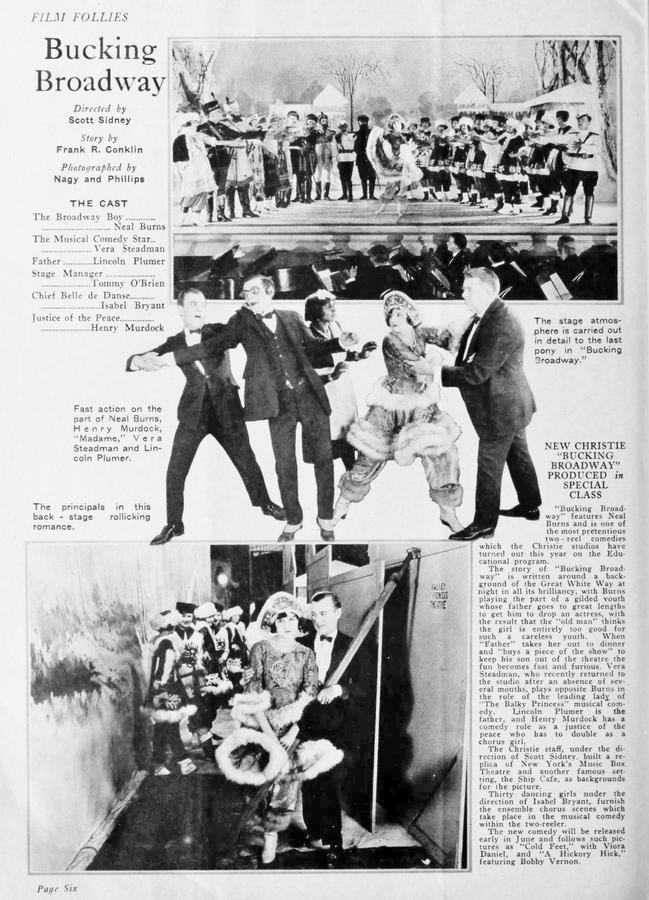
The year 1922 remains a hallowed epoch for silent cinema enthusiasts, a period where the medium transitioned from the raucous, disjointed energy of early nickelodeon shorts toward the sophisticated narrative architecture of the feature-length comedy. At the heart of this evolution lies Bucking Broadway, a film that deftly navigates the treacherous waters of intergenerational conflict, social mobility, and the performative nature of romance. Unlike the more somber explorations of the era, such as The Hungry Heart, this production leans into the absurdity of the human condition with a wink and a nudge, yet it possesses a satirical bite that feels remarkably modern.
The narrative engine is fueled by the stubbornness of Lincoln Plumer’s patriarch, a man whose skepticism of the theatrical world borders on the pathological. When his son, Neal (the agile and charismatic Neal Burns), announces his intention to marry a musical star, the father doesn't merely object; he orchestrates a psychological experiment. His goal is to demonstrate the inherent fickleness of women who live under the spotlight—a trope that was frequently explored in contemporary works like Heedless Moths. However, Frank Roland Conklin’s screenplay takes a sharp left turn. Instead of finding a vacuous flirt, the father encounters a woman of genuine substance and magnetic allure, played with luminous poise by Vera Steadman.

"The comedy arises not from the girl's supposed infidelity, but from the father's utter failure to maintain his cynical distance. It is a masterclass in the disintegration of the 'rational' male ego when confronted with the very magic he sought to dismiss."
This shift transforms the film from a standard farce into a deeper meditation on desire and hypocrisy. As the father begins to believe the girl is 'good enough for father to marry, if not for son,' the audience is treated to a delicious reversal of roles. We see the older man attempting to navigate the social mores of the Broadway elite, a fish-out-of-water scenario that mirrors the thematic tension found in A Continental Girl. The contrast between his rigid, Victorian sensibilities and the fluid, opportunistic world of the theater provides a rich tapestry for physical comedy and sharp social commentary.
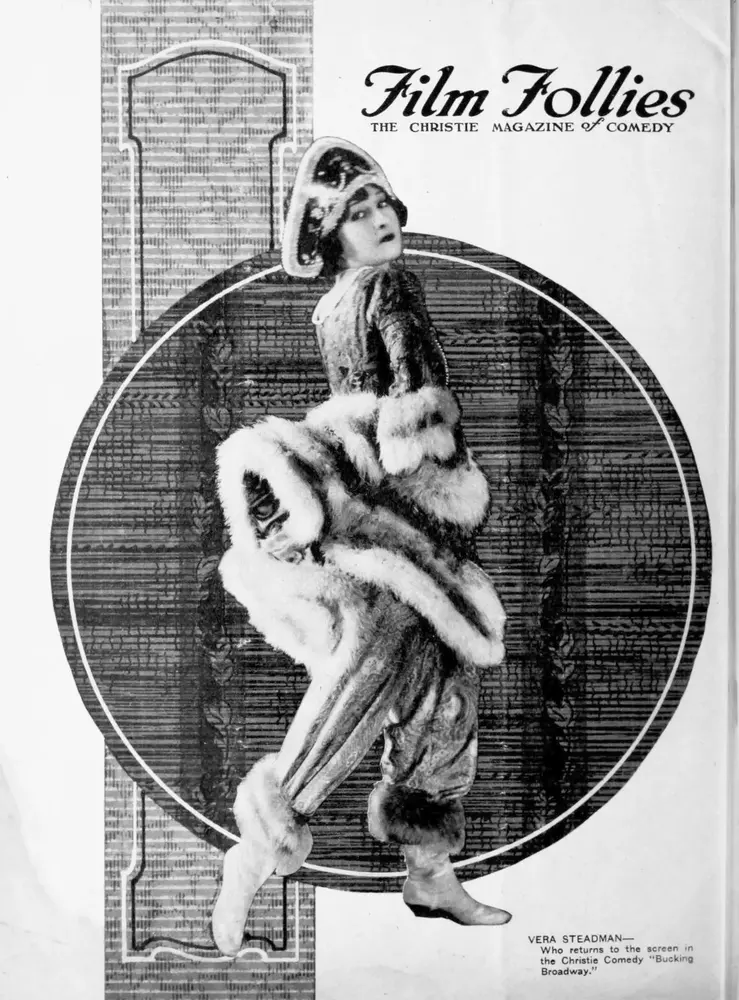
Neal Burns, often overshadowed by the giants of the era like Keaton or Lloyd, displays a remarkable 'agility' here—both physical and situational. While the film lacks the death-defying stunts of El caporal, Burns uses the space of the frame with a rhythmic precision. His character is not merely a passive victim of his father's meddling; he is a strategist. The third act, involving the son's threat to pull his wife from the cast—thereby jeopardizing the father's newly acquired financial stake in the show—is a brilliant stroke of narrative economy. It subverts the 'damsel in distress' motif, turning the marriage itself into a form of industrial leverage.
This intersection of art and commerce is a recurring theme in silent cinema, often depicted with more gravity in films like The Vermilion Pencil or the dark undercurrents of The Opium Runners. In Bucking Broadway, however, the stakes are kept buoyant by the lightness of the performances. The father's eventual submission to his son's 'agility' is not a defeat of love, but a surrender to the inevitable tide of the modern age. He learns that the Broadway he tried to 'buck' is far more resilient and authentic than his own preconceived notions.
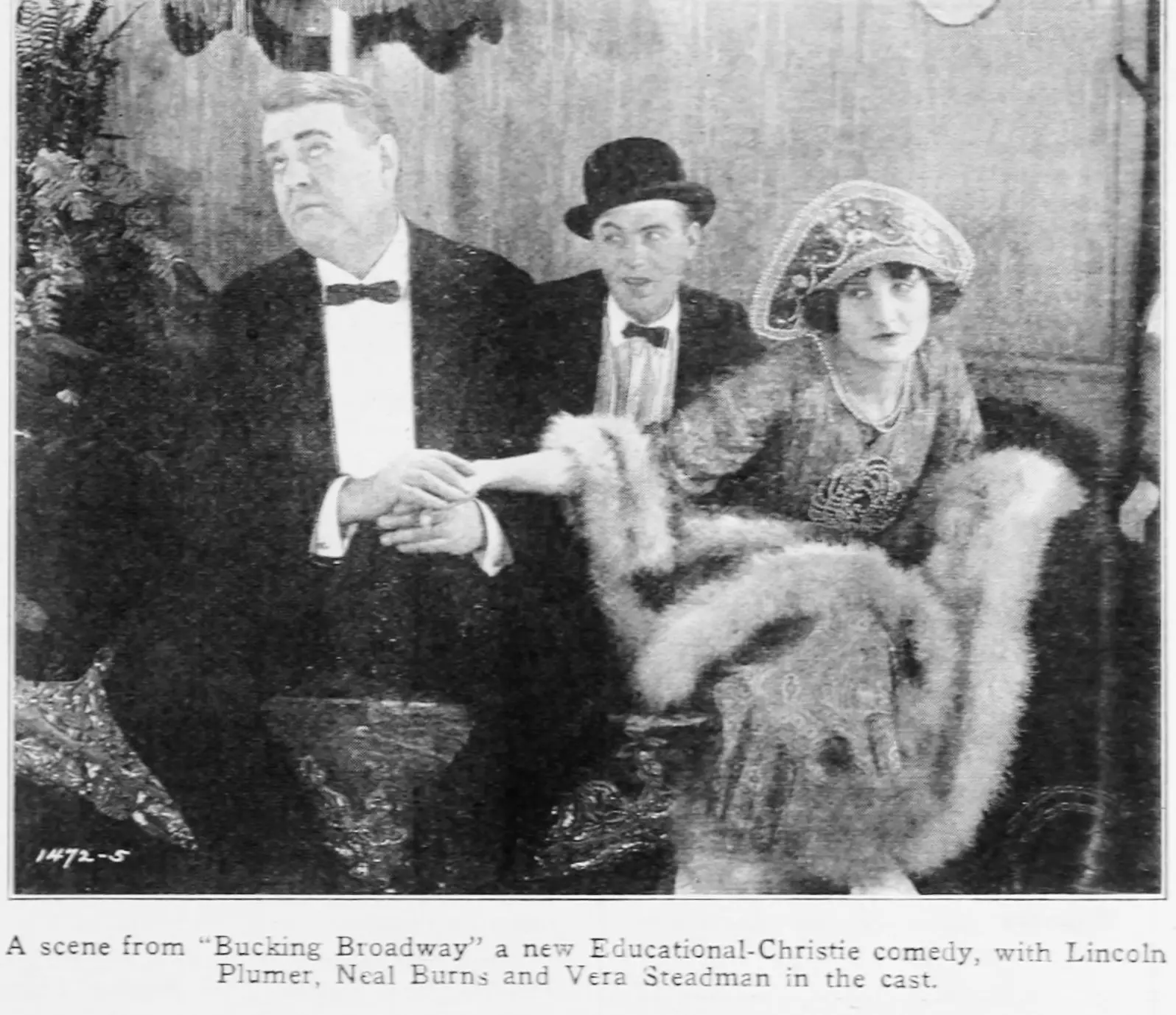
Visually, the film benefits from the crisp cinematography typical of the early 20s, capturing the glitz of the stage with a clarity that rivals Montmartre. The set designs for the musical show within the film offer a glimpse into the vaudevillian aesthetics of the time, providing a stark contrast to the domestic interiors of the father's home. This visual dichotomy reinforces the central conflict: the old world versus the new, the static versus the kinetic. When compared to the rural antics of A Barnyard Cavalier, Bucking Broadway feels distinctly urban and sophisticated, a precursor to the screwball comedies that would dominate the 1930s.
The thematic resonance of the film also touches upon the 'concealed truths' of human nature, much like the aptly named The Concealed Truth. The father's initial plan was based on a lie—a performance of cynicism—that eventually revealed his own hidden capacity for romance and vulnerability. It is this psychological layering that prevents the film from becoming a mere footnote in the history of silent comedy. Even in its most slapstick moments, there is a palpable sense of human frailty at play.
While many films of 1922, such as Tiannu san hua, explored more ethereal or historical subjects, Bucking Broadway remained grounded in the immediate social anxieties of its audience. It addressed the fear of the 'new woman' and the changing dynamics of the American family with a grace that avoided didacticism. The film’s pacing is relentless, reflecting the 'agility' of its protagonist, and the chemistry between the cast members creates a lived-in feel that is often missing from more stylized productions like Hell-Roarin' Reform.
In the broader context of the era's output, including the identity-swapping antics of In and Out, Bucking Broadway stands out for its structural integrity. It doesn't rely on coincidences to resolve its plot; instead, it relies on the logical progression of its characters' flaws and strengths. The father's ultimate 'good behavior' is not a moral epiphany, but a pragmatic response to a well-played hand by his son. This cynical yet oddly heartwarming conclusion is what makes the film a perennial delight for those who appreciate the complexities of the silent screen.
Ultimately, Bucking Broadway is a celebration of the theatrical spirit. It suggests that even the most hardened skeptic can be seduced by the artifice of the stage, and that sometimes, the only way to win a game is to own the board. For modern viewers, it offers a window into a world where Broadway was not just a place, but a symbol of a burgeoning, vibrant modernity that challenged every traditional boundary it encountered. It remains a vital, energetic piece of cinema that proves, quite handily, that the 'agility' of youth and the allure of the spotlight are a formidable combination against the stagnant forces of the past.
IMDb —
1920
Community
Log in to comment.