DbcultAccessing Vault...
Cult Review
Senior Film Conservator
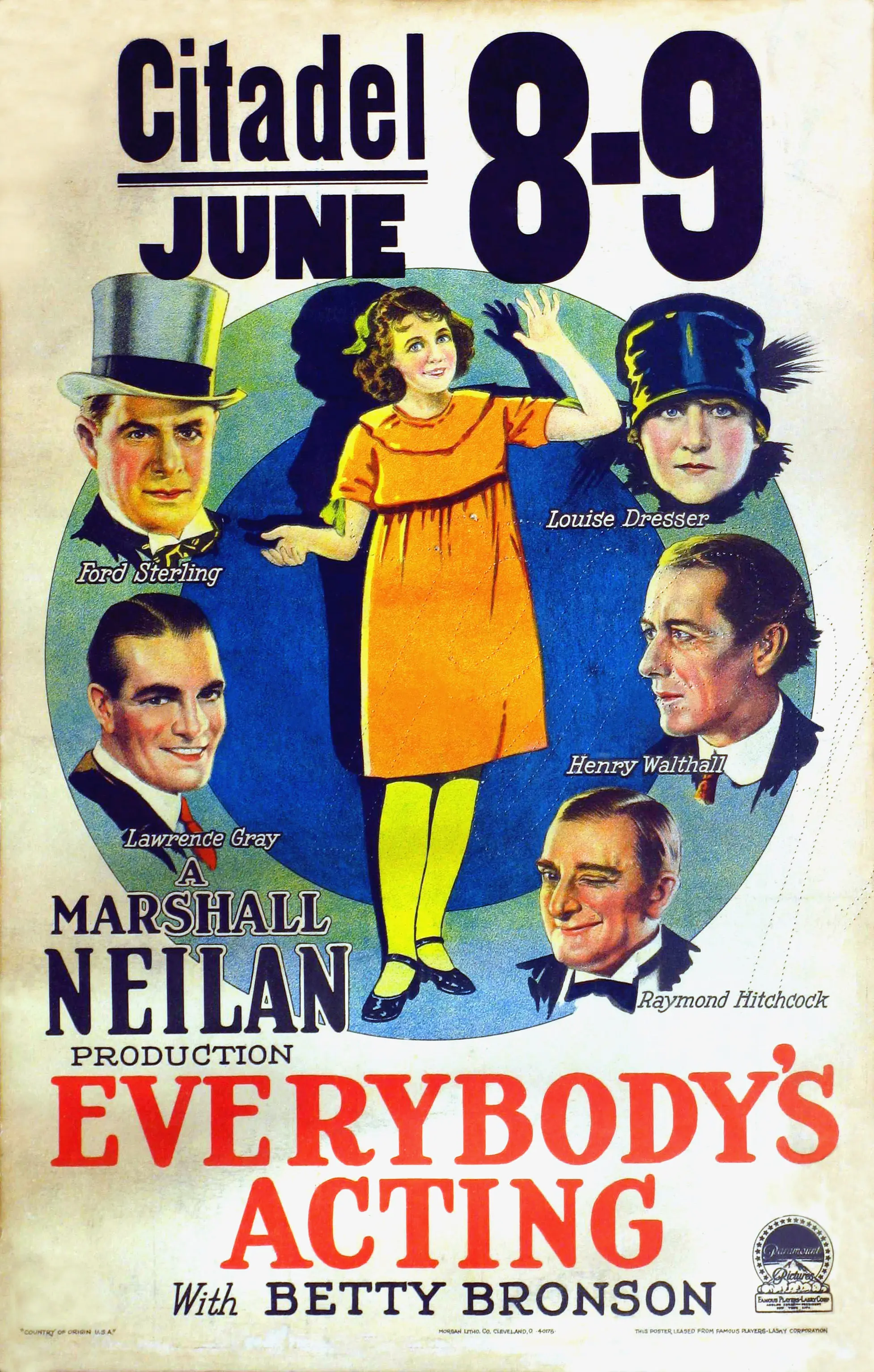
Is 1926’s Everybody’s Acting worth your time in the modern era? Short answer: yes, but only if you have a soft spot for the specific brand of whimsical melodrama that defined the late silent period. This film is a treat for those who appreciate ensemble character acting, but it will likely frustrate viewers who demand narrative consistency or logical character motivations.
This film works because of its central conceit: a young woman raised by four distinct, eccentric father figures. It fails because it attempts to pivot from lighthearted class comedy to a grim murder-backstory in the final act, creating a jarring tonal whiplash. You should watch it if you enjoyed the theatrical charm of Sally of the Sawdust or the character-driven humor of Hands Up!.
1) This film works because the chemistry between the four 'foster fathers' provides a warmth rarely seen in 1920s cinema.
2) This film fails because the 'murderous father' subplot feels like it belongs in a completely different movie.
3) You should watch it if you are a fan of Betty Bronson’s ethereal screen presence or silent-era backstage dramas.
The heart of Everybody's Acting isn't the romance between Doris and Ted, but rather the unconventional domesticity of the four actors who raise her. Marshall Neilan, a director known for his ability to handle large casts, populates the screen with a quartet of legends: Ford Sterling, Henry B. Walthall, Jed Prouty, and Raymond Hitchcock. Each brings a different flavor of theatrical history to the table.
Sterling, usually known for his frantic slapstick in Keystone comedies, shows a surprising amount of restraint here. There is a specific scene in the first act where the four men are deciding how to care for the infant Doris; the way they navigate the cramped backstage space, using props as makeshift nursery items, is a masterclass in physical storytelling. It’s better than the broad humor found in Darwin Was Right because it is grounded in genuine affection.
The film posits that 'acting' isn't just a profession, but a survival mechanism. These men have spent their lives pretending to be kings and villains, yet their most challenging role is that of a stable parent. This meta-commentary on the nature of performance gives the film a depth that elevates it above standard studio fare from the mid-twenties.
Betty Bronson, fresh off her success in Peter Pan, brings a luminous, almost otherworldly quality to Doris. While she was often cast as the 'waif,' here she gets to play a woman with agency—a leading lady in a San Francisco stock company. Her performance is a fascinating study in contrast. When she is on stage within the film, her gestures are broad and declamatory; when she is with Ted, she shifts into a more naturalistic, intimate style.
The 'taxi driver' ruse, where Ted (Lawrence Gray) hides his wealth, is a tired trope even by 1926 standards, but Bronson makes it work through sheer earnestness. She doesn't play Doris as a fool; she plays her as someone who values labor over lineage. This stands in stark contrast to the social morality explored in films like Where Are My Children?, focusing instead on personal integrity over social standing.
However, the script does her no favors when the 'dark secret' is revealed. The revelation that her biological father was a murderer is handled with such heavy-handed gloom that it threatens to sink Bronson's light performance. She handles the dramatic weight well, but the transition is clunky. One moment we are laughing at Ford Sterling’s antics, and the next we are staring into the abyss of a family tragedy.
Marshall Neilan was a director who lived as hard as he worked, and that sense of 'life in the fast lane' permeates the film's pacing. The San Francisco of Everybody's Acting is vibrant and bustling. The use of location shots, or at least highly detailed sets, gives the stock company a lived-in feel. You can almost smell the greasepaint and the stale coffee in the dressing rooms.
The pacing is brisk, perhaps too brisk. Neilan rushes through the romance to get to the 'plan'—the elaborate ruse the four fathers concoct to get Doris and Ted on the same ship. This is where the film finds its second wind. The sequence on the steamship is choreographed with the precision of a stage play, which is fitting given the title. It’s a series of near-misses and comic misunderstandings that feel more sophisticated than the earlier drama.
Comparing this to the pacing of something like Lille Dorrit, which takes a much more methodical approach to its Dickensian roots, Neilan’s film feels modern. It doesn't linger on misery. It moves. It pulses. It’s a bit of a mess, but a glorious one.
Yes, Everybody's Acting is a vital watch for those interested in the 'backstage' subgenre of silent film. It provides a fascinating look at the social hierarchy of the 1920s, where actors were still viewed by the upper crust as little more than vagabonds. The film’s defense of the 'theatrical family' is moving and surprisingly progressive for its time.
While it lacks the visual experimentation of the German Expressionist films of the era, its strength lies in its humanity. The four fathers are not caricatures; they are men with histories, failures, and a shared purpose. That alone makes it more engaging than many of the period's more polished, but hollow, romances.
Pros:
- Exceptional ensemble cast of silent-era veterans.
- Betty Bronson is magnetic and carries the emotional weight of the film.
- The 'ship-bound' finale is a comedic highlight.
- High production values for a 1926 dramedy.
Cons:
- The tonal shift in the third act is jarring.
- The antagonist (Ted's mother) is a one-dimensional socialite villain.
- Some of the 'acting' humor may feel dated to those unfamiliar with 1920s stage traditions.
The most debatable aspect of Everybody's Acting is the inclusion of the murder subplot. In a film that spends so much time celebrating the joy of the theater, the revelation that Doris’s father killed her mother out of jealousy feels like a lead weight. It’s a narrative choice that seems designed to satisfy the 'moral' requirements of the era—reminding the audience that the theatrical life was fraught with passion and danger.
However, one could argue this is the film's most 'human' moment. It acknowledges that the four fathers didn't just adopt Doris out of charity, but out of a need to protect her from a truth that could destroy her. They are 'acting' as her parents to shield her from the reality of her lineage. This adds a layer of pathos to their comedy. When Ford Sterling makes a face or Henry B. Walthall strikes a pose, they are doing it to keep the darkness at bay. It works. But it's flawed.
The film’s resolution—sending the couple to the 'Orient'—is a classic 1920s escapist ending. It ignores the trauma of the revelation in favor of a romantic sunset. It’s a bit of a cheat, but in the world of Everybody's Acting, the show must go on, and a happy ending is the only way to close the curtain.
Everybody's Acting is a chaotic, heartwarming, and occasionally bizarre film that deserves more attention than it currently receives. It isn't a flawless piece of art, but it is a vibrant piece of entertainment. Marshall Neilan manages to juggle four legendary actors, a rising star, and a plot that veers from slapstick to homicide with a confidence that is infectious. It’s a testament to the idea that family is what you make of it, even if your family is a group of over-the-top character actors. If you can forgive the clunky plot pivots, you'll find a film with a massive heart and a genuine sense of fun.
IMDb 6.7
1921
Community
Log in to comment.