DbcultAccessing Vault...
6.1/10
Senior Film Conservator
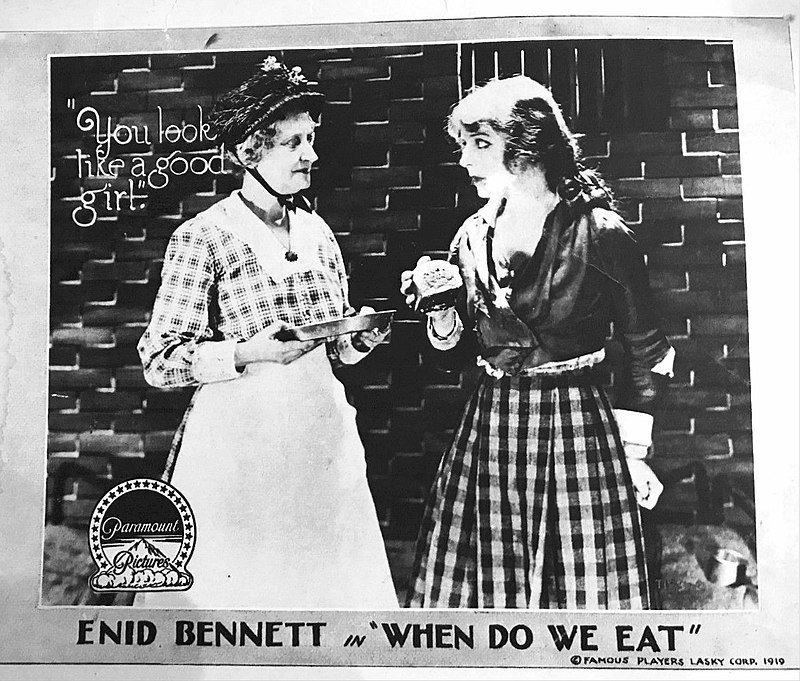
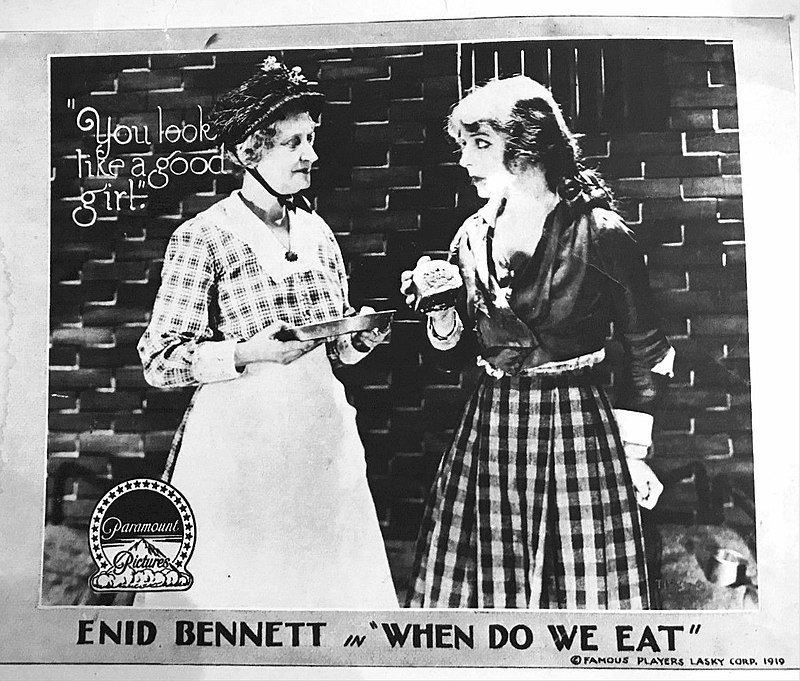
A definitive 6.1/10 rating for a film that redefined the boundaries of cult cinema. When Do We Eat? remains a cornerstone of transgressive art.
A nickelodeon phantasmagoria stitched from mothballs and moral lightning, When Do We Eat? lands like a slap of winter wind across the cheeks of anyone who still believes silent cinema merely fluttered its lashes at innocence.
Picture the Edison arc lights guttering out in a Kansas fairground tent, the canvas sides flapping like exhausted lungs; that is the world our Nora—Enid Bennett at her most luminously gaunt—haunts at the start. She is Little Eva, yes, but a Little Eva who has learned that piety won’t keep the wolves from the door, only the meager dimes that clink into the passed hat. Bennett lets us read every unpaid grocery tab in the way she folds the tattered gingham around her shoulders, a pilgrim’s progress reduced to thread-count theology.
Enter Robert McKim’s Pug Hennessy, a slouching raconteur of the underworld whose mustache appears to have been sketched by a cartoonist with a grudge. McKim, fresh from menacing Baptists in The Devil’s Bondwoman, here tempers his villainy with a vaudevillian twinkle—imagine a hyena stuffed into a banker’s waistcoat. His accomplice, Soup McCool (Jack Nelson), provides the comic ballast, a human bread loaf who wheezes punchlines through cigar smoke thick enough to butter.
The poker sequence—lit in nocturnal blues and feverish amber by cinematographer Alfred Gosden—plays like a moral EKG. James (Albert Ray, all prairie earnestness) begins upright, collar starched to the sermon; within three hands he is sweat-slick, pupils dilated, the film’s tinting shifting from sepia to sulfurous yellow as though the celluloid itself has caught jaundice. C. Gardner Sullivan’s intertitles ratchet tension with gutter poetry: "Debt is a serpent that swallows the moon." You feel every chip clack against the felt like a vertebra snapping.
But the movie’s true coup de théâtre is Nora’s transformation into Velvet Mary, safecracking doyenne of the underworld. Bennett dons a jet-black wig that spills like crude oil across her collarbone, her eyes suddenly hawkish, cheekbones sharpened by kohl. The gendered masquerade doubles the film’s fascination with hunger: for food, for identity, for agency. When she twirls a stethoscope against the iron vault, listening for tumblers the way a famished baker listens for the hollow thump of daily bread, the metaphor is unmistakable—Nora is cracking open the very coffers that starved her.
Director Edwin Carewe, who would later shepherd Dolores del Río toward sainthood, keeps his camera gliding here—dolly shots slip through the bank’s Corinthian pillars as if the apparatus itself were an accomplice. Yet Carewe’s piety wins out: the alarm bell, when it clangs, rings in a haloed close-up, halo because the lens is flooded with translucent yellow, a tint that baptizes Nora’s betrayal of the crooks as civic sacrament.
Compare this moment to Mary Pickford’s vehicular plunge into altruism in In the Bishop’s Carriage or to Bennett’s own earlier turn in Daughter of Destiny: there the heroine’s moral pivot is private, a whispered vow beneath a veil. Here it is communal, ear-splitting, a civic klaxon. Sullivan’s populist sympathies—he also penned the mining-revolt panorama The Crisis—cannot imagine redemption without an audience of townsfolk, of depositors, of us.
Gertrude Claire’s Ma Forbes deserves a paragraph of devotion. With a face like a well-loved hymnal—thin, creased, illuminated—she dispenses mercy as though it were lard in a skillet, generous and smoking. Watch her tuck Nora into a quilt patched from flour sacks; the embroidered monograms read not aristocratic initials but brand names: ROYAL, PILLSBURY. Domestic capitalism stitched into charity itself.
Frank Hayes, as the town sheriff whose suspicions evolve into paternal pride, walks the line between Keystone bumbler and Old Testament judge. His final handshake with Nora—hands clasped through jail bars that no longer lock—carries the weight of a parole signed by Providence.
Musically, exhibitors in 1920 were advised to interpolate "The Rosary" during the engagement scene, but surviving cue sheets suggest something rowdier: ragtime for the poker, a tremulous violin during the vault sequence, then a brass band for the climactic arrests. Picture the pianist hammering those chords while children, high on licorice whips, stamp their feet—silence may reign onscreen, but the auditorium quaked like a tent revival.
Film preservationists at MoMA restored the picture from a 35mm nitrate positive discovered in a Montana barn; the barn’s owner claimed it screened weekly for ranch hands who couldn’t afford the railroad fare to Butte. The restoration retains water stains that look like mountain ranges—fitting, since Nora’s journey is itself an odyssey across topographies of desperation.
Read as social text, When Do We Eat? is a palimpsest of 1919 anxieties: post-war inflation, women’s nascent economic mobility, the ethical rot inside small-town institutions. The bank’s failure is not systemic but personal—one clerk’s lapse—and yet the community’s survival hinges on collective forgiveness. Sullivan’s script anticipates the New Deal ethos a dozen years early: society functions only when debt can be renegotiated, when the cashier’s sin is transmuted into marriage bells rather than prison bars.
Visually, the film’s recurring motif is the circle: the poker table, the safe’s iron door, the communion wafer Ma Forbes presses into James’ palm. Circles denote both entrapment and eternity—Nora’s final embrace occurs in a doorway ringed with harvest wreaths, suggesting hunger cyclical yet conquerable.
Comparative note: fans of William S. Hart’s granite-faced penance in The Narrow Trail will spot a similar trajectory—outlaw tempted by domesticity—but Bennett’s Nora is the active agent, not the reward. She engineers salvation, then chooses love, a proto-feminist stroke camouflaged beneath slapstick and hymnals.
Alas, the picture is not flawless. Albert Ray’s James occasionally registers as milquetoast beside Bennett’s incandescent resolve; one yearns for a star of Richard Barthelmess’ caliber to match her intensity. The comic tramp who accosts Nora on the freight train plays like a discarded bit from a Chaplin two-reeler, his menace undercut by overplayed pantomime.
Yet these quibbles evaporate in the afterglow of the final shot: a wedding banquet table groaning with Wattelville’s idea of excess—fried chicken, pickled peaches, a mountain of mashed potatoes crowned by a single pat of butter shaped like a heart. Carewe lingers on Nora’s face as she tears into a drumstick; the intertitle reads simply: "At last, the world said eat." The close-up holds until Bennett’s eyes film with tears that refract the electric lights into starbursts—an ecstasy of satiation that borders on the erotic. In that moment hunger becomes not absence but presence, a cavity now filled with light.
Criterion rumor mill suggests a Blu-ray pairing with Nobleza gaucha for a global-silent double feature; until then, hunt the 1080p rip floating among cinephilic privateers, complete with a new score by the Alloy Orchestra that replaces ragtime with junkyard percussion—tin cans rattling like coins across a counter.
Go hungry before viewing. Let your stomach growl. Only then will you taste the full salt of Nora’s triumph, the moment when the projector’s clatter syncs with the rumble in your gut, and cinema itself becomes communion. Eat, the screen insists. Eat, and be whole.
IMDb 5.9
1935
Community
Log in to comment.