DbcultAccessing Vault...
Cult Review
Senior Film Conservator
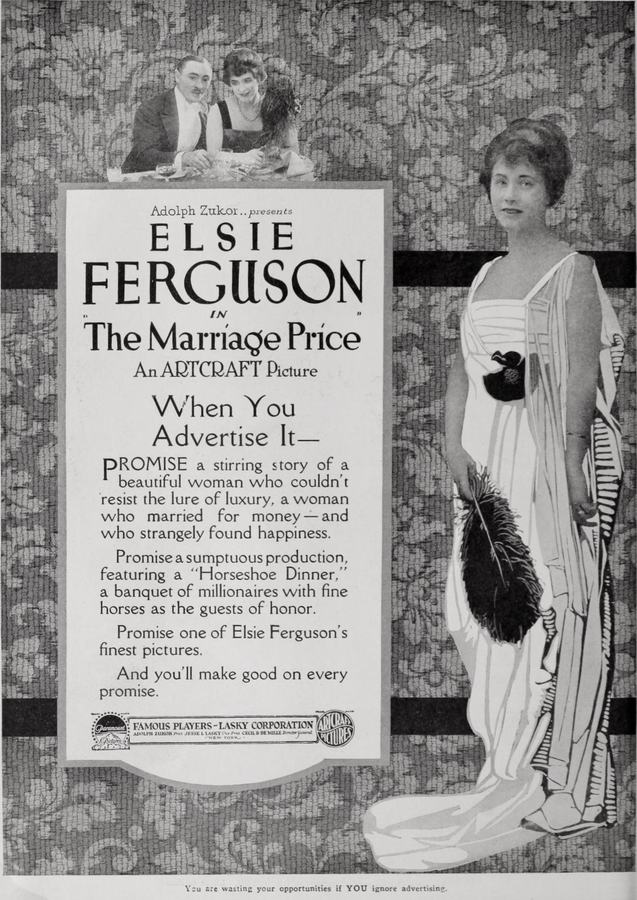
The cinematic landscape of the early 20th century, often dismissed as mere prologue to sound, frequently delivered narratives of surprising depth and emotional resonance. Among these, 'The Marriage Price' stands as a compelling testament to the era's storytelling prowess, a profound exploration of love, societal stratification, and the arduous journey toward authentic connection. Helmed by the creative synergy of writers Griswold Wheeler and Eve Unsell, this film transcends its seemingly straightforward premise to offer a nuanced portrayal of human desires clashing against the rigid architecture of social convention. It is a work that, even a century later, still resonates with an undeniable power, speaking to the enduring struggle between the heart's true compass and the siren call of status.
At its core, the film presents a classic, yet eternally relevant, romantic triangle, but with a distinctive twist that elevates it beyond mere melodrama. We are introduced to the rugged, unyielding spirit of Jim Harding, portrayed with compelling gravitas by Robert Schable. Harding is a man forged in the crucible of the American West, a landscape that imbues him with an innate sense of honor and an unapologetic directness. His presence on the Eastern seaboard, a world away from the dusty trails and open skies that shaped him, feels almost anachronistic, a force of nature unleashed into a meticulously manicured garden. Schable’s performance is a masterclass in silent acting, conveying immense depth through subtle gestures and piercing gazes, making Harding’s struggle to adapt to, or indeed, defy, metropolitan mores profoundly palpable. He is a character who understands the true value of things, untainted by the superficial glitter that often blinds the denizens of high society.
His antithesis arrives in the form of Arthur Livingston, a smarmy, high-society type brought to life with chilling precision by Lionel Atwill. Atwill, a veteran of the stage and screen, imbues Livingston with an oily charm that barely conceals a predatory ambition. Livingston is not merely a rival for affection; he embodies the very essence of the societal structures that threaten to crush genuine emotion under the weight of expectation and material gain. His pursuit of the young woman, Eleanor Vance, played with exquisite vulnerability and inner strength by Marie Temper, is less a testament to true love and more a strategic maneuver, a consolidation of status and wealth. Atwill’s portrayal is so effective that one feels an almost visceral repulsion, a testament to his ability to craft a villain who is not overtly monstrous but subtly insidious, a threat precisely because he operates within the acceptable boundaries of his social sphere.
Marie Temper, in the pivotal role of Eleanor Vance, is the emotional anchor of the film. Her performance is a delicate balance of youthful innocence and a dawning awareness of the world’s complexities. Eleanor is not a passive damsel in distress; rather, she is a woman caught between two profoundly different worlds and two vastly divergent conceptions of love and partnership. Her internal conflict is beautifully articulated through Temper’s nuanced expressions and graceful movements. She is drawn to Harding’s rugged honesty, his untamed spirit offering a promise of genuine freedom, yet she is also tethered by familial obligations and the pervasive societal pressures to secure a 'suitable' match, which Livingston, on the surface, represents. This internal tug-of-war, the struggle between heart and perceived duty, forms the dramatic backbone of the narrative, reminding one of the intricate moral dilemmas faced by characters in films like A Woman's Fool, where personal desires often clash with public expectations.
The supporting cast further enriches this intricate tapestry. Zelda Crosby, as Eleanor’s well-meaning but socially conventional Aunt Martha, provides a crucial counterpoint to Harding’s unconventional nature, embodying the entrenched beliefs of the old guard. Her subtle manipulations and constant nudges toward Livingston are driven by a genuine, if misguided, desire for Eleanor’s 'happiness' as defined by wealth and status. Clairette Anthony, as Eleanor’s vivacious but perhaps naive friend, Lillian, offers moments of levity and serves as a sounding board for Eleanor’s burgeoning feelings. Meanwhile, Maud Hosford as Mrs. Livingston, Arthur’s mother, exudes an aristocratic haughtiness that reinforces the formidable social barrier Harding must overcome. Wyndham Standing and Elsie Ferguson also deliver memorable performances in their respective roles, adding layers to the societal backdrop against which this drama unfolds. The ensemble cast, under the astute direction, works in concert to create a believable and immersive world, where every glance and gesture contributes to the overarching narrative.
One of the film's most striking achievements is its visual storytelling. The contrast between the two male protagonists is not merely textual but deeply embedded in the cinematography and production design. Harding is often framed against expansive, natural backdrops or in stark, unadorned settings, emphasizing his connection to the untamed. Livingston, conversely, is frequently seen amidst opulent interiors, gilded furniture, and crowded ballrooms, highlighting the superficiality and claustrophobia of his world. This visual dichotomy, a common but effective technique in silent cinema, is executed with particular finesse here, reminiscent of the stark contrasts employed in Wagon Tracks, where the rugged frontier lifestyle is visually juxtaposed against more 'civilized' environments. The meticulous attention to detail in costume and set design further amplifies these thematic undercurrents, making the societal divide almost tangible.
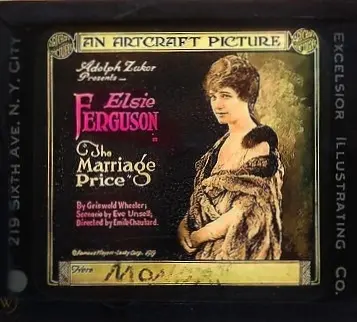
The screenplay by Griswold Wheeler and Eve Unsell is a masterclass in pacing and character development. They deftly avoid simplistic good-versus-evil tropes, instead presenting characters with complex motivations. Even Livingston, despite his smarmy exterior, is not entirely one-dimensional; his actions, while self-serving, are perhaps a product of the very society that bred him, a society where marriage was often a transactional affair. This complexity elevates the narrative beyond a mere romantic conflict, transforming it into a commentary on the societal pressures that shape individual choices. The dialogue, conveyed through intertitles, is sharp and purposeful, never extraneous, driving the plot forward with efficiency and emotional impact. The dramatic tension builds organically, each scene contributing to the escalating stakes for Eleanor, Harding, and even Livingston.
The film also delves into profound philosophical questions about the nature of 'The Marriage Price' itself. Is it the dowry? The social standing? The compromise of one's true self for perceived security? The narrative subtly critiques a system where women, particularly those of Eleanor’s standing, were often treated as commodities, their value assessed by their ability to secure advantageous alliances. This theme resonates strongly with other silent era dramas exploring the constraints on women, such as The Vanity Pool or Old Wives for New, which similarly grappled with the societal expectations placed upon women and the personal costs of defying or conforming to them. Eleanor's journey is one of self-discovery, of learning to discern true affection from superficial flattery, and ultimately, of choosing a path that honors her own spirit rather than succumbing to external pressures.
The climax of the film is orchestrated with remarkable tension and emotional intensity. Without revealing too much for those yet to experience this gem, it involves a dramatic confrontation that forces all characters to shed their pretenses and face the raw truth of their desires and intentions. The resolution is neither simplistic nor entirely predictable, offering a nuanced conclusion that acknowledges the complexities of life and love. It's a testament to the writers' skill that the ending feels earned, a natural culmination of the emotional arcs painstakingly developed throughout the film. The final scenes are particularly poignant, leaving the audience with a sense of both satisfaction and contemplation about the true meaning of happiness and commitment.
'The Marriage Price' is more than just a historical artifact; it is a vibrant, living piece of cinema that continues to speak volumes about the human condition. Its themes of authenticity versus artifice, genuine love versus calculated alliance, and individual freedom versus societal constraint are timeless. The performances by Marie Temper, Robert Schable, and Lionel Atwill are particularly noteworthy, showcasing the immense talent that graced the silent screen. Their ability to convey such intricate emotions without spoken dialogue is a powerful reminder of the artistry inherent in this often-underestimated era of filmmaking. The film's enduring appeal lies in its ability to tap into universal anxieties and aspirations, presenting a mirror to our own struggles with identity and belonging.
For enthusiasts of classic cinema, or anyone interested in the evolution of storytelling, 'The Marriage Price' offers a rich and rewarding experience. It serves as a compelling example of how early filmmakers were already mastering the visual language of cinema to explore complex human emotions and societal critiques. Its thoughtful narrative, strong performances, and evocative visual style ensure its place as a significant, albeit perhaps lesser-known, work of its time. It invites viewers to ponder the true cost of 'marriage' – not just in monetary terms, but in the currency of the soul. Much like other profound explorations of societal expectations and personal integrity such as The More Excellent Way, this film leaves an indelible mark, urging us to question the values we place on relationships and the compromises we are willing to make for love or for status. It's a film that proves that some stories, like true love, are simply timeless.
In conclusion, 'The Marriage Price' remains a poignant and powerful cinematic endeavor. It is a film that challenges its audience to look beyond superficial appearances and to seek out the deeper truths of human connection. The collaborative genius of Griswold Wheeler and Eve Unsell in crafting such a resonant narrative, coupled with the stellar performances from the entire cast – particularly Temper, Schable, and Atwill – ensures its continued relevance. Its themes, so deeply ingrained in the human experience, resonate as strongly today as they did a century ago. This film is not merely a relic of a bygone era; it is a vibrant, enduring piece of art that continues to provoke thought and stir the emotions, cementing its status as a must-see for anyone with an appreciation for the foundational works of cinema. It’s a testament to the idea that some stories, much like the enduring spirit of the West, refuse to be confined by the boundaries of time or convention, and instead, carve out their own indelible mark on the landscape of cinematic history.
IMDb 6.6
1925
Community
Log in to comment.