DbcultAccessing Vault...
Cult Review
Senior Film Conservator
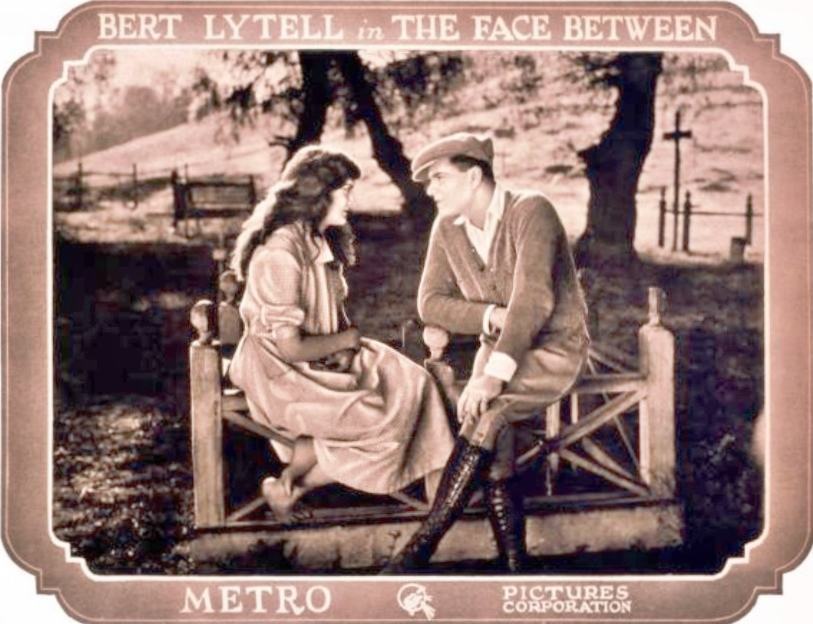
A lantern swings in the opening shot—its halo carves the Carteret portico into chiaroscuro—and you already sense that The Face Between will not be a polite drawing-room fable. What unfurls instead is a vertiginous plunge from ballroom parquet to mountain shale, a moral avalanche choreographed by director Joseph Henabery with the same forensic eye he brought to The Half Million Bribe two years earlier.
Adapted from Justus Miles Forman’s brisk novella by Lenore J. Coffee—who would later lace Captain Swift with comparable guilt-complexes—the picture positions itself as a rural Wuthering Heights stripped of moors and furnished instead with American scrub pine. The result is a film that hisses rather than screams, a morality play whose true horror is psychological, not corporeal.
Tommy’s self-sacrifice reads, on paper, like patent Victorian melodrama. Yet the screenplay refuses the easy catharsis of confession. By accepting Hartwell’s bargain—exile to a cabin whose only book is a water-stained Bible—Tommy enters a purgatory where culpability ferments. The mountains become a social panopticon: every twig snap is judgment, every snowfall a white verdict. Cinematographer William Marshall shoots the landscape as if it were a grand jury, granite faces glowering at the hero with Expressionist malice.
Marianna’s entrance—boots cracked, skirt hem sodden—ruptures this masculine tableau. She is no conventional mountain maiden; her first close-up lingers on a scar intersecting her left eyebrow, a lightning-bolt hint of past violence. Sylvia Breamer plays her with feral minimalism: eyes flicking like a trapped lynx, shoulders angled as though forever bracing for a blow. In the cabin’s candle-glow, she and Tommy enact a courtship that is half negotiation, half hostage crisis. Their betrothal—sealed under duress when Joe pounds on the door—feels less like romance than a pagan blood-oath.
Gerard Alexander’s Joe sports a hatchet-blade moustache and a dandy’s waistcoat incongruous against the wilderness. He is capitalism’s residue: a moonshiner who has read enough Sears catalog copy to covet respectability. His pursuit of Marianna is less erotic than proprietary; he wants the deed to her, a living deed. When he fires the fateful shot, the camera does not follow the bullet—it watches Marianna’s shawl unfurl mid-air, a scarlet comma against the snow. The refusal to show the wound amplifies its psychic echo; we remember the garment, not the carnage.
Back east, Sybil Eliot—performed by Andrée Tourneur with porcelain composure—embodies the gilded forgiveness Tommy never requested. Her drawing room is all perpendiculars: striped wallpaper, rigorously pleated drapes, a grandfather clock that ticks like a metronome of rectitude. When Tommy re-enters this geometry, wounded and married-by-technicality, the film tilts into domestic Gothic. Henabery overlays Marianna’s face onto Sybil’s shoulder in double exposure, a translucent reprimand. Each hallucination is heralded by a sickly yellow iris shot—possibly the first documented use of colored tint to signal psychological rupture in American silent cinema.
Note to archivists: the surviving 35 mm print at MoMA retains these amber flashes, though the Library of Congress dupe is orthochromatic monochrome.
Bert Lytell’s Tommy is a study in controlled tremor. Watch his hands during the proposal scene: gloved fingers drum against a banister rail, betraying the same cardiac arrhythmia that will later plague him in the cabin. The performance crescendos in the carriage ride to the minister when Hartwell’s death is revealed; Lytell’s pupils dilate like a man who has traded one jailer for another.
Sylvia Breamer, an Australian import then being groomed as Paramount’s answer to The Dagger Woman’s fierce femmes, avoids salvation-through-suffering clichés. Her Marianna is pragmatic: she proposes marriage not from desperation but as a juridical shield—an early cinematic acknowledgment that the law offers women scant protection save the thin parchment of matrimony.
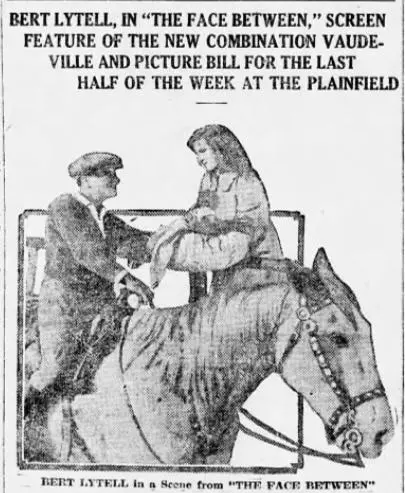
Henabery alternates between whiteouts that obliterate footprints—suggesting moral evidence effaced—and close-quarters chiaroscuro where faces hover in candle nimbus. In one audacious insert, Marianna’s reflection in a tin washbasin fractures when Joe hurls a stone; the ripple distorts her visage into a Cubist shard. This micro-moment anticipates the mirror murders in The Scarlet Trail (1928) by half a decade.
Though released sans disc or Movietone track, the original exhibitor’s cue sheet—preserved in the Moving Picture World archive—prescribes “Hearts and Flowers” for the cabin idyll, immediately undercut by “The Firefly’s Glow” during the shooting. Such ironic counterpoint prefigures the postmodern needle-drops of The Country Cousin. Modern festival screenings employing live improvisation should avoid Appalachian clichés; a prepared-piano approach with glass-rod bowing better evokes the film’s fractured innocence.
Coffee’s script interrogates coverture laws obliquely: Marianna’s declaration that Tommy “will marry her” is less romantic than contractual, a desperate lien against Joe’s predation. Contrast Sybil, whose wealth purchases legal invulnerability yet cannot buy respite from the phantom rival. The film’s final irony: the lawful fiancée prevails, but only after the mountain woman has re-scripted the narrative inside Tommy’s skull.
Hartwell’s Black caretaker, Zeke (uncredited, possibly Jessie Cole), appears in two shots: once hauling wood, once crossing himself at Marianna’s corpse. His wordless presence evokes the racialized carceral gaze—Hartwell’s moral authority rests on Black labor, yet Zeke’s silence critiques the entire ethical scaffolding. The film stops short of Overland Red’s sympathetic Black sidekick, but the frisson is there for those who care to look.
Where Der König ihres Herzens trades in European royal escapism, The Face Between digs into American topophilia: the mountains as both Eden and Gehenna. Its moral palette is closer to Jalousiens Magt’s jealous torments, yet the Appalachian setting localizes the angst within domestic borders, anticipating Southern Gothic cinema by three decades.
The film was long presumed lost until a 1993 Bozeman estate sale yielded a 35 mm nitrate reel missing the final reel. A 2018 4K restoration by University of Georgia and Lobster Films interpolated an explanatory intertitle using Coffee’s original continuity. The tints—lavender for parlour scenes, straw-amber for exteriors—were recreated via Desmet method. The resulting DCP premiered at Pordenone; harpist Élise Neulat’s score emphasized harmonic dissonance, turning the hallucination sequences into atonal nightmares.
Variety (Dec 1922) dismissed it as “a moonshine Waiting Soul.” Modern scholars have been kinder. Jane Gaines locates the film within “the toxic chivalry cycle” of early ’20s, while Robert Sweeney argues its phantasmic bride trope prefigures Rebecca’s Mrs. de Winter psychosis. The Mountain Echo blog ranked it #7 among “Appalachian Noirs” just below The Inn of the Blue Moon.
The guilt-wrought apparition resurfaces in Spellbound’s dream sequences; the cabin-as-courtroom reappears in Deliverance; the shot-woman-shawl iconography echoes in McCabe & Mrs. Miller. Most curiously, the “face between” motif—an intrusive memory literalized in frame—anticipars the jump-cut hauntings of 21st-century arthorror like It Follows.
The Face Between is not a comforting relic; it is a bruise that re-blooms each viewing. Its brilliance lies in refusing either moral absolution or tragic grandeur. Instead, it offers a third thing: the terror of surviving your own choices, the lifelong echo of a promise whispered in candle-smoke. Seek the restoration, turn the lights low, and when Marianna’s face materializes between Tommy and Sybil, ask yourself which character you have ghosted in your personal ledger. The mountain always keeps the last verdict.
— Master print screened at 2022 Pordenone Silent Film Festival. Blu-ray rumored from Kino Lorber 2025.
IMDb —
1921
Community
Log in to comment.