DbcultAccessing Vault...
Cult Review
Senior Film Conservator
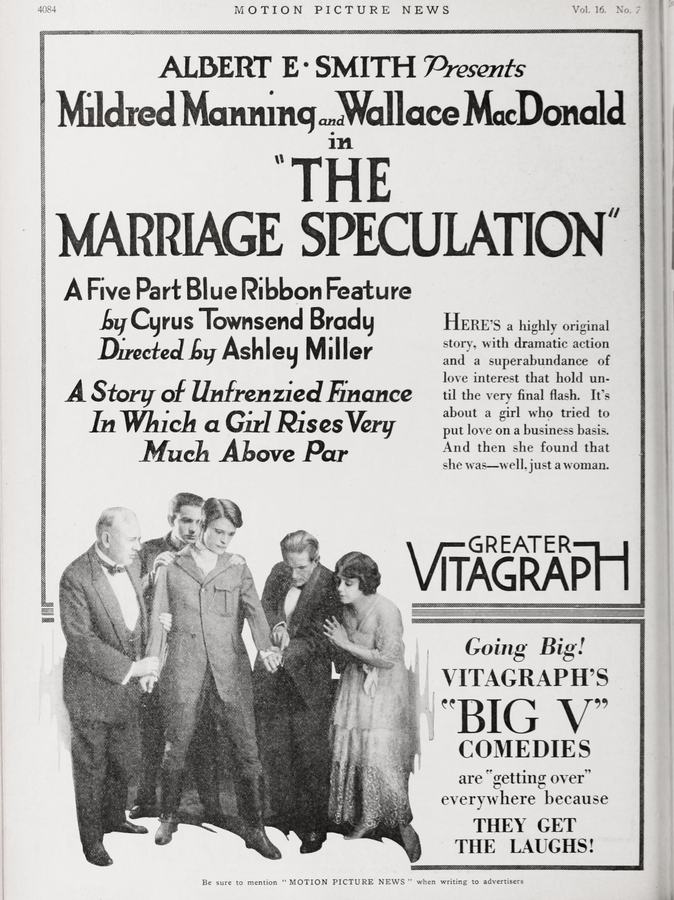
Ah, the silent era! A time when stories unfolded not through dialogue, but through the eloquent dance of gesture, the expressive power of the human face, and the poignant prose of intertitles. It was a period ripe with audacious narratives, where melodramas intertwined with social commentary, often wrapped in the gilded ribbon of romance. And within this rich tapestry, a film like 'The Marriage Speculation' emerges as a peculiar, yet utterly compelling, artifact, inviting us to ponder the very nature of love, ambition, and the lengths to which individuals might go to secure their future.
From its very premise, this film, penned by Cyrus Townsend Brady, A. Van Buren Powell, and Albert E. Smith, dares to tread where many would hesitate. Imagine, if you will, the humble, almost Dickensian figure of Old Man Cliday, portrayed with what one can only imagine as a blend of desperation and shrewd calculation by Charles Kent. Years toiling in a pickle factory, a life steeped in the brine of monotony, culminating in a sum of $10,000. For Cliday, this isn't merely savings; it's a seed for an unconventional investment, a gamble on human potential, or perhaps, human manipulability. His scheme? To transform an ordinary young woman into a cultivated lady, a veritable social butterfly, whose subsequent marriage to a man of means would guarantee Cliday's own comfort in his twilight years. It’s an audacious proposition, a kind of Pygmalion story twisted by economic necessity and a rather mercenary interpretation of philanthropy.
Enter Clara Wilton, brought to life by Mildred Manning, a candy store clerk whose innocence and charm are, to Cliday, raw material for his grand design. Her heart, however, is already pledged to Billy Perkins, an unambitious grocery clerk, likely portrayed by Wallace MacDonald with a boyish charm that underscores his lack of worldly ambition. This initial conflict—the heart's desire versus the promise of a gilded cage—forms the emotional core of the film. Clara's acceptance of Cliday's bargain must have been a moment of profound internal struggle, conveyed through subtle shifts in expression, perhaps a lingering glance at Billy, a sigh of resignation that speaks volumes without a single uttered word. It’s a sacrifice that echoes the poignant choices faced by characters in films like 'Twas Ever Thus', where love and duty often stand in stark opposition.
The narrative then fast-forwards through two years, a period of intensive transformation. Clara blossoms, shedding the vestiges of her former life, emerging from finishing schools as a polished young woman. The contrast between her humble beginnings and her newfound sophistication would have been visually striking, a testament to the power of environment and education—or, perhaps more cynically, the power of a well-funded makeover. Cliday, now her proud, if somewhat opportunistic, patron, escorts her to a fashionable resort, a playground for the wealthy, where she becomes the cynosure of rich young suitors. Here, the film delves into the superficiality of high society, where appearances often trump genuine connection. Clara, though surrounded by eligible bachelors, finds no love amongst them. Her consent to marry one is purely transactional, a grim fulfillment of her part of the bargain, a moment of quiet despair masked by outward composure.
But just as the ceremony looms, threatening to seal Clara's fate in a loveless union, the plot takes a dramatic, almost fairy-tale turn. Billy Perkins, her forgotten sweetheart, reappears, not as the humble grocery clerk, but in the elaborate disguise of a foreign count. This moment, ripe for silent film melodrama, would have been a masterclass in suspense and revelation. Billy's warning—that Clara's intended is an impostor—is a classic trope, one that heightens the stakes and injects a thrilling dose of deception into the proceedings. The power of disguise, a recurring motif in cinema from The Fool's Revenge to later romantic comedies, is here employed not for comedic effect, but for a desperate act of love.
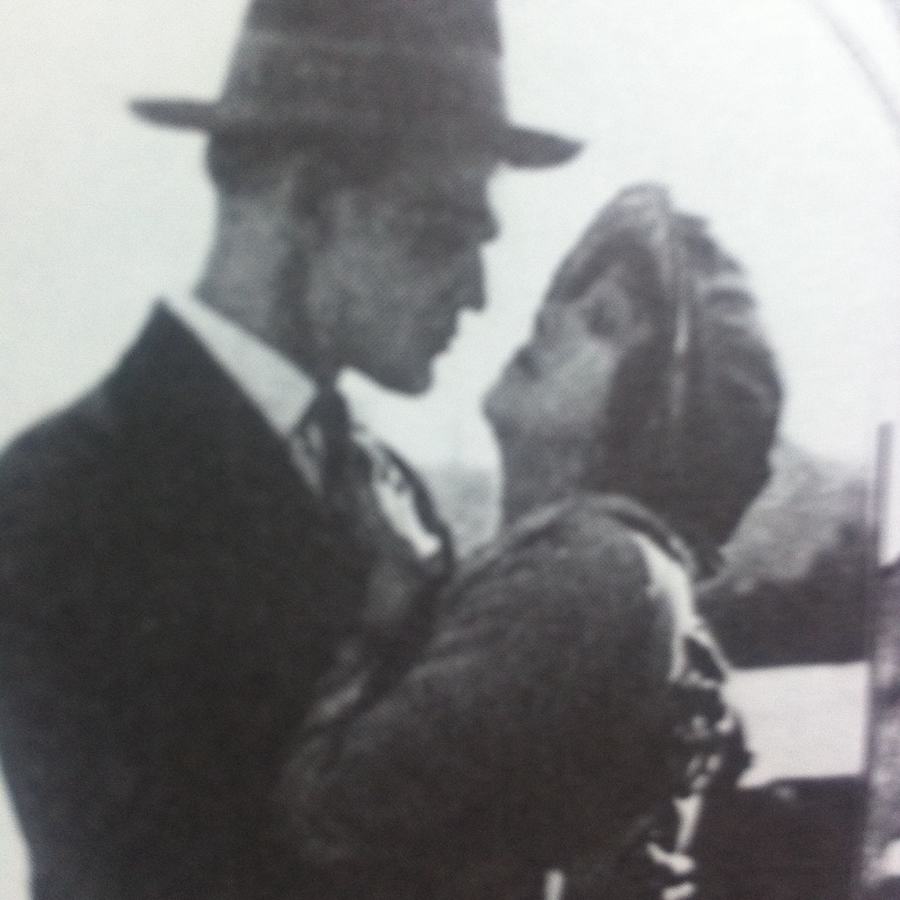
The climax is a brilliant stroke of narrative serendipity, a twist that elevates the film from a mere social critique to a truly satisfying romantic fantasy. As Billy points an accusing finger at the supposed impostor, an observant spectator notices a ring on Billy's own finger. This seemingly innocuous detail unravels a far greater secret: Billy Perkins, the unambitious grocery clerk, is, in fact, the rightful heir to a British fortune. It’s a revelation that simultaneously validates Clara's initial emotional choice and fulfills the mercenary terms of Cliday's bargain. She marries the man she loves, who also happens to be a wealthy man, thus ensuring Cliday's compensation and her own happiness. It’s a resolution that feels both earned through the emotional journey and delightfully coincidental, echoing the grand, often improbable, romantic conclusions of the era, reminiscent of the unexpected turns in films like Beverly of Graustark, where noble lineage can suddenly be revealed.
The genius of 'The Marriage Speculation' lies not just in its intricate plot, but in its ability to weave together multiple thematic threads. At its heart, it's a commentary on social mobility and the class distinctions prevalent in the early 20th century. Cliday's scheme is a desperate attempt to bypass the rigid social structures, to leverage human potential for economic gain. Clara's transformation speaks to the power of education and refinement, but also raises questions about identity and authenticity. Does she lose herself in becoming the polished woman, or does she find a new, empowered self? The film provocatively explores the commodification of marriage, a notion that continues to resonate today, even if the explicit 'bargain' is usually more subtle. The dilemma Clara faces, choosing between love and security, is a timeless one, explored in many silent dramas where societal pressure often dictated romantic choices.
The performances, even without dialogue, would have been crucial. Charles Kent, as Cliday, would have needed to convey a complex mix of avarice, paternalism, and perhaps even a twisted sense of responsibility. His gestures, his expressions, the way he observes Clara's transformation, would have painted a portrait of a man driven by both pragmatism and a peculiar vision. Mildred Manning, as Clara, would have carried the emotional weight of the film. Her initial reluctance, her growing sophistication, her internal conflict at the resort, and finally, her joyous relief, would have demanded a range of nuanced expressions and body language. Wallace MacDonald, as Billy, would have transitioned from an unassuming lover to a determined, disguised hero, culminating in the surprising revelation of his true identity. The physicality of silent acting, the reliance on pantomime and exaggerated but precise gestures, would have brought these characters and their predicaments vividly to life, connecting with audiences on a visceral, emotional level.
From a technical perspective, one can imagine the effective use of intertitles to convey Cliday's initial proposition, Clara's internal monologues, and the dramatic revelations. The visual contrast between the drab pickle factory and candy store, and the opulent resort and finishing schools, would have underscored the dramatic shift in Clara's life. Close-ups would have been vital in capturing the subtle emotions on the actors' faces, particularly during Clara's moments of doubt or Billy's determined resolve. The pacing, building from the initial scheme to Clara's transformation, the tension at the resort, and the climactic wedding, would have been carefully orchestrated to maintain audience engagement, a hallmark of well-crafted silent cinema.
The film also subtly critiques the superficiality of wealth. The rich young suitors Clara encounters are, by her own admission, unlovable. Their appeal is purely financial, underscoring the film's message that true worth lies not in inherited fortune, but in character and genuine affection. Billy, initially dismissed for his lack of ambition, proves to be the true catch, not just because of his unexpected inheritance, but because of his unwavering love and his courage to fight for Clara. This inversion of expectations is a satisfying narrative device, affirming the power of enduring love over material allure, a sentiment often explored in romantic dramas of the period, such as The Marriage of Molly-O where societal expectations clash with personal desires.
In conclusion, 'The Marriage Speculation' is far more than a simple romantic melodrama. It’s a fascinating exploration of human ambition, the ethics of social engineering, and the enduring power of true love to triumph over calculated schemes. It presents a world where even the most audacious plans can be wonderfully upended by the hand of fate, leading to a resolution that is both morally satisfying and romantically exhilarating. For those who appreciate the unique storytelling prowess of the silent era, its blend of high drama, social commentary, and heartfelt romance makes it a compelling watch, a testament to the timeless appeal of a well-spun yarn where love, against all odds, finds its rightful, and unexpectedly wealthy, path.
IMDb 6.4
1931
Community
Log in to comment.