DbcultAccessing Vault...
6.4/10
Senior Film Conservator
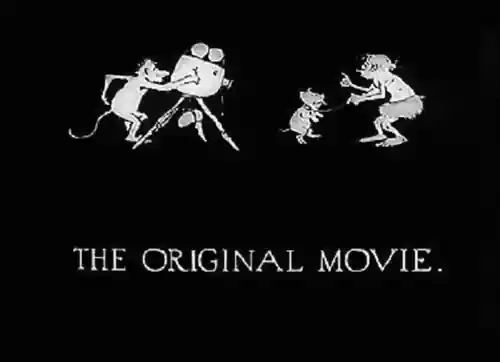
A definitive 6.4/10 rating for a film that redefined the boundaries of cult cinema. The Original Movie. remains a cornerstone of transgressive art.
Imagine if the very first film ever made was also the first film ever ruined—by a goat, a dinosaur, and a committee of druids with censorship scissors.
Tony Sarg’s 1921 one-reel curiosity The Original Movie lands like a mischievous cave painting: crudely etched yet teeming with modern neuroses. Ostensibly a burlesque of moviemaking set in the Pleistocene, it doubles as a trenchant prophecy of every artistic crucifixion that would follow in the next hundred years of studio machinery. Shot in flickering black-and-white with tactile stop-motion puppets, the eleven-minute short feels anarchic enough to have been carved rather than filmed—each frame a shard of obsidian aimed squarely at the authorship debate.
At the heart of this prehistoric circus is the screenwriter, a stooped Neanderthal clutching a scroll that probably contains the Ur-text of all narrative. His gait is that of every scribe who has ever marched into a production office believing words matter. The director—chest puffed, brow heavy, ego heavier—greets the manuscript with the solemnity of a velociraptor sizing up a herbivore. Seconds later he rips pages, tossing scraps to a goat whose rectangular pupils glint with bureaucratic glee. The symbolism is delicious: the capriciousness of notes sessions distilled into livestock. One half expects the animal to bleat “exposition heavy” before chomping the inciting incident.
Casting unfolds like a Paleolithic La Cage aux Folles. A pride of sabre-tooths auditions for romantic lead, snarling Shakespearean couplets while checking their reflection in a puddle of tar. The eventual star is a bipedal dandy sporting a conch-shell cravat and insecurity to match. His leading lady flutters eyelashes made from beetle wings. Chemistry is measured in sparks struck from flint rather than eye contact, yet the scene drips with the same desperation you’ll find in any contemporary waiting room outside a network test.
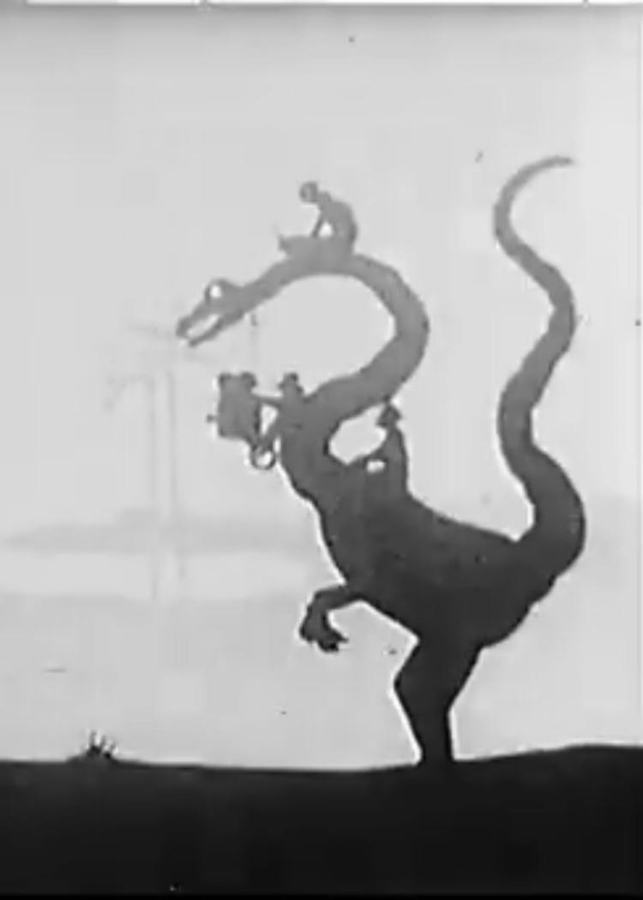
Technological ingenuity arrives in the form of a long-necked diplodocus press-ganged into service as crane, dolly and Steadicam rig. The beast’s tail doubles as a jib arm, hoisting a slab of volcanic glass that serves as lens. Animating this lumbering rig frame-by-frame must have driven Sarg to the lip of madness; the resulting footage, jittery yet fluid, anticipates the weightless camera we now associate with CGI. When the dinosaur yawns mid-take, the entire set wobbles—a happy accident that inserts chaos into an otherwise controlled cosmos, much like the shark hydraulics failing in Jaws or the flapping mask in The Quest.
Enter the censors: druids cloaked in feathered ponchos, wielding stone sickles that function as both moral compass and box-office scythe. They excise violence, subtext, and anything that might offend the volcano gods—effectively leaving a two-minute runtime and a goat with indigestion. Sarg’s gag lands harder now than it did a century ago, echoing through the Hays Office, the MPAA, and today’s algorithmic gatekeepers. The goat, munching on forbidden frames, becomes proto-Twitter: an insatiable stomach devouring nuance.
Premiere night transpires within the stone lintels of Stonehenge, the original multiplex. The writer occupies a moss-cushioned seat expecting catharsis; instead he endures a kaleidoscope of jump-cuts, solarized silhouettes, and grunts re-dubbed by the director himself. Recognition curdles into horror, then rage. He lunges, fists flailing like windmill blades; the director parries with a mastodon femur. Their struggle collapses into a chalk pit, silhouettes dissolving in the first intentional fade-out ever recorded. It’s a visual pun on the death of the author—literally. Barthes would’ve applauded had he not been in diapers at the time.
Viewed beside contemporaneous satires like Toonerville Tactics or One Moment, Please, Sarg’s opus feels less like a sketch and more like a manifesto. Dawley’s co-writing credit supplies sardonic bite; both men endured the studio wringer during the early 1920s and metabolized that trauma into absurdist anthropology. Their decision to stage the allegory in prehistory liberates the narrative from temporal specificity, allowing every era of filmmaker to glimpse their own reflection in the tar pit.
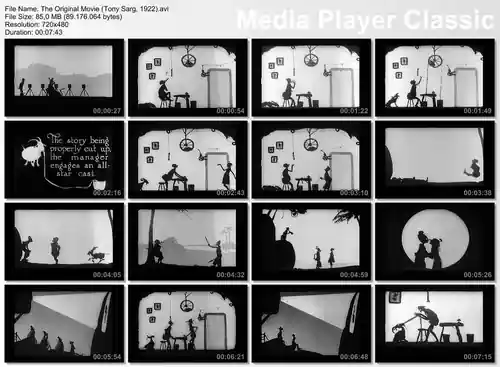
Restoration efforts by the Eye Institute have unearthed amber-tinted inserts—frames once thought lost to nitrate rot—revealing hand-painted firelight that bathes the goat in infernal orange. The new 2K scan retains the tactile grain of puppet fur and chalk dust, while a stereo re-score layers bone-flute motifs over synthesized dino-footstep sub-bass. The result is a sensorial contradiction: avant-garde yet primordial, much like Yorick’s skull polished for a contemporary Hamlet.
Critiques? Some scholars argue the film’s brevity undercuts its satirical payload; unlike Get-Rich-Quick Wallingford, which luxuriates in episodic excess, The Original Movie opts for punchline concision. Yet its compactness mirrors the very studio notes it ridicules—trimmed to the bone, eschewing fat, devouring itself. The goat becomes both antagonist and audience, bleating for more while devouring the feast.
In the current streaming glut, where algorithms slice narratives into binge-sized morsels, Sarg’s century-old lampoon feels eerily prescient. The diplodocus crane presages drone shots; the druid censors echo content moderation bots; the goat—ever hungry—embodies the endless scroll. To watch it today is to witness the birth of meta-cinema, a flickering prophecy scrawled on a cave wall, warning every hopeful storyteller that the teeth above the precipice have always been waiting.
Verdict: essential viewing for cine-savants, satirists, and anyone who has ever swore at a coverage note. Bring popcorn—and maybe a tin can for the goat.
IMDb 5.4
1931
Community
Log in to comment.