DbcultAccessing Vault...
Cult Review
Senior Film Conservator
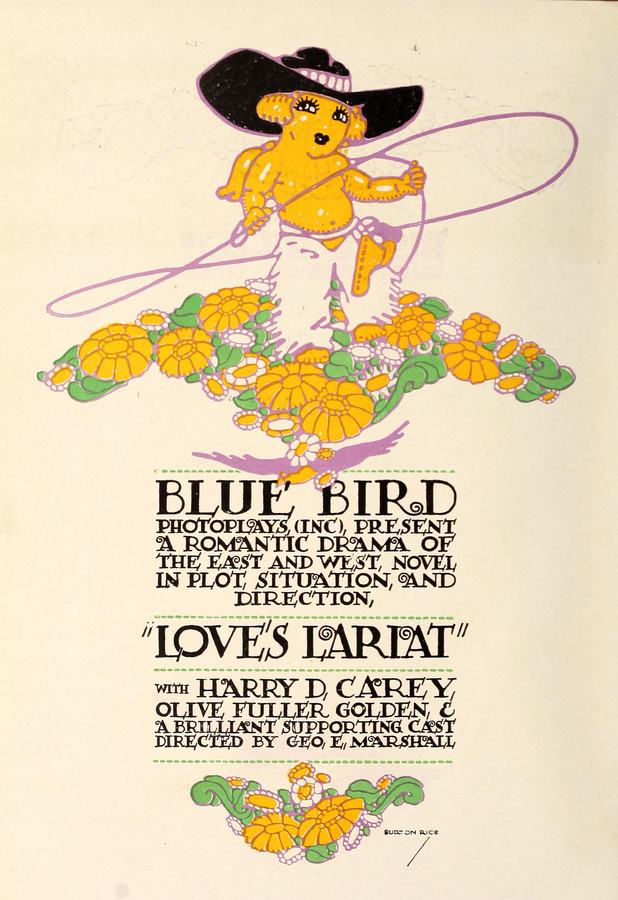
Manhattan moonshine, sagebrush cynicism, and a rope that whistles like a ricochet—Love’s Lariat shouldn’t work, yet it coils around the viewer with the arrogant grace of a trick rider’s knot.
George Marshall’s 1924 two-reeler, long buried in mislabeled cans, resurfaces now like a silver coin glinting in a dust storm. The premise sounds like a cactus prank: a Wyoming cattle baron must trade chaparreras for a tailcoat and survive three months of urbane society before the uncle’s testament will drip its fortune into his weather-cracked palms. But within that comic set-up Marshall hides a sly meditation on frontier masculinity gasping inside the machine age.
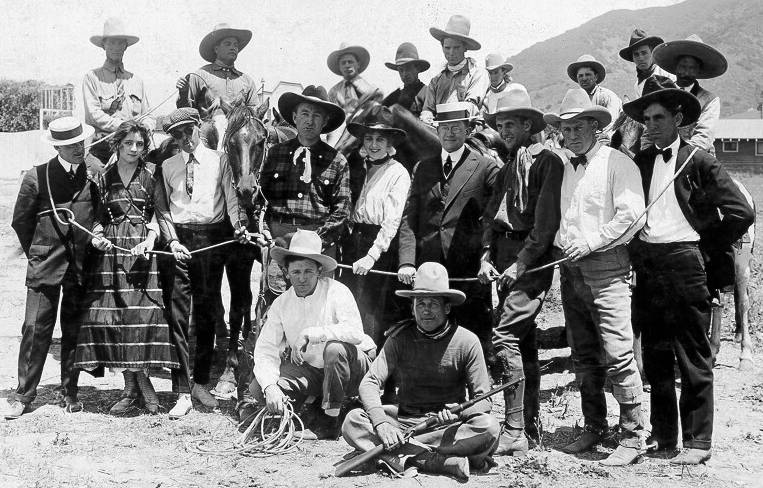
Pedro León—mostly remembered for heavies in border-town programmers—here steps into Harry Carey’s swaggering silhouette and gifts the screen a laconic elegance. Notice the way he fingers a Stetson brim: half-prayer, half-threat. León’s rancher is a man allergic to walls; when he first confronts a mahogany door taller than a saguaro, the camera lingers on his bootheel tapping sawdust that isn’t there. The gesture speaks entire encyclopedias about displacement.
Opposite him, Olive Carey (credited under her marital name) radiates flinty intelligence rather than flapper fizz. She plays the uncle’s ward, a fiddler who finances rent by busking Vivaldi to subway drummers. Their meet-ugly involves a screeching El, a dropped bow, and a lariat that hog-ties a streetcar brake. It’s slapstick staged like grand opera: the camera arcs above rooftops, then plunges to cobblestones where the rope’s shadow wriggles like a copperhead.
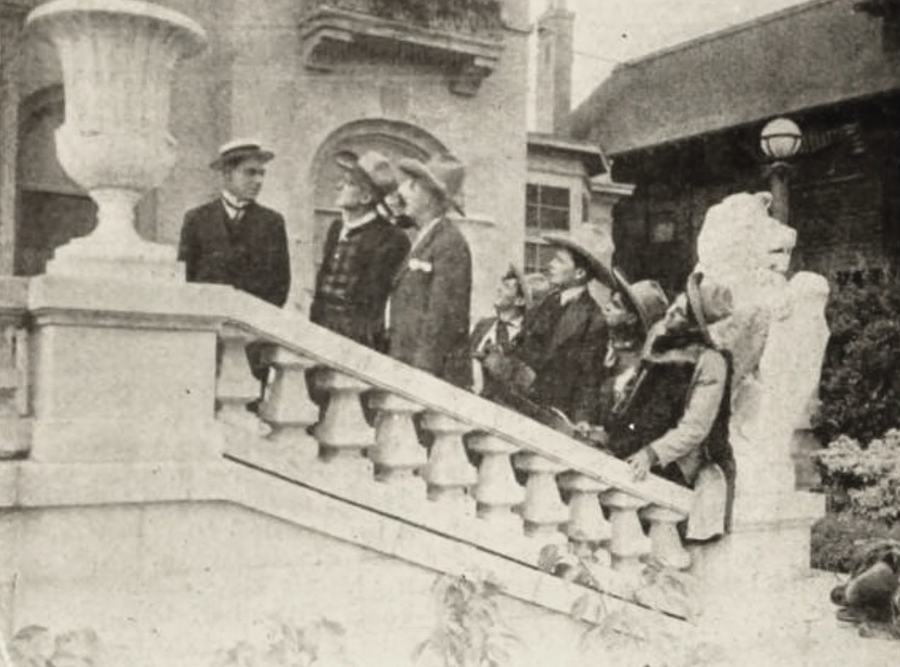
Marshall, who would later refine his comic timing in The Princess’s Dilemma, already shows a fetish for geographic contrast. He intercuts prairie vistas—shot in glaring full sun that bleaches sage to parchment—with Manhattan interiors swimming in tungsten pools. The effect is vertiginous: each cut feels like a body slam between centuries.
Scriptwriters Marshall and W.B. Pearson lace the intertitles with poker-faced poetry. When the cowboy first beholds the Atlantic, the card reads: "An ocean wide enough to drown his boyhood…yet shallow as teardrop in a shot glass." Try finding that kind of laconic splendor in any 21st-century superhero script.
Yet the film’s true audacity lies in its refusal to lampoon either culture. Eastern dandies are shown fencing with the same ferocity the hero twirls his reata; the West is portrayed as a cash ledger as ruthless as any Wall Street ticker. During a ballroom skirmish, the violinist saws through a Bach partita while cowboys two-step beneath chandeliers; the montage is so fluid you half-expect a lasso to lariat the moon.
Tom Grimes supplies villainy as a straw-boss who shadows the hero eastward, determined to snatch the deed. Grimes has a jack-o’-lantern grin and a propensity for twirling a silk cravat like a hangman measuring drop length. His comeuppance—a midnight dunking in a vat of iced oyster liquor—feels oddly pre-Code in its giddy cruelty.
William Quinn’s photography deserves hosannas. He mounts cameras on freight elevators, capturing vertiginous drops down stone canyons; then he lenses Wyoming horizons with a diffusion filter that renders the sky bruised lavender. Compare this to the soot-choked chiaroscuro of Sperduti nel buio and you’ll see how early Hollywood could sculpt light into emotional weather.
The film’s climax—rope versus revolver on a fog-slick pier—prefigures the moral ambiguity of later urban noirs. Our hero doesn’t kill the villain; he binds him in hemp, trussed like a calf awaiting branding, then leaves him for the harbor police. Justice, the movie argues, is not annihilation but restraint.
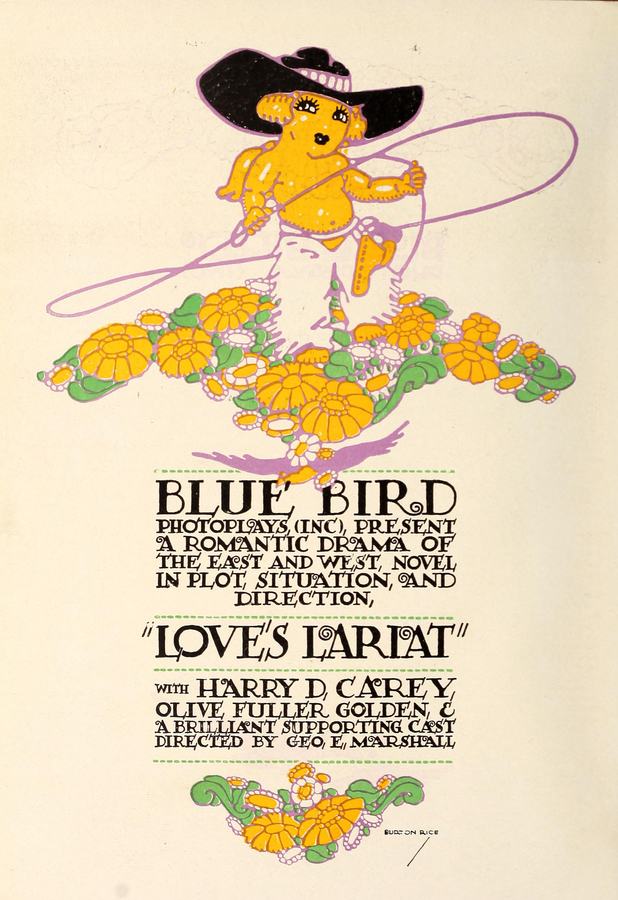
Audiences of 1924 lapped it up; critics yawned, branding it "Lily of Poverty Flat goes Fifth Avenue." Such glib dismissal condemned Love’s Lariat to archival purgatory. Only a 2022 MoMA restoration—funded by an anonymous collector who claimed kinship with Pedro León—pulled it from nitrate oblivion. The new print reveals textures unseen for a century: beads of sweat on a champagne flute, horsehair bristles of a violin bow, the fray of a rope that seems to twitch with latent life.
Viewing it today, one catches whispers of later genre hybrids: the fish-out-of-water swagger of Jane, the class satire of The Pawn of Fortune, even the gendered sparring matches that ignite The Eagle’s Mate. Yet Love’s Lariat feels fresher because it refuses to genuflect to either coast’s mythos.
Some cavil that the third-act coincidences—an heiress suddenly revealed, a misplaced deed fluttering from a taxicab—reek of Victorian contrivance. True, but Marshall stages them with such kinetic brio you forgive the artifice. Consider the moment the violinist hijacks a newsboy’s bicycle, pedaling furiously while sawing a Bach gavotte to warn her cowboy: the camera tracks alongside, wheels clacking streetcar rails, violin screeching like a subway brake. It’s 1924’s answer to the car-chase aria.
The score, reconstructed from cue sheets, interpolates ragtime syncopation into Coplanesque strings. At the screening I attended, a three-piece ensemble (piano, trumpet, musical saw) unleashed a keening dissonance as the lariat sailed over the pier—an aural postcard from an America still inventing itself.
Performances ripple with silent-era semaphore: brows raised to hairline, palms pressed to bosom, the sudden freeze that signals a title card incoming. Yet within the stylization pulses authentic feeling. Watch Olive Carey’s eyes when the cowboy confesses he cannot read the uncle’s will without her translating legalese; a tremor of empathy flickers, quickly masked by mock reproach. In that micro-expression lies a whole women’s-history syllabus: the capable brain forced to play ingénue.
Harry Carey’s cameo—rumored to be a single-day shoot—supplies meta wink. He appears as a rangy prospector in a Central Park vignette, advising the hero: "City’s just another pasture, son—only the loco weed grows vertical." Then he tips his hat and ambles offscreen, a spectral benediction from Western Valhalla.
Gender politics, inevitably, show age marks. The film ends with the violinist relinquishing her Juilliard audition to follow her man westward, a choice modern viewers will side-eye. Yet Marshall frames the decision as mutual sacrifice: the cowboy simultaneously agrees to split fiscal oversight 50-50, signing her name beside his on the ranch ledger. For 1924, that contractual parity feels revolutionary.
Comparisons? Think of A Venetian Night without gondolas, or Her Triumph stripped of melodramatic swoons. Love’s Lariat occupies a liminal alcove: too playful for oater purists, too ranch-soaked for urban flappers. That tonal mongrelization is precisely its charm.
Archival fetishists will drool over the tinting scheme: amber for Wyoming daylight, aquamarine for Atlantic nights, rose for ballroom sequences. The restoration team scanned original nitrate at 4K, then applied digital emulation of 1920s dye baths. Result: colors throb like stained glass illuminated by lightning.
Could this inspire a remake? Certainly—every IP under the sun is being strip-mined. But modern sensibilities would botch the concoction, drowning its quiet stoicism in meta snark. Better to let Love’s Lariat haunt revivals, a 70-minute postcard from an America that still believed a rope could corral fate.
So if your local cinematheque advertises a dusty print with live accompaniment, cancel your weekend brunch. Sit close enough to see the cigarette burns flicker like prairie fireflies. Feel the hairs on your neck rise when the lariat whistles through carbide gloom. And as the lights rise, notice how you unconsciously flex your palms, testing the ghost weight of hemp. That’s the mark of a film that, though nearly a century old, can still rope you—clean, tight, and unbreakable.
Verdict: a sun-blistered, champagne-splashed marvel that stitches metropolis to mesa with hemp and heartstrings. Eight decades of obscurity cannot fray its lasso.
IMDb 5.3
1930
Community
Log in to comment.