DbcultAccessing Vault...
Cult Review
Senior Film Conservator
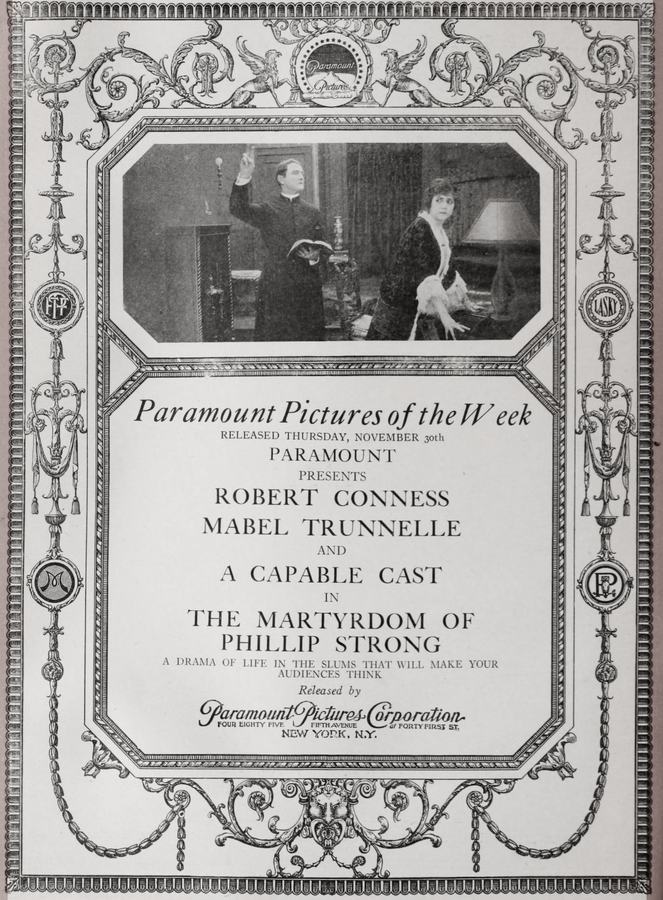
In the annals of early cinema, few narratives confront the chasm between spiritual rhetoric and lived reality with the searing intensity of The Martyrdom of Philip Strong. This cinematic offering transcends mere melodrama, positioning itself as a profound moral allegory, a stark examination of social conscience, and an unyielding critique of institutional hypocrisy. Through the harrowing journey of its titular protagonist, the film meticulously dissects the perils of detached piety, ultimately celebrating the transformative power of radical empathy and self-sacrifice. It is a testament to the enduring human capacity for redemption, albeit one painted in shades of profound tragedy and societal resistance.
At the outset, we are introduced to Philip Strong (William Wadsworth), a man seemingly at the zenith of his career. As the charismatic, rising young pastor of the fashionable Calvary Church, he is ensconced in a world of luxury and adulation, his sermons echoing through hallowed halls, lionized by a congregation whose wealth often insulated them from the very tenets of the gospel he preached. His life, by all outward appearances, is one of spiritual success and material comfort. Yet, this carefully constructed facade is violently shattered by the arrival of an enigmatic figure, simply known as Brother Man (Brad Sutton). This character, whose very presence symbolizes the Spirit of Christ on earth, delivers a devastating indictment: "Man, you are a living lie." This single, potent phrase acts as the film's catalyst, a spiritual thunderclap that reverberates through Philip's soul, forcing him to confront the profound chasm between his eloquent pronouncements and the tangible absence of Christ's work in his own life. The realization is agonizing, a brutal awakening that strips away the layers of self-deception and societal approval. Philip's ministry, he understands with a crushing clarity, has been nothing more than "bare words only," devoid of genuine engagement with suffering.
Brother Man, acting as both guide and conscience, then leads Philip on a revelatory descent into the urban underbelly—the sprawling, squalid slums that exist in stark, often willfully ignored, contrast to the opulence of Calvary Church. Here, Philip's eyes are opened to a world he has never known, a hellish landscape of human misery. The starving women, their faces etched with despair, the emaciated children, their innocence stolen by hunger, and the "kitchens of Hell"—the whiskey-soaked dens where lives are systematically ruined—all combine to form an indelible tableau of suffering. This visceral encounter profoundly impresses Philip, forging within him an unshakeable conviction: his true mission lies not in the comfort of the pulpit, but in the trenches of human need. He must become an instrument of tangible help for the downtrodden, a shepherd truly among his flock. This radical shift, from intellectual piety to active compassion, forms the very core of his transformative arc, reminiscent in its stark moral clarity to the social consciousness explored in films like The Road o' Strife, which similarly grappled with the harsh realities of class disparity.
Philip's spiritual metamorphosis, however, is met with immediate and fierce resistance, particularly from his wife, Sarah (Edith Wright). Wrapped inextricably in her social ambition, Sarah is horrified by Philip's announcement of his determination to abandon his prestigious post for the thankless work in the slums. For her, this new path signifies not noble purpose, but utter ruin and social ostracism, a catastrophic blow to the carefully curated facade of their lives. Her disdain is palpable, reaching a crescendo when Philip brings home an orphaned child from the slums, intending to shelter her. Sarah refuses to permit their own little daughter, Irma (Janet Dawley), to play with the child, her class prejudices overriding any semblance of Christian charity. Her pleas with Philip to abandon his "folly" escalate into furious scolding and bursts of rage, yet Philip remains unyielding, his newfound conviction a bedrock against her emotional storms.
The domestic conflict is further inflamed by Sarah's mother (Mabel Trunnelle), who, envisioning the complete disgrace of Philip's close association with the impoverished, actively goads her daughter. Under this pressure, and unable to reconcile herself with a life stripped of social standing, Sarah makes the agonizing decision to leave Philip, taking Irma with her. This act of abandonment marks a crucial turning point, severing Philip from the last vestiges of his former life and plunging him into profound personal isolation. The film masterfully portrays this rupture, highlighting the immense personal cost of Philip's spiritual integrity. It echoes the tragic familial separations and societal condemnations found in other dramas of the era, such as East Lynne, where social standing often dictates the very fabric of personal morality and happiness. Philip's steadfastness in the face of such devastating personal loss underscores the depth of his commitment, transforming him from a privileged clergyman into a true ascetic, a man stripped bare for his cause.
Time finds Philip entirely immersed in his new life, living within the very slums he seeks to redeem. His work is relentless, a continuous battle against the systemic injustices that perpetuate the suffering of the downtrodden. However, his fervent advocacy inevitably arouses the hate of powerful, entrenched forces. The film astutely reveals the interconnectedness of wealth and exploitation: the rich of his former congregation, who own the very properties housing the saloons and tenement slums, conspire with the saloon owners themselves to bring about Philip’s downfall. These antagonists, embodying the corrupting influence of profit over people, view Philip as a dangerous agitator, a threat to their economic empires built on human despair. Undaunted by threats of personal harm, Philip wages his war, his resolve hardened by the injustices he witnesses daily. He becomes a singular figure of defiance, a beacon of hope in an otherwise bleak landscape.
In moments when things seem most hopeless, when the weight of the world threatens to crush his spirit, Philip is cheered by the spectral presence of Brother Man. This spiritual encouragement serves as a vital wellspring of renewed energy, preventing Philip from succumbing to despair. It underscores the film's allegorical nature, suggesting that true spiritual strength comes from divine inspiration when human support falters. Despite losing his friends, the tragic death of his little daughter Irma, and the continued opposition of the wife he still loves, Philip fights on. His journey becomes a testament to an almost superhuman endurance, a commitment to a cause that transcends personal happiness or safety. This unwavering dedication in the face of overwhelming odds resonates with the themes of relentless struggle against oppressive systems explored in films like A Fight for Freedom; or, Exiled to Siberia, where individual resolve confronts titanic societal evils.
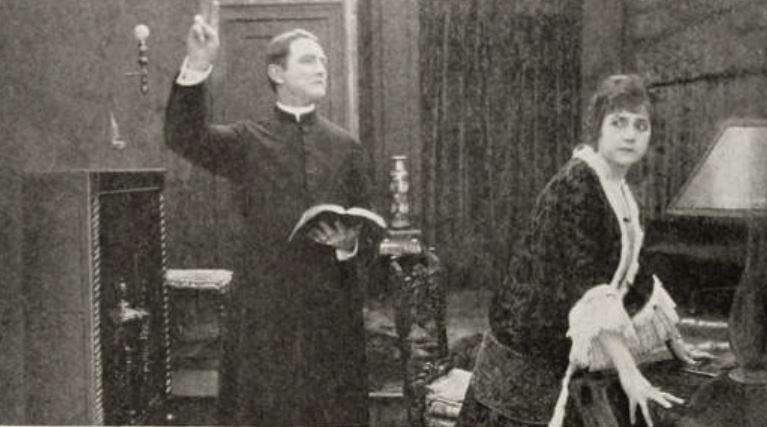
The powerful interests, sensing an opportunity to irrevocably discredit Philip, concoct a malicious scheme. They manipulate Sarah into believing that Loreen (Olive Wright), a consumptive derelict whom Philip has redeemed and sheltered in his home, is his mistress. This cruel calumny, designed to destroy Philip's reputation and moral authority, is a final, desperate attempt to break him. The revelation of this false accusation is a moment of intense dramatic tension, as Sarah, initially swayed by the insidious lies, is forced to confront the truth of Philip's unwavering purity of purpose. The story is ultimately disproved, and Sarah, witnessing the depth of his sacrifice and the falsity of the charges, finally relents, her hardened heart softening in the face of his undeniable goodness. It is a moment of potential reconciliation, a glimmer of hope that Philip might yet find some measure of personal peace.
However, this reprieve comes tragically too late. The relentless toll of worry, ceaseless labor, and ill-health has irrevocably weakened Philip's physical form. His body, bearing the spirit of a true martyr, is no longer equal to the monumental task he has undertaken. Wrecked by the accumulated burdens, he gives up his life, his soul passing to the One Whose work he has been doing. The film culminates in a powerful, evocative image: Philip Strong, having dedicated his entire being to the cause of the downtrodden, is depicted as having been "crucified"—a direct parallel to Christ himself. This final act of martyrdom solidifies his legacy, transforming him from a mere pastor into a timeless symbol of selfless devotion and radical love. His death is not a defeat, but a profound spiritual victory, a testament to the enduring power of his message and the ultimate triumph of spirit over the corrupting forces of the world. The poignant, almost inevitable, tragic end echoes the profound moral dilemmas explored in films like Should a Mother Tell or Sins of the Parents, where characters face impossible choices with devastating personal consequences, yet find a form of redemption in their unwavering moral stance.
The success of such a morally charged narrative hinges significantly on the performances of its cast, and The Martyrdom of Philip Strong appears to have been blessed with a ensemble capable of conveying its weighty themes. William Wadsworth, as Philip Strong, must embody a monumental transformation, moving from the polished, somewhat aloof demeanor of a fashionable pastor to the gaunt, resolute figure of a slum crusader. His performance would have required a nuanced portrayal of internal conflict, followed by an unwavering commitment to his new path, conveyed largely through expressive physicality and poignant facial gestures characteristic of the silent era. The dramatic arc demands that he convey both the initial shock of revelation and the ultimate peace of martyrdom, a challenging feat for any actor.
Edith Wright, as Sarah, carries the burden of representing the societal pressures and personal ambition that stand in direct opposition to Philip's spiritual calling. Her portrayal would have needed to oscillate between initial indignation, furious resistance, and eventual, albeit belated, remorse. Her character is not merely an antagonist but a tragic figure herself, trapped by the expectations of her class. Janet Dawley's Irma, though likely a smaller role, serves as a crucial emotional anchor, her innocence highlighting the stakes of the conflict and her death symbolizing the profound personal sacrifices Philip endures. Brad Sutton's Brother Man, an allegorical figure, would require a quiet intensity, a spiritual gravitas that lends credibility to his role as divine messenger. The ensemble, including Herbert Prior, Mabel Trunnelle, Bigelow Cooper, Olive Wright (as the unfortunate Loreen), Robert Conness, Helen Strickland, and Frank A. Lyons, collectively contribute to painting a vivid, if often bleak, canvas of human experience, from the corrupt powerful to the suffering masses. Their collective efforts would have been instrumental in grounding the film's lofty allegorical ambitions in relatable human drama.
The script, crafted by Everett McNeil, Charles Sheldon, and Francis Neilson, evidently weaves a complex tapestry of moral and social commentary. Drawing inspiration from what appears to be a powerful literary source, the writers construct a narrative that is both deeply personal and broadly societal. The film's direction (often uncredited in early cinema but implicitly powerful) would have been tasked with translating this intricate plot into compelling visual storytelling. The stark contrasts—between the opulent church and the squalid slums, between Philip's initial detachment and his ultimate immersion—would have been critical visual motifs. The use of light and shadow, typical of the era, could have been employed to emphasize the moral chiaroscuro of the narrative, highlighting Philip's journey from spiritual darkness to illuminating self-sacrifice.
Beyond its immediate narrative, The Martyrdom of Philip Strong resonates with a timeless relevance. It is a powerful indictment of performative faith, challenging audiences to look beyond superficial religiosity to the true demands of compassion and justice. It forces a confrontation with uncomfortable truths: that poverty is often a direct consequence of systemic exploitation, and that those who preach charity from positions of privilege may be complicit in the very suffering they claim to alleviate. The film's unflinching portrayal of class struggle, the corrupting influence of wealth, and the personal cost of genuine altruism makes it a potent social document. In an era grappling with rapid industrialization and burgeoning social inequalities, such a film served not just as entertainment, but as a moral mirror, reflecting the pressing issues of the day. Its themes of self-sacrifice for a greater good, the battle against powerful, corrupt institutions, and the enduring strength of conviction continue to echo in contemporary discourse, making this a work of enduring significance.
The film's ultimate message is one of profound, if tragic, hope. Philip Strong's martyrdom is not a failure, but a triumph of spirit, a testament to the idea that true faith demands action, sacrifice, and an unwavering commitment to the least among us. His crucifixion, both literal and metaphorical, elevates him to a Christ-like figure, his suffering a testament to the depth of his love and the purity of his mission. In an age often characterized by its simplistic moralizing, The Martyrdom of Philip Strong stands as a complex, unflinching exploration of what it truly means to live a life of principle, even when that path leads to utter desolation and, ultimately, to a profound, redemptive end. It is a cinematic experience that challenges, inspires, and ultimately, deeply moves, leaving an indelible mark on the viewer's conscience.

IMDb —
1917
Community
Log in to comment.