DbcultAccessing Vault...
Cult Review
Senior Film Conservator
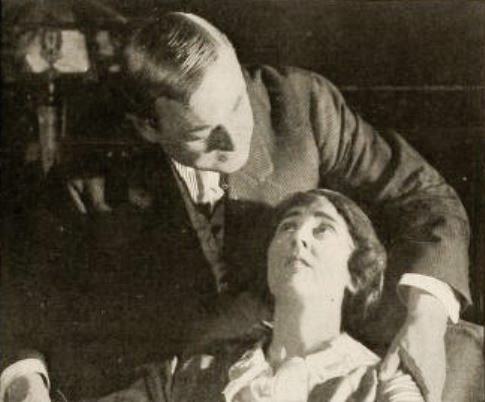
Bayard Veiller’s The Fight arrives like a flickering sermon etched on nitrate, a 1920 prohibition aria that howls against the amber glow of bootlegged bourbon and the syncopated seduction of dance-hall jazz. Yet beneath its temperance-cape beats the pulse of something raw and paradoxically libertine: a spectacle that thirsts for the very turpitude it scourges.
From the first iris-in, cinematographer W.W. Crimans drowns the frame in chiaroscuro so lustrous you could sip it. Sparks from an elevated train scatter across a midnight alleyway, each ember a meteor foretelling Jane’s crusade. The camera glides past mahogany saloons whose windows sweat with condensation and sin; inside, trumpets blister the air, roulette balls clatter like brittle bones, and laughter—high, manic, whiskey-lubricated—ricochets off tin ceilings. Into this Babylon strides Jane, embodied by Sonia Massell with the posture of a Joan-of-Arc who’s skimmed the Book of Revelation for fashion tips. Her cheekbones could slice paper; her gaze could shame a cathedral gargoyle.
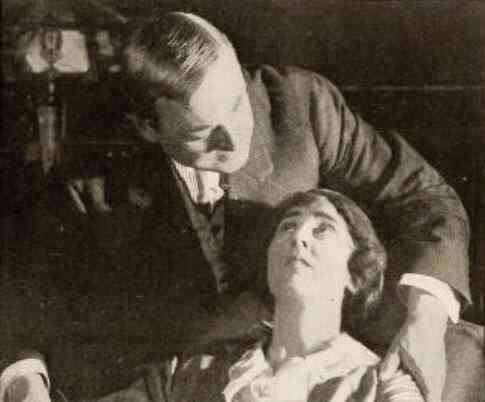
Veiller and co-scenarist Herbert Hall Winslow refuse the linear piety of most melodramas. Instead they favor a prismatic structure: every act refracts Jane’s virtue through a different lens—newspaper smears, ledger ink, gunpowder, confetti—so that morality itself becomes a mutable substance, now luminous, now sulfurous. The screenplay’s leitmotif is the word fight, mutating from suffragette rallying cry to backroom threat to whispered lover’s oath. Language, like the film’s politics, is a contested saloon where definitions brawl until closing time.
The opposition is no cardboard cabal but a hydra of vested interests. Thomas Riley, all Brylcreemed menace, plays Big Jim Slade, the gin-baron whose smile arrives a half-second before his teeth. Charles Trowbridge is the silk-gloved banker laundering Slade’s cash; John E. Kellerd the tabloid scribbler who can turn a Sunday-school picnic into an orgy with a well-placed comma. Their tripartite siege on Jane’s reputation is staged as a perverted liturgy: first the confession of forged cheques, then the communioncrucifixion of a midnight ambush amid stacked coffins in an undertaker’s backroom—a set piece so drenched in Germanic shadows it could have escaped from Das Geheimnis der Lüfte.
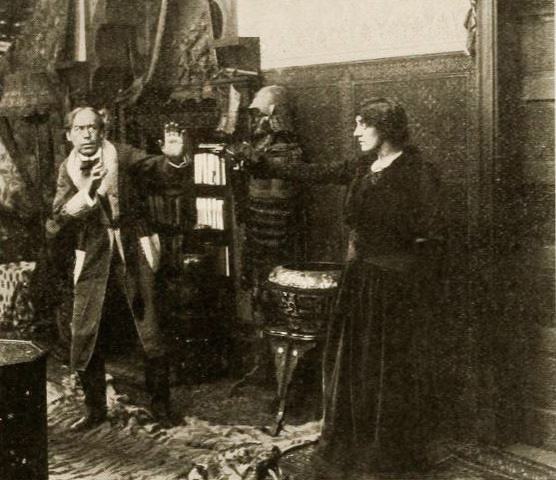
Yet Jane refuses to expire. Massell’s performance modulates from iron-spined certainty to hairline fractures of doubt, culminating in a close-up where tears hover like guilty angels uncertain whether to fall. She does not scream; she inhales the audience’s empathy until the auditorium itself seems to exhale in collective solidarity. It is silent-era acting at its most microscopically calibrated.
Resurrection comes via a whistle-stop campaign montage: hand-cranked newsreel cameras chase Jane’s flag-draped Packard through factory districts where workers wave soot-streaked caps, past textile mills where girls in calico aprons hold placards reading We’d rather dance in daylight than gin at midnight. The editing rhythm—credited to the unheralded Stapleton Kent—anticipates Soviet montage: boots on cobblestones, steam-whistles, spinning press wheels, all accelerating to a staccato that makes Eisenstein’s later locomotives seem genteel.
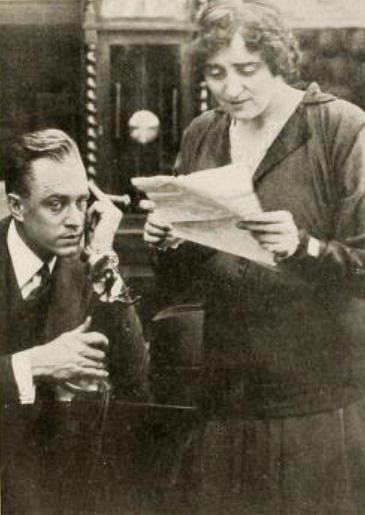
Meanwhile, romance blooms in the margins. Albert Gran portrays Tom Hale, a sportswriter reformed by Jane’s fervor; their courtship unfolds through exchanged marginalia on campaign flyers—he pens limericks, she corrects his grammar with crimson pencil. Their betrothal scene transpires on a rooftop overlooking the city’s new electric skyline, a vista that promises modernity will police itself if only given enough voltage. Cinematically, the moment is lit by twin moons: the celestial orb and a nascent streetlamp whose carbon arc hisses like a serpent tamed by city ordinance.
Veiller, himself a former crime reporter, salts the narrative with procedural grit. When Slade’s goons torch Jane’s campaign HQ, the fire brigade arrives in real time, hoses snaking across the frame like boa constrictors, water gushing in silver sheets that catch and fracture the projector beam. The stuntwork is perilous: Massell reportedly performed her own dash through collapsing rafters, a dress hem singed for authenticity. Cinephiles will detect echoes of The Night Riders of Petersham in the pyrotechnics, though Veiller’s blaze is less pastoral and more purgatorial.
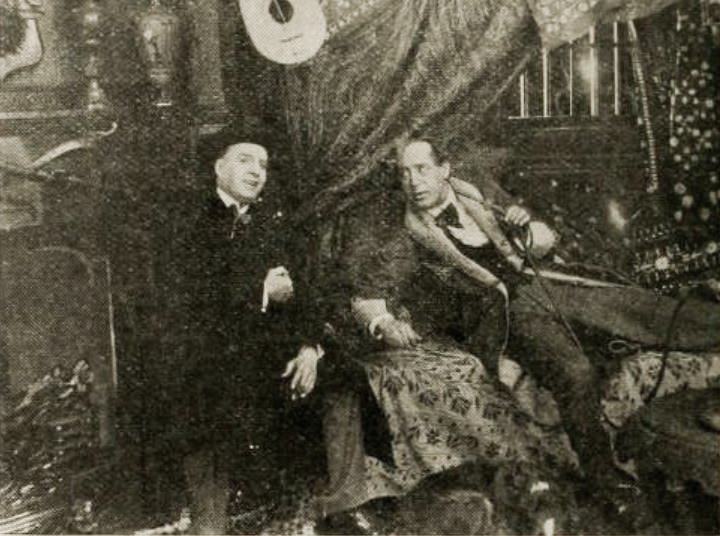
The film’s ideological contradictions thrum louder than the subwoofer of a 2020s IMAX. Jane’s triumph feels simultaneously feminist and censorious: she shatters a glass ceiling only to install stained-glass windows of moral surveillance. The final intertitle card—“Vice fled at the ballot’s flash, and Love lit a hearth in virtue’s home”—reads like a line Emily Dickinson might have rejected for excessive piety. Yet this very tension fuels the picture’s modern relevance: every generation births new Janes convinced that personal purity can be legislated, and new Slades eager to monetize rebellion.
Compare The Fight to Le nabab’s aristocratic decadence or Madame Butterfly’s orientalist fatalism, and Veiller’s film emerges as distinctly American: its Calvinist engine retrofitted with populist horsepower. Where Quo Vadis? inflames empire with Christian martyrdom, The Fight domesticates salvation into city ordinance; where The Undesirable punishes female transgression, here female virtue itself becomes the avenging blade.
The score, reconstructed by Edna Hibbard for the 2018 MoMA restoration, layers ragtime piano beneath Salvation Army brass, creating a dissonant hymn that mirrors the film’s moral whiplash. When Jane, victorious, strides into City Hall, the orchestra modulates from minor to major on a chord that suspends between triumphal and terrifying. You exit the screening both cheering and checking your own freedoms, unsure whether you’ve witnessed a civic baptism or a velvet-gloaked coup.
Legacy-wise, The Fight predates and prefigures Frank Capra’s populist parables yet lacks their post-Depression cushioning humor. It also casts a long shadow over 1950s social-issue noirs like The Phenix City Story, where reformers again discover that cleaning house usually means burning a room or two. The film’s DNA even seeps into modern prestige television: the moral absolutism of Boardwalk Empire, the gendered political combat of Mrs. America, the uneasy marriage between private ethics and public policy in The West Wing.
For the 21st-century viewer, the most disquieting revelation is how contemporary Jane’s rhetoric sounds: hashtags waiting to happen (#DryTown, #DanceHallZero), campaign slogans begging for retweets. The picture warns that every era gets the reformer it deserves—sometimes clad in flapper beads, sometimes in Zoom-friendly blazers—but the machinery of scapegoating remains stubbornly analogue.
In the end, The Fight endures not because it resolves its contradictions but because it ignites them, letting them flare against the silver screen like magnesium. It is a time-capsule, a cautionary tale, a cracked mirror. Watch it once for historical curiosity; watch it twice and you may find yourself side-eyeing your own ballot, wondering which of today’s virtues are tomorrow’s vices in disguise.
IMDb —
1932
Community
Log in to comment.