DbcultAccessing Vault...
Cult Review
Senior Film Conservator
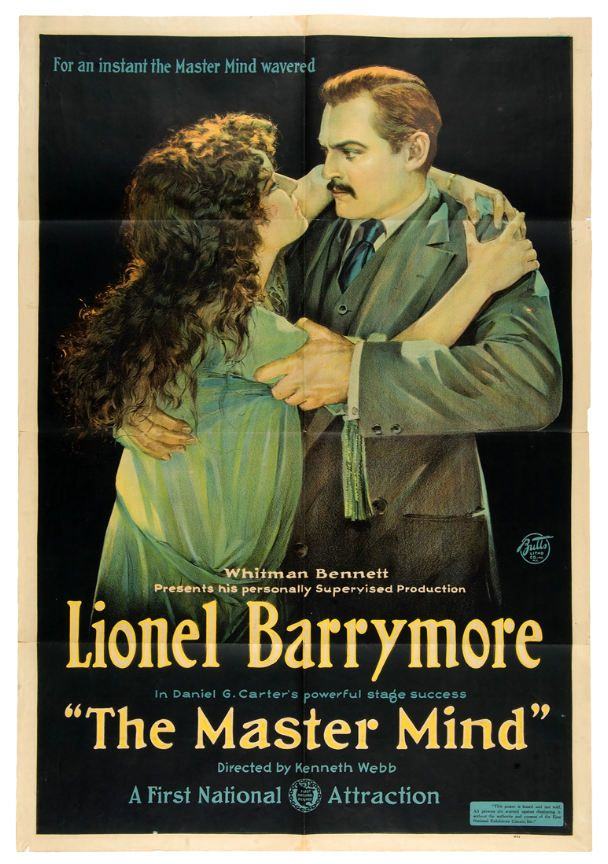
A hush falls, the kind that rustles through velvet drapes when the house lights dim and the projector’s carbon-arc begins to sing. What follows is not the comfort of moral certainty but its annihilation—The Master Mind detonates the very notion that law and justice share a heartbeat.
Shot in the feverish winter of 1919 yet released the following spring, this 83-minute nitrate dagger has slipped through the cracks of collective memory, but its after-image lingers like phosphor burn behind eyelids. The film opens on a courtroom sketched in slate and obsidian: high windows leak pewter light onto a defendant so young his chin fuzz catches the shimmer of court-room chandeliers. He stammers, innocence distilled into flesh, yet the jury—those twelve interchangeable masks—see only the prosecution’s narrative, a story bound with red ribbon and prejudice.
Percy Helton, whose moon-round face could pivot from benevolent to Mephistophelian quicker than a hand-cranked iris, embodies the defense attorney. Helton was only twenty-seven here, but the camera chisels premature fatigue under his eyes, as though he has already lived every future betrayal. Watch the way his fingers drum a silent paradiddle on the oak rail while the verdict is read; the metronome of guilt begins its count.
Cut to a gallows montage rendered through silhouettes and creeping shadows—no need for the graphic detail modern audiences crave; suggestion is the sharper blade. The innocent drops, the rope snaps tight, the camera dollies back until the hangman becomes a punctuation mark against dawn. Helton’s character, nameless in the intertitles, stands in the fog, top-hat in hand, as though attending his own funeral. From this moment, the film pivots from social tragedy to baroque revenge fantasia.
Enter the prosecutor, played with bristling sanctimony by Charles Brandt. Brandt, a matinee idol in the making, sports a jawline that could slice briefs in half. His character has never lost a case; victory is his cologne. The film’s genius lies in how it weaponizes that vanity, turning confidence into quicksand.
The second act unfurls like a forged ledger, each page a deception. Our renegade attorney—now half-mad with purpose—constructs an intricate plot equal parts Machiavelli and Barnum. He rents a derelict townhouse, hires a chorus of outcasts: a morphine-addicted medium, a pickpocket with a poet’s tongue, a society divorcee clutching her reputation like a rosary. Each is promised absolution or annihilation; all are pawns on a chessboard only he can see.
Alma Aiken, luminous beneath a glaze of kohl and resignation, plays the divorcee. Her role could have been mere ornament, yet she transmits a brittle intelligence, the sense of a woman calculating escape velocity in every scene. When the attorney instructs her to seduce the prosecutor at a fundraising masquerade, she doesn’t simper; she strategizes, turning seduction into reconnaissance.
Meanwhile, Lionel Barrymore—billed fourth, stealing every frame—appears as the prosecutor’s political rival, a cigar-chomping populist who smells blood in the water. Barrymore’s eyes glitter with predatory glee; his laugh is a rusted hinge. Watch how he leans into the camera, violating personal space ninety years before Scarface’s Tony Montana. His presence reminds us that American political theater was already vaudeville.
Directors Kenneth S. Webb and scenario writer David Daniel Cohen orchestrate these threads with clockwork precision. Intertitles appear sparingly, often superimposed over images rather than interrupting them, a stylistic flourish that feels startlingly modern. One memorable card—“Guilt is a tenant who pays no rent yet refuses to leave”—hovers over a shot of the attorney scrubbing his hands under a basin, Lady Macbeth in reverse.
Visually, the film luxuriates in chiaroscuro. Cinematographer Louis Stern, who would later lens Stolen Moments, bathes parlors in saffron lamplight while alleys drip Prussian blue. The contrast externalizes the characters’ moral fracture: the farther they descend, the starker the shadows. A ballroom sequence filmed via mirrors multiplies the dancers into infinity, suggesting a universe where every choice spawns a thousand doppelgängers, each equally damned.
The score, now lost, survives only in cue sheets: Saint-Saëns’ Danse Macabre for the courtroom, a medley of spirituals for the gallows, ragtime for the montages of deceit. Contemporary reviewers praised the “syncopated anxiety” it lent the images. Today, silent-festival accompanists often substitute a slow-burn tango; the discord suits the film’s moral tango perfectly.
Third-act pyrotechnics arrive disguised as confession. The attorney, feigning repentance, invites the prosecutor to inspect “new evidence” inside a candle-lit warehouse down by the wharf. The set is a labyrinth of crates and mirrors, a literalization of the narrative’s hall-of-mirrors logic. Here, the attorney reveals his coup: ledgers proving the prosecutor once tampered with evidence in an unrelated case, letters revealing an affair that would sink his gubernatorial bid, and—most damning—a staged tableau suggesting the prosecutor has accepted bribes from the underworld.
Brandt’s face registers the five stages of ruin in under thirty seconds: disbelief, rage, bargaining, terror, and a hollow acceptance that resembles relief. It’s a master-class in silent acting, all widened pupils and tremoring cigar. Just as the noose tightens, the attorney steps back into shadow, allowing the prosecutor to “discover” a pistol planted earlier. A gunshot cracks; the camera cuts not to the wound but to a mirror reflecting the smoke, as though violence itself is vain enough to admire its reflection.
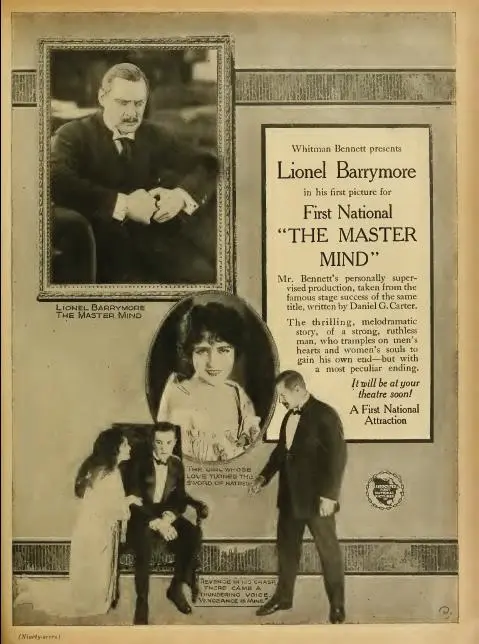
Yet retribution sours. The final reel finds the attorney alone in the same courthouse, now derelict, moonlight slicing through broken shutters. He unwraps the same rope used to hang the boy, caresses it like an old friend, and—well, the film fades rather than shows. A title card intones: “Justice, like wax, melts when held too tightly.” Cue iris out.
Viewers raised on tidy denouements may find this refusal of closure perverse, even nihilistic. But The Master Mind is less a revenge thriller than an autopsy on the concept of moral accounting. By denying catharsis, it indicts the audience for craving simple arithmetic—an eye for an eye—when the real world traffics in quadratic equations of culpability.
Compare it to other 1920 meditations on power such as Madame la Presidente, where gender politics flip the script, or The Bigger Man, where redemption is possible. Here, redemption is a foreign dialect. The film anticipates noir’s post-war cynicism by a quarter-century, its DNA evident in everything from The Maltese Falcon to Chinatown.
Performances ricochet from grand guignol to minimalist. Helton’s descent is calibrated in millimeters: shoulders slump one scene, smile tightens the next. Aiken, gifted with the film’s only close-up, conveys a universe of regret in the flutter of a gloved hand over a gas lamp. Barrymore, ever the scene-kleptomaniac, devours space like a vaudevillian black hole.
Yet the film’s politics feel unnervingly current. In an era when district attorneys brandish conviction rates like campaign medals, the story’s skepticism toward institutional “truth” lands as prophecy. One intertitle reads: “A prosecutor can be an angel to the jury and a devil to the defendant—both masks fit the same face.” Replace jury with Twitter, and you have a 21st-century aphorism.
Restoration efforts remain nascent. The lone known 35mm print, exhumed from a Belgian asylum archive in 1987, suffers from vinegar syndrome and emulsion bubbling. Digital scans reveal ghostly double-images—fitting for a tale about doppelgängers of guilt. The San Francisco Silent Film Festival hopes to crowd-fund a 4K restoration; until then, most cinephiles rely on bootleg rips watermarked by the ghosts of projectors past.
Does the film overplay its hand? At times, yes. Subplots involving Gypsy O’Brien’s pickpocket and a cache of forged war bonds feel like vestigial limbs, perhaps remnants of an even longer cut. The pacing sags midway, as though the narrative itself is winded from its own contortions. Yet these flaws feed the fever-dream texture, the sense that the story is stitched together by an unreliable narrator—namely, the attorney’s warped conscience.
Reception in 1920 was split along class lines. Trade papers praised its “cerebral melodrama,” while mass-market tabloids dismissed it as “a cure for insomnia.” Critics uncomfortable with moral ambiguity labeled it “un-American,” a charge that would dog similar masterpieces like The Dead Secret. Over time, the film vanished from repertory houses, eclipsed by Barrymore’s later, more prestige-friendly roles.
Modern viewers will notice proto-gothic flourishes: rain-streaked windows that resemble celluloid scratches; a taxi shaped like a hearse; a recurring shot of a clock whose hands spin counter-clockwise, hinting that vengeance rewinds ethical evolution. These touches prefigure German Expressionism, though filmed in Fort Lee, New Jersey, back when its marshes doubled for every continent.
Gender dynamics simmer beneath the surface. Women here traffic information like currency; men trade bodies for power. The film’s most transgressive moment arrives when Aiken’s character blackmails the prosecutor with letters that could be either love notes or evidence—ambiguous enough to indict desire itself. The intertitle whispers: “In the economy of scandal, a woman’s reputation is both collateral and interest.” One can almost hear the roar of 1920s flappers and suffragettes colliding in the lobby.
Soundless though it is, the film offers a symphony of textures: the rasp of rope against wood, the hush of velvet skirts sliding across marble, the metallic click of a safety catch. These details emerge through visual suggestion, proof that silence can amplify sensation. When the prosecutor fondles a locket containing a child’s photograph, the image alone evokes the clink of gold against nail, the distant playground laugh that haunts his insomnia.
Ultimately, The Master Mind endures because it refuses the narcotic of comfort. Like the best noir, it understands that guilt is a contagion; the closer you walk toward revenge, the more you resemble the monster you intended to slay. The attorney’s final act is not triumph but surrender—a recognition that the law is a blindfolded referee in a rigged fight.
If you stumble upon a rare screening, arrive prepared: leave moral certitude at the cloakroom, bring a taste for bitter ironies, and expect no redemption arcs bathed in golden light. Instead, expect a film that stares back, whispering that every scaffold is a mirror, every courtroom a stage, every audience an accomplice. When the lights rise, city traffic will sound like gavels, streetlights like interrogation lamps, strangers like jurors. And somewhere in the flicker between frames, you may spot your own face, weighing the cost of a verdict you once believed was justice.
IMDb —
1921
Community
Log in to comment.