DbcultAccessing Vault...
Cult Review
Senior Film Conservator
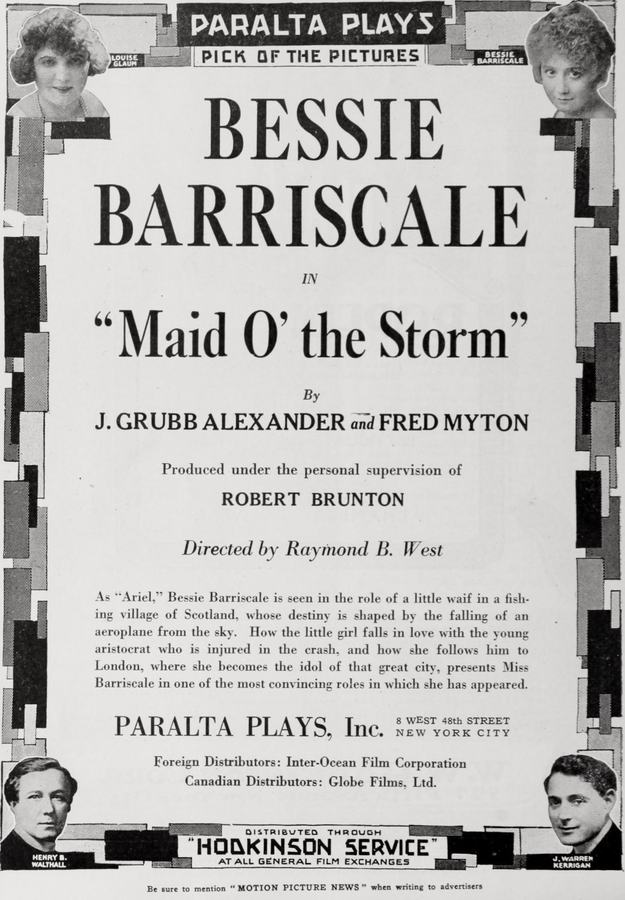
There are films that merely flicker; then there is Maid o' the Storm, a 1924 whirlwind that lashes the screen like briny spray across a lens. Picture it: intertitles dissolving into foam, Gustav von Seyffertitz-style shadows looming over cliff edges, and Ida Lewis’s Ariel—part Selkie, part sylph—spinning through Scottish mists toward the chromium glare of post-war London. What unfurls is less a linear narrative than a tidal exchange between folklore and modernity, poverty and pomp, eros and etiquette.
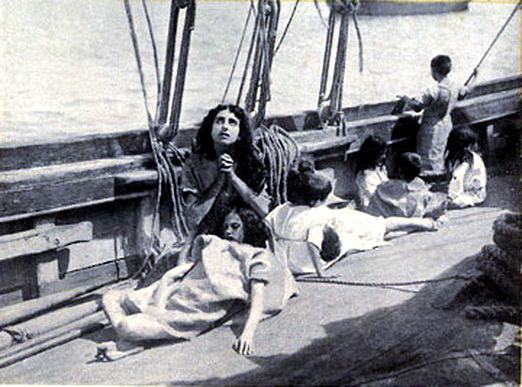
Director Robert J. Horner—never a household name—opens on a night so saturated with gale-force foreboding you can almost taste iodine. Cinematographer Bert Baldridge tilts his camera into horizontal rain, coaxing silver nitrate to shimmer like fish scales. When Andy MacTavish (Nick Cogley, all beard and anchor-tattooed knuckles) hauls a sodden barrel above the surge, the gesture feels biblical: Moses reimagined by way of John Knox. The foundling’s first close-up—a prism of innocence haloed by kelp—announces the film’s governing obsession: transformation birthed from cataclysm.
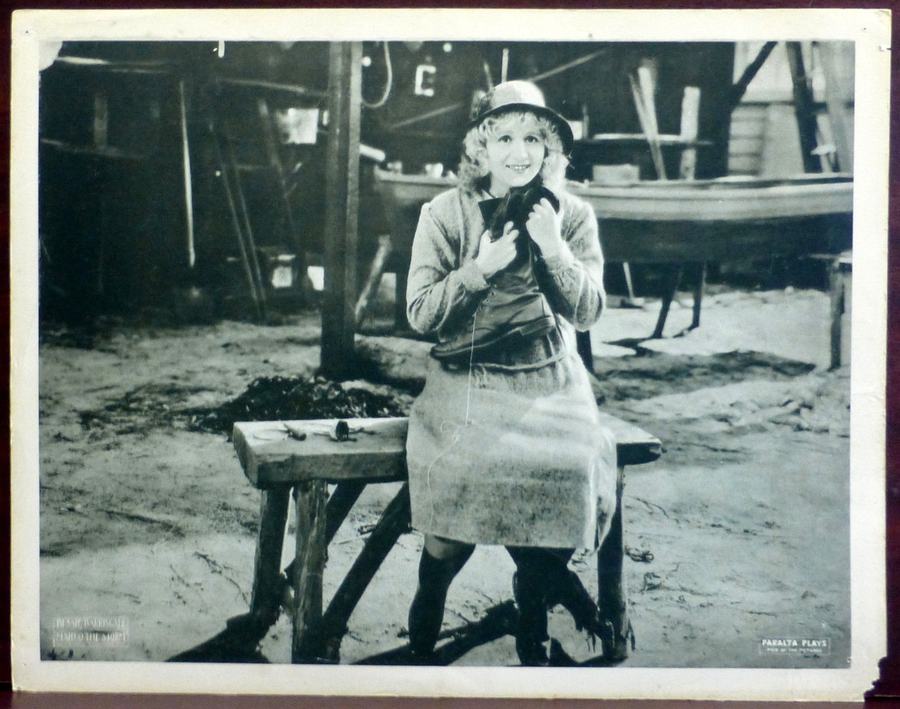
Fast-forward fifteen storybook years. Ariel no longer crawls but dances, her bare soles drumming rhythms that echo inside conch shells. The beach becomes proscenium arch; gulls, unpaid extras. Horner overlays these sequences with a blue-tinted stock that renders skin lunar, sea obsidian. The effect is proto-Technicolor reverie, anticipating Powell & Pressburger’s A Matter of Life and Death by two decades. Yet even this lyricism carries bruises: each pirouette flirts with jagged basalt, each landing risks ankle and aspiration alike.
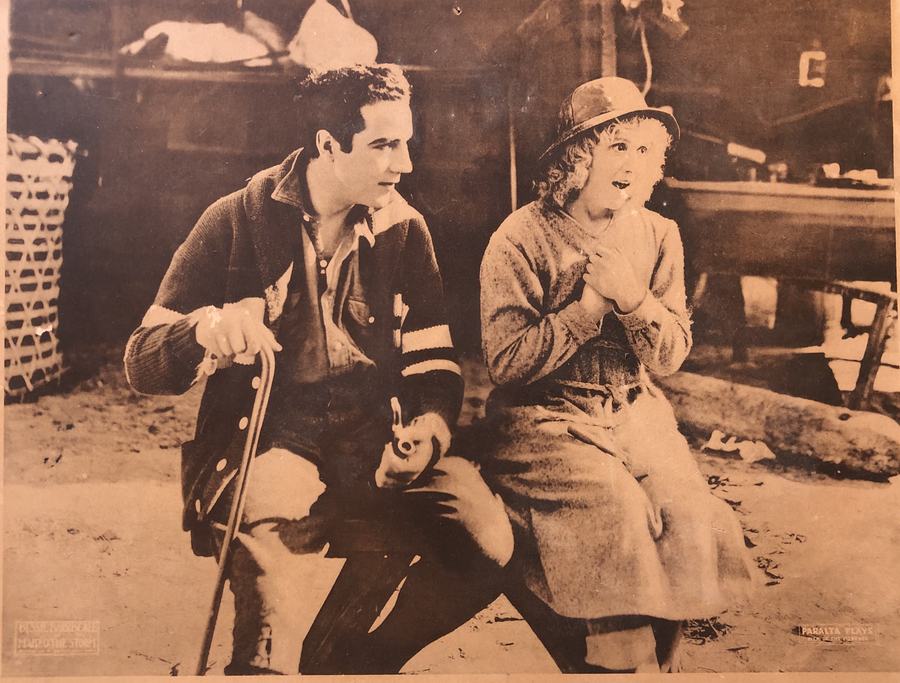
Enter Franklin Shirley (Jacob Abrams), crashing from cloud aristocracy into peat-bog reality. His scarlet scarf, the only splash of crimson in a gun-metal world, prefigures the blood he will shortly cough into monogrammed handkerchiefs. The rescue—ropes, pulleys, a pony cart driven by a one-eyed collie—plays like Griffith grafted onto Méliès. Horner crosscuts between close-ups of Ariel’s widening eyes and long shots of the crippled aircraft listing like a wounded albatross, forging a visual equation: vulnerability plus velocity equals destiny.
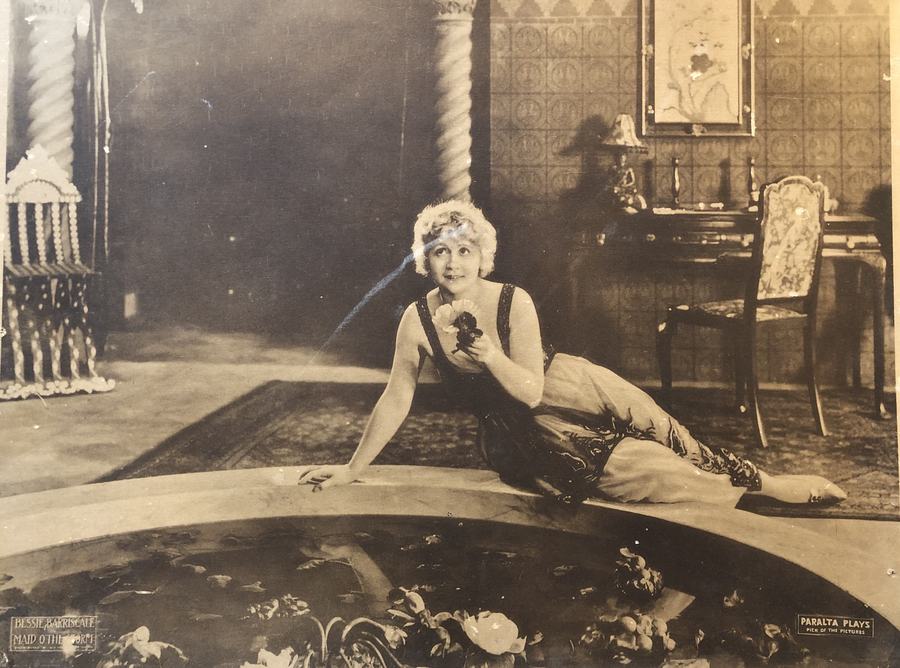
Once the action relocates to the capital, art director H. B. Hoffman swaps granite horizons for mirrored nightclubs where geometric chandeliers refract champagne bubbles into constellations. Abe Strohman (Clifford Alexander), cigar clamped between gold teeth, embodies Jazz-age predation; his office, a vertiginous collage of cubist posters and unpaid invoices, foreshadows the backstage horrors of Sunday and Fear. Bessie Barriscale’s Elaine, meanwhile, glides through drawing rooms like a swan trailing entitlement, every feather stitched by couturiers who invoice by the pearl.
Ariel’s metamorphosis from rustic prodigy to metropolitan starlet condenses the cultural whiplash of the 1920s. Choreographer Lillian Albertson borrows from Isadora Duncan’s fluidity and adds the angular shocks of Weimar tanz-theater. In the centerpiece “Tempest Variations,” Ariel executes a 48-second continuous spin—achieved by under-cranking the camera—while backdrop projections of storm-tossed waves surge behind her, merging human kinesis with elemental chaos. Contemporary critics compared the sequence to the Odessa Steps massacre for sheer kinetic bravura; hyperbolic, perhaps, yet the celluloid crackles with that urgency.
What levitates the melodrama above pot-boiler status is its refusal to brand any vertex of the triangle as villain. Elaine may drip condescension, but her terror of social free-fall feels palpable. Franklin’s indecision reads less as callow weakness than the paralytic grip of inter-class anxiety. And Ariel—ostensibly the home-wrecker—carries the moral weight of someone who has already been abandoned once by the tide. When she ultimately agrees to relinquish Franklin, the moment lands not as sacrificial cliché but as existential resignation: another foundling set adrift.
Horner’s boldest pivot arrives when Ariel, believing love irretrievable, prepares to surrender herself to Strohman’s patronage. The implied transaction—sex for security—skirts Pre-Code candor by encoding desire in montage: a bracelet snapped shut, a theater curtain ascending, a single tear glistening like permafrost on her powdered cheek. The sequence’s chiaroscuro owes as much to The Blindness of Love as to von Sternberg’s later Dietrich collaborations.
The screenplay, attributed to Fred Myton and J. Grubb Alexander, detonates expectations by letting Elaine orchestrate her own escape with Richard Barrows—a penniless violinist whose bow scrapes out Rachmaninoff in pungent pubs. Their dash to Gretna Green, crosscut with Ariel’s final stage triumph, liberates all parties without the customary bloodletting. It’s a narrative coup that feels closer to 1970s second-wave feminism than to 1920s propriety, and it gifts the film its unexpectedly buoyant finale.
Ida Lewis, unjustly forgotten today, wields her brows like semaphore flags; each quiver telegraphs interior monologue that intertitles merely annotate. Jacob Abrams suggests a matinee prototype for Ronald Colman, all polished vowels invisible yet implied. Clifford Alexander’s Strohman oozes the reptilian bonhomie that anticipates Barrymore’s Redemption of Dave Darcey turn. Even the bit players—Helen Dunbar’s matriarch, Myra Davis as a Cockney dresser—etch indelible cameos with a glance or a cigarette flick.
Cinematographer Baldridge alternates between diffusion filters that romanticize Highland vapors and hard arc lights that carve out London’s art-deco planes. The tonal clash mirrors the thematic friction: nature vs. artifice, instinct vs. ambition. In one audacious match-cut, surf smashes against a rock; the next frame reveals champagne spurting from a popped cork in the Ritz. Intellectual montage, Soviet style, delivered inside a commercial pot-boiler—delicious irony.
Though originally released with a compiled score of traditional reels, recent 4K restorations by the Scottish Film Archive commissioned a new accompaniment—piano, string quartet, and field-recorded gales. The contrapuntal result underscores every pirouette with the echo of far-off breakers, reminding viewers that the past, like the ocean, never truly relinquishes what it once claimed.
Trade papers of 1924 praised the film’s “sweeping panorama of passions,” yet box-office returns were hobbled by a concurrent flu outbreak that shuttered theaters across the Midlands. Modern appraisals—especially after the 2018 Pordenone Silent Festival—rank it beside A Yoke of Gold and The Battle of Life as a hidden gem of emotional spectacle. Twitter cognoscenti now swap GIFs of Ariel’s perpetual spin, meme-ing it as the original “infinite twirl.”
Does the film transcend its era? Partially. Its sexual politics, though progressive for 1924, still frame female agency through male validation. Yet its formal daring—the match-cuts, the tinting, the meta-theatrical dance—places it light-years ahead of assembly-line melodramas. Most importantly, it trusts emotion to erode class strata as surely as brine erodes limestone cliffs. That faith, raw and romantic, makes Maid o' the Storm a relic worth exhuming, polishing, and setting back into the tempest of modern viewing.
For cineastes who revere the storm-tossed lyricism of For the Freedom of the World or the proto-feminist feints of Should a Woman Divorce?, this picture offers a bridge between folklore and flapper, between the crash of surf and the clink of cocktail ice. Stream it during a thunderstorm; let lightning strobe across your 4K monitor; surrender to the illusion that somewhere, out in the mist, a dancer still spins—forever balanced between the pull of the moon and the promises of men.
IMDb 5.8
1921
Community
Log in to comment.