DbcultAccessing Vault...
6.3/10
Senior Film Conservator
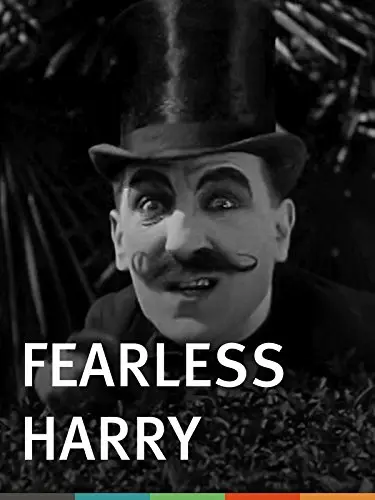
A definitive 6.3/10 rating for a film that redefined the boundaries of cult cinema. Fearless Harry remains a cornerstone of transgressive art.
Is "Fearless Harry" still a thrilling watch a century after its release? Short answer: yes, but primarily as a historical curiosity and a masterclass in early mechanical slapstick.
This film is for silent era aficionados and those fascinated by the transition of comic strips to the silver screen; it is certainly not for viewers who require nuanced character arcs or logical plot progression.
1) This film works because it prioritizes physical ingenuity and environmental storytelling over the melodramatic fluff that bogged down many of its contemporaries.
2) This film fails because the villain, Relentless Rudolph, lacks any motivation beyond the most basic mustache-twirling tropes, making the stakes feel repetitive.
3) You should watch it if you want to see the literal structural skeleton of the modern action-rescue sequence, stripped of all CGI and artifice.
Yes, "Fearless Harry" is worth watching if you appreciate the craftsmanship of early 20th-century set design. Unlike the more static drama found in The Waif, this short film moves with a frantic, rhythmic energy that feels surprisingly modern.
The film provides a rare glimpse into how early filmmakers translated the panel-to-panel logic of a comic strip into a continuous cinematic space. It is a short, punchy experience that doesn't overstay its welcome. It works. But it’s flawed.
C.W. Kahles was a pioneer of the cliffhanger format in American comics, and "Fearless Harry" (based on Hairbreadth Harry) captures that "just-in-time" spirit perfectly. The film doesn't waste time with exposition. We are thrown immediately into the conflict.
Earl McCarthy plays Harry with a buoyant, almost elastic physicality. While he lacks the soulful pathos of a Keaton or the balletic grace of a Chaplin, he possesses a rugged, blue-collar athleticism that fits the character's name.
The film’s reliance on the "secret formula" MacGuffin is a trope that would later be beaten to death in 1940s serials. Here, however, it feels fresh and serves its purpose: a simple excuse to get our hero into a room full of trap doors.
The direction (often attributed to Al Martin's influence) is remarkably focused on the geography of the hideout. This isn't just a set; it’s a character. Each room in Rudolph's lair presents a new mechanical puzzle for Harry to solve.
Consider the sequence where Harry triggers a floor plate and is unceremoniously dumped into a sub-basement. The camera stays wide, allowing the viewer to appreciate the timing of the stunt. It’s a level of physical clarity often missing in modern, over-edited action films.
Compare this to the more theatrical staging of A Celebrated Case. While that film relies on stage-bound grandeur, "Fearless Harry" embraces the mobility of the medium. The pacing is relentless, punctuated by the kind of "near-miss" gags that defined the era.
John J. Richardson’s Relentless Rudolph is the ultimate pantomime villain. His performance is broad, perhaps too broad, even for 1922. Every sneer is telegraphed, every gesture amplified. It borders on the exhausting.
However, Charlotte Merriam as Belinda provides a necessary grounding element. While her role is fundamentally passive—the quintessential damsel—she reacts to the mechanical horrors of the house with a genuine sense of alarm that elevates the stakes.
In many ways, the acting here is more successful than in Faint Hearts, where the comedic timing feels slightly more labored. McCarthy and Merriam have a shorthand that makes their onscreen relationship believable, even if it’s purely functional.
The most surprising element of "Fearless Harry" is the inclusion of a mummy. It’s a bizarre, almost surrealist choice that shifts the tone from a standard industrial heist to something approaching a proto-horror comedy.
The mummy’s appearance is played for laughs, but it adds an eerie layer to the hideout. It suggests that Rudolph isn't just a criminal; he’s a collector of the macabre. This tonal shift reminds me of the atmospheric experimentation seen in The Dream Cheater.
This isn't high art, but it is inventive. The use of a "haunted house" aesthetic to mask a scientific theft is a clever way to keep the audience off-balance. It’s the kind of unconventional observation that makes these early shorts worth revisiting.
The cinematography is functional, but the lighting in the hideout sequences is surprisingly effective. Shadows are used to hide the seams of the trap doors, creating a sense of genuine peril as Harry navigates the darkness.
The mechanical effects—the chutes, the sliding panels, the collapsing floors—are the real stars. There is a tactile quality to these gags. You can feel the weight of the wood and the tension of the springs. It’s a far cry from the weightless digital effects of today.
In films like Off the Trolley, we see similar slapstick, but "Fearless Harry" integrates these elements into a more cohesive narrative structure. The traps aren't just there for a laugh; they are obstacles Harry must overcome to reach his goal.
Pros:
Cons:
When placed alongside other films of the period, like The Bigger Man or An American Widow, "Fearless Harry" stands out for its lack of pretension. It isn't trying to be a sweeping social drama or a sophisticated comedy of manners.
It is a working-class entertainment, designed to elicit gasps and laughs in equal measure. While it lacks the emotional weight of La marcia nuziale, it compensates with sheer, unadulterated energy. It is a film that understands its audience.
The film’s influence can be seen in everything from the 1960s Batman TV show to the Indiana Jones franchise. The idea of the hero navigating a series of increasingly absurd traps is a trope that "Fearless Harry" helped codify for the big screen.
"Fearless Harry" is a primitive but essential piece of action cinema history. It succeeds by leaning into its comic strip roots and embracing a level of mechanical absurdity that remains charming over a hundred years later. While it won't win any awards for character development, its kinetic energy and inventive set-pieces make it a worthwhile watch for anyone interested in the foundations of the blockbuster. It is a loud, clattering, and joyful reminder of why we fell in love with the hero's journey in the first place.
IMDb —
1918
Community
Log in to comment.