DbcultAccessing Vault...
Cult Review
Senior Film Conservator
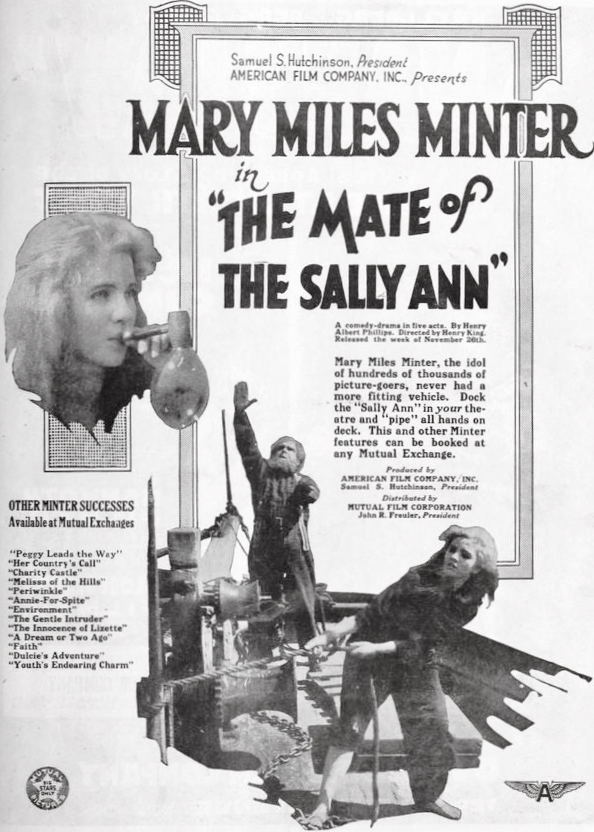
A crate of fogged nitrate labelled The Mate of the Sally Ann drifts ashore after a century below critics’ radar, smelling of kelp and kerosene. Once the projector sputters awake, the first image—an emaciated ship lashed to a wharf like a dying colossus—announces that this 1917 one-reeler has zero intention of genuflecting to sentimental convention. Director Henry Albert Phillips and scenarist Elizabeth Mahoney fuse tragic Croatian yearning with the brisk American morality fable, yet refuse the postcard piety that smothers so many silents. Instead they let salt corrode righteousness, let dogs limp across class ramparts, let women—not thundering fathers—write the final clause of blood-feud contracts.
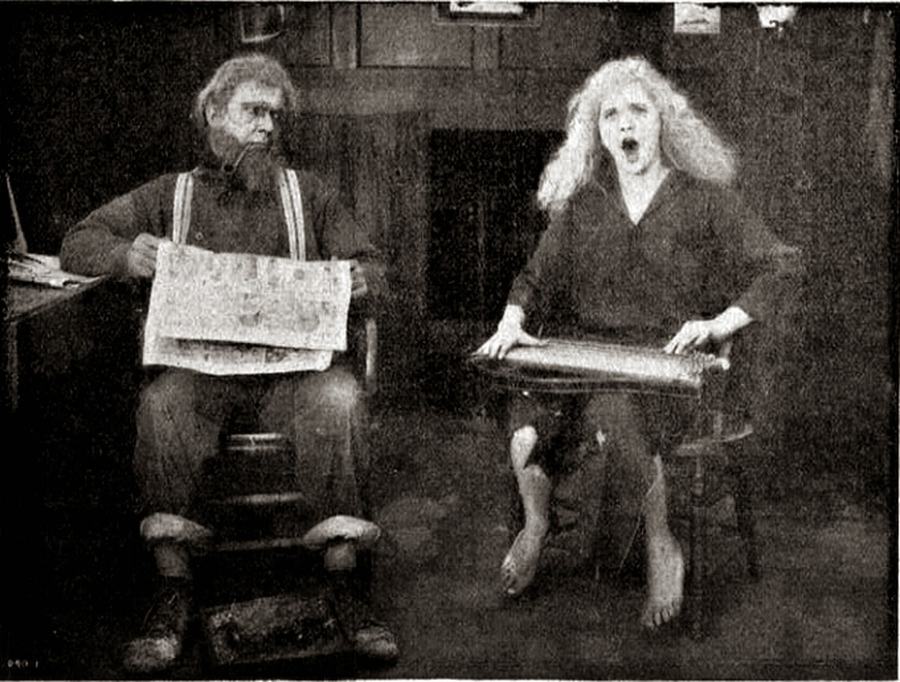
Phillips shoots the hulk like a cadaver: decks blistered, rigging strung like black-market veins, cavernous hold swallowing candlelight. Captain Ward—George Periolat beneath a crust of whiskers and prosthetic tar—hauls his bulk through frames as though every step risks keelhauling by memory. His misanthropy is not quaint seafarer caricature; it is patriarchy weaponizing grief, a cousin to the plantation patriarchs in The House of Bondage yet stripped of plantation pageantry, left with only barnacle and brine.
Mary Miles Minter was sixteen during production, already a veteran of luminous close-ups. Cinematographer George Barnes drapes her in diffuse top-light so that her corona of blonde hair seems bioluminescent against tar-dark planks. Notice how she signals interior revolt: a micro-lowering of eyelids, a breath held until the ribcage protests. The performance forecasts the adolescent ferocity later bottled in Inspiration, yet here it is rawer—no studio polish, only the tremor of a girl discovering that her body is disputed territory.
Animal sidekicks in 1910s cinema usually serve as frolicsome filler; Teddy, however, is screen-written like a limping morality compass. His three-legged gait rhymes with Sally’s emotional hobble—both incomplete, both hunted. When he scampers toward Judge Gordon’s Palladian mansion, the edit rhymescapes from rusted porthole to marble portico without intertitle, implying that destiny is not chained by longitude.
Adele Farrington’s judge arrives in white flannels and Panama, radiating Progressive-Era benevolence. Yet the screenplay refuses hagiography: his philanthropy is back-payment for abandoning a pregnant lover decades earlier. The revelation lands like a paper-cut—no villainous monologue, merely a marriage certificate mildewed in a desk drawer. The film thus sides with the women who intercept violence, not the men who auction restitution.
Allan Forrest embodies the well-heeled bachelor who mistakes infatuation for rescue. Watch how his hands hover at Sally’s waist—hesitant, apologetic—conscious that courtship can itself be a form of captivity. Their love story never drowns in swoon; it is a negotiation of power conducted through glances across ballroom parquet.
Costumer likely scavenged 1915 Worth gowns from a theatre rag-bin; Sally emerges in candle-smoke chiffon the color of bleached coral. The captain barges in, oilskins reeking, a black-sailed invasion. Phillips blocks the scene like battlefield photography: guests freeze in tableau, orchestra stalls mid-note, chandeliers oscillate as though breathing. It is a visual thesis on how working-class trauma can puncture drawing-room dioramas—an echo of the dockyard riot in Through Fire to Fortune yet compressed into dagger-sharp intimacy.
When Ward swings a belaying pin at the judge, the camera positions Sally between weapon and target—her torso becomes a parchment upon which two decades of vendetta are violently annotated. The impact occurs off-frame; we see only the whoosh of wood, a gasp, a lace collar fluttering like shot silk. Censorship boards in 1917 balked at graphic violence, yet the elision weaponizes imagination, forcing viewers to sketch their own anatomy of damage.

Modern audiences, weaned on DNA tests, may smile at the primacy of a single stamped document. Yet within the hermetic legalism of early 20th-century melodrama, that certificate is both Eucharist and indemnity. The judge’s revelation retroactively legitimizes Sally, dissolving the captain’s grievance like salt in bilge. It is a deus-ex-bureaucracy, yes, but one that implicates social institutions rather than divine fiat—a subtle radicalism.
The coda—a sun-bleached schooner ferrying lovers, dog, puppies, penitent judge, and chastened captain—risks saccharine aftertaste. Yet Phillips frames it against an iris-out that shrinks to a porthole, implying the voyage is not closure but surveillance: we, the audience, remain on deck, custodians of their fragile armistice. The open sea, historically a realm of masculine escape, here becomes a negotiated domestic space—a floating commune where lineage is chosen, not ordained.
George Periolat oscillates between bellicose thunder and crumb-skinned regret without hammy gesticulation—watch how his shoulders cave inward once he realizes Sally might die for his vendetta. Mary Miles Minter’s hospital scene, awakening to the word “married,” contains a 14-second close-up during which she cycles through bewilderment, dawning comprehension, and tearful absolution—a masterclass in micro-acting seldom acknowledged by historians who relegate her to footnote status beside Pickford or Gish.
Cinematographer Barnes scavenges natural light through hatches, letting it slice darkness into cathedral vaults. In the hold, faces hover mid-gray, bodies dissolve into obsidian—an effect later refined in German expressionism yet here achieved with minimal artificial lighting. Compare this to the over-exposed exteriors of The Springtime of Life; Sally Ann prefers claustrophobic chiaroscuro that moralizes space itself.

Mahoney’s intertitles eschew Victorian verbosity. Example: “The sea kept his secret—until love unlatched the hatch.” Each card functions like a pulse rather than exposition, allowing maritime metaphors to seep into language itself—anticipating the laconic severity found in The Man They Could Not Hang.
Only two 35mm prints survive: one at EYE Filmmuseum (Netherlands), another in a private San Francisco collection. Both are riddled with vinegar syndrome along reel-change points; the balcony scene exists solely in a 9.5mm Pathé baby-print, French intertitles intact. Digital 4K scans reveal Barnes’s subtle gradations between sea-grunge and silk, yet众筹 funding for full restoration languishes under the radar of major archives. Cinephiles can currently stream a 2K bootleg on niche torrents—watchable but bereft of tinting notes, which likely cast courtroom scenes in cobalt and ship interiors in amber.
No original cue sheets survive. A prudent accompanist might juxtapose sea-shanty motifs in Dorian mode against Debussy-esque arpeggios for mansion scenes, letting accordion and celesta converse across class fracture—echoing the socio-musical hybridity that Aaron Copland later perfected.
Place this film beside The City of Illusion and you discern a pattern: early American cinema uses seaports as liminal zones where paternity can be re-inked, where foundlings and scions swap fortunes like playing cards. European contemporaries—say, Ludi i strasti—treat the waterfront as existential void; Hollywood, even in infancy, insists on closure buoyed by sentiment.
Read Sally’s arc through today’s lens: a young woman denied bodily autonomy by a male guardian, publicly shamed for seeking companionship, nearly killed by patriarchal rage, then granted legitimacy only via institutional paperwork. The film inadvertently exposes the cyclical trap of respectability politics—still urgent as survivors navigate courts and hashtags.
Original one-sheet lithographs surface once per decade; last auction (Heritage, 2011) fetched $4,800 despite fold separations. Lobby cards with Minter’s close-up are more common, averaging $400 NM. For home libraries, pair a viewing with Jennifer Bean’s anthology ‘Flickers of Desire’ to contextualize Minter’s stardom within the era’s cult of adolescent luminosity.
For its gendered critique smuggled inside a seafaring potboiler, for Barnes’s proto-noir lighting, for Minter’s proto-feminist pathos, The Mate of the Sally Ann earns a rightful berth in the canon of transitional-era treasures. Demands restoration, reappraisal, and—above all—an audience willing to brave bilge-water sentiment for the shimmer of nascent female agency.

IMDb —
1925
Community
Log in to comment.