DbcultAccessing Vault...
Cult Review
Senior Film Conservator
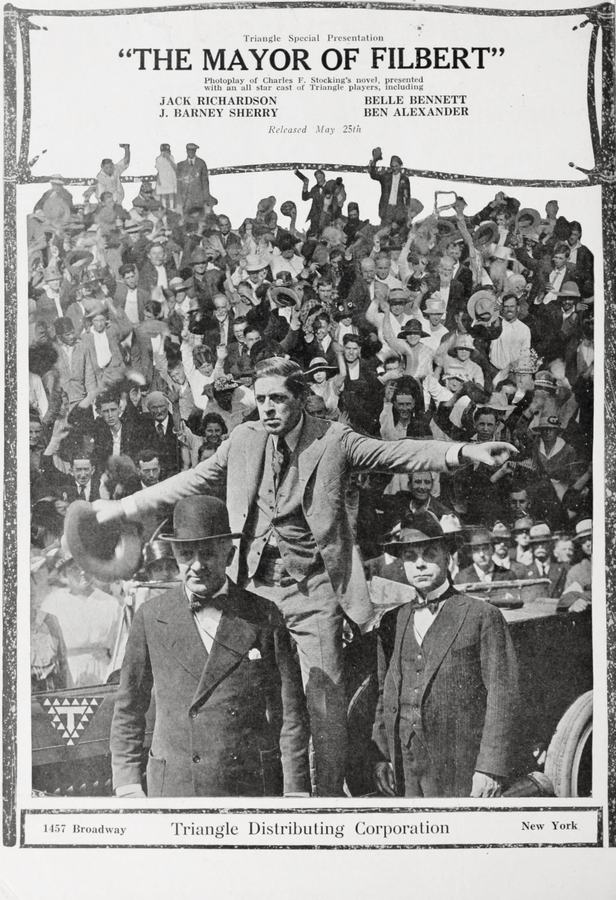
Stepping back into the cinematic annals of 1917, one encounters a fascinating artifact of early American filmmaking: The Mayor of Filbert. This silent feature, penned by Daniel Carson Goodman and Charles Frances Stocking, is far more than a mere historical curiosity; it's a vibrant, often darkly humorous, exploration of political corruption, mistaken identity, and the malleable nature of public perception. It plunges us headfirst into the fictional Ohio town of Filbert, a place whose moral fabric has been thoroughly unravelled by the self-serving machinations of its chief executive, Mayor Schmidt. A saloonkeeper by trade, Schmidt embodies the very antithesis of civic responsibility, his tenure marked by graft and an unapologetic disregard for ethical governance. The film, in its silent eloquence, paints a vivid portrait of a community held hostage by its own leadership, a theme that resonates with startling clarity even a century later. The narrative's initial setup is deceptively simple, yet it quickly spirals into a labyrinth of farcical complications that underscore the film's satirical ambitions.
The catalyst for the film's intricate plot is a meeting fraught with tension. The long-suffering citizens, represented by the earnest if somewhat naive Civic Reform Society and the staunchly moral Prohibition Party, finally confront Mayor Schmidt. Their hope is to appeal to whatever vestige of conscience might remain, or at least to publicly shame him into accountability. However, the meeting takes an unexpected, almost slapstick turn. In a moment of high drama, or perhaps simple clumsiness, Schmidt suffers a head injury, falling and striking his head on a heater. The ensuing unconsciousness is misinterpreted by the reformers as death, a dramatic misapprehension that propels the entire narrative into motion. This accidental incapacitation, rather than a deliberate act, injects a layer of dark comedy into the proceedings, highlighting the absurdity of the situation and the desperation of the reformers. Their subsequent decision to replace the 'deceased' mayor with a doppelgänger is born out of a profound belief that Filbert's salvation hinges on immediate, radical action, even if that action borders on the ethically dubious. The film masterfully exploits this premise, drawing the audience into a world where appearances are everything and the line between truth and deception blurs with alarming frequency. The introduction of the drifter, a man who, by sheer coincidence, bears an uncanny resemblance to the crooked mayor, is a stroke of narrative genius, setting the stage for a delightful exploration of identity, mimicry, and the perils of mistaken assumptions.
The core of The Mayor of Filbert lies in its exploration of impersonation, a trope frequently utilized in early cinema to explore themes of identity, social mobility, and the exposure of hypocrisy. In this regard, the film finds common ground with other silent-era narratives that delve into the complexities of assuming another's mantle. One cannot help but draw parallels to films such as The Impersonation, which likely explored similar themes of identity theft and the ensuing chaos. However, The Mayor of Filbert distinguishes itself by imbuing its impersonation with a unique moral urgency, driven by the reformers' desperate desire to salvage their town. The drifter, initially a reluctant participant, finds himself thrust into a role he never sought, forced to navigate the treacherous waters of Filbert's political landscape while maintaining the illusion of being the very man he replaced. This narrative device allows for both comedic moments, as the drifter struggles to adopt Schmidt's mannerisms and history, and more poignant ones, as he perhaps begins to embody a better version of the mayor than the original ever was. The film cleverly uses this dynamic to comment on the nature of leadership itself: is it the person, or the office, that truly holds sway? The complications that ensue from the real Mayor Schmidt's eventual, inevitable return are the narrative's true engine, setting up a delightful clash between the assumed identity and the original, between the intended reform and the chaotic reality. The tension between the benevolent intentions of the reformers and the morally ambiguous means they employ is a central conflict, inviting the audience to ponder the ethical tightrope walked by those who seek to effect change through deception.
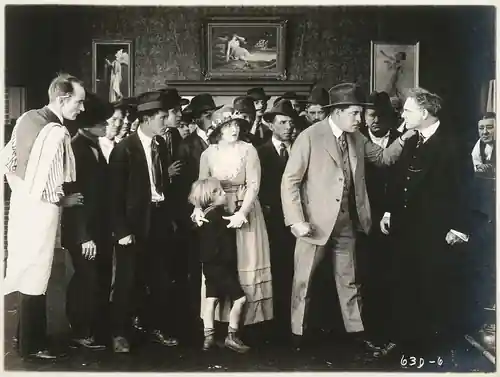
In the silent era, the burden of conveying character, emotion, and plot rested squarely on the shoulders of the actors, whose expressions, gestures, and physicality had to speak volumes without uttering a single word. The Mayor of Filbert benefits from a robust ensemble cast that rises to this challenge with considerable aplomb. While specific details of individual performances are often lost to the mists of time for lesser-known silent films, the very premise demands nuanced portrayals. The dual role, presumably played by a single actor (though the plot description doesn't explicitly state this, it's a common trope for doppelgänger stories), would have required immense skill to differentiate the venal original Mayor Schmidt from his reluctant, perhaps more sympathetic, impersonator. Actors like Ben Alexander, Louis Durham, and J. Barney Sherry would have been instrumental in grounding the more dramatic elements, while Grace Parker, Millicent Fisher, and Belle Bennett likely brought grace and conviction to the roles of the reformers or other key female characters, whose reactions to the unfolding deception would have been crucial for the audience's emotional connection. The nuanced facial expressions and exaggerated bodily movements, characteristic of silent film acting, would have been key to portraying the mayor's villainy, the reformers' earnestness, and the drifter's growing discomfort and eventual moral awakening. The supporting cast, including Louise Lester, Jack Richardson, Olga Grey, William Dyer, Walter Perkins, Wilbur Higby, George C. Pearce, and Joseph Singleton, would have filled out the town of Filbert, creating a believable community that reacts to the chaos with varying degrees of alarm, confusion, and perhaps even amusement. Their collective effort would have been vital in establishing the film's tone, oscillating between genuine social commentary and lighthearted farce. The success of such a film hinged entirely on the actors' ability to communicate the intricacies of a complex plot without dialogue, a testament to their craft.
At its heart, The Mayor of Filbert is a compelling study of several enduring themes. Foremost among them is the pervasive nature of political corruption, a subject as relevant in 1917 as it is today. Mayor Schmidt's character serves as a potent symbol of unchecked power and moral decay, a figure whose venality is so pronounced that his supposed death is seen not as a tragedy, but as an opportunity for societal cleansing. This cynical view of leadership is sharply contrasted with the idealism, albeit misguided, of the Civic Reform Society and the Prohibition Party. Their desperate gambit to replace Schmidt with an imposter speaks volumes about the perceived impossibility of rectifying the system through conventional means. This theme of moral compromise in the pursuit of greater good echoes in films like Thou Shalt Not Steal, where the boundaries of ethical behavior are tested under duress. Furthermore, the film delves deeply into the concept of identity. What defines a person? Is it their name, their position, or their actions? The drifter, stepping into Schmidt's shoes, is forced to grapple with this question, potentially transforming from a nameless wanderer into a figure of civic responsibility, even if under false pretenses. The tension between the outward facade and the inner truth is a rich vein for dramatic and comedic exploration. The eventual return of the real Schmidt inevitably leads to the unmasking of the deception, a moment that forces all characters, and by extension the audience, to confront the shackles of truth. This unraveling of lies, a common yet effective narrative device, serves to highlight the fragility of constructed realities and the ultimate triumph, or at least the inescapable nature, of truth. The film, therefore, functions not just as an entertaining farce but also as a pointed social commentary on the societal mechanisms that allow corruption to flourish and the often-desperate measures taken to combat it.
The success of The Mayor of Filbert owes much to the narrative ingenuity of Daniel Carson Goodman and Charles Frances Stocking. Crafting a story for the silent screen required a particular finesse, where visual storytelling, intertitles, and the actors' performances had to convey complex plots and character motivations without spoken dialogue. Goodman and Stocking demonstrate a keen understanding of dramatic irony, a potent tool in this film. The audience is privy to the truth – that Schmidt is merely unconscious – while the characters remain blissfully, or rather desperately, ignorant. This creates a constant undercurrent of suspense and anticipation, as viewers await the inevitable moment of revelation. The pacing of the film, from the initial confrontation to the frantic search for a look-alike, and then the gradual unfolding of the drifter's new life, would have been crucial. Early cinema often relied on clear, linear narratives, but the potential for escalating comedic chaos in this plot suggests a dynamic, almost breathless rhythm. The visual language of the film would have been paramount, with blocking, set design, and costume choices all contributing to the delineation of character and social standing. The contrast between the squalid saloon of Mayor Schmidt and the earnest, perhaps austere, meeting place of the reformers would have visually reinforced the film's thematic concerns. While specific directorial credits aren't provided, the execution of such a complex plot, with its demands for synchronized reactions and the seamless transition between the two 'Schmidts,' speaks to a competent and imaginative hand behind the camera. The film stands as a testament to the sophisticated storytelling capabilities of early cinema, proving that even without sound, compelling and layered narratives could be brought to life with considerable impact. The ability to weave together elements of social critique, farce, and character study into a cohesive and engaging whole is a hallmark of strong screenwriting, and The Mayor of Filbert appears to exemplify this prowess.
In its totality, The Mayor of Filbert transcends its origins as a silent film from over a century ago to offer a surprisingly resonant commentary on human nature and the mechanisms of governance. The film's portrayal of a corrupt official, the desperate measures of a populace yearning for change, and the inherent comedy and drama in an identity swap, speak to universal truths. It reminds us that the struggle against venality in power is an ongoing one, and that the lines between good intentions and questionable ethics can often blur. The film's ability to elicit both laughter and reflection, often simultaneously, is a hallmark of well-crafted satire. While we may not have the luxury of experiencing its original theatrical run, complete with live musical accompaniment and an engaged early 20th-century audience, its narrative skeleton remains robust. It’s a compelling reminder of how early cinema, often dismissed as simplistic, was capable of tackling complex social issues with wit and ingenuity. For enthusiasts of film history, political satire, or simply a well-told story, The Mayor of Filbert stands as a valuable example of the silent era's enduring power. Its legacy lies not just in its historical significance, but in its ability to spark conversations about leadership, authenticity, and the continuous, often messy, pursuit of justice in our communities. The film offers a stark, yet entertaining, look at the lengths to which people will go to achieve what they believe is right, even if it means orchestrating an elaborate, potentially disastrous, charade. It's a testament to the timeless appeal of stories that challenge our perceptions of truth and power, leaving us to ponder the true cost of both corruption and the attempts to rectify it through unconventional means.
IMDb —
1932
Community
Log in to comment.