DbcultAccessing Vault...
Cult Review
Senior Film Conservator
One Dark Night arrives as a kinetic blend of farce and noir, a film that refuses to settle comfortably within a single genre. The opening sequence, drenched in chiaroscuro, places the audience directly behind the protagonist, Joe (Frank Alexander), as he slides a threadbare convict uniform over his ordinary attire. The camera lingers on the fabric’s frayed seams, a visual metaphor for the protagonist’s fragmented identity, before thrusting him into a ballroom awash with flickering chandeliers and masked revelers. The mise‑mise, saturated in muted gold and deep indigo, immediately establishes a world where appearances are mutable, and truth is a commodity traded in whispers.
The narrative thrust hinges on a simple yet potent conceit: a man masquerading as a criminal to escape his own mediocrity, only to become the target of an actual law‑enforcement pursuit. Zack Williams, portraying the relentless detective Mallory, delivers a performance that oscillates between sardonic bemusement and steely resolve. His eyes, often narrowed beneath a fedora, convey a detective’s intuition honed by years of chasing phantoms. The tension between Mallory’s methodical investigation and Joe’s improvisational antics creates a cat‑and‑mouse dynamic reminiscent of the chase in The Broken Law, yet the tonal palette here leans heavily into absurdist comedy.
Lois Scott’s portrayal of Elise, the manor’s enigmatic hostess, adds a layer of intrigue. Her costume—a cascade of midnight blue silk—mirrors the sea‑blue #0E7490 accents that punctuate the film’s visual language. Elise’s dialogue, peppered with cryptic allusions to past transgressions, hints at a personal history entwined with the very notion of concealment. When she whispers, "Masks are only as solid as the secrets they protect," the line reverberates through the narrative, echoing the film’s central motif: the permeability of identity.
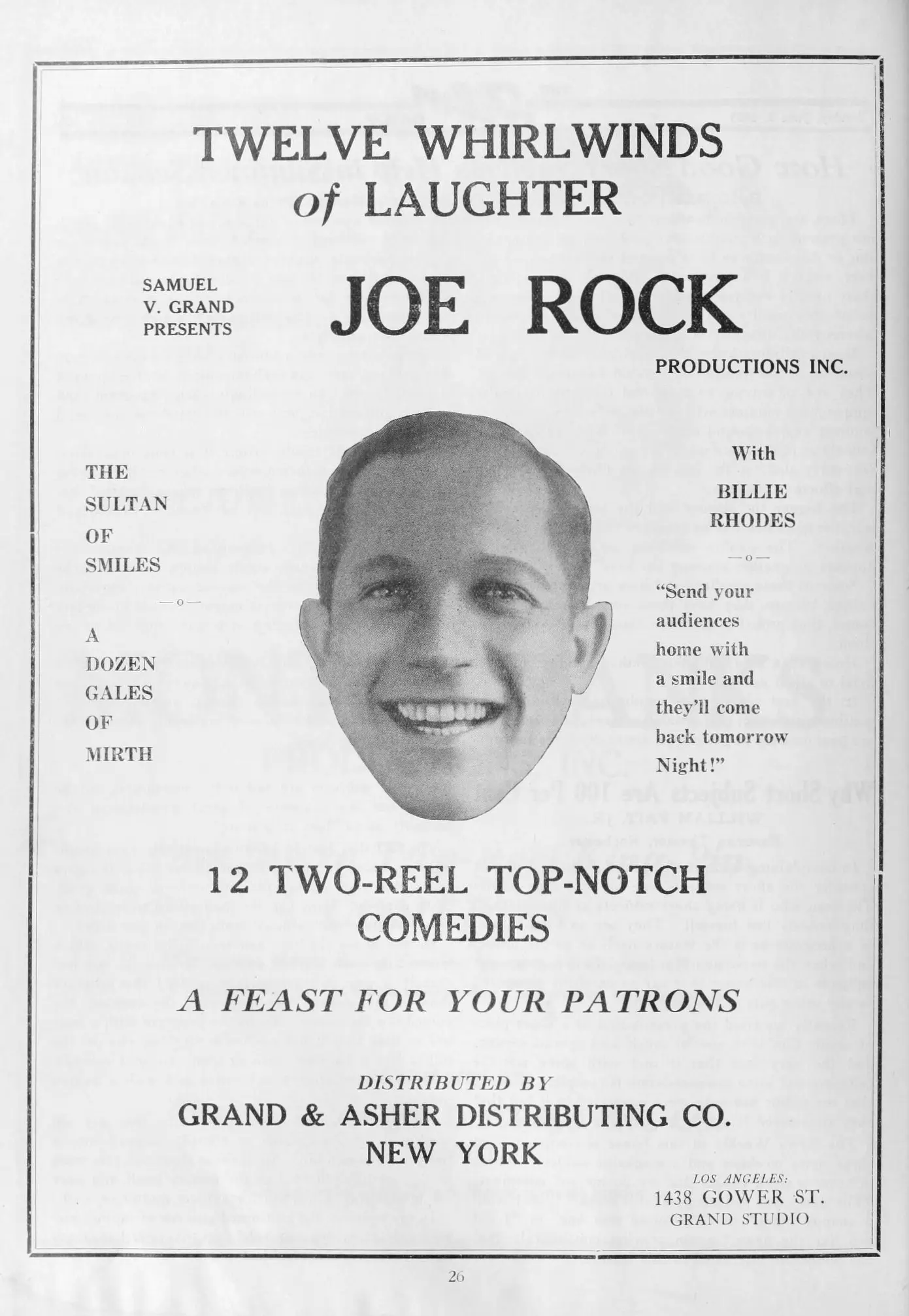
The supporting cast, featuring Joe Rock as the jittery butler and Max Asher as a sardonic bartender, enriches the tapestry of deception. Rock’s physical comedy—stumbling over a tray of crystal goblets while attempting to conceal his own nervousness—evokes the slapstick timing of classic silent-era pieces, yet his performance is grounded by a subtle undercurrent of dread. Asher’s bartender, a man who knows every patron’s true face, serves as the story’s moral compass, offering Joe a rare moment of candor: "You can’t outrun the truth, kid, it’s got a faster stride than any boots you wear."
The film’s pacing is deliberately erratic, mirroring Joe’s frantic attempts to navigate a labyrinthine estate. Scenes transition with abrupt cuts, each accompanied by a staccato jazz motif that punctuates the rising tension. This auditory choice recalls the disorienting soundscapes of Alraune, where music becomes an active participant in the storytelling, guiding the audience’s emotional rhythm. The cinematography, employing handheld shots during chase sequences, immerses viewers in the claustrophobic corridors, while static, wide‑angle frames capture the grandeur of the ballroom, juxtaposing confinement with opulence.
The screenplay, penned by an unnamed writer, balances witty repartee with moments of stark introspection. Joe’s internal monologue—delivered through voice‑over in a hushed, almost confessional tone—reveals his yearning for significance beyond the drudgery of clerical work. Lines such as, "I thought a uniform could rewrite my story, but perhaps the ink is already dry," articulate a universal anxiety about self‑reinvention. This thematic thread aligns with the existential quandaries explored in The Man Trail, where characters grapple with the futility of escaping one's past.
Visually, the film exploits its dark orange #C2410C palette during moments of heightened drama. The color saturates the screen during the climactic showdown beneath the manor’s collapsed dome, casting the characters in a lurid glow that underscores the surreal nature of the confrontation. This deliberate chromatic choice amplifies the emotional stakes, turning the setting into a character of its own—an ancient structure that bears witness to the unraveling of facades.
The narrative’s resolution, eschewing a tidy denouement, leaves Joe’s fate ambiguous. As police sirens wail in the distance, Joe disappears into the night, his convict outfit now a relic of a night that blurred reality and performance. The lingering shot—an empty ballroom illuminated by the dying embers of candles—invites contemplation on the ephemerality of identity. This open‑ended conclusion resonates with the thematic ambiguity of The Missing Bullet, where the audience is tasked with interpreting the protagonist’s ultimate destiny.
From a technical standpoint, the film excels in its sound design. The ambient murmur of masked guests, the clinking of crystal, and the distant rumble of thunder coalesce into an auditory tapestry that amplifies tension. The use of silence during pivotal moments—particularly when Joe realizes the police have surrounded the manor—creates a palpable sense of dread, allowing the audience to feel the weight of impending capture.
Editing choices further enhance the film’s kinetic energy. Rapid cross‑cuts between the detective’s methodical search and Joe’s frantic escapades generate a rhythm that keeps viewers on edge. The juxtaposition of slow, lingering shots of Elise’s contemplative gaze with frenetic chase sequences underscores the film’s duality: the elegance of masquerade versus the brutality of pursuit.
The film’s thematic resonance extends beyond its immediate plot, probing societal preoccupations with appearance, reputation, and the allure of reinvention. By placing a man in a convict’s garb within a setting of aristocratic masquerade, the narrative interrogates the performative nature of class and the ease with which societal roles can be subverted. This commentary aligns with the satirical undertones present in Cupid Camouflaged, where love and deception intertwine.
In terms of cultural impact, One Dark Night stands as a daring experiment in genre hybridity. Its willingness to blend slapstick comedy, noir tension, and philosophical musings positions it as a noteworthy entry in contemporary cinema. While it may not achieve the commercial ubiquity of mainstream blockbusters, its nuanced craftsmanship and daring narrative choices merit serious consideration among cinephiles seeking depth beyond surface spectacle.
Ultimately, the film invites viewers to question the masks they wear in daily life, urging an examination of the thin line separating authenticity from artifice. The interplay of dark orange, yellow, and sea blue hues not only serves an aesthetic function but also symbolizes the spectrum of emotions traversed throughout the night—danger, hope, and melancholy. As the credits roll, the lingering echo of a distant police siren serves as a reminder that, regardless of costume, the pursuit of truth remains relentless.
IMDb —
1933
Community
Log in to comment.