DbcultAccessing Vault...
Cult Review
Senior Film Conservator
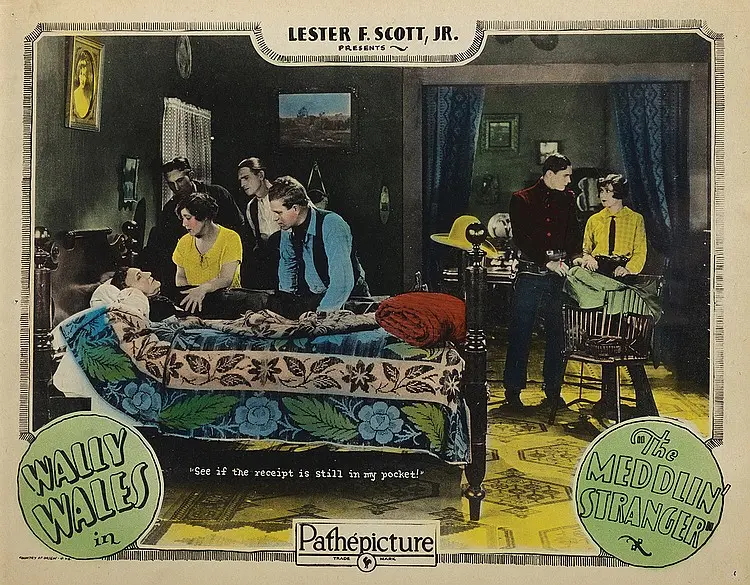
Is The Meddlin' Stranger a forgotten classic or a dusty relic? Short answer: It is a fascinating historical artifact for Boris Karloff fans, but a standard-issue Western for everyone else. If you value the evolution of the cinematic villain, this is a mandatory watch; if you require fast-paced action and complex dialogue, look elsewhere.
The film is specifically for silent cinema enthusiasts and those interested in the 'Poverty Row' productions of the 1920s. It is definitely not for viewers who struggle with the slower, theatrical pacing of the pre-talkie era or those who find 1920s moral binaries to be overly simplistic.
1) This film works because of the palpable tension between Hal Taliaferro’s stoic heroism and Boris Karloff’s emerging screen presence.
2) This film fails because the middle act cattle drive feels like a detour from the far more interesting revenge plot.
3) You should watch it if you want to see the structural foundations that would later define the 'Man with No Name' archetype.
The Meddlin' Stranger arrives at a pivotal moment in film history, 1927, just as the industry was preparing to find its voice. However, this film remains firmly rooted in the visual language of the silent West. Directed by Richard Thorpe, who would later find fame at MGM, the film showcases a raw, unpolished energy that is often missing from more prestigious productions like The Common Law.
The plot is a classic revenge cycle. Wally Fraser (Taliaferro, credited as Wally Wales) is the quintessential 'meddler.' He is an outsider whose presence acts as a catalyst for the collapse of a corrupt social order. Unlike the characters in The Ace of Cads, who navigate social high-society, Wally is grounded in the dirt and dust of Juniper City.
The opening sequence, where Wally enters the town, is handled with a stark, minimalist efficiency. There are no grand fanfares. There is only a man with a memory of a dead father and a suspicion that the town’s most powerful man is a killer. This setup is lean and effective, though it eventually loses steam when the film pivots to the cattle drive subplot.
The most compelling reason to watch The Meddlin' Stranger today is the presence of Boris Karloff as Al Meggs. Long before he became the face of Universal Horror, Karloff was a working actor often cast as the 'heavy.' In this film, his performance is a masterclass in silent menace. Unlike the more flamboyant villains of the era, such as those found in Bela, Karloff uses his stillness to intimidate.
Consider the scene in the poker room. When Wally calls out Meggs for cheating, the camera lingers on Karloff’s face. You can see the shift from calculated deceit to murderous rage. It is a subtle performance for 1927. His physical presence—long, lean, and slightly unsettling—creates a perfect foil for Taliaferro’s more traditional, athletic hero. It is a shame that the two do not share more screen time, as their chemistry is the film's strongest asset.
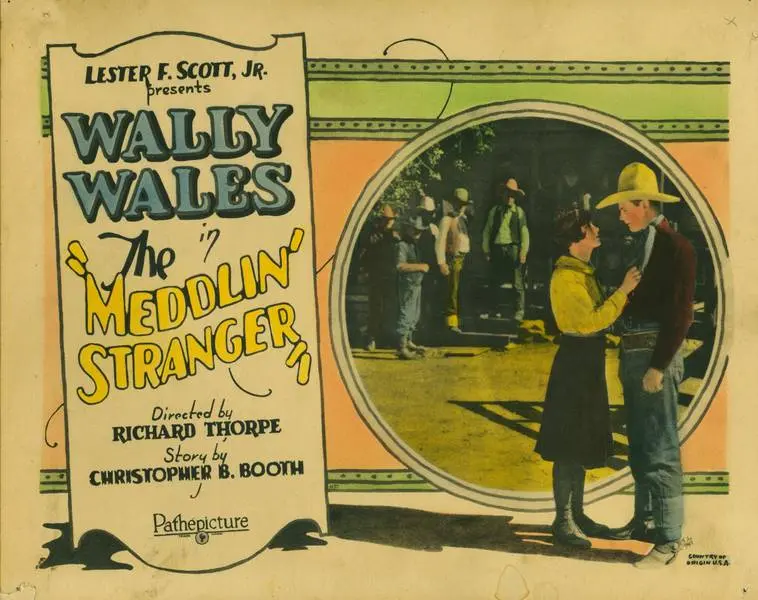
The final showdown, where Meggs turns on his benefactor Dawson, is a surprising narrative choice. Usually, the hero is the one to deliver the final blow. Here, the villains consume one another. It is a cynical, almost modern conclusion that suggests the hero’s 'meddling' was merely the spark that let the corruption burn itself out.
Technically, the film is a product of its time. The cinematography relies heavily on wide shots and natural lighting. The rescue of the runaway team is the standout action sequence. The stunt work is genuine; there are no green screens or digital safety nets here. When you see the dust kicking up around the horses’ hooves, you feel the physical danger of the era’s filmmaking.
The pacing, however, is uneven. The transition from the revenge setup to the cattle drive feels clunky. It is as if the writers, including Christopher Booth, felt the need to pad the runtime with genre tropes. While films like King of the Saddle managed to balance these elements with more fluidity, The Meddlin' Stranger feels like two different movies stitched together at the waist.
The score—if you are watching a restored version with accompaniment—often has to do the heavy lifting for the emotional beats. The relationship between Wally and Mildred (Nola Luxford) is particularly thin. Their romance feels like a structural requirement rather than a genuine connection. It lacks the charm found in Married Alive.
Yes, but with caveats. If you are looking for a masterpiece of silent cinema on par with the greats, you will be disappointed. However, if you are looking for a gritty, unpretentious Western that features a legendary actor in his formative years, it is well worth the 60-minute investment.
The film’s portrayal of the banker, Dawson, as a predatory figure who uses debt as a weapon is surprisingly relevant. It adds a layer of social commentary that elevates the film above the standard 'white hat vs. black hat' tropes. It works. But it’s flawed.
The Meddlin' Stranger is a fascinating look at the 'B-movie' landscape of the silent era. While it lacks the polish of a major studio production like The Prince and the Pauper, it compensates with a raw, Western grit. The horse is faster than the plot, but the performances—particularly Karloff's—keep it from fading into total obscurity.
"A dusty, determined relic that proves even in 1927, the Western was already perfecting the art of the anti-hero."
Ultimately, this is a film that rewards the patient viewer. It captures a moment in time when the Western was transitioning from simple morality plays to something more complex. It isn't a essential viewing for the casual fan, but for the cinema historian, it is a piece of the puzzle that cannot be ignored. It is a reminder that even 'meddling' strangers have their place in the sun.
IMDb —
1935
Community
Log in to comment.