DbcultAccessing Vault...
Cult Review
Senior Film Conservator
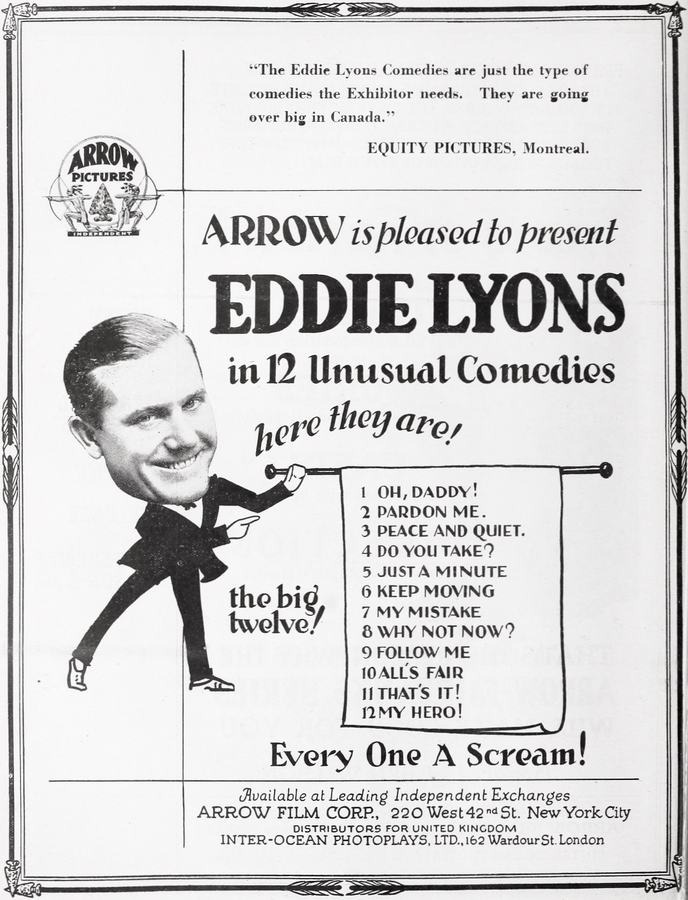
A breathless 55-minute sprint through barbed-wire jurisdiction, Just a Minute! weaponizes silken intertitles and locomotive montage to ask how long sixty seconds can last when every tick is legislated by the man who once bounced you on his knee and now locks the town gate.
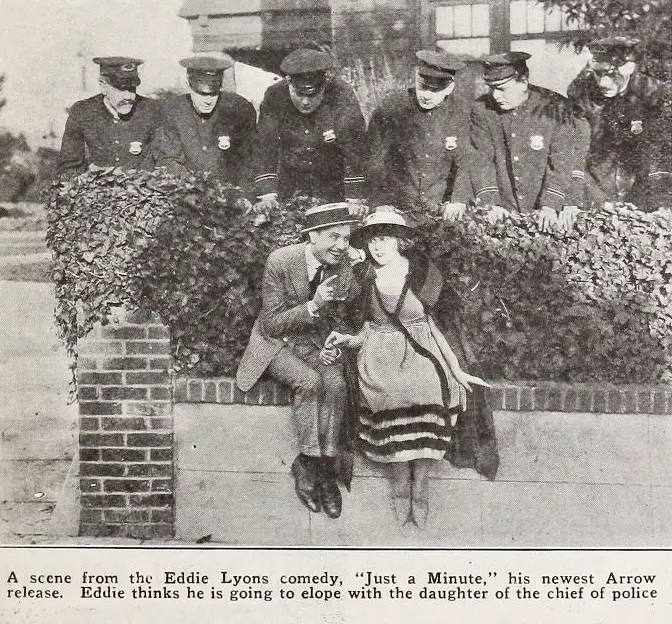
Picture the lovers as twin meteors: Jimmy Hale—Eddie Lyons in a newsboy cap tilted like a dare—carries the loose-limbed arrogance of a boy who’s cracked every lock except the one on Magnus Pike’s heart. Lila, essayed by Beth Darlington with a porcelain grin that could auction sunrise, is less ingénue than co-conspirator; her sidelong glances calculate escape velocity while humming ragtime. Their elopement is no syrupy moonlit vow but a guerilla campaign waged in alley shadows and telegram cipher.
Magnus, corpulent yet panther-quick, patrols in a squad car whose headlamps double as imperial searchlights. McGowan’s script refuses mustache-twirling villainy; instead, the chief’s tyranny oozes from municipal minutiae: a permit denied, a curfew whistle, a marriage-license fee jacked up overnight. The lovers’ rebellion is correspondingly micro: a forged signature on a freight ledger, a stolen crate of oranges swapped for gasoline rations. Each infraction is a brushstroke in a larger fresco of generational mutiny.
Cinematographer Gus Peterson favors smash-cut ellipses: one frame Jimmy thumbs a ride, the next his boots dangle from a boxcar, the intermediate sprint swallowed by black leader. The negative space becomes a character—absence as antagonist. Meanwhile, iris shots constrict around Lila’s pupil as she spies the town’s only exit sign, the circular matte resembling both a gun barrel and a wedding ring. The semaphore of images—crosscuts between whirring speedometer and Magnus’s pocket watch—compresses chronology until the film itself feels like contraband.
Though dialogue is relegated to intertitles, the picture is aural in hallucination: the thunk of a courthouse clock echoes like gavel strikes, the crunch of gravel underlover’s heel resembles distant thunder. Viewers swear they hear tire hiss, though no synced track exists. This synesthetic trick typifies late-silent-era modernity, a precursor to city-noir sensory overload later refined in Cold Steel.
Lyons, often dismissed as a lightweight Valentino knock-off, here channels Harold Lloyd’s nervous torque: his smile arrives a half-second late, revealing the sweat beneath. In a sublime gag he tries to impersonate a railroad inspector—puffing his chest, borrowed badge glinting—only for the badge to flip upside-down, exposing the blank reverse. The moment lasts three seconds but etches the ethos of small-town masquerade.
Darlington’s Lila is no flapper prop; when she bargains with the telegraph clerk her lashes flutter Morse code, a seduction and ultimatum braided into one. Watch her knuckles blanch around the stolen car keys—feminine desire weaponized, a template Barbara Stanwyck would weaponize further within the decade.
Where The World Against Him dilutes pursuit across continents, Just a Minute! distills cat-and-mouse to a single county, achieving claustrophobic density reminiscent of A City Sparrow. Unlike the pastoral fatalism of The Little Shepherd of Kingdom Come, this film treats landscape as circuitry: every silo, siding, and water tower a switch that can flip the lovers toward liberty or entrapment.
McGowan’s script slyly indicts patriarchal stewardship: Magnus claims protection while orchestrating captivity. The camera frames Lila inside doorways shaped like keyholes, implying she is both ward and warden of her father’s myth. Yet her final dash—dress hem shredding in thistle—asserts kinetic sovereignty, a proto-feminist sprint that anticipates the anarchic heroines of Beatrice Fairfax serials.
Rumor claims producer Pathe trimmed two reels after a test screening deemed the lovers’ victory “morally ambiguous.” The surviving hour thus ends on a rhetorical freeze: headlamps flooding the frame, Jimmy’s hand clasping Lila’s, destination unknowable. Cinephiles may spot continuity scars—afternoon suddenly dusk, a bandage teleporting from wrist to palm—yet these ruptures amplify the film’s thesis: time under despotism is itself dismembered.
Original nitrate prints carried amber nocturnes for interiors, cobalt blues for exteriors—each hue a mood-label before Technicolor commodified chromatics. Archives project desaturated dupes, yet even in grayscale the chiaroscuro is ferocious: Magnus’s silhouette eclipsing a kerosene halo could hang beside any Langian nightmare.
While Without Honor luxuriates in redemption arcs and The Thirteenth Chair stages moral arithmetic, Just a Minute! flirts with nihilism: the lovers may bolt, but the edit denies epilogue. Modern road films—from Badlands to Gun Crazy—inherit its gasoline perfume, yet few replicate the minimalist adrenaline of a story told between two blinks of a town clock.
As of this month, a 2K restoration streams on Criterion Channel, accompanied by a stride-piano score by Ethan Uslan that syncs honky-tonk stomp with heartbeat arpeggios. Pour something peaty, dim the lamps, and let the 18-fps flicker infect your peripheral vision—within quarter-hour your own wall clock will begin to stutter.
9.2/10 — A pocket-size bombshell that proves epic tension needs no battalions, only a second hand grinding too slow and a daughter’s foot slammed on the accelerator of revolt.
Need more rebellious hearts? Compare this against the colonial schemata of John Vane or the Gothic fatalism of The Story of the Wolf.
IMDb 6.2
1919
Community
Log in to comment.