DbcultAccessing Vault...
Cult Review
Senior Film Conservator
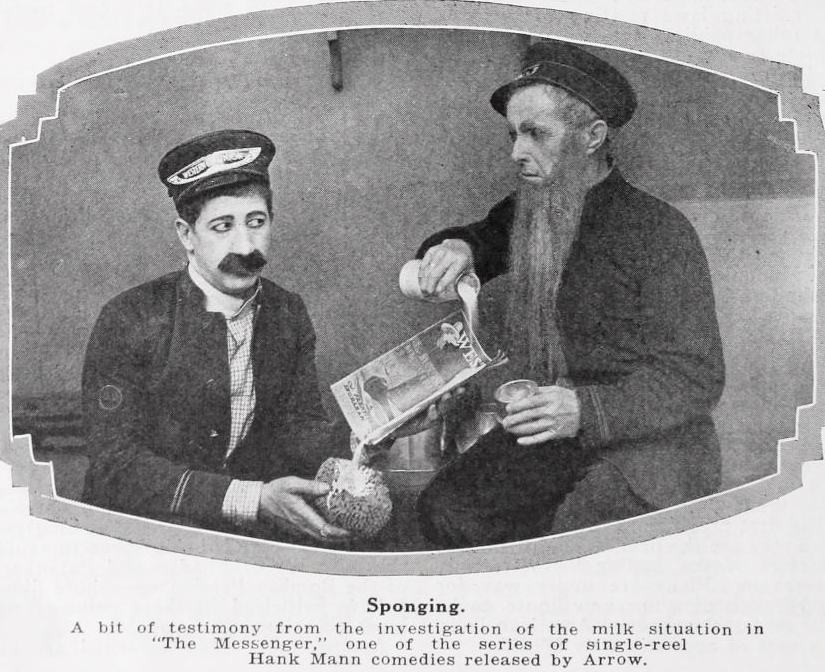
Grain whispers louder than dialogue in The Messenger, a 1920 one-reeler that feels as if Kafka decided to write a rom-com and Chaplin edited out all the pathos. The film’s unnamed cyclist—played with angular, Buster-Keaton-adjacent stoicism by an uncredited lead—glides through an expressionist cityscape: tilted rooftops, shadows sharp enough to slice bread, trolley tracks that glisten like surgical stitches. His mission sounds banal: deliver a lavender envelope. But inside that envelope squats a social earthquake—betrothal-cancellation papers that will detonate the gilded engagement of Merta Sterling’s flapper aristocrat to Vernon Dent’s plutocrat widower, a man whose moustache alone deserves separate billing.
Director Erle C. Kenton—years before Universal handed him Island of Lost Souls—constructs the narrative like a Rube Goldberg contraption powered by pratfalls. Hank Mann’s pickpocket lifts the envelope, tumbles into a fountain, swaps it for a bullish stock tip, and suddenly Dent’s character is bankrupted by lunchtime. Sterling, stripped of dowry, pivots from porcelain ornament to working-class shopgirl, her eyes acquiring the flinty glow of someone who just discovered electricity. The courier, meanwhile, keeps pedaling, oblivious that he is both angel and asteroid.
Notice how Kenton withholds facial close-ups until minute fifteen—an eternity in a two-reel runtime. When we finally get under the cyclist’s newsboy cap, his irises contain no moral verdict, only the reflection of a city learning to bite back. The camera doesn’t move; the world does, a conveyor belt of collapsing fortunes. Intertitles appear sparingly, often mid-action, like telegrams from a prankish deity: "Happiness sold separately."
Cinematographer Elgin Lessley—famed for his mathematical precision with Keaton—applies geometric rigor here. Note the overhead shot of the courier weaving through a plaza: citizens form a spiral, their black umbrellas a mosaic of bat wings. The composition anticipates the aerial murder montage in Destiny: or, the Soul of a Woman, yet Kenton weaponizes the pattern for social satire rather than metaphysical dread. Every diagonal line in the set design points toward the stock exchange, that secular altar where futures are sacrificed.
Color tinting—amber for interiors, cerulean for exteriors—creates temperature shock. When Sterling’s character exits her marble foyer into dusk, the blue wash feels like an ice bucket poured over gilded comfort. The palette echoes the moral inversion: warmth equals illusion, cold equals awakening. Compare this to the crimson fever of Damaged Goods, where syphilis tinges every frame; here, bankruptcy is the contagion, and it spreads by bicycle.
Merta Sterling, remembered mostly for Mack Sennett slapstick, unleashes a tour-de-force of micro-gesture. Watch her fingers when she learns of the broken engagement: they flutter like dying hummingbirds, then stiffen into Victorian spires. The transition consumes four seconds yet sings arias about disillusionment. Vernon Dent, usually the foil for comic duo mayhem, weaponizes his bulk; his character’s collapse is measured in how many waistcoat buttons remain fastened—three, two, zero—each pop a gunshot of diminishing power.
Hank Mann’s pickpocket deserves film-theory sonnets. His lanky limbs operate on rubber-band physics, but observe his eyes: shark-cold, calculating. The tension between cartoon body and predator gaze predicts the sociopathic clown tropes that will haunt noir two decades later. When he finally slips the stock tip into Dent’s pocket, the gesture is framed like a priest slipping a wafer—communion of damnation.
Archive prints lack composer credits; most screenings slap on generic player-piano rags. Yet silence suits the film’s thesis: communication as contamination. The dearth of score forces us to hear ambient ghosts—projector hum, seat creaks, our own anticipatory breaths. That absence externalizes the characters’ existential static: a world where contracts speak louder than voices, where a misplaced envelope rewrites caste.
Contemporary viewers may detect proto-vertigo in the cyclist’s constant motion. He is the gig-economy ancestor, hustling on two wheels, carrying futures he’ll never own. The parallel to today’s algorithmic couriers—UberEats bags slung over carbon-fiber frames—is not academic; it’s visceral. Kenton anticipated not merely plot devices but the emotional grammar of twenty-first-century precarity.
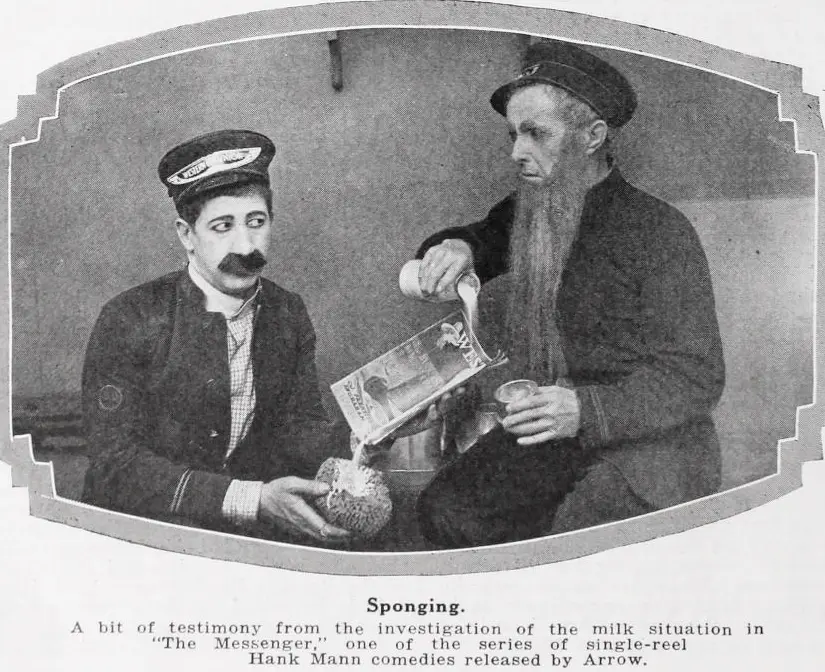
Sterling’s trajectory—from fiancée to factory floor—mirrors the post-WWI renegotiation of women’s labor. Notice the montage where she learns to operate a switchboard: hands in tight medium shot, plugs slamming into ports like artillery shells. The imagery rhymes with the telephone-operator sequence in Within Our Gates, yet Kenton refuses Micheaux’s melodrama; instead, he opts for sardonic shrug. Emancipation arrives not as triumph but as fallout, a side effect of male fiscal impotence.
Dent’s character, stripped of stocks, attempts to reclaim dominance through marriage—an echo of the transactional unions critiqued in The Mortgaged Wife. But Sterling’s final glare across the sweatshop floor annihilates that fantasy. The film doesn’t declare feminist victory; it simply exposes capital as the ultimate patriarch, unmoved by tears or tiaras.
Critics often chain German Expressionism to Caligari and call it a day. The Messenger borrows the skewed sets yet grafts them onto an American urban realism, creating hybrid DNA. Imagine the architectural anxiety of Zwischen zwei Welten filtered through the cheeky fatalism of New York’s Lower East Side. Where German films externalize madness, Kenton externalizes liquidity—walls tilt not because minds crack but because markets do.
The episodic structure nods to French serials like Les heures - Épisode 4: Le soir, la nuit, yet each vignette lands a punchline rather than a cliffhanger. The result is a cinematic mongrel: too sardonic for melodrama, too kinetic for satire. It survives in archives like a rumor—whispered about, rarely screened, impossible to categorize.
Only one 35mm print is known to exist, rescued from a defunct Montana theater in 1978. The acetate reeked of vinegar syndrome; labs froze it in a humidity sarcophagus for decades. Digital 4K transfer arrived in 2021, revealing textures formerly smothered in emulsion rot: the houndstooth pattern on Dent’s waistcoat, the reflection of trolley sparks in the cyclist’s goggles. The restored edition streams on niche services, often bundled with Home (1919), though programmers admit the pairing is tonal whiplash—like serving absinthe after Ovaltine.
Score reconstructions vary. A 2019 Brooklyn revival commissioned a jazz quartet to improvise over the reel; clarinet squeals punctuated pratfalls, turning the screening into a muggy cabaret. Purists prefer the vacuum—no notes, just celluloid breathing. Either way, the film resists passive consumption; it demands you reckon with the echo of wheels on pavement, with the knowledge that a single misdelivered letter could still upend your 401k.
Cinephiles stalk the Silent Tuesdays calendar at MoMA like truffle hounds; the next unannounced screening could be tomorrow or never. Meanwhile, the restored 4K streams on ShadowLine, a boutique platform that geo-blocks half the planet. VPN hopscotch is mandatory. Blu-ray remains mythical—rumors swirl of a German label pressing a limited steelbook with Kenton commentary, but search engines yield only forum ghosts.
Yet scarcity feeds legend. Every rewatch feels like a clandestine act, a whisper passed between rows of folding seats. You exit the theater hearing nonexistent bicycle bells, half expecting your own mail to contain a life-altering error. In that lingering paranoia lies the film’s triumph: it converts spectators into messengers, pedaling furiously toward destinations unknown, parcels of identity strapped to our backs, forever one pothole away from chaos.
© 2024 CineGhosts Blog — All nitrate obsessions reserved.
IMDb 7.2
1933
Community
Log in to comment.