DbcultAccessing Vault...
Cult Review
Senior Film Conservator
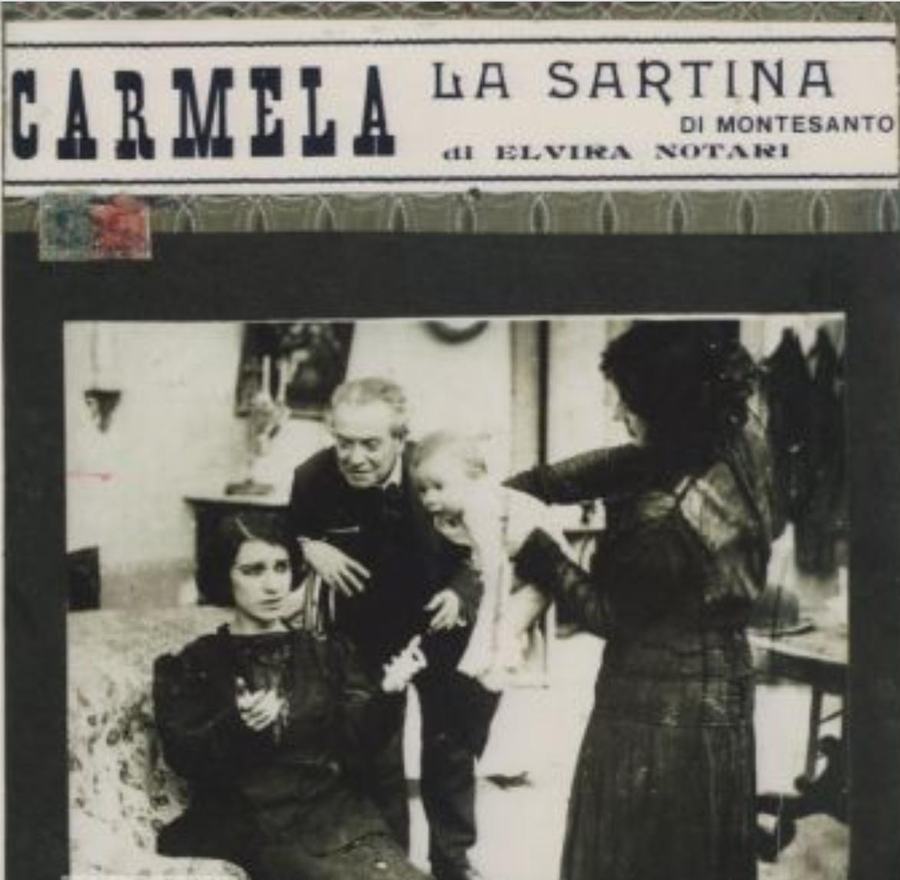
The annals of silent cinema are replete with tales of grand romance, tragic destinies, and moral quandaries, yet few resonate with the raw, psychological intensity of Carmela, la sartina di Montesanto. This 1916 Italian drama, a creation of the astute Davide Galdi, is not merely a period piece; it's a profound exploration of human nature, class distinctions, and the corrosive power of unchecked desire. To revisit this film today is to peel back layers of cinematic history and find a pulsating heart beating beneath the flickering images, a testament to the enduring power of storytelling through expressive gesture and stark, evocative imagery.
At its core, the narrative is a tragic ballet between innocence and corruption, personified by the titular Carmela, brought to life with poignant grace by Angelina Rulli, and the magnetic, yet morally bankrupt, Count Luigi, portrayed with compelling complexity by Giulio Paternostro. The film opens, implicitly, with the echoes of a past grandeur now faded, as Count Luigi inherits a dilapidated villa, a physical manifestation of his own internal decay. This setting, with its crumbling opulence, immediately establishes a gothic undertone, reminiscent in its atmospheric dread of literary works that explore the decay of aristocracy and the shadows it casts upon the innocent. Luigi, a man whose charm is as potent as his depravity, quickly sets his sights on Carmela, a seamstress of humble origins but luminous spirit. Her simple existence, dedicated to her craft and her steadfast boyfriend, becomes the unwitting target of his sophisticated machinations.
Luigi's pursuit of Carmela is a masterclass in manipulation. He is not merely a seducer; he is an architect of deception, weaving a tapestry of lies and false promises that slowly, inexorably, ensnare Carmela. The film, even without spoken dialogue, conveys the insidious nature of his charm, how it can blind even the most discerning heart to the underlying malice. Carmela, perhaps naive to the ways of the world beyond Montesanto, falls prey to his allure, a decision that ripples through her life with devastating consequences. This tragic romantic entanglement, driven by a powerful man's whim and a vulnerable woman's misplaced trust, echoes the timeless themes found in other cinematic and literary works. One might draw parallels to the ill-fated romance in The Betrothed, where social status and manipulative figures similarly dictate the course of love, or even the grand, tragic passion of Romeo and Juliet, though here, the tragedy stems less from warring families and more from warring moralities within a single, predatory individual.
The narrative's turning point arrives with a duel, a staple of melodramatic cinema, but here imbued with a deeper significance. Luigi, wounded in a clash over another woman—a clear indicator of his incorrigible philandering—is brought low. This physical vulnerability, however, does not necessarily equate to moral redemption. It instead provides the stage for Carmela's profound devotion. She nurses him with an unwavering commitment, transcending the betrayal she has suffered. It is in these intimate, hushed moments of recovery that the film truly delves into the psychological undercurrents that define Luigi. His delirium, a window into his tormented subconscious, reveals fragments of a deeper secret: accusations against his butler, Giangrande, concerning an unspecified blunder. This revelation adds a layer of mystery and intrigue, suggesting that Luigi's moral failings might be intertwined with, or even a consequence of, past misdeeds and unresolved guilt.
The success of Carmela, la sartina di Montesanto hinges significantly on the exceptional performances of its lead actors. Angelina Rulli, as Carmela, embodies a quiet strength and heartbreaking vulnerability. Her expressive eyes and delicate gestures convey a spectrum of emotions—from initial infatuation and joy to profound sorrow and unwavering loyalty—without uttering a single word. She is the moral compass of the film, her suffering a stark contrast to Luigi's self-indulgence. Rulli's portrayal is a masterclass in silent acting, relying on nuanced facial expressions and body language to communicate the depths of her character's inner world. It's a performance that stands shoulder to shoulder with other powerful female leads of the era, whose resilience and emotional fortitude often carried the weight of complex narratives.
Giulio Paternostro’s Count Luigi is equally captivating, albeit in a darker vein. He manages to imbue Luigi with a dangerous charisma that explains Carmela's initial attraction, even as he portrays the character's inherent cruelty and moral emptiness. Paternostro avoids making Luigi a one-dimensional villain; instead, he suggests a damaged soul, perhaps haunted by past events, especially evident during his delirious accusations against Giangrande. This ambiguity adds a fascinating depth to the character, preventing him from becoming a mere caricature of aristocratic villainy. The supporting cast, including Mariù Gleck, Signor Mastrojanni, Eduardo Notari, Camillo Talamo, Goffredo D'Andrea, Tina Pica, and Tina Somma, all contribute to the rich tapestry of Montesanto life, their presence grounding the central drama in a believable community, even if their roles are less expansive. The understated yet crucial presence of Giangrande, the butler, is also key, as his character remains shrouded in the mystery of Luigi's accusations, a silent fulcrum around which the Count's psychological torment revolves.
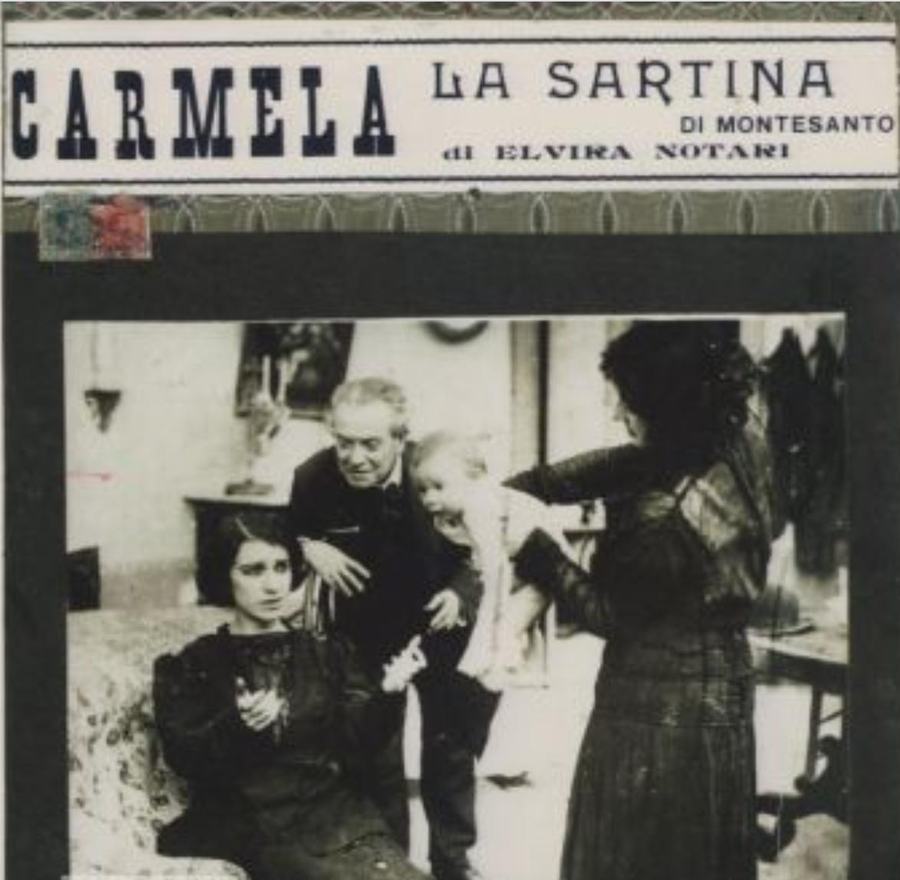
Davide Galdi, credited as the writer, demonstrates a profound understanding of dramatic structure and character development, crafting a narrative that is both expansive in its emotional scope and meticulous in its plotting. The film's ability to maintain suspense and emotional resonance without spoken dialogue is a testament to Galdi's skill in visual storytelling. The pacing, the use of intertitles, and the carefully choreographed scenes all work in concert to build tension and convey complex emotional states. Galdi’s script deftly navigates themes of class disparity, the corrupting influence of power, and the enduring nature of selfless love, even in the face of profound betrayal. The ambiguity surrounding Giangrande's 'blunder' is a particularly clever narrative device, leaving the audience to ponder the full extent of Luigi's past and the true nature of his psychological torment, elevating the film beyond simple melodrama into something more akin to a psychological thriller, a quality one might also appreciate in the nuanced plotting of The Conspiracy, where hidden motives drive much of the drama.
The directorial choices, while not explicitly credited in the provided information, are evidently in harmony with Galdi's vision. The framing, the use of light and shadow, and the arrangement of actors within the frame all contribute to the film’s powerful visual language. Silent films often relied heavily on mise-en-scène to convey meaning, and Carmela, la sartina di Montesanto is no exception. The decrepit villa, for instance, is not just a backdrop but an active participant in the story, symbolizing the decay of the aristocratic world Luigi inhabits and the moral rot within him. The contrasting brightness of Montesanto's streets and the shadowed interiors of the villa visually underscore the stark difference between Carmela's world and Luigi's.
As a product of Italian silent cinema, Carmela, la sartina di Montesanto stands as a significant artifact. The Italian film industry of the early 20th century was a prolific and innovative force, producing epics, historical dramas, and melodramas that captivated audiences worldwide. This film, with its focus on character-driven drama and psychological depth, showcases a particular facet of that creative output. It demonstrates a sophistication in storytelling that belies the common misconception of silent films as merely simplistic or overly theatrical. Instead, it proves that even without synchronized sound, cinema possessed the power to explore complex human emotions and societal critiques with profound impact. Comparisons could be made to other contemporary works that grappled with societal issues, perhaps less directly than Down with Weapons, but certainly within the sphere of human struggle and moral conflict.
The film’s exploration of class differences, where an aristocratic man feels entitled to exploit a woman of lower social standing, remains disturbingly relevant. This theme, a pervasive undercurrent in many early 20th-century narratives, reflects the societal anxieties and power imbalances of the era. Carmela's predicament is not just personal; it is emblematic of the struggles faced by countless women caught in the rigid social hierarchies of the time. Her eventual actions, whether they lead to tragedy or a form of quiet triumph, speak volumes about resilience in the face of overwhelming odds. It is a narrative that, despite its period setting, feels remarkably modern in its psychological insights and its unflinching portrayal of human frailties and strengths.
Ultimately, Carmela, la sartina di Montesanto is more than just a historical curiosity; it is a compelling drama that resonates on multiple levels. It offers a glimpse into the artistic and thematic concerns of early Italian cinema while delivering a timeless story of obsession, deception, and the enduring power of devotion. The film challenges viewers to look beyond the surface, to decipher the unstated emotions and motivations that drive its characters. The mystery of Giangrande's blunder, left tantalizingly open, serves as a powerful metaphor for the hidden depths and unresolved traumas that often shape human behavior, transforming Luigi from a simple villain into a figure of complex, if ultimately destructive, pathos. For enthusiasts of silent film and anyone interested in the foundational narratives of cinematic art, this film is an essential viewing experience, a vibrant, emotional journey into a past that continues to inform our present understanding of love, loss, and the human condition.
The film's capacity to evoke such profound emotion without the aid of spoken dialogue underscores the universal language of visual storytelling. It reminds us that gestures, gazes, and the subtle shifts in an actor's posture can convey more than pages of dialogue. This is the magic of silent cinema, and Carmela, la sartina di Montesanto stands as a shining example of its potent artistry. It invites us to engage with cinema on a deeper, more intuitive level, to interpret the unspoken and to feel the weight of every silent glance and every deliberate movement. It's a film that lingers in the mind, prompting reflection on the complexities of morality and the often-painful intricacies of human relationships, solidifying its place not just as a historical document, but as a vibrant piece of dramatic art.
IMDb —
1921
Community
Log in to comment.