DbcultAccessing Vault...
Cult Review
Senior Film Conservator
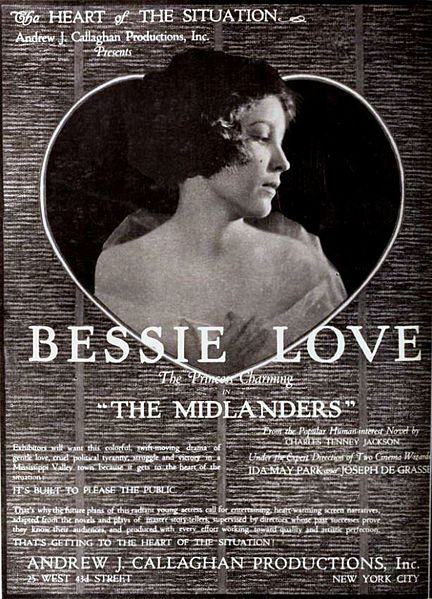
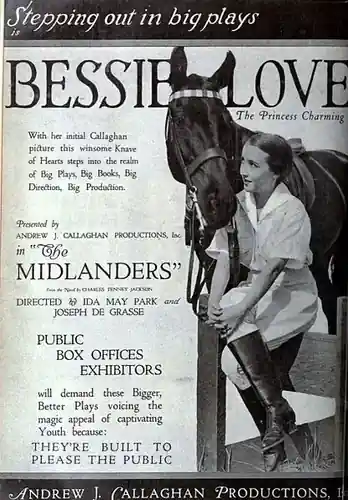
The silent era was frequently preoccupied with the 'foundling'—a blank slate upon which the anxieties of class, lineage, and morality could be projected. In Ida May Park’s The Midlanders, this trope is elevated beyond mere melodrama into a sophisticated interrogation of provincial hypocrisy. The film, anchored by the luminous Bessie Love, navigates the treacherous waters between the fluid identity of the river and the rigid, calcified structures of the valley town. Much like the narrative tensions found in The Love Doctor, the film examines the intersection of professional ambition and personal reputation, though here the stakes are weighted with the heavy gravity of early 20th-century social ostracization.
The opening sequences, set against the backdrop of New Orleans, establish a visual language of confinement. The convent is not merely a religious institution but a metaphorical cocoon. When Aurelie escapes, her transition to the riverboat represents a radical shift in kinetic energy. Captain Lindstrom is the quintessential maritime father figure, yet his decision to send her to his brother John—a squatter—highlights a tragic irony: in seeking to give her 'roots,' he inadvertently plants her in a garden of weeds. This thematic preoccupation with the 'proper' place for a woman mirrors the domestic anxieties explored in His Wife's Money, where financial and social standing dictate the boundaries of affection.
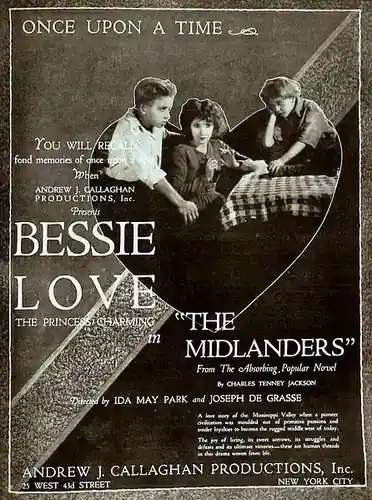
Bessie Love delivers a performance of remarkable psychological density. Her Aurelie is not a passive victim of circumstance but a woman whose inherent vitality acts as a mirror to the town's insecurities. When she wins the beauty contest, it is a moment of triumph that carries the seeds of her subsequent alienation. The townspeople are enamored with her image but repulsed by her success. This dichotomy is a recurring motif in silent cinema, often seen in the works of directors who sought to critique the 'small-town mind.' Her transition to the stage is handled with a sense of inevitability; she is a creature of light forced into the shadows of a valley that cannot contain her. Her screen presence here rivals the charm found in Patsy, yet Love imbues the role with a darker, more melancholic undercurrent.
"The beauty contest in The Midlanders functions as a social guillotine; it invites the protagonist to stand tall only so the community can more efficiently witness her fall from grace once she dares to transcend their geographical limits."
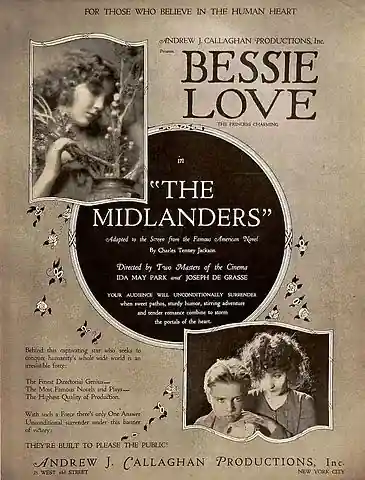
The film’s romantic conflict is less about the heart and more about the soul of the American middle class. We are presented with three distinct paths for Aurelie. First, there is Harlan Van Hart, the scion of the local elite. His interest in Aurelie is tinged with the condescension of the 'educated' class, a dynamic that often leads to ruin in films like The Gray Mask. Harlan represents the status quo—a life of quiet desperation within the confines of Judge Van Hart’s moral jurisdiction. Then there is Wiley Curran, the newspaper editor. Wiley is the observer, the man who documents the town’s decline but lacks the fortitude to change it. His fascination with Aurelie is intellectual, almost voyeuristic, reminiscent of the narrative observers in Hamlet who watch the tragedy unfold from the ramparts.
Finally, we have Arney Vance. Arney is the outlier, the man who sees Aurelie not as a prize or a headline, but as a human being. The choice of Arney is a radical rejection of both the intellectual elite and the media’s gaze. It is a return to a more primal, honest connection, free from the 'midlander' obsession with optics. This struggle for authentic connection amidst social pressure is a theme also touched upon in The Wonder Man, though Park’s direction here is far more grounded in the grit of the riverbank than in the escapism of typical genre fare.
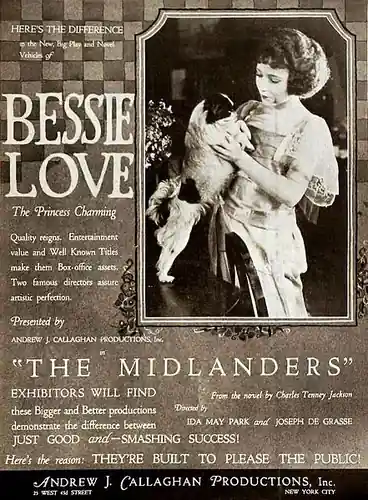
As one of the few women directing in the early studio system, Ida May Park brought a nuanced perspective to the 'fallen woman' narrative. In The Midlanders, she avoids the easy path of moralizing. Instead, she turns the camera back on the audience, questioning why we cheer for the underdog only to resent her when she wins. The pacing of the film is deliberate, allowing the atmosphere of the river valley to seep into the narrative like a rising tide. The visual contrast between the New Orleans convent and the squatter's cabin is stark, highlighting the precariousness of Aurelie’s social standing. The cinematography captures the Mississippi not as a romanticized artery of commerce, but as a mercurial force that gives and takes with equal indifference, a quality shared with the atmospheric tension in Det gamle fyrtaarn.
The film’s climax—Aurelie’s return to the town—is a masterclass in tension. The 'spurning' she experiences is not a single dramatic event but a series of micro-aggressions, cold stares, and closed doors. It is a psychological siege that tests the limits of her resilience. This sequence serves as a scathing critique of American parochialism. Unlike the swashbuckling adventures of The Three Musketeers, where conflict is resolved with a blade, the battles in The Midlanders are fought with whispers and reputations. The film understands that for a woman in 1920, the tongue was a more lethal weapon than the sword.
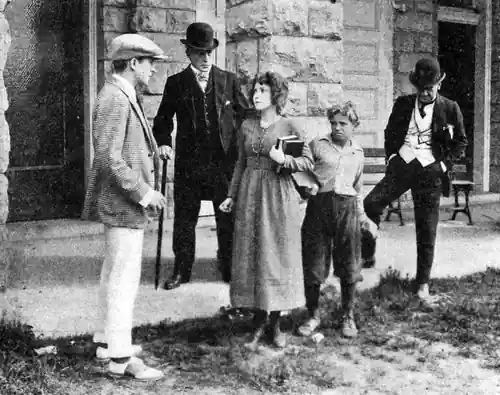
When comparing The Midlanders to its contemporaries, its groundedness becomes even more apparent. While The Kangaroo might lean into more overt melodrama, Park’s work remains focused on the internal life of its protagonist. There is a sense of inevitability here that mirrors the tragic arcs of Jalousiens Magt, yet Aurelie’s ultimate choice of Arney Vance offers a glimmer of hope—a suggestion that one can survive the 'midlands' if they find an anchor in genuine affection. The film also avoids the comedic pitfalls of He Couldn't Fool His Wife or Ambrose's Matrimonial Mixup, maintaining a somber dignity even in its most romantic moments.
The financial subtext of the theatrical offer and the beauty contest prize money also brings to mind the rapid-fire stakes of Five Thousand an Hour. However, where that film views wealth as a scorecard for success, The Midlanders views it as a catalyst for isolation. Aurelie’s success does not bring her freedom; it merely changes the nature of her cage. The 'theatrical producer' is less a savior and more a merchant of her image, a theme that resonates through the ages and remains relevant in our modern celebrity-obsessed culture.
The river valley itself acts as a character, a topographical representation of the characters' moral stagnation. John Lindstrom, the squatter, is a man who has given up on the current, settling for the silt. His brother, the Captain, represents the lost potential of movement. Aurelie is caught between these two masculine failures until she finds her own path. The film’s use of location—or at least the convincingly rendered studio sets—creates a sense of place that is both specific and universal. It is the 'Midlands' of the soul, a place where ambition is viewed with suspicion and beauty is a liability. This sense of impending doom and social pressure is as palpable as the mystery in The Strangler's Cord, though the 'noose' here is woven from the town's collective judgment.
In the final analysis, The Midlanders is a vital piece of silent cinema that deserves a place in the pantheon of early feminist filmmaking. Ida May Park does not just tell a story of an orphan’s rise; she deconstructs the very society that makes such a rise so perilous. Bessie Love’s performance is the heartbeat of the film, a pulse of humanity in a world of rigid social clockwork. It reminds us that while the 'long arm of the law'—as seen in The Long Arm of the Law—can punish the body, it is the collective cold shoulder of the community that truly breaks the spirit. Aurelie’s journey from the convent to the stage and back to the river is a haunting cycle of search and rejection, ultimately finding peace not in the applause of the many, but in the quiet recognition of the one.
Written by the Lead Critic for the Silent Era Archives. A deep dive into the socio-political undercurrents of 1920s cinema.
IMDb 6
1913
Community
Log in to comment.