DbcultAccessing Vault...
Cult Review
Senior Film Conservator
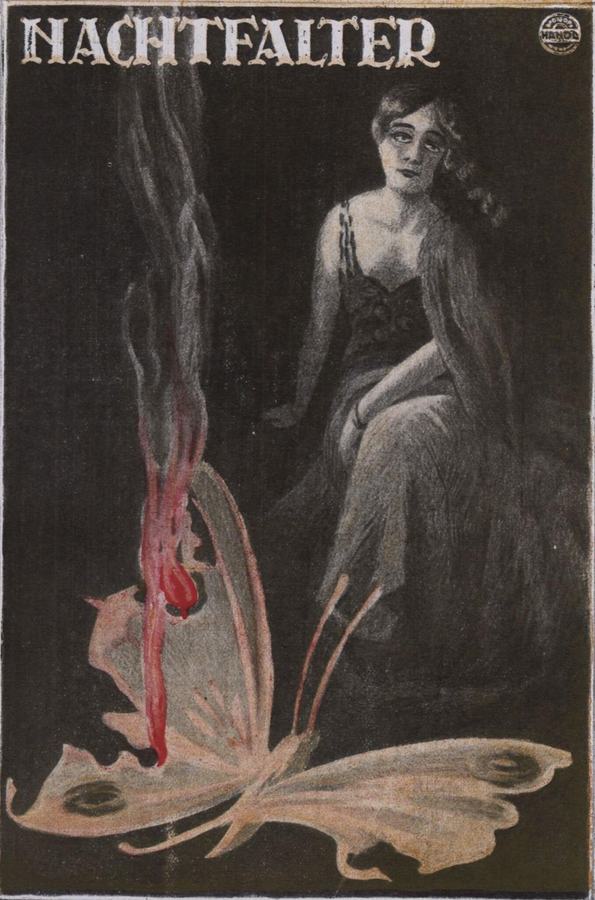
Imagine a marble chip slipping beneath the fingernail of dawn: that splinter is Thea’s first hemorrhage. Gallone and Bataille translate the heroine’s pneumonic roses into visual arabesques—every exhalation a gust of magnesium flash-powder, every silhouette a cracked statue against nitrate dusk. The result is not a medical melodrama but a metaphysical striptease in which mortality itself performs the danse macabre.
Lyda Borelli, the seraphic moth-goddess of Italian silent divismo, glides through the frames as though her joints were lubricated with absinthe. Arms undulating like silk caught in tramontana, she embodies a decadent paradox: the healthier she appears, the nearer she is to disintegration. It is a performance calibrated not in grand histrionics but in micro-tremors—an eyelid flutter that suggests both orgasm and last breath.
Where American films of the era sentimentalized illness—see The Foundling—La falena flirts with morbid glamor. Costume designer G. Cassini-Rizzotto drapes Borelli in diaphanous chiffons the color of arterial blood mixed with champagne; as Thea’s lungs collapse, her wardrobe lightens, until she drifts through the finale like a crimson comet evaporating in night sky. The camera lingers on clavicles sharp enough to slice the celluloid itself.
Tuberculosis here is no mere plot device; it is the ultimate avant-garde accessory, a perverse badge of bohemian authenticity. When Thea sculpts a self-portrait, she chisels cheekbones that mirror her own wasting, turning the studio into a mausoleum where Beauty and Thanatos lock lips.
Gallone shoots the Eternal City like a fevered lover who caresses scars more than skin. Crumbling aqueducts become spinal columns of some extinct leviathan; moonlit piazzas gape like abscessed mouths. The director overlays dissolves of ancient frescoes onto modern cafés, suggesting centuries metastasizing into one instant. The effect is proto-surrealist, predating the oneiric Paris of In the Clutches of the Paris Apaches by several years.
The final soirée is staged as a living installation. Servants drape the salon in black velvet; chandeliers are extinguished one by one until only candelabra remain, their tapers sweating wax like slow-motion tears. A string quartet performs a waltz whose rhythm mimics Thea’s erratic pulse; guests circulate like platelets inside an arterial labyrinth. The sequence lasts only twelve minutes yet feels suspended in a limbo outside chronometric time.
Into this chiaroscuro opera steps Filippo, played by Andrea Habay with the stiff angularity of a man carved from walnut. His face registers less heartbreak than bewilderment—as though love itself were a neurological hoax. Their final tableau—Thea collapsing into his arms, blood blossoming across his white gloves—recalls Christian martyr paintings, but the subtext is secular: here, desire is merely another word for autopsy.
Editor Ugo Falena (no relation to the title) eschews continuity in favor of pulmonary lurches. Jump-cuts mimic tubercular paroxysms; shot durations shorten as the illness progresses, culminating in stroboscopic flashes during the death scene. Film historians often credit French Impressionists with rhythmic editing, yet this 1916 Italian curio anticipates Epstein’s theories by slicing breath into visual syncopation.
Unlike the utilitarian cards of, say, What Happened to Mary, La falena’s intertitles read like fragments from an unpublished Decadent manifesto: “Love is a velvet sarcophagus lined with teeth.” Bataille’s French source play is filtered through Gallone’s baroque Italian, yielding linguistic orchids that sprout from cracked marble.
No original score survives; the Cinémathèque Italiana reconstruction screened at Pordenone paired the film with a newly commissioned suite for string octet and musical saw—an inspired choice, as the saw’s warble resembles a consumptive wheeze. Home-video releases often slap on generic piano, but seek the octet version; it replicates the sensation of bone marrow resonating inside an echo chamber.
Where Francesca Bertini in Saints and Sorrows grounds emotion in proletarian grit, Borelli etherealizes anguish until it levitates. Compare the fainting scenes: Bertini collapses like a sack of flour—earthbound, social-realist—whereas Borelli descends in slow motion, fabric billowing as though the air itself were a lover reluctant to let go. The distinction defines two philosophies of performance: body as flesh versus body as vapor.
Early cinema rarely granted women creative authorship; Thea wields chisels, commissions models, and stares at male torsos with unabashed appetite. Yet the camera undercuts autonomy by fetishizing her decline. The tension—empowerment versus eroticized morbidity—renders La falena a proto-feminist text that simultaneously succumbs to voyeurism. One could argue the contradiction is intentional: art cannot transcend the market’s necropolitics, even in allegory.
Without La falena there is no Bella Donna’s opulent ennui; without Borelli’s death-mask glamour, Siouxsie Sioux might never have smeared kohl into hollowed sockets. The film’s DNA persists in the visual grammar of Antonioni’s Red Desert, in the consumptive chanteuses of Tom Waits ballads, in Nick Cave’s murder-haunted lyrics. It is a virus dressed as a flower, still germinating a century later.
Most extant prints circulate in 2K DCP struck from a 35 mm element riddled with vertical scratches that resemble arterial scratches. Embrace the decay: the emulsion’s sores rhyme with Thea’s hemorrhaging bronchi. Project it onto a wall-sized screen; allow the grain to hover like dust motes in a sepulcher. Dim the bulbs to 15 lux—any brighter and the illusion of candlelit Rome evaporates.
Once you witness Borelli’s final convulsion—eyes rolling upward until only lunar whites glint—you will carry that image like latent bacilli in the lymph nodes of memory. La falena does not ask for sympathy; it colonizes your lungs with its velvet spores. You will exit the screening, cough once into a white handkerchief, and glimpse a crimson moth trembling in the cotton—proof that cinema, too, is contagious.
IMDb —
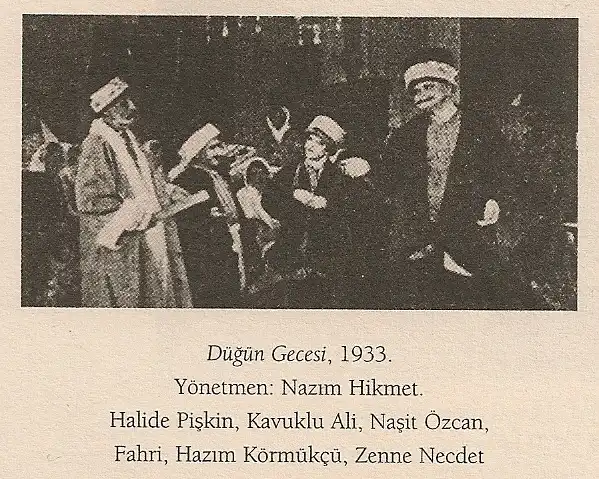
1933
Community
Log in to comment.