DbcultAccessing Vault...
Cult Review
Senior Film Conservator
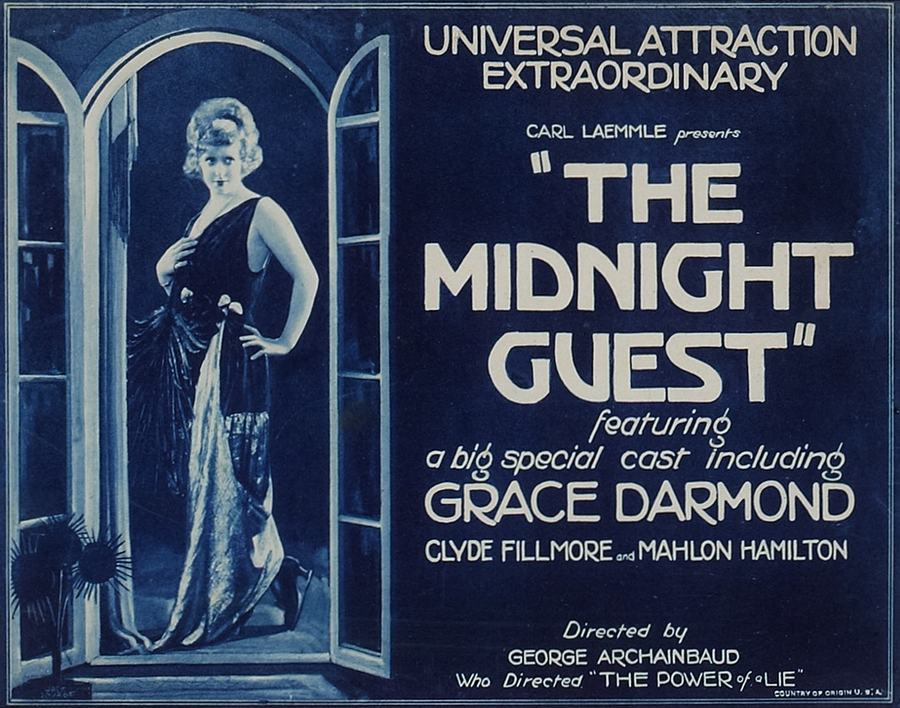
The Midnight Guest unfurls like a chiaroscuro painting, each frame drenched in the ink‑black certainty of night while punctuated by splashes of lurid orange and electric blue. Director Rupert Julian, alongside co‑writer Andrew Percival Younger, constructs a narrative lattice that is simultaneously intimate and expansive, allowing the audience to peer through the cracks of a world where virtue is a commodity and redemption a fragile mirage.
Mathilde Brundage delivers a performance that oscillates between hardened street‑wise cunning and a nascent vulnerability that feels almost tactile. Her portrayal of the titular "midnight guest" is not merely a study in transformation; it is an excavation of the psyche of a woman who has long learned to trust only the echo of her own footsteps. When the affluent benefactor—played with understated gravitas by Clyde Fillmore—extends an olive branch, Brundage's character teeters on the precipice of a new identity, her eyes flickering between suspicion and yearning.
The benefactor himself is a study in contradictions. He embodies the archetype of the philanthropic patron, yet his motivations are never fully disclosed, leaving the viewer to wonder whether his generosity stems from genuine altruism or a desire to possess something untouchable. This ambiguity fuels the film's central tension, positioning him as both catalyst and enigma.
Mahlon Hamilton's cynical confidant, a man whose world-weariness is etched into every line of his face, serves as the film’s counterpoint to the hopeful overtures of the benefactor. His sardonic commentary, laced with a dry humor that borders on bitterness, underscores a deep-seated belief that redemption is a myth perpetuated by the privileged. When he scoffs at the notion of reforming the thief, his disdain is palpable, and his eventual injury becomes a crucible that reshapes his worldview.
The moment Pat Harmon's character—an erstwhile accomplice resurfacing with a gun—fires upon the cynic, the narrative takes a sudden, violent turn. The shot reverberates not only through the physical realm but also through the emotional architecture of the film, forcing each character to confront the fragility of their convictions.
The thief’s desperate bid to save the wounded cynic is rendered with a kinetic urgency that is both visceral and symbolic. In the frantic scramble through rain‑slicked alleys, the choreography of danger becomes a ballet of redemption. The act of salvation, however, is not a simple transaction; it is an exchange of power, trust, and ultimately, affection. Hamilton’s cynic, once impermeable to sentiment, finds his hardened exterior softened by the very hands that once threatened his demise.
This unexpected romance is not painted with the rose‑tinted brush of melodrama. Instead, it is a slow‑burning ember that glows amidst the ash of betrayal, a testament to Julian’s refusal to indulge in facile sentimentality.
Visually, The Midnight Guest is a masterclass in atmospheric storytelling. The cinematographer employs a palette dominated by deep blacks and stark whites, allowing the occasional intrusion of dark orange (#C2410C) to highlight moments of moral illumination. Yellow (#EAB308) surfaces in the form of street lamps and neon signage, casting an otherworldly glow that both guides and misleads the characters. The sea‑blue (#0E7490) hue infiltrates the nocturnal sky, evoking a sense of melancholy that permeates the film’s tone.
Every frame is meticulously composed; shadows are not merely absence of light but active participants in the storytelling. The use of low‑angle shots during the benefactor’s introductions imbues him with an almost regal aura, while high‑angle perspectives on the thief emphasize her vulnerability. The camera lingers on the cynic’s face as he lies wounded, allowing the audience to absorb the rawness of his pain.
The auditory landscape complements the visual palette with a score that weaves jazz‑inflected motifs with somber strings. The music swells during moments of tension, receding into a haunting silence as the characters confront their inner demons. The die‑getic sounds—rain pattering on cobblestones, distant sirens, the metallic clink of a gun—anchor the film in a gritty realism that heightens its emotional resonance.
When placed alongside contemporaneous works such as Heiress for a Day or Black Sheep, The Midnight Guest distinguishes itself through its refusal to resolve its moral dilemmas with tidy conclusions. While Heiress for a Day offers a light‑hearted exploration of class mobility, and Black Sheep delves into familial betrayal, The Midnight Guest dwells in the liminal spaces between virtue and vice, offering a more nuanced, albeit darker, meditation on the possibility of change.
The film also shares thematic DNA with Children of Dust, particularly in its portrayal of characters navigating a world where survival often necessitates moral compromise. However, The Midnight Guest’s focus on the transformative power of love—albeit a love forged in the crucible of violence—sets it apart, granting it a unique emotional core.
Grace Darmond’s supporting role, though limited in screen time, provides a crucial emotional anchor for the protagonist. Her subtle glances and restrained dialogue convey a depth of feeling that words alone could not capture. Pat Harmon’s portrayal of the vengeful ex‑accomplice is chillingly efficient; his cold stare and deliberate movements imbue the character with an almost mythic menace.
Clyde Fillmore, as the wealthy benefactor, avoids the trappings of a one‑dimensional benefactor archetype. Instead, he offers fleeting moments of vulnerability—most notably in a scene where he confides his own past misdeeds, suggesting that his philanthropy may be a form of atonement. This layered characterization enriches the film’s exploration of redemption as a two‑way street.
The film’s pacing is deliberate, allowing the audience to savor each character’s internal conflict. The first act establishes the thief’s world with meticulous detail, the second act introduces the benefactor’s influence and the cynic’s skepticism, and the third act erupts into a crescendo of action and emotional revelation. This three‑act structure, while conventional, is executed with a freshness that keeps the viewer engaged.
The climactic rescue sequence is a masterstroke of tension building. The intercutting of frantic footsteps, the ticking of a watch, and the echoing gunshots creates a rhythm that mirrors the protagonist’s racing heart. The subsequent quiet after the storm—where the cynic’s eyes meet the thief’s—offers a poignant pause that underscores the transformative power of shared trauma.
At its core, The Midnight Guest interrogates the notion that individuals can escape the gravitational pull of their past. The thief’s struggle is not simply about abandoning crime; it is about confronting the internalized belief that she is unworthy of love or safety. The cynic’s journey, conversely, reveals the brittleness of his world‑view; his disdain for redemption is shattered when he becomes dependent on the very person he once dismissed.
Power dynamics shift fluidly throughout the narrative. The benefactor’s initial position of authority wanes as the thief’s agency grows, culminating in a reversal where the former victim becomes the savior. This inversion challenges traditional gender and class hierarchies, inviting viewers to reconsider preconceived notions about who holds agency in a story of crime and salvation.
Although The Midnight Guest did not achieve blockbuster status upon its release, its influence can be traced in later noir‑inflected dramas that explore redemption through acts of violence. Filmmakers have cited its bold use of color contrast and its unflinching portrayal of moral ambiguity as inspirations for subsequent works.
The film’s enduring relevance is also evident in academic discourse. Scholars frequently reference its subversion of the ‘damsel in distress’ trope, noting how the protagonist’s agency redefines the narrative expectations of early 20th‑century cinema.
The Midnight Guest stands as a compelling testament to the power of cinema to interrogate the human condition. Its deft blend of visual artistry, nuanced performances, and thematically rich storytelling renders it a work that rewards repeated viewings. For aficionados of noir, redemption narratives, or simply those seeking a film that challenges the binary of good versus evil, this piece offers a richly textured experience that lingers long after the credits roll.
In sum, the film’s success lies in its ability to balance stark realism with poetic melancholy, to present characters who are simultaneously flawed and heroic, and to employ a palette of darkness punctuated by bursts of color that mirror the flickering hope within its protagonists.
IMDb —
1929
Community
Log in to comment.