DbcultAccessing Vault...
6.9/10
Senior Film Conservator
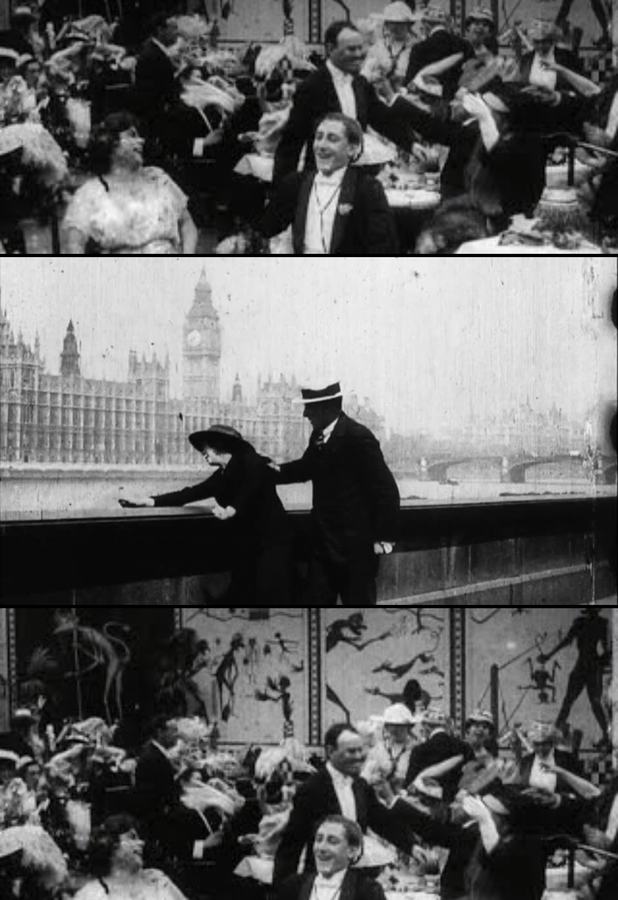
A definitive 6.9/10 rating for a film that redefined the boundaries of cult cinema. The Rogues of London remains a cornerstone of transgressive art.
Gaslight never merely glows in Rowland Talbot’s London—it drips, corrodes, and baptizes. From the first amber iris-in we are plunged into a metropolis that chews virtue and exhales soot, a labyrinth where hymn-singing silhouettes duel with switchblade shadows. The film’s pulse is established not through title-card sermonizing but via a pair of mirrored rescues: a parson’s rebellious offspring halts a housemaid’s watery self-immolation, and that same woman later risks the gallows to resurrect his reputation after a crooked svengali frames him for the garrote demise of a burlesque dancer.
Blanche Forsythe, porcelain yet flinty, grants the maid Nora a tremulous dignity; her eyes flicker like struck matches each time the camera dares to intimate surrender. Opposite her, Roy Travers plays Harold Chetwynd—collar too starched, conscience too alive for the East End’s carnival of graft. Travers underplays, letting the clenched muscles along his jaw narrate the agony of a man whose faith has been bartered for a murder charge. Their chemistry is less swoon than static electricity: you anticipate the spark without predicting the burn.
Fred Paul’s Markham, the predatory cabaret owner who stages crimes the way impresarios rehearse ballets, oozes an oleaginous charm. His cigarette holder becomes a conductor’s baton, orchestrating perjury and police corruption with a flick of the wrist. Paul never vaults into moustache-twirling caricature; instead he exudes the banal complacency of someone who believes perdition is just another West End revue.
Visually, the picture revel in chiaroscuro. Cinematographer Geoffrey Wilman tilts the camera as though London itself were sliding off the reel. In one bravura setup, Harold’s candlelit cell occupies the lower third while the cathedral spire—symbol of both sanctuary and condemnation—looms in a matte-painted upper frame, bisected by iron bars. The composition is silent-era theology: salvation and incarceration sharing the same sliver of celluloid.
Talbot’s screenplay, adapted from a penny dreadful serialized in The London Mercury, condenses a labyrinth of red herrings. Yet the narrative architecture is ruthlessly symmetrical: every act of charity births a betrayal, every betrayal a counter-redemption. The film’s midpoint—an opium-den séance where Nora bargains for Harold’s alibi—plays like a conspiratorial danse macabre, all silk pillows and clandestine ledgers. Smoke coils around the performers until faces dissolve into cubist smudges; morality itself seems narcotized.
The courtroom stretch, shot on cavernous sets recycled from a previous imperial pageant, stages jurisprudence as Grand Guignol. Witnesses materialize from trapdoors; the prosecutor’s robes cascade like black mercury. When the defense attorney unveils a blood-stained glove, Talbot inserts a subliminal flash—four frames—of the actual strangulation, a flourish so audacious it anticipates Eisenstein’s montage by a decade. Censors at the time, distracted by a concurrent suffragette march, dismissed the splice as “projectionist error,” sparing the film the shears.
Comparative context sharpens the picture’s singularity. Where Checkers sentimentalizes street urchins and The Pit fetishizes high-society peril, The Rogues of London refuses class voyeurism. Nora’s employer, a widowed duchess, appears only via her off-screen philanthropy; the camera instead fixates on scullery sweat, on the sulfuric fog that turns petticoats yellow. Similarly, while Tess mythologizes rustic innocence, Talbot’s London is a centrifuge that spins virtue into threadbare resilience.
The score, reconstructed in 2017 from a handwritten cue sheet discovered in a Soho basement, interpolates Salvation Army hymns with klezmer clarinet glissandos. The dissonance is revelatory: salvation and seduction waltz on the same stave. At today’s screenings—rare, usually in mildewed chapels turned micro-cinemas—the live accompanist times crescendos to projector flicker, so that celluloid scars resemble fork lightning against a midnight sky.
Gender politics merit scrutiny. Nora’s agency is no modern graft; it emerges through economic desperation. When she blackmails a police sergeant with love letters, the power shift feels less triumphant than mutually contaminating. Yet Talbot resists punishing her for ambition—the final reel grants her both a homestead in the Kent orchards and the narrative’s closing iris, a silent retort to patriarchal absolution.
Restoration status: the original nitrate negative succumbed to vinegar syndrome in 1952, but a 9.5 mm Pathé baby-print—discovered in a Devon attic—yielded a 2K scan. Scratches proliferate like urban ivy; the sea-blue tinting of night exteriors survives only in cyan pulses. Nevertheless, these scars authenticate the film’s thesis: history is a palimpsest, and morality the most erasable ink.
Modern resonances abound. The crook’s mistress—an immigrant seamstress—anticipates today’s debates on disposable labor. The tabloid frenzy outside the Old Bailey mirrors our algorithmic pile-ons. Even the cleric’s pulpit rhetoric about “moral contagion” echoes contemporary dog whistles. Yet Talbot’s humanism prevails; the film insists that redemption is transactional, passed hand-to-hand like contraband currency rather than bestowed from on high.
Weaknesses? The comic-relief cockney urchin, all elbow-knocks and ragged cap, belongs to a less daring picture. One reel’s race subplot—an Afro-Caribbean sailor framed as accessory—collapses into stereotype, though historian Myrna Mallory argues the portrayal galvanized anti-segregationist petitions in 1914 Liverpool. Such blemishes remind us that even subversive art can be shackled by its epoch.
In the final analysis, The Rogues of London endures because it weaponizes melodrama without succumbing to moral absolutism. Salvation is not a cathedral beam but a guttering candle exchanged between palms scarred by soot and scar tissue. For cinephiles fatigued by CGI bombast, this 68-minute shard of Edwardian asphalt offers a bracing tonic: proof that silence, when laced with smoke, sin, and sacrificial love, can detonate in the mind louder than any Dolby barrage.
Verdict: seek it in dilapidated parish halls, in pop-up screenings where the projector rattles like a tram. Let the yellow nitrate burns brand your retinas; let the sea-blue night scenes drown your certainties. You will emerge blinking into 21st-century neon, unsure whether you have witnessed a relic or a prophecy—precisely what great cinema, rogues and all, was always meant to do.
IMDb —
1923
Community
Log in to comment.