DbcultAccessing Vault...
Cult Review
Senior Film Conservator
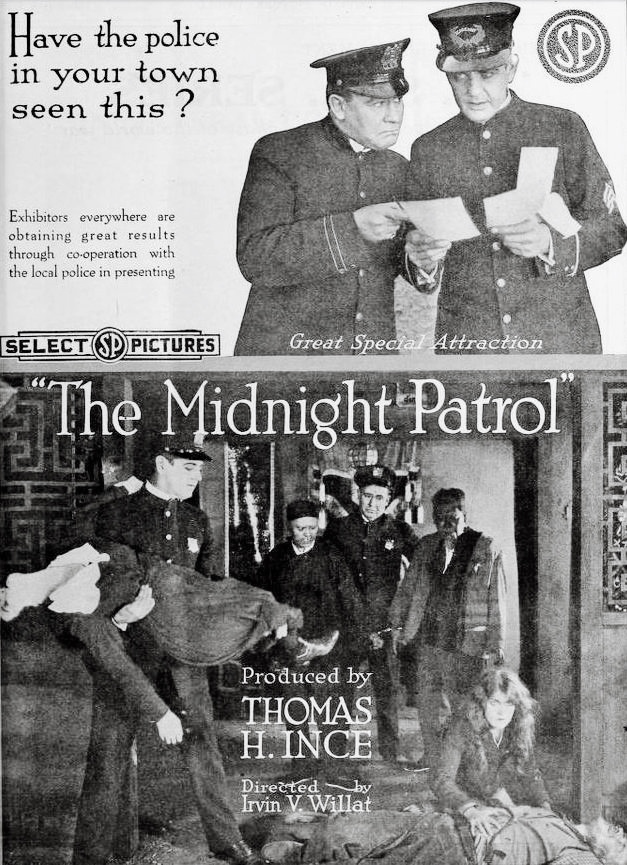
Stepping into the shadowy realm of The Midnight Patrol is akin to unearthing a forgotten artifact from the golden age of pulp cinema, a gritty testament to an era when urban landscapes pulsed with both promise and peril. This isn't just a film; it's a stark, unvarnished glimpse into a narrative style that prioritized visceral conflict and clear-cut moral lines, even as it wrestled with the complexities of systemic corruption. From the opening frames, the audience is plunged headfirst into a Chinatown that is less a cultural enclave and more a battleground, a microcosm of society’s ceaseless struggle against its own dark impulses. The film, a product of its time, captures a specific anxiety about the unseen forces that could undermine civic order, a fear personified by the enigmatic Wu Fang and his insidious political enabler, Jim Murdock.
The narrative, driven by the compelling character of Patrolman Terence Shannon, eschews subtlety for impact, establishing a dramatic tension that rarely wanes. Shannon is not merely a badge-wearing protagonist; he embodies the unwavering spirit of justice, a bulwark against the tide of venality threatening to engulf his community. His journey from a dedicated officer to a beacon of hope is the very spine of The Midnight Patrol, a classic hero's arc rendered with an earnestness that transcends the film’s vintage. The stakes are immediately apparent: Wu Fang, portrayed with a sinister charisma that makes him a truly formidable antagonist, operates a vast criminal network, his tentacles reaching into every illicit corner of the city. His partnership with Jim Murdock, a politician whose moral compass has long been corrupted by avarice, paints a grim picture of power and its abuses. This isn't just a story of good versus evil; it's a trenchant commentary on how easily societal foundations can erode when those entrusted with public welfare betray their sacred oath. The film crafts a world where the lines between protector and predator are blurred by greed, forcing the audience to confront uncomfortable truths about the nature of power.
The catalyst for Shannon's unwavering crusade arrives with the brutal murder of Sergeant Joe Duncan, an event that reverberates through the precinct and ignites a righteous fury in our protagonist. This isn't a random act of violence; it's a deliberate challenge, a declaration of war from the underworld against the forces of law. Duncan's death transforms the abstract concept of crime into a deeply personal affront for Shannon, pushing him beyond the call of routine duty into a relentless pursuit of justice. The film masterfully builds towards this confrontation, setting up Wu Fang’s anticipated opium shipment as the prime target for Shannon’s retaliatory raid. This planned operation, however, is complicated by Fang's cunning and ruthless tactics. The kidnapping of Patsy O'Connell, a mission worker whose compassion shines brightly amidst the gloom of Chinatown, serves as a cruel and effective manipulation. Her vulnerability becomes a weapon in Fang's arsenal, designed to paralyze the police with a moral dilemma: rescue the innocent or dismantle the criminal enterprise? This strategic move by Fang adds a deeply personal layer to Shannon's mission, intertwining his professional duty with a burgeoning emotional attachment, forcing a profound internal conflict.
The performances, while perhaps not reaching the theatrical heights of a grand stage production, are nonetheless effective in conveying the raw emotions and stark realities of the narrative. Thurston Hall, as the corrupt Jim Murdock, embodies a chillingly plausible venality, his smooth demeanor belying a heart of pure opportunism. His exchanges with Goro Kino, who portrays the menacing Wu Fang, crackle with an unspoken understanding, a shared depravity that makes their alliance all the more sinister. Kino’s portrayal of Wu Fang is particularly noteworthy for its ability to project authority and menace without resorting to overt histrionics, creating a villain whose power feels genuinely pervasive. Rosemary Theby, as Patsy O'Connell, imbues her character with a quiet strength and vulnerability that makes her plight genuinely affecting, ensuring that her role is more than just a mere plot device. Her presence serves as the moral compass of the narrative, highlighting the human cost of the underworld’s reign. The emotional core of the film, however, rests firmly on the shoulders of the actor playing Terence Shannon. His earnestness and unwavering resolve anchor the chaotic events, providing the audience with a steadfast hero to rally behind. The cast, under the direction of the filmmakers, manages to evoke a palpable sense of urgency and danger, drawing the viewer into a world where every decision carries weighty consequences.
The thematic richness of The Midnight Patrol extends beyond its immediate crime narrative. It delves into the enduring struggle between order and chaos, the fragility of societal norms, and the profound impact of individual courage. The film, in its stark portrayal of a city gripped by fear, champions the notion that even in the darkest of times, a single determined individual can make a significant difference. Shannon's internal struggle, balancing his personal feelings for Patsy with his professional oath, elevates the film from a simple crime procedural to a more complex exploration of duty and sacrifice. This dilemma is a timeless one, echoing through countless narratives of heroism. One might even draw parallels to the stark moral choices faced by protagonists in films like Honor's Cross, where personal integrity is tested against formidable external pressures, or the relentless pursuit of justice seen in Hoodman Blind, albeit in different narrative contexts. These films, while distinct in their historical settings and cinematic approaches, share a common thread: the portrayal of individuals standing firm against overwhelming odds, often at great personal cost.
The pacing of The Midnight Patrol is commendably brisk, a characteristic often found in films of this era that sought to maximize audience engagement without the luxury of sprawling runtimes. The narrative propels forward with a relentless momentum, each scene contributing directly to the escalating tension. The sequence leading up to Shannon's capture and the horrifying revelation of the rat-infested pit is particularly effective, a masterclass in building dread. This scene, graphic in its implied terror rather than explicit gore, serves as the dramatic crescendo, pushing the protagonists to their absolute limits and underscoring the sheer depravity of Wu Fang. It’s a moment designed to elicit a visceral reaction, cementing Fang’s status as a truly monstrous villain. The subsequent arrival of Officer Michael O'Shea and his men is timed to perfection, a classic cinematic rescue that delivers a cathartic release of tension. The ensuing battle is chaotic and desperate, a fitting climax to the long-simmering conflict. The resolution, with Wu Fang’s demise and Murdock’s arrest, feels earned, providing a satisfying sense of closure and reaffirming the triumph of good over evil. The film does not shy away from the brutality of its world, but it ultimately offers a message of hope and redemption, a reaffirmation of the enduring power of law and order.
While the film's depiction of Chinatown and its inhabitants might, through a contemporary lens, appear to lean into certain racial tropes prevalent in early 20th-century cinema, it's crucial to evaluate it within its historical context. The villainy of Wu Fang, while undeniably tied to his ethnicity in the narrative, is presented less as a commentary on a race and more as an embodiment of criminal malevolence, a common trope for 'exotic' villains in genre films of the period. The focus remains squarely on the corruption and the fight for justice, rather than any overt racial demonization. It’s a delicate balance, one that many films of the era struggled with, and The Midnight Patrol is no exception. However, its primary objective is to deliver a thrilling crime drama, and in that regard, it largely succeeds. The film's strength lies in its unyielding focus on the core elements of the genre: a clear hero, a formidable villain, high stakes, and a dramatic resolution. The writers, Denison Clift and Julien Josephson, crafted a tightly wound plot that prioritizes forward momentum and dramatic impact, ensuring that the audience remains captivated from start to finish. Their script, while direct, is effective in establishing character motivations and escalating the central conflict, demonstrating a keen understanding of pulp narrative conventions.
The visual storytelling, though constrained by the technological limitations of its time, excels in creating an immersive atmosphere. The black-and-white cinematography, far from being a drawback, becomes an artistic strength, enhancing the film's noirish undertones. Shadows cling to alleyways, obscuring dangers and hinting at unseen threats, while the stark contrast between light and dark visually reinforces the moral dichotomies at play. The flickering gaslights (or their electric equivalents) and the bustling, yet often claustrophobic, sets of Chinatown contribute significantly to the film’s authenticity, transporting viewers directly into its gritty urban landscape. This deliberate use of atmosphere, rather than relying solely on dialogue or action, showcases a sophisticated understanding of how to build tension and immerse an audience. It’s a testament to the filmmakers' ability to conjure a compelling world with the tools at their disposal, proving that resourcefulness often trumps extravagance in cinematic impact.
The lasting appeal of films like The Midnight Patrol lies in their ability to transport us to a bygone era, offering a window into the anxieties and entertainment sensibilities of the time. It serves as a valuable document of early cinematic storytelling, showcasing techniques and narrative conventions that would evolve into the sophisticated crime dramas we know today. The film, despite its age, retains a certain raw energy, a directness in its storytelling that is often refreshing. It doesn't overcomplicate its themes or characters; instead, it delivers a straightforward, exciting tale of heroism and villainy. For enthusiasts of classic cinema, it’s a compelling watch, not just for its historical significance but also for its enduring capacity to entertain. The transformation of Chinatown from a den of iniquity to a safe haven, and Terence Shannon’s ascension to police chief, alongside his romantic union with Patsy, provides a deeply satisfying conclusion. It's a classic Hollywood ending, perhaps a touch idealistic, but one that perfectly encapsulates the film's optimistic vision of justice prevailing against all odds. This resolution, while tidy, reinforces the film's core message: that vigilance and courage are ultimately rewarded, and that the fight against corruption is a winnable one. The final scenes, depicting a renewed sense of community and the establishment of a righteous authority, leave the audience with a feeling of hope and the satisfaction of a narrative well-concluded, cementing The Midnight Patrol as a memorable entry in the annals of early crime cinema.
Reflecting on the broader landscape of early 20th-century cinema, The Midnight Patrol distinguishes itself not through groundbreaking technical innovation, but through its robust execution of a familiar genre formula. It understands its audience and delivers precisely what is expected: a thrilling escapade into the heart of urban danger, punctuated by moments of genuine peril and ultimate triumph. While it may not possess the artistic gravitas of a Carmen or the epic scope of Joan the Woman, its modest ambitions are met with considerable success. It operates within the confines of its budget and contemporary storytelling conventions to craft a compelling narrative. The film's enduring charm lies in its straightforward earnestness, a quality that allows its core message of civic duty and personal integrity to shine through without excessive embellishment. The black-and-white cinematography, while perhaps taken for granted in its era, contributes significantly to the atmospheric tension, creating a stark contrast between the illuminated world of law and order and the shadowy depths of the criminal underworld. Every alleyway seems to hold a secret, every darkened doorway a potential threat, enhancing the sense of pervasive danger. This visual language, combined with the tightly wound script, ensures that the film remains a captivating experience, even for modern viewers accustomed to more elaborate productions.
The character development, particularly for Terence Shannon, is handled with an economy of storytelling that is admirable. We don't need extensive backstory to understand his motivations; his actions speak volumes. His unwavering resolve in the face of daunting odds, his willingness to place duty above personal safety, and his ultimate victory against the forces of corruption establish him as a truly heroic figure. This archetypal portrayal is a hallmark of early genre cinema, where heroes were often defined by their unwavering moral compass and their ability to inspire hope. The supporting cast, too, plays their part effectively, each character serving a specific function within the narrative tapestry. From the doomed Sergeant Duncan, whose death catalyzes the plot, to the loyal Officer O'Shea, who arrives in the nick of time, every individual contributes to the overall dramatic impact. The writers, Denison Clift and Julien Josephson, understood the power of a well-structured plot, ensuring that each twist and turn served to heighten the stakes and propel the story towards its inevitable, satisfying conclusion. Their work here is a testament to the craft of popular screenwriting, demonstrating how a compelling narrative can be constructed with precision and flair. The dialogue, while occasionally melodramatic by today's standards, perfectly captures the tone and conventions of the period, adding to the film's authentic vintage feel. It’s a snapshot of a particular cinematic moment, preserved for future generations to appreciate and study. The undeniable tension built through their script is a masterclass in suspense.
Ultimately, The Midnight Patrol stands as a vibrant example of early crime cinema, a genre that would continue to captivate audiences for decades to come. Its blend of thrilling action, moral drama, and a compelling central conflict ensures its place as a significant, if often overlooked, piece of cinematic history. It’s a film that reminds us of the timeless appeal of a good story, well told, where heroes are brave, villains are truly menacing, and justice, eventually, triumphs. The enduring legacy of films like this lies not just in their entertainment value but in their ability to reflect the societal anxieties and aspirations of their time. They are cultural documents, offering insights into the collective consciousness of a bygone era. For those seeking to explore the foundational elements of the crime thriller, or simply to enjoy a classic tale of daring and redemption, The Midnight Patrol offers a rewarding and insightful viewing experience. Its narrative clarity, robust characterizations, and relentless pacing make it a film that, despite its age, still resonates with an undeniable power, proving that a compelling story, irrespective of technological sophistication, remains the heart of cinematic art. The dark orange, yellow, and sea blue accents chosen for this commentary reflect the vibrant, yet often stark, emotional palette of such a classic narrative, highlighting the urgency, danger, and ultimate hope embedded within its frames.
IMDb —
1919
Community
Log in to comment.