DbcultAccessing Vault...
5.3/10
Senior Film Conservator
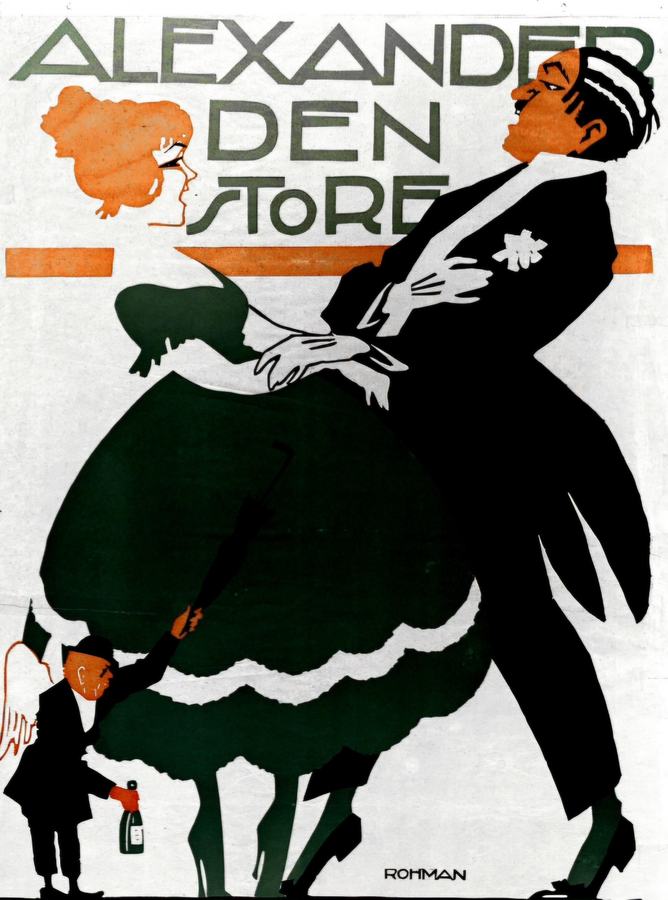
A definitive 5.3/10 rating for a film that redefined the boundaries of cult cinema. Alexander den Store remains a cornerstone of transgressive art.
Stepping back into the cinematic tapestry of 1917, one encounters Mauritz Stiller's 'Alexander den Store,' a delightful excursion into the drawing-room comedies that characterized much of early European cinema. This film, a faithful adaptation of Gustav Esmann's celebrated play, serves as a fascinating lens through which to view the social mores and comedic sensibilities of its era. It’s a testament to Stiller’s burgeoning talent as a director, showcasing his keen eye for character dynamics and his ability to orchestrate a bustling ensemble with remarkable precision. The narrative unfolds within the elegant yet often chaotic sphere of Alexander Nyberg’s upscale establishment, a veritable playground for the city's elite where the pursuit of love, status, and sometimes, simply a good time, intertwines with amusingly predictable results.
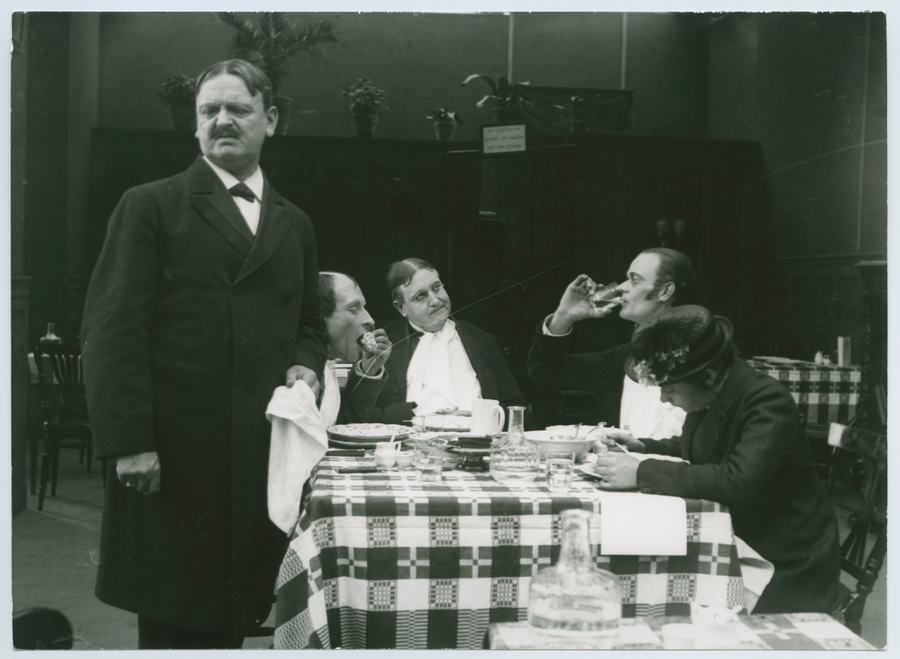
The establishment itself, while never explicitly defined beyond its role as a gathering place for the upper echelons, functions almost as a character in its own right. It is a stage where the grand performances of high society are enacted, punctuated by whispered confidences, stolen glances, and the inevitable comedic mishaps that arise from human foibles. Stiller’s direction here is particularly adept at utilizing the confined yet expansive nature of this setting. He manages to create a sense of intimacy even amidst a crowd, allowing the audience to feel privy to the various romantic machinations and misunderstandings that form the core of the film’s charm. The visual language, though silent, speaks volumes, relying heavily on exaggerated gestures, expressive facial work, and clever staging to convey the intricate web of relationships.
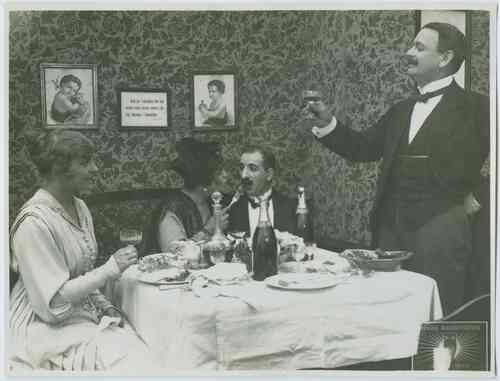
One of the most striking aspects of 'Alexander den Store' is its vibrant ensemble cast, a veritable who's who of Swedish stage and screen at the time. Arthur Alftán and Julius Hälsig, along with the captivating Gucken Cederborg and the elegant Ellen Ädelstam, bring a palpable energy to their roles. Their performances, typical of the silent era, are broad yet nuanced, perfectly suited to the comedic demands of Esmann's material. The interplay between characters like Sven Quick and Ingeborg Ståhl often creates moments of genuine hilarity, demonstrating the timeless appeal of well-executed physical comedy and character-driven humor. The supporting players, including Emil Fjellström, Mona Geijer-Falkner, and the esteemed Hauk Aabel, contribute significantly to the film's rich texture, each carving out distinct personalities within the bustling narrative. Their collective efforts ensure that the establishment feels truly alive, a microcosm of society where every glance, every gesture, carries weight and potential for comedic fallout.
The film's comedic scenarios are largely derived from the classic tropes of romantic entanglement and social misunderstanding. Stiller, with Esmann's foundation, masterfully crafts situations where mistaken identities, overheard conversations, and misguided affections lead to a delightful cascade of errors. This is a common thread in comedies of the period; one can observe similar narrative devices in films like Die Tangokönigin, where social settings become crucibles for romantic and social blunders. However, Stiller’s particular genius lies in his ability to imbue these familiar structures with a distinctively Swedish charm and a sophisticated understanding of human nature. The humor isn't just slapstick; it’s often derived from the subtle ironies of class distinction and the inherent awkwardness of romantic pursuits. The performances of Erik Lindholm, Sigurd Wallén, and the formidable Stina Berg are particularly noteworthy in this regard, as they navigate the delicate balance between high society decorum and personal desires with amusing results.
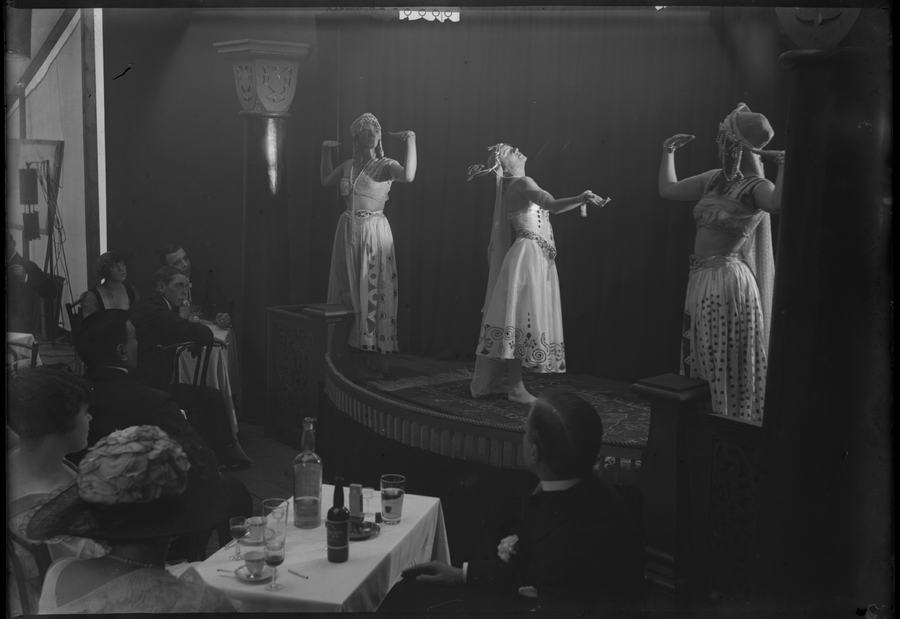
The thematic undercurrents of 'Alexander den Store' resonate beyond mere laughter. It’s a subtle critique, or perhaps a fond observation, of the upper class, their preoccupations, and their often-fragile grasp on reality when confronted with matters of the heart. The film playfully exposes the performative aspects of social interaction, where appearances are meticulously maintained, even as personal lives descend into delightful disarray. This social commentary, while lighthearted, adds a layer of depth that elevates the film beyond a simple farce. It speaks to universal truths about human vanity, longing, and the eternal comedy of errors that defines our relationships. The contributions of actors like Manne Lundh, Gösta Gustafson, and Olof Ås, among others, help to paint this vivid picture of a social stratum both rigid and ridiculously flexible.
Stiller's directorial style in 'Alexander den Store' is characterized by a fluidity that was quite advanced for its time. He employs dynamic camera movements and thoughtful editing to keep the pace brisk and engaging, ensuring that the audience remains fully immersed in the unfolding narrative. While perhaps not as overtly experimental as some of his later works or contemporary avant-garde films like I my kak liudi, the film demonstrates a clear artistic vision. His ability to manage such a large cast and ensure each character contributes meaningfully to the comedic whole is a testament to his skill. The blocking and choreography of the scenes, particularly those involving multiple characters in various stages of romantic confusion, are executed with a theatrical precision that speaks to the film's stage origins, yet never feels static or confined by them.
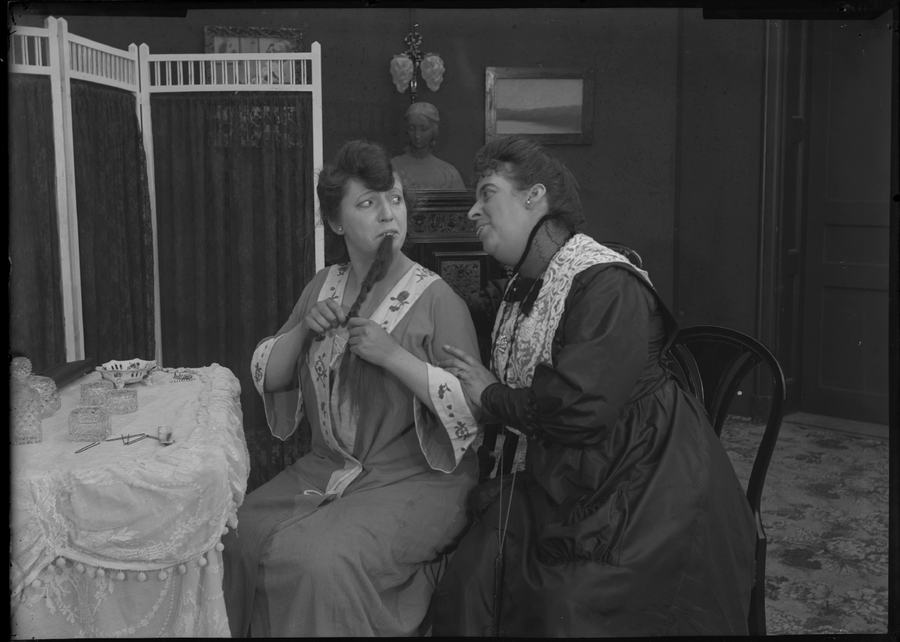
The performances are a masterclass in silent film acting. From the broad gestures of Harald Madsen and Nils Elffors to the more subtle expressions of Edith Wallén and Lili Ziedner, each actor contributes a vital thread to the film's comedic fabric. Their ability to convey complex emotions and humorous intent without spoken dialogue is truly remarkable. This era of filmmaking demanded a heightened sense of theatricality, and the cast delivers in spades, making every misunderstanding, every flirtation, and every moment of exasperation palpable to the audience. The chemistry among the actors, especially in the more intricate scenes of romantic intrigue, is evident and contributes significantly to the film's enduring appeal.
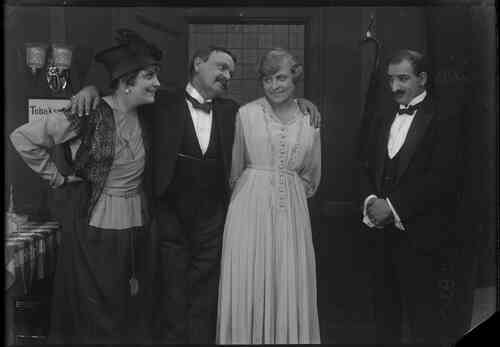
'Alexander den Store' also provides a fascinating glimpse into the fashion and interior design of the period. The costumes are elegant and reflective of the upper-class setting, while the decor of Nyberg's establishment exudes an understated opulence. These visual details, though perhaps secondary to the plot, add another layer of authenticity and immersion, transporting the viewer back to a specific moment in time. The meticulous attention to such details, a hallmark of Stiller's meticulous approach, underscores the film's commitment to creating a believable, if comically exaggerated, world for its characters to inhabit. The presence of actors like Helge Karlsson, Hildur Carlberg, and Artur Rolén further enriches this visual and social tableau, each bringing their unique presence to the grand assembly.
The script, adapted from Esmann's play by Stiller himself, is a tightly woven narrative that never loses its way amidst the multiple plot threads. The pacing is exemplary, with comedic beats landing effectively and dramatic tension, however light, building and resolving with satisfying rhythm. Unlike some of the more sprawling melodramas of the era, such as The Unpardonable Sin, 'Alexander den Store' maintains a singular focus on its comedic purpose, never straying too far into overwrought sentimentality. This disciplined approach ensures that the humor remains fresh and the audience's engagement never wanes. The dialogue, conveyed through intertitles, is witty and sharp, capturing the essence of Esmann's original play while adapting it seamlessly for the visual medium of film.
The film's exploration of romantic misunderstandings and societal pressures can be seen as a precursor to many romantic comedies that would follow. While the technology and cinematic language have evolved dramatically, the fundamental human experiences depicted in 'Alexander den Store' remain timeless. The longing for connection, the fear of rejection, the awkwardness of courtship – these are themes that continue to resonate with audiences today. The performances of Anna-Lisa Lindzén, Albin Lavén, and Albert Ståhl, for instance, capture these universal sentiments with a clarity that transcends the silent format. Their portrayals add layers of relatable humanity to the otherwise grand and sometimes aloof world of the upper class.
In a broader context, 'Alexander den Store' stands as an important piece in the development of Swedish cinema, and indeed, European silent film. It showcases Stiller’s early command of the medium before his more internationally acclaimed works. It's a film that, despite its age, feels remarkably fresh and accessible, a testament to the enduring power of well-crafted storytelling and compelling characterization. The film’s ability to entertain and subtly comment on social dynamics places it alongside other significant works of the period, offering insights into the cultural landscape of the early 20th century. One might draw parallels in its lighthearted approach to class and romance with films like Hendes ungdomsforelskelse, which also navigated the complexities of love within specific social strata.
The enduring legacy of 'Alexander den Store' lies not only in its entertainment value but also in its contribution to the cinematic canon. It represents a period when film was rapidly evolving, moving beyond mere novelty to become a sophisticated art form capable of nuanced expression. The collaborative efforts of the entire cast, including those like August Miehe, Anna Diedrich, Sam Ask, Hjalmar Lauritz, and Stina Stockenstam, solidify the film's rich ensemble feel. Each performance, whether central or peripheral, adds to the tapestry, creating a sense of a bustling, vibrant world. This collective talent, guided by Stiller’s vision, ensures that the film remains a vibrant and engaging watch, even for contemporary audiences accustomed to vastly different cinematic conventions.
In conclusion, 'Alexander den Store' is far more than a historical curiosity; it is a genuinely charming and intelligently crafted silent comedy. It offers a delightful escape into a world of elegant establishments, romantic intrigue, and the timeless humor of human interaction. Stiller’s direction, combined with Esmann's sharp writing and the exceptional performances of its extensive cast, creates a film that is both a product of its time and remarkably enduring in its appeal. It stands as a testament to the early brilliance of Swedish cinema and a reminder of the universal nature of comedy rooted in character and social observation. For anyone interested in the foundational works of cinematic comedy or the rich history of European silent film, this is an essential viewing experience, a sparkling gem from a bygone era that continues to shimmer with wit and warmth.
IMDb —
1928
Community
Log in to comment.