DbcultAccessing Vault...
Cult Review
Senior Film Conservator
In the annals of early cinema, certain narratives resonate with a timeless power, even when viewed through the sepia-toned lens of a bygone era. Such is the case with I Want to Forget, a dramatic tapestry woven with threads of espionage, patriotism, love, and profound personal sacrifice. This film, emerging from the crucible of World War I's looming shadow, presents a fascinating study of identity and allegiance, anchored by a central performance that must have captivated audiences of its time. It’s a compelling exploration of what it means to shed one's past for a more noble, albeit perilous, future. The film doesn't merely recount events; it delves into the psychological landscape of its protagonist, Varda Deering, painting a portrait of a woman navigating treacherous waters, both geopolitical and personal.
At the heart of I Want to Forget lies Varda Deering, a character of remarkable complexity and moral fortitude, brought to life by the enigmatic Evelyn Nesbit. Before the cataclysmic eruption of World War I, Varda served the Austrian secret service, an existence shrouded in the clandestine. Yet, as allegiances shifted and the world braced for conflict, Varda underwent a profound metamorphosis, renouncing her former loyalties to embrace the United States as her adopted homeland. This transition isn't merely a change of address; it signifies a deep-seated ideological realignment, a conscious decision to commit herself to a new nation's ideals. Nesbit’s portrayal, even in the silent era's often broad strokes, hints at a nuanced inner life, a woman burdened by a past she desperately wishes to consign to oblivion, yet one that inevitably defines her present. Her captivating presence, her ability to enchant and disarm, becomes both a social asset and a crucial tool in her espionage endeavors. She is not merely a dancer, but a performer on the grander stage of international intrigue, her every movement imbued with purpose, her every glance a calculated risk. This kind of character, a woman of mystery and agency, was a fascinating archetype for the period, echoing perhaps the allure of figures in films like Filibus, where female protagonists defied conventional gender roles to exert their will in a male-dominated world.
Varda's initial detachment from romantic entanglements in America speaks volumes. She captivates many, yet cares for none, suggesting a heart perhaps guarded by the scars of her past, or perhaps simply waiting for a connection profound enough to pierce through her carefully constructed façade. This emotional reticence makes her eventual bond with Lieutenant John Long all the more significant. Long, initially dismissive, viewing Varda as little more than a social butterfly, undergoes his own transformative journey. His gradual recognition of her inherent goodness, her hidden depths, forms the emotional core of the narrative. Alphonse Ethier, in the role of John, must convey this shift from skepticism to unwavering devotion, a challenge in silent film that relies heavily on subtle gestures and expressive eyes. Their evolving relationship is not a whirlwind romance but a slow burn, built on observation and eventual understanding, making the eventual betrayal, or rather, the *perception* of betrayal, all the more poignant.
The narrative truly ignites when John is dispatched on a diplomatic mission, leaving Varda free, or rather compelled, to engage her unique skills for her adopted nation. Her agreement to aid the U.S. Secret Service in procuring classified documents from August Von Grossman, a figure from her Austrian past, thrusts her back into the very world she sought to abandon. This assignment is not merely a task; it's a confrontation with her former life, personified by Von Grossman. His lecherous threats, his readiness to expose her past unless she succumbs to his advances, paint him as a truly menacing antagonist. Varda's decision to feign acceptance of his terms is a masterclass in calculated risk and self-sacrifice. She willingly places herself in a morally compromising, physically dangerous situation, knowing full well the potential for misinterpretation and ruin. This act elevates her from a mere spy to a tragic heroine, a woman willing to sacrifice her reputation, and potentially her life, for the greater good. The tension inherent in these scenes—the furtive glances, the forced smiles, the underlying dread—would have been palpable, a silent ballet of deceit and desperation.
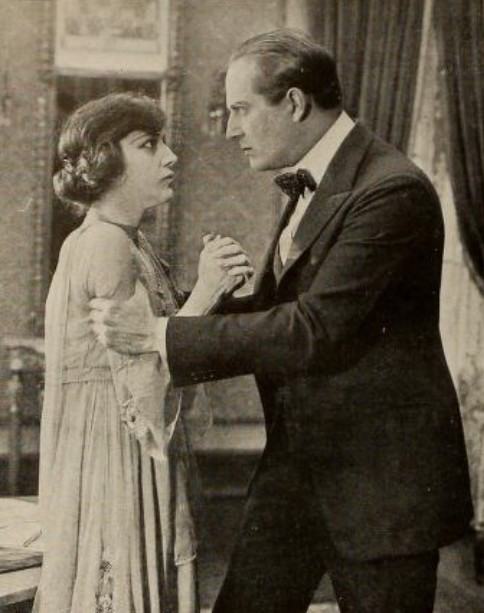
The dramatic irony reaches its zenith when John returns unexpectedly and discovers Varda in Von Grossman's arms. The ensuing heartbreak and dismissal, born of a profound misunderstanding, are gut-wrenching. It's a classic cinematic trope, yet rendered with particular potency here due to the high stakes of Varda's mission. The audience, privy to Varda's true intentions, feels the weight of her predicament, her inability to explain without jeopardizing the mission and her life. This moment echoes the kind of tragic miscommunication that drives many melodramas of the era, where circumstances conspire to tear lovers apart, as seen in the emotional complexities of films like Alimony or Nobody's Wife, though here, the stakes are not just personal, but national. It’s a testament to the power of the unspoken word in silent cinema, where a single glance or gesture could convey worlds of meaning and sorrow.
Despite John's painful rejection, Varda's commitment to her adopted country, and indeed, to John himself, remains unwavering. Her subsequent actions—helping John penetrate the German spy headquarters—are not merely an act of patriotism but a desperate attempt to clear her name and reaffirm her loyalty in the most tangible way possible. This sequence would have been a thrilling spectacle for contemporary audiences, a pulse-pounding infiltration and escape. The silent film medium, with its reliance on visual storytelling, was particularly adept at building suspense through dynamic staging and cross-cutting. The clandestine movements within the enemy stronghold, the tense retrieval of secret papers, and the frantic escape would have been choreographed with precision, each frame designed to heighten the audience's anxiety.
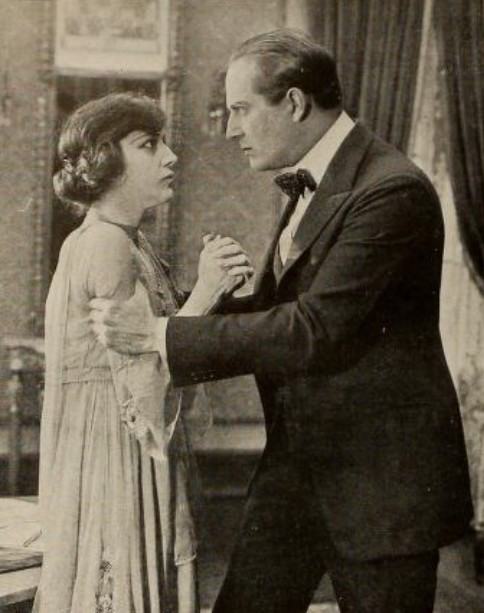
The climax of their escape, with the car carrying their pursuers being obliterated by an express train, is a moment of pure, unadulterated cinematic exhilaration. It’s a deus ex machina of sorts, but one that delivers a visceral impact, providing a dramatic resolution to the chase and symbolizing the crushing, unstoppable force of fate or justice. This kind of spectacular set-piece was a hallmark of early action cinema, designed to leave audiences breathless. It provides a definitive end to the immediate threat, clearing the path for the emotional denouement. This dramatic escape, with its high-stakes and perilous journey, might even draw parallels to the adventurous spirit found in films like Dulcie's Adventure or The Squatter and the Clown, albeit with a far more serious and consequential backdrop.
In the aftermath, Varda finally has the opportunity to explain everything to John. The effectiveness of this scene hinges entirely on the performances of Nesbit and Ethier, conveying relief, sorrow, understanding, and renewed love without a single spoken word. John's reaction – his profound understanding and forgiveness – is the emotional catharsis the audience has been yearning for. It's a powerful affirmation of trust and the enduring strength of true affection, capable of overcoming even the most damning appearances. The title, I Want to Forget, takes on a poignant double meaning here: Varda wants to forget her past, but perhaps John, too, must forget the momentary doubt and pain, embracing the woman he loves for who she truly is, beyond the shadows of espionage and wartime deception. This resolution, where trust is ultimately restored, is a comforting and necessary closure for a narrative fraught with such tension.
I Want to Forget is more than just a spy thriller; it's a mirror reflecting the anxieties and moral complexities of its time. Released during or shortly after the height of World War I, the film would have resonated deeply with audiences grappling with shifting national identities, the omnipresent threat of espionage, and the sacrifices demanded by patriotism. Varda's struggle to reconcile her past with her present, her former loyalties with her fervent Americanism, speaks to a broader cultural narrative of immigration and assimilation. The film subtly explores the idea that identity is not static but fluid, capable of being reshaped by conviction and circumstance. The portrayal of Von Grossman as a lecherous, manipulative German agent also taps into the prevailing anti-German sentiment of the era, serving as a clear-cut antagonist for the audience to despise.
The film also touches upon the inherent loneliness and isolation of espionage. Varda operates in a world where trust is a luxury she can rarely afford, where even her deepest affections are jeopardized by the demands of her work. Her journey is one of profound solitude, punctuated by brief moments of connection. This emotional landscape, rendered through the expressive power of silent film, invites the audience to empathize with her plight, to understand the heavy burden she carries. The narrative, while thrilling, never loses sight of the human cost of war and clandestine operations, a theme that remains timeless. It's a reminder that beneath the grand declarations of war and patriotism, individual lives are irrevocably altered, tested, and sometimes, redeemed. The profound human drama embedded within the thrilling plot elevates I Want to Forget beyond mere genre fare, making it a compelling piece of historical cinema.
The collaborative efforts of writers James Kirkwood, Hamilton Smith, and Harry O. Hoyt crafted a narrative that is both intricate and emotionally resonant. Their ability to weave together personal drama with international intrigue demonstrates a sophisticated understanding of storytelling, especially given the limitations and conventions of early cinema. The cast, led by Evelyn Nesbit and Alphonse Ethier, supported by talents like Blanche Craig, William R. Dunn, Russell Thaw, Jane Jennings, and Henry Clive, undoubtedly brought these characters to life with the expressive power characteristic of the silent screen. While specific details of their individual performances might be lost to time, the impact of their collective portrayal of a world teetering on the brink of chaos, yet finding moments of profound human connection, remains evident in the enduring strength of the plot. This film, like many from its period, offers a unique window into the past, not just in terms of historical events but in the evolution of cinematic storytelling itself.
In conclusion, I Want to Forget stands as a potent reminder of the power of early cinema to tackle complex themes with dramatic flair. It is a testament to the enduring appeal of stories about courage, loyalty, and the redemptive power of understanding. Varda Deering's journey, from a shadowy past to a heroic present, is a compelling narrative that transcends its historical setting, speaking to universal human experiences. It’s a film that, despite its title, is certainly not one to be forgotten by those interested in the rich tapestry of cinematic history, offering insights into the birth of the spy thriller genre and the evolving role of women in narrative cinema. The film's intricate plot, compelling characters, and dramatic conclusion ensure its place as a significant, if often overlooked, work of its era.
IMDb —
1917
Community
Log in to comment.