DbcultAccessing Vault...
Cult Review
Senior Film Conservator
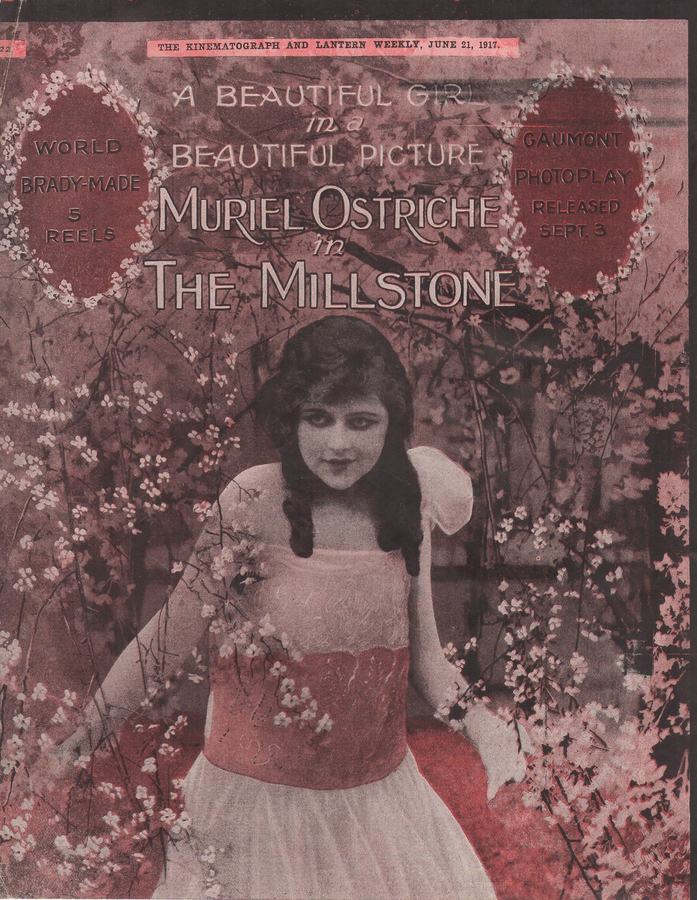
Stepping back into the cinematic past, one encounters works that, despite their age, resonate with an almost primal emotional force. Such is the case with The Millstone, a film that, even a century after its presumed creation, speaks volumes about the enduring weight of societal judgment, the quiet heroism of maternal sacrifice, and the relentless march of fate. It’s a narrative steeped in the melancholic beauty of human struggle, a testament to the fact that some burdens, once assumed, are carried for a lifetime, shaping every contour of existence. This isn't just a story; it's an elegy to the unwritten lives of countless individuals who, for love or necessity, embraced a destiny of silent suffering.
The film introduces us to Elara, a character whose initial vivacity is quickly overshadowed by the harsh realities of her station. As a seamstress, her life is one of quiet industry, a fragile existence in a city that offers little solace to the vulnerable. Her brief, passionate entanglement with Julian, a man of means but devoid of moral fiber, serves as the catalyst for her profound ordeal. This isn't a romance; it's a tragic misstep, a moment of unguarded vulnerability that sets in motion a chain of events from which there is no easy escape. The film masterfully portrays the swiftness with which social standing can be obliterated, particularly for women in that era, highlighting the stark inequalities that governed personal lives.
Elara's pregnancy, revealed with a quiet, devastating certainty, marks the true beginning of her 'millstone.' Julian's immediate retreat, a cowardly vanishing act, leaves her utterly alone, facing a future devoid of prospects and laden with shame. The film's portrayal of her internal struggle, though conveyed through silent acting, is palpable. We see the agonizing calculations in her eyes, the desperate search for a path that preserves both her child's future and her own precarious existence. The decision to relinquish her infant son, Thomas, to an anonymous couple in a distant town is not one of abandonment, but of profound, wrenching love. It's a choice born of necessity, a sacrifice of her present joy for his potential future, free from the stigma of illegitimacy. This particular narrative thread, the secret child, resonates with a timeless, tragic quality, reminiscent of the societal pressures explored in works like Fanchon, the Cricket, though Elara's burden is far more somber and enduring.
The subsequent years of Elara's life are depicted with an almost documentary-like adherence to her quiet suffering. Her existence becomes a carefully constructed edifice of secrecy. Every penny earned through tireless work is meticulously saved, a portion always earmarked for Thomas. Her clandestine visits, fraught with the constant danger of exposure, are the only moments where she can truly embrace her identity as a mother, albeit from a painful distance. The camera often lingers on Elara's face during these scenes, capturing the bittersweet ache of a love that must remain unspoken, a connection that can only be nurtured in shadows. This sustained emotional tension is a hallmark of the film's artistic merit, drawing the viewer into her internal world with remarkable efficacy.
Elara's life is a masterclass in quiet resilience. She rejects potential suitors, knowing that any genuine connection would inevitably lead to the unearthing of her carefully guarded secret, a revelation that would not only destroy her but potentially harm Thomas. The film subtly illustrates how this 'millstone' doesn't just represent the secret itself, but the entire architecture of lies and sacrifices built around it. It's the constant vigilance, the suppression of natural desires, the perpetual fear that gnaws at her soul. Her struggle for financial stability, intensified when Thomas falls ill, forces her into increasingly demeaning jobs, further underscoring the relentless toll of her chosen path. In its portrayal of the working class and their struggles, the film draws parallels with the stark realities depicted in Germinal; or, The Toll of Labor, though focusing on a deeply personal rather than collective hardship.
The narrative gains considerable momentum with the unexpected return of Julian. His reappearance, now a figure of considerable social standing and respectability, engaged to a woman from a powerful family, introduces a new layer of dramatic irony. He is oblivious to Elara's presence, let alone her identity, a stark contrast to the life she has been forced to lead because of him. This juxtaposition highlights the profound disparity in consequences faced by men and women for similar transgressions in that era. Julian's unblemished public image stands in stark opposition to Elara's hidden suffering, a powerful indictment of societal double standards.
As Thomas matures, his innocent curiosity begins to pose a new threat to Elara's secret. His questions about his past, his longing for a 'real' mother figure, become increasingly difficult to deflect. The film deftly builds suspense around these interactions, showing Elara's internal conflict between the desire to embrace her son openly and the imperative to protect him from the harsh truths of their shared history. This delicate dance of proximity and distance creates a potent emotional core.
Further complicating Elara's already precarious existence is the emergence of a blackmailer, an opportunistic acquaintance from her past who possesses knowledge of Thomas's true parentage. This external threat, demanding money in exchange for silence, pushes Elara to the brink. The tension in these scenes is almost unbearable, as the carefully constructed walls of her life threaten to crumble. The film uses this element to amplify the sense of danger and the precariousness of Elara's situation, a common dramatic device, but executed here with a raw, visceral intensity that feels deeply personal.
The climax of The Millstone is a masterclass in dramatic convergence. Julian, through a series of coincidences and investigations, finally uncovers Elara's identity and the existence of their son. His initial reaction is one of horror, not for Elara's suffering, but for the potential ruin of his carefully cultivated public image. This moment is a searing indictment of his character, revealing the depth of his self-interest. Simultaneously, the blackmailer makes their move, threatening to expose all, while Thomas, now a young man, begins to piece together the fragments of truth that have always surrounded him. The film orchestrates these converging crises with precision, creating a sense of inevitability that is both tragic and compelling.
Elara finds herself at the epicenter of this maelstrom, facing an impossible choice: continue to bear the 'millstone' in silence, sacrificing her own truth for the sake of others' reputations, or unleash the full force of the truth, shattering lives and exposing hypocrisy. The film's strength lies in its refusal to offer easy answers. Elara's ultimate decision is portrayed not as a moment of triumphant vindication, but as an act of profound courage, steeped in a quiet, dignified resolve. She chooses to protect her son's future, even if it means sacrificing her own societal acceptance. This theme of personal sacrifice for a greater good, often involving secrets and moral quandaries, echoes the complexities found in films like On Dangerous Ground, where characters navigate treacherous moral landscapes.
Though a silent film, The Millstone utilizes its visual language with remarkable eloquence. The use of close-ups on Elara's expressive face conveys her inner turmoil with heartbreaking clarity. The stark contrasts in setting – the bustling, impersonal city versus the quiet, hidden corners where Elara finds solace or pain – effectively underscore the themes of public façade versus private anguish. The pacing, though deliberate, never drags, propelled by the escalating emotional stakes and the ever-present threat of exposure. The film demonstrates a sophisticated understanding of how to build tension and elicit empathy without relying on spoken dialogue.
The resolution, a bittersweet tableau, sees the truth emerge, but Elara's journey is not one of unadulterated triumph. While her son's acceptance offers a measure of solace, society's judgment remains a palpable force. Julian faces a degree of public scrutiny, his carefully constructed world slightly cracked, but not entirely demolished, a realistic portrayal of power dynamics. This nuanced ending, eschewing a simplistic 'happy ever after,' elevates the film from mere melodrama to a profound meditation on life's enduring complexities. It reminds us that some burdens, once taken on, become an indelible part of who we are, shaping our triumphs and our quiet sorrows. The film's exploration of a woman's struggle against societal constraints and personal hardship finds thematic kinship with the resilience shown in Her Triumph, though the outcomes diverge, offering a broader perspective on female agency and fate in early cinema.
In a broader context, The Millstone stands as a powerful social commentary. It critiques the hypocrisy of a society that punishes women disproportionately for moral transgressions while often allowing men to escape accountability. It champions the quiet strength of individuals who bear immense personal burdens for the sake of love and family. The film’s emotional impact is undeniable, lingering long after the final frame, prompting reflection on the nature of sacrifice, the weight of secrets, and the enduring power of a mother's love. It is a cinematic experience that, despite its silent origins, speaks volumes to the human condition, making it a compelling piece of film history that continues to resonate today. It is a stark reminder of the social pressures that could turn love into a life-long burden, a 'millstone' indeed, much like the struggles against overwhelming forces depicted in Neft vä milyonlar sältänätindä, albeit on a far more intimate and personal scale.
IMDb 6.3
1922
Community
Log in to comment.