DbcultAccessing Vault...
Cult Review
Senior Film Conservator
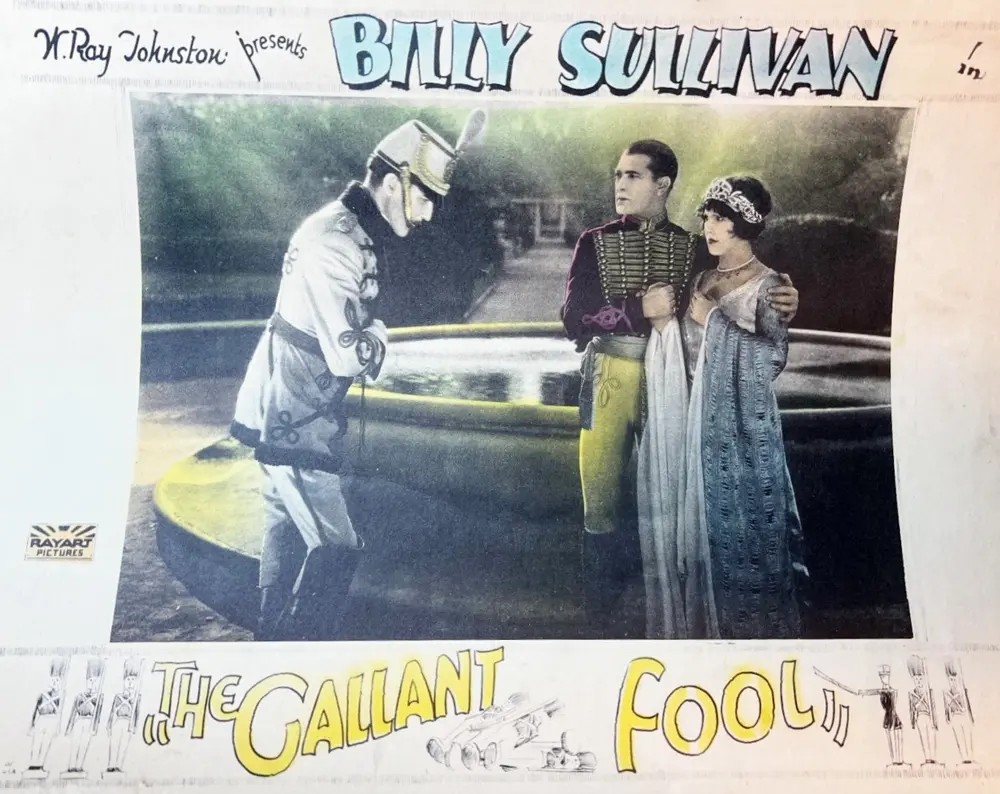
Is 'The Gallant Fool' worth watching today? Short answer: yes, but with significant caveats that anchor it firmly in its historical context. This film is an intriguing curio for dedicated silent film aficionados and those fascinated by early cinematic storytelling, yet it will likely test the patience of viewers accustomed to modern narrative conventions.
This film works because of its undeniable charm, anchored by Billy Sullivan's earnest performance and a surprisingly enduring central premise that taps into classic romantic comedy tropes. It’s a foundational piece, demonstrating how simple premises can still resonate.
This film fails because its narrative pacing is often uneven, suffering from the era's reliance on broad strokes and a lack of nuanced character development that leaves supporting roles feeling like mere archetypes. The emotional stakes, while present, often feel underdeveloped.
You should watch it if you appreciate the foundational elements of cinema, enjoy lighthearted historical romances, and are willing to engage with a film that prioritizes simple, heartfelt storytelling over complex thematic exploration. It’s a window into a bygone era of filmmaking.
At its core, "The Gallant Fool" presents a narrative as old as storytelling itself: the imposter who finds love. Billy Banner, played by Billy Sullivan, is not seeking a crown or a princess, but rather a ledger entry. His arrival in Valdonia is purely transactional, driven by a father's demand for a debt collection. It’s a refreshingly unromantic starting point for what quickly becomes a romantic comedy.
The plot, thin as it might appear by contemporary standards, hinges entirely on the central conceit of Billy impersonating a prince. This isn't a complex political thriller, nor is it a deep dive into existential identity. Instead, it’s a playful exploration of how superficial status can open doors, and how genuine connection can blossom even under false pretenses. The tension, such as it is, comes from the inevitable reveal, which the film handles with a light touch.
What truly elevates this simple premise beyond mere historical curiosity is its surprising relevance to character archetypes that persist in film today. Billy Banner is an early iteration of the charming rogue, the outsider who disrupts established order with his wit and unconventional approach. His 'gallantry' isn't in grand heroic acts, but in his sheer audacity and the innocent charm of his deception. It’s a blueprint for countless romantic leads to follow.
Billy Sullivan, as the titular 'Gallant Fool,' carries the film with an earnestness that is both disarming and essential. His performance, typical of the silent era, relies heavily on exaggerated facial expressions and broad physical comedy, yet he manages to inject Billy Banner with a genuine, almost boyish, appeal. There’s a twinkle in his eye that sells the audacious lie he’s living.
One particular scene, where Billy is awkwardly trying to navigate courtly etiquette while maintaining his princely facade, stands out. Sullivan’s subtle shifts from regal posture to his more natural, casual American demeanor provide the film’s most effective comedic beats. He's not just playing a character; he's playing a character playing a character, and that layered performance, however rudimentary, works.
Mae Prestell, as Princess Iris, offers a performance that is, by contrast, more restrained. Her royal bearing is convincing, conveying a quiet dignity that makes her eventual affection for Billy feel earned rather than simply mandated by the script. However, the film gives her less to do than Sullivan, often positioning her as the object of affection rather than a fully realized character with her own agency. This is perhaps the biggest missed opportunity: for all her queenly status, Princess Iris feels less like a sovereign and more like a narrative device, a prize to be won. This diminishes her potential impact, even for a film of its time.
The direction in "The Gallant Fool," likely by an uncredited hand given the era's common practices, is functional and straightforward. The camera work, while static by today's standards, effectively captures the theatricality of the performances. There are no sweeping crane shots or complex tracking movements; instead, the focus remains squarely on the actors and their gestures, allowing the audience to interpret emotions largely through their expressions.
The production design, though clearly limited by budget, manages to evoke a sense of a quaint European kingdom. The 'Valdonia' sets, while not elaborate, are enough to establish the foreign, royal context. Costumes are fittingly regal for the monarchy and suitably American for Billy, creating a visual contrast that underscores his outsider status.
One particularly charming visual moment occurs during Billy's 'princely' day. The use of simple, yet effective, cross-cutting between Billy's attempts at royal duties and the reactions of the Valdonian court effectively builds comedic tension. It’s a rudimentary technique, but it demonstrates an understanding of how to use editing to enhance storytelling, even in the nascent days of cinema. The lack of dialogue, while a hallmark of the era, actually enhances the film’s dreamlike quality, forcing a slower, more contemplative engagement than modern, dialogue-driven films.
The pacing of "The Gallant Fool" is undeniably a product of its time. Silent films often moved at a deliberate speed, allowing audiences to absorb the visual information and read the frequent title cards. For contemporary viewers, this can feel sluggish. There are moments where scenes linger a little too long, or where narrative beats are drawn out beyond what a modern editor would allow.
However, to judge it solely by modern standards would be unfair. This deliberate pace encourages a different kind of engagement, one that rewards patience and attention to subtle visual cues. The film doesn't rush its comedic setups or its romantic developments. Instead, it allows moments to breathe, letting the audience absorb the charm and occasional absurdity of the situation.
The tone is consistently lighthearted and comedic, never veering into melodrama or genuine peril. Even when the 'debt' or the 'imposter' aspects could introduce darker elements, the film maintains a genial, almost whimsical, atmosphere. It’s a feel-good film from an era that often gravitated towards moralistic tales or grand epics. This consistent tone makes it an easy, if somewhat undemanding, watch.
Yes, for a very specific audience.
"The Gallant Fool" offers a fascinating glimpse into early
IMDb —
1926
Community
Log in to comment.