DbcultAccessing Vault...
6.2/10
Senior Film Conservator
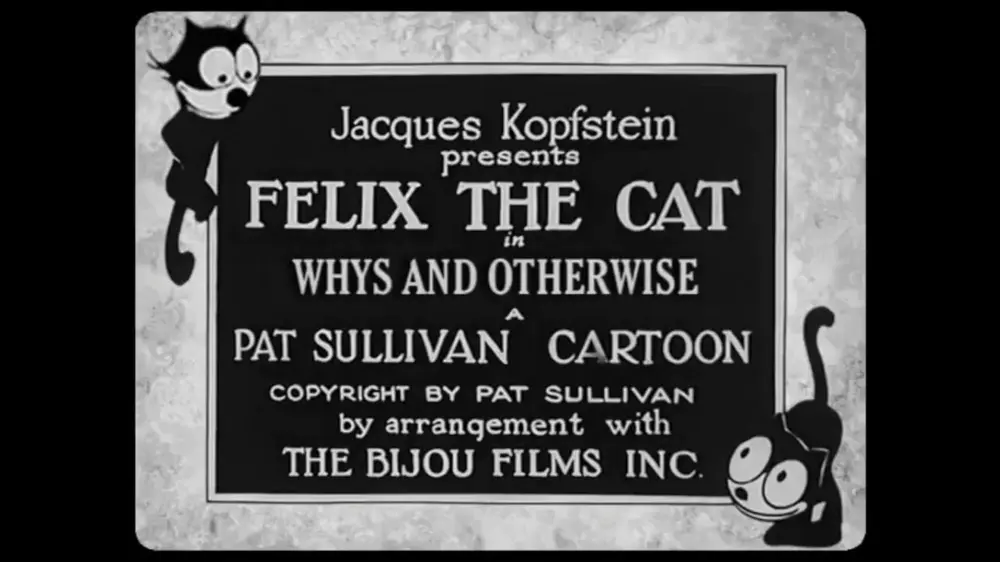
A definitive 6.2/10 rating for a film that redefined the boundaries of cult cinema. Whys and Otherwise remains a cornerstone of transgressive art.
Is 'Whys and Otherwise' worth watching today? Short answer: yes, but with a significant caveat. This early Felix the Cat short is an essential piece of animation history, a vibrant snapshot of the medium's burgeoning creativity, yet its appeal is primarily for those with an appreciation for silent-era cartoons and the foundational work of Otto Messmer. It’s a delightful, if brief, diversion for animation buffs, but perhaps not the entry point for casual viewers seeking modern narrative complexity.
This film works because of its sheer inventive spirit and Felix's timeless charm. It fails because its episodic structure, while clever, can feel slight to those unaccustomed to the pacing of its era. You should watch it if you have an interest in the evolution of animation, enjoy classic slapstick, or want to understand the origins of one of cinema's first true cartoon stars.
'Whys and Otherwise', though a brief excursion into the life of Felix the Cat, offers a surprisingly rich tapestry of narrative ingenuity and visual wit for its time. Released during an era when animation was still finding its voice, this short demonstrates a sophisticated understanding of character and comedic timing, largely thanks to the unparalleled talent of Otto Messmer. Messmer, effectively the entire creative force behind Felix, imbued his feline protagonist with a personality that transcended the limitations of the silent screen.
The premise is elegantly simple: Felix, late home, must concoct a series of excuses for his rolling pin-wielding wife. This isn't just a setup for gags; it's a brilliant narrative device that allows for a rapid-fire succession of fantastical scenarios, showcasing the boundless possibilities of the animated medium. Each of Felix's three tales is a mini-adventure in itself, a testament to the imaginative prowess at play.
What makes this film endure, even if only for specific audiences, is its fearless embrace of the absurd. There's a playful disregard for logic that defines Felix's world, a quality that makes these early shorts feel both timeless and profoundly influential. It’s a foundational text for anyone interested in how cartoons learned to tell stories.
The core of 'Whys and Otherwise' is Felix's desperate scramble for plausible (or, more accurately, wildly implausible) explanations. We open with the classic domestic tableau: a stern wife, a late husband, and an instrument of marital justice – the rolling pin. This establishes the stakes immediately, grounding the fantastical elements that follow in a relatable, if exaggerated, human (or feline) experience.
Felix's three tales aren't just random vignettes; they represent an escalating series of narrative gambits. He starts with one explanation, which is quickly dismissed by his unimpressed wife, forcing him to invent another, then another. This structural repetition, far from being tedious, highlights Felix's quick thinking and his capacity for elaborate fabrication. It’s a meta-narrative before such terms even existed, a story about storytelling itself.
Each tale serves as a mini-showcase for the animators' creativity. While the plot details of these individual stories are brief and serve primarily as vehicles for visual gags, they collectively build a picture of Felix’s mischievous character. He’s not just late; he’s a master of theatrical self-preservation, willing to conjure entire worlds to avoid a domestic scolding. This commitment to the bit is what makes the film genuinely charming.
It's impossible to discuss 'Whys and Otherwise' without acknowledging Otto Messmer, the true architect of Felix the Cat. Messmer's genius wasn't just in creating Felix's iconic design but in animating him with an unparalleled expressiveness and dynamic movement. Felix isn't merely a drawing; he feels like a living, breathing, scheming entity. His eyes, in particular, convey a range of emotions from cunning to fear, a remarkable feat in black-and-white silent animation.
The character of Felix, as portrayed by Messmer's animation, is a delightful blend of impishness and resourcefulness. He's a trickster, a survivor, and utterly endearing despite his clear transgressions. His physical comedy – the way he contorts, dashes, and reacts – is fluid and exaggerated, perfectly suited to the medium. This isn't just movement; it's personality made visible.
Consider the wife's character as well. While less developed, her presence with the ever-present rolling pin is a strong visual shorthand for authority and consequence. She serves as the perfect foil to Felix's chaotic energy, a grounding force that makes his antics even funnier. The dynamic between them is a classic cartoon pairing that would influence countless animated duos that followed, from Tom and Jerry to Homer and Marge.
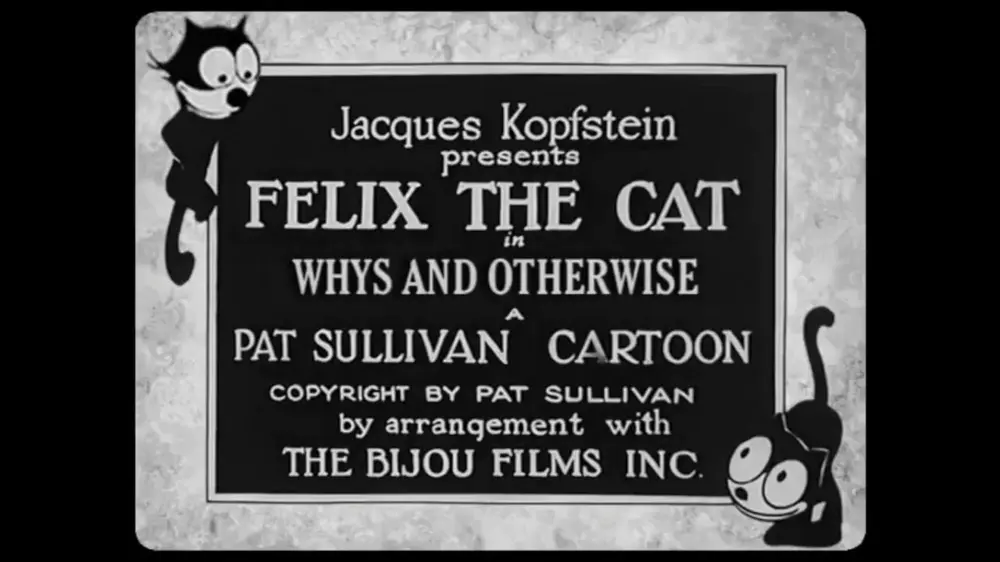
The direction in 'Whys and Otherwise', largely synonymous with Messmer's animation choices, is remarkably adept at conveying narrative without dialogue. The film relies heavily on visual cues, exaggerated reactions, and clear sequential storytelling. The pacing is brisk, moving quickly from one alibi to the next, never allowing the audience to linger too long on any single explanation before Felix is forced to invent another.
Each of Felix's tales, while brief, is packed with visual information and comedic beats. The animation style is clean and uncluttered, allowing the focus to remain squarely on Felix's actions and expressions. There's a certain economy to the storytelling, a directness that ensures the gags land effectively. This efficiency is a hallmark of early animation and a skill that Messmer honed to perfection.
The tone is consistently lighthearted and comedic, even with the underlying tension of Felix facing his wife's wrath. There's a sense of playful mischief that permeates the entire short, inviting the audience to enjoy Felix's predicaments rather than genuinely fear for him. It's a testament to the film's confidence that it can maintain this tone while still delivering on its simple premise.
For those with an interest in the history of animation, 'Whys and Otherwise' is absolutely essential viewing. It showcases Felix the Cat at his peak, a character who, alongside figures like Charlie Chaplin, defined early cinematic stardom. It's a masterclass in silent comedy and visual storytelling, demonstrating how much personality and narrative could be conveyed with simple lines and clever movement.
However, for a casual viewer accustomed to the rapid-fire dialogue and intricate plots of modern animation, this short might feel a bit slow or simplistic. Its humor is largely visual and relies on an appreciation for the foundational techniques of early cartoons. It works. But it’s flawed. This isn't a film you'd put on for a group of children expecting Pixar-level engagement, but it's perfect for a quiet afternoon spent exploring cinema's rich past.
It's a foundational text, a stepping stone. Its value lies less in its ability to universally entertain modern audiences and more in its historical significance and its demonstration of raw, unadulterated creative spirit. If you want to understand where many of today's animated tropes originated, this is a fantastic, if brief, lesson.
Felix the Cat, particularly in shorts like 'Whys and Otherwise', stands as a monumental figure in animation history, arguably the first truly global cartoon superstar. His impact can be seen in the subsequent development of characters like Mickey Mouse, who, despite his later fame, owed a significant debt to Felix's design and mischievous personality. The black-and-white, rubber-hose animation style, so expertly employed by Messmer, became a blueprint for an entire generation of animators.
While other early animated shorts, such as those featuring Koko the Clown or Gertie the Dinosaur, certainly pushed boundaries, Felix brought a consistent character and narrative focus that resonated deeply with audiences. His ability to manipulate his own tail, transforming it into tools or props, was a stroke of genius, a visual shorthand for his innate resourcefulness that transcended cultural barriers. This kind of meta-physical comedy was revolutionary.
The episodic nature of Felix's adventures, where each short presented a new predicament and clever solution, set a precedent for animated series. While 'Whys and Otherwise' is a standalone story, its structure of escalating excuses could easily be seen as a precursor to more complex anthology narratives or even the 'what if' scenarios explored in later cartoons. It’s a testament to Messmer's vision that these early shorts feel so complete within themselves, yet contribute to a larger, evolving character arc.
I would argue that the sheer inventive freedom displayed in Felix's early cartoons, including this one, has rarely been surpassed in mainstream animation. Modern animation often prioritizes narrative cohesion and character development over pure, unadulterated visual gag-driven surrealism. While that's not necessarily a flaw, it does mean that the unique charm of films like The Fates and Flora Fourflush or even Good Morning, Nurse often gets overlooked in favor of more polished, but perhaps less daring, storytelling.
'Whys and Otherwise' is more than just a historical curiosity; it's a vibrant, clever piece of early animation that demonstrates the raw power of visual storytelling. While its appeal might be niche today, primarily resonating with animation scholars and fans of silent-era cinema, its influence is undeniable. Otto Messmer's Felix the Cat is a character of immense personality, brought to life with an inventiveness that still sparks joy. This short might not be for everyone, but for those it's intended for, it offers a fascinating, often hilarious, look at a pivotal moment in cinematic history. It's a testament to the idea that sometimes, the simplest stories, told with the most imaginative flair, can leave the biggest mark. Seek it out if you want to understand the very roots of cartoon magic; you won't be disappointed by Felix's charmingly desperate efforts to save his hide.
IMDb 7.1
1931
Community
Log in to comment.