DbcultAccessing Vault...
4.2/10
Senior Film Conservator
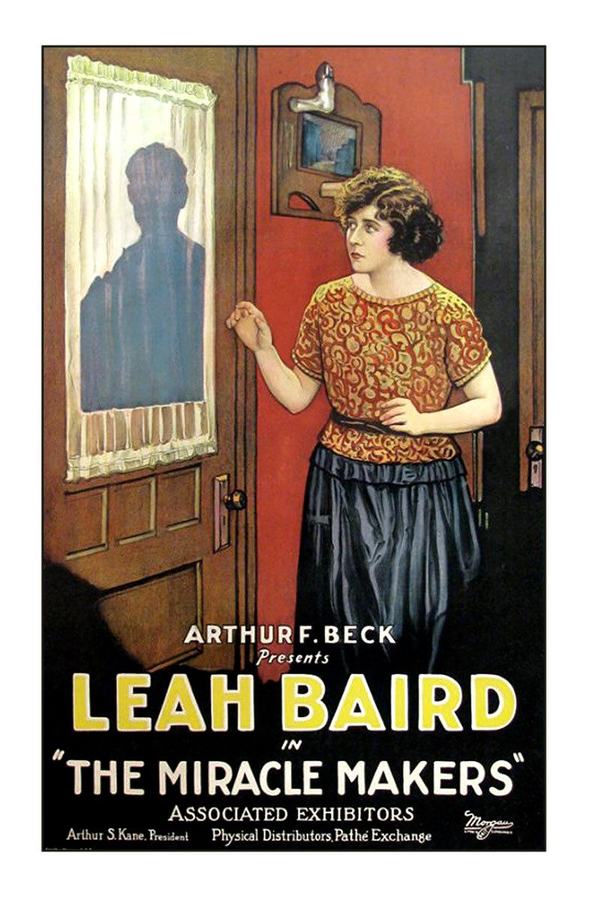
A definitive 4.2/10 rating for a film that redefined the boundaries of cult cinema. The Miracle Makers remains a cornerstone of transgressive art.
When we peer through the lens of the early 1920s, we often expect a certain quaintness, a flickering simplicity that characterizes the nascent days of cinema. However, The Miracle Makers (1923) defies such reductive categorizations. Written by and starring the formidable Leah Baird, this film is a searing indictment of the domestic traps laid for women of the era. It is a work that feels surprisingly modern in its cynicism toward the institution of marriage, while remaining firmly rooted in the melodramatic traditions of the silent screen. Unlike the more whimsical explorations of social climbing found in The Country Mouse, Baird’s vision is one of stark, almost existential dread.
The plot functions as a trap, snapping shut on the protagonist with the cold efficiency of a legal brief. We see a woman whose emotional landscape is initially vibrant, only to be flattened by the demands of a forced marriage. This isn't merely a plot point; it is the central thesis of the film. The marriage is a performance, a hollow ritual that strips the protagonist of her identity. When her husband is arrested, the film pivots from a domestic tragedy into something far more nuanced. His incarceration is not presented as a release, but as a secondary prison for his wife. She is legally bound to a ghost, a criminal whose shadow looms over her every attempt at rebirth.
This theme of being 'sold' into a life of misery echoes the sentiments found in Sold for Marriage, yet Baird elevates the material through a more complex psychological framework. The husband, played with a stolid, almost menacing presence by Mitchell Lewis, represents the unyielding weight of the law. His arrest creates a vacuum, and it is in this vacuum that the film’s moral questions begin to fester. What does a woman owe to a man who stole her future? What is the shelf life of a vow made under duress?
Visually, The Miracle Makers utilizes a chiaroscuro palette that emphasizes the protagonist’s isolation. The interiors are often cluttered, representing the suffocating social expectations, while the rare outdoor scenes offer a false sense of freedom that is always undercut by the narrative’s tension. The cinematography captures the minute flickers of despair on Baird’s face—a performance that relies on subtlety rather than the broad gesticulations often associated with the era. This nuanced approach to acting reminds one of the emotional depth seen in Sei no kagayaki, where the internal world of the character is as significant as the external action.
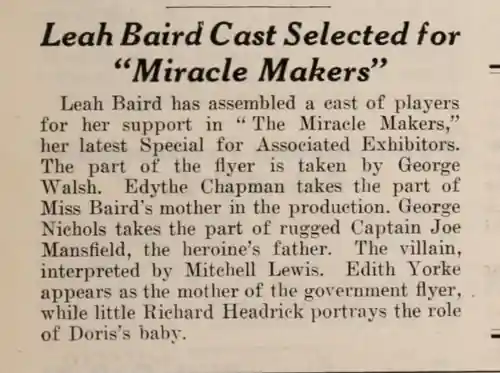
"The 'miracle' in this film is not a moment of divine grace, but the grueling endurance of the human spirit in the face of systemic erasure."
The re-entry of the former fiancé, portrayed by George Walsh, serves as the catalyst for the final act’s moral explosion. Walsh brings a desperate vitality to the role, a stark contrast to the incarcerated husband’s cold absence. His presence forces the protagonist to confront the illegitimacy of her current life. The film masterfully handles the tension between the 'legal' husband and the 'spiritual' husband. It’s a conflict that would later be explored with less nuance in The Blindness of Divorce, but here, the stakes feel more intimate and personal.
The script, penned by Baird herself, doesn't offer easy answers. It interrogates the very concept of loyalty. Is she a 'miracle maker' because she finds a way to reconcile these disparate lives, or because she manages to survive the wreckage of both? The film’s title carries a heavy irony. In a world where women have no legal standing to dissolve a coerced union, survival itself is the only miracle available. This isn't the slapstick world of The Stage Hand or the innocent whimsy of Angel Child; this is a landscape of hard choices and permanent scars.
To understand The Miracle Makers, one must appreciate the transitional period of 1923. Cinema was moving away from simple morality plays toward more sophisticated character studies. Baird’s work sits at the apex of this shift. Her writing displays a lexical diversity of emotion—hope, resentment, duty, and desire are all woven into a complex tapestry. The film shares a certain thematic DNA with European works like Il fuoco, particularly in its focus on the destructive power of passion and the constraints of high society.
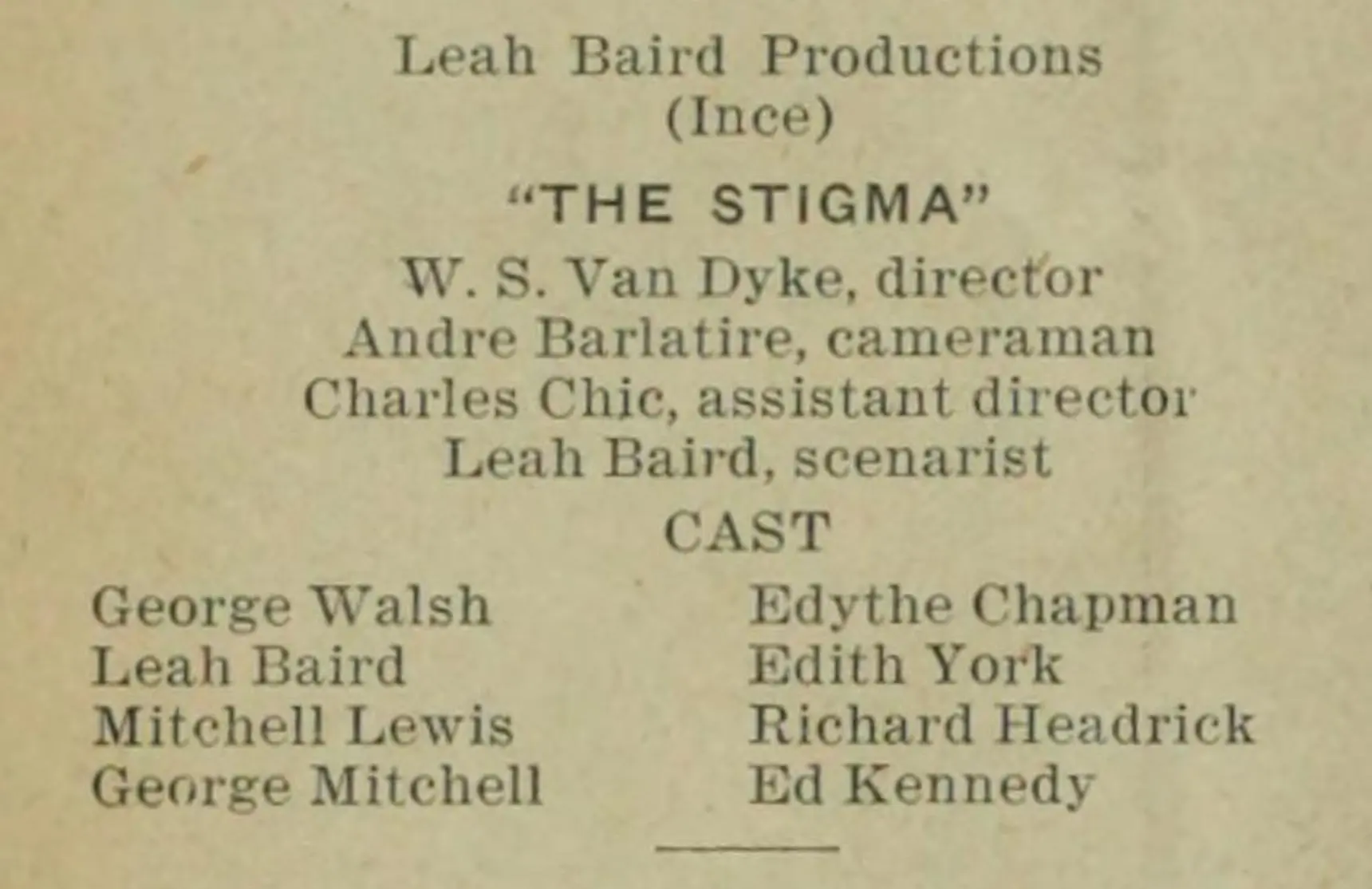
Furthermore, the supporting cast, including Edith Yorke and Edythe Chapman, provides a solid foundation of period-appropriate gravitas. They represent the societal 'chorus' that judges and maintains the status quo, much like the judgmental figures in Den sidste dans. Their performances serve to highlight the protagonist’s loneliness, making her eventual decision feel even more transgressive and necessary.
The final sequences of the film are a masterclass in silent tension. As the protagonist stands between her past and her present, the 'miracle' begins to take shape. It is a sequence that requires the viewer to look beyond the surface level of the plot. Unlike the straightforward narrative of Out of a Clear Sky, The Miracle Makers demands an engagement with the subtext of the law versus the heart. The protagonist’s decision is not just a romantic choice; it is a political act. By choosing her own path, she rejects the 'miracles' promised by the church and the state, opting instead for a self-actualized redemption.
The film’s pacing is deliberate, allowing the dread to settle into the viewer’s bones. It avoids the frenetic energy of contemporaries like Flip's Circus or the crime-focused thrills of The Soft Boiled Yegg. Instead, it lingers on the quiet moments—the way a hand trembles, the way a door closes, the way light dies in a room. It is a film of shadows and whispers, a far cry from the more overt dramatics of Who Cares?.
In the pantheon of 1920s cinema, The Miracle Makers deserves a more prominent place. It is a precursor to the modern psychological thriller, a film that understands that the most terrifying prisons are the ones we build for ourselves through our social contracts. It echoes the atmospheric weight of Calvert's Valley and the thematic ambition of The Age of Desire. Baird’s contribution as both writer and actor cannot be overstated; she was a woman taking control of the narrative in an industry that was increasingly becoming a boys' club.
While it may lack the high-octane thrills of Big Stakes, its emotional stakes are infinitely higher. It is a film that asks us to look at the 'miracles' in our own lives and question their cost. It is a haunting, beautiful, and deeply intelligent piece of work that remains relevant a century later. For those willing to look past the grain of the film stock, there is a vibrant, beating heart to be found—a heart that refuses to be silenced by the conventions of its time.
Reviewer Note: This analysis seeks to re-contextualize Leah Baird’s work within the broader spectrum of feminist cinema, highlighting the sophisticated narrative structures she employed long before they became industry standards.
IMDb 6.6
1919
Community
Log in to comment.