DbcultAccessing Vault...
4.6/10
Senior Film Conservator
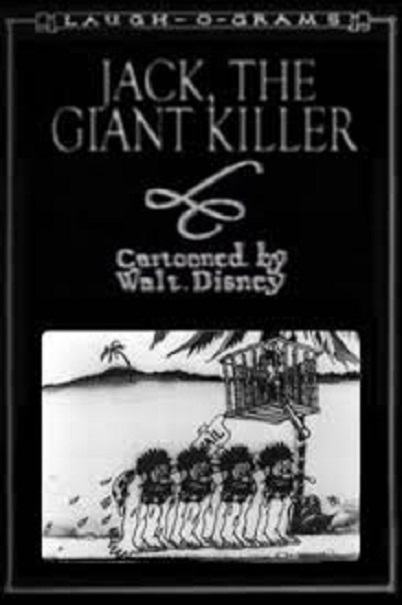
A definitive 4.6/10 rating for a film that redefined the boundaries of cult cinema. Jack the Giant Killer remains a cornerstone of transgressive art.
There’s a moment—twenty-two seconds in, if you’re counting spindle perforations—when the crude chalk title card hiccups sideways and young Walt’s own gloved thumb sneaks into frame. Most viewers treat it as a blemish; I call it the birth certificate of modern meta-fiction. Jack the Giant Killer is ostensibly a seven-minute trifle, one of the Laugh-O-Gram studio’s last gasps before creditors padlocked the doors. Yet within its warped emulsion lies a fractal of everything Disney would ever monetize: plucky self-insert hero, escalated stakes, wish-fulfillment romance, and that tantalizing promise that if you dream hard enough the edges of reality will politely dematerialize.
Watch Jack’s knees jitter as he confronts the giant: the drawing is so minimal the creature’s pupils are literally thumbtacks pressed against celluloid. Resourceful desperation masquerades as style; necessity becomes aesthetics. The same alchemy turns a shoestring into rigging, a postage stamp into a royal crest, a wisp of cigarette smoke into atmospheric haze. Walt, barely twenty, already intuits that every limitation is a secret hatch if you twist it counter-clockwise.
Rather than recount plot—boy plants beans, boy ascends, boy rescues girl from sky ogre—let’s dissect how the film weaponizes point of view. Jack begins in a dusty attic that feels like the inside of a skull; rafters criss-cross like synapses. He threads the projector, cranks the handle, and the fantasy blooms outward. We’re not merely watching a story, we’re watching the act of storytelling as seduction. Susie’s silhouette leans against the wall, arms folded, skeptical. The flicker on her irises is the only genuine special effect Walt needed; everything else is elbow grease and chutzpah.
Compare that with the static postcard vistas of Golfo di Napoli, where the camera worships landscape but never interrogates who’s doing the looking. Disney inverts the equation: landscape is whatever fit inside a borrowed garage, but the gaze—voracious, self-mythologizing—is inexhaustible.
The British folktale Disney ransacks is blood-soaked: bones ground to meal, princesses devoured, treachery rewarded. Walt bleaches it, swaps blood for blushes, yet the residue of menace persists. The giant’s shadow, rendered by a charcoal-smeared rag dragged across each frame, looms like debt. Jack’s sword is a fountain-pen nib; he slays the monster by signing his name across the horizon. Autography as victory: a signature Disney formula later refined in The Eagle’s Mate where the protagonist literally writes herself into freedom.
"If you can’t afford grandeur, graffiti grandeur across the margins," the film whispers. That credo would later echo when Mickey Mouse, cobbled from leftover sketches of a luckless rabbit, scrawled his way into global consciousness.
Susie never speaks—no intertitles ventriloquize her—but her body language stages a mini-rebellion. Eyebrow hitches, toe taps, a smirk that refuses to curtsy. She’s the first proto-Disney ‘princess’ who watches herself being watched, who sees the mechanism of courtship and finds it half-hilarious, half-pathetic. The film’s closing gag—Jack offering her the beans—plays like an awkward prom proposal. She pockets them, not because she’s swept away, but because free food is free food. Walt, ever the Kansas City carny, already senses that modern romance works best when the heroine keeps one foot outside the frame.
That tonal wink separates the short from contemporaries like Treason or The Story of the Wolf, both bloated with moral absolutes. Jack’s universe wobbles, negotiates, flirts. Its ethical compass spins like a pinwheel.
Surviving prints are scarred: water damage chews the edges, emulsion ulcers bloom like fungal mandalas. Yet decay adds a spectral layer, as if the giant’s pulse continues outside the story, metastasizing across history. When Jack clambers down the vine, the footage stutters—six missing frames—so his feet never quite touch soil. He hangs mid-air, forever suspended between aspiration and aftermath. Plenty of 1922 comedies suffer continuity gaps (Mutt and Jeff in Paris literally misplaces a character for an act), but here the gap feels philosophical: a caution that stories don’t resolve, they merely suspend hostilities.
Restorationists want to graft new frames, paper over the wound. I say leave the abyss visible; let the audience feel the drop.
Because it’s a black-and-white one-reeler, critics seldom discuss palette. Nonsense—palette is concept. The beans glow because Walt hand-tinted each in toxic green, frame by frame, until the hue seemed to vibrate off the grayscale farm. That pop anticipates the Technicolor orgies of Millionaire for a Day by a full decade, proving that even in penury the man splurged on chromatic adrenaline. When Susie finally accepts the beans, the tint has faded, oxidized into a sickly mustard. A visual punchline: dreams age faster than meat.
Archival notes suggest Walt screened the reel at local Rotary luncheons, providing live narration through a megaphone. Imagine the reedy optimism of a hungry twenty-year-old, voice cracking as he pitches his own future. That absent soundtrack—forever lost—haunts the artifact. Contemporary viewers often project jaunty piano because silence terrifies them. Yet the true score is whatever racket you bring: your own creaky ambitions, your private thuds of rejection, the white noise of unpaid bills. The film is a Rorschach with cue marks.
Contrast that with Her Bridal Night-Mare, a 1922 farce that spoon-feeds synchronized gags via on-screen horns and whistles. Disney trusts the vacuum, lets anxiety amplify the echo.
Same year, same republic: Howard Carter unseals Tut’s tomb, insulin rescues diabetics, T.S. Eliot publishes The Waste Land. And here’s Walt, doodling beanstalks on butcher paper, chasing a mouse across a cluttered desk. History remembers the pharaohs and poets; film buffs remember the flickering Kansas kid who understood that myths are just intellectual property waiting for a fresh copyright. Jack’s giant is less fairy-tale relic than startup disruptor: he hoards value (golden goose), lives above regulatory oversight (the clouds), and gets toppled by a nimble coder with a bean API. Disguised as whimsy, the short forecasts every Silicon Valley hubris narrative.
Strip away the burlap and you find the first shareholder pitch: invest in me, I’ll scale the heavens.
Susie’s captivity atop the beanstalk plays like a dry run for every subsequent Disney damsel, yet she refuses hysterics. She rolls her eyes at the giant’s table manners, knits socks from spun cumulus, basically ghost-hosts her own imprisonment until Jack arrives. The rescue feels incidental; she’s already planning an IPO on the goose. Feminist scholars dismiss her as a prototype passive princess; I read her as the original manic-pixie exit strategist. She doesn’t need heroism—she needs a ride that doesn’t cost extra.
Compare her agency to the marble heroines of East Lynne, forever fainting onto chaises. Susie’s pragmatism prefigures the flapper insouciance of Love in a Hurry where the heroine literally outruns the plot.
The Laugh-O-Gram studio collapsed months after completion; creditors auctioned desks, cels, even the lightbox. Walt, couch-surfing in New Uncle Robert’s apartment, kept only the 35mm negative, tucked inside a rotting valise. Decades later, when his corporate behemoth needed origin myths, the short resurfaced—scratches intact—remastered for limited-edition Blu-ray. Irony: the film about scaling impossible heights only survived because its creator scaled unimaginable ones. Without that subsequent empire, the reel would’ve become cupcake wrappers. Myth needs commerce as much as beans need water.
Yet every time the restored edition circulates, fans complain: too jittery, too slight, too… amateur. They want the slickness of The Guardian or the muscular set pieces of The Fighting Grin. They misread imperfection as failure, not as the authentic texture of risk.
Historians hunt for explicit lineage: Jack’s bulbous shoes inform Mickey’s; the giant’s roar evolves into the thunder of Serp i molot’s locomotive chase. More interesting are the ghost echoes: the short’s frantic vine-climbing prefigures the vertiginous skyscraper gags in Props; its self-aware projectionist DNA resurfaces in A Motorcycle Adventure where characters literally crash through the screen. Walt never wasted a trick, only upgraded the real estate.
Stream it on your phone, the pixels smear into impressionist soup; project it on 16mm in a drafty church basement, and the scratches dance like fireflies. Either way, the film needles you: when did you last risk ridicule to spin a daydream into something tangible? Every frame of Jack the Giant Killer vibrates with that dare. It’s not a relic; it’s a dare that aged into a dare.
So the next time some algorithm serves you a pastel princess anthem, remember the attic, the dust, the kid who couldn’t afford a tripod yet learned to tilt the world until beans rained upward. That’s not quaint; that’s the fundamental choreography of imagination: climb, wobble, maybe fall, maybe fly. Susie still hasn’t decided, and neither, thank heavens, have we.
IMDb —
1930
Community
Log in to comment.