DbcultAccessing Vault...
6/10
Senior Film Conservator
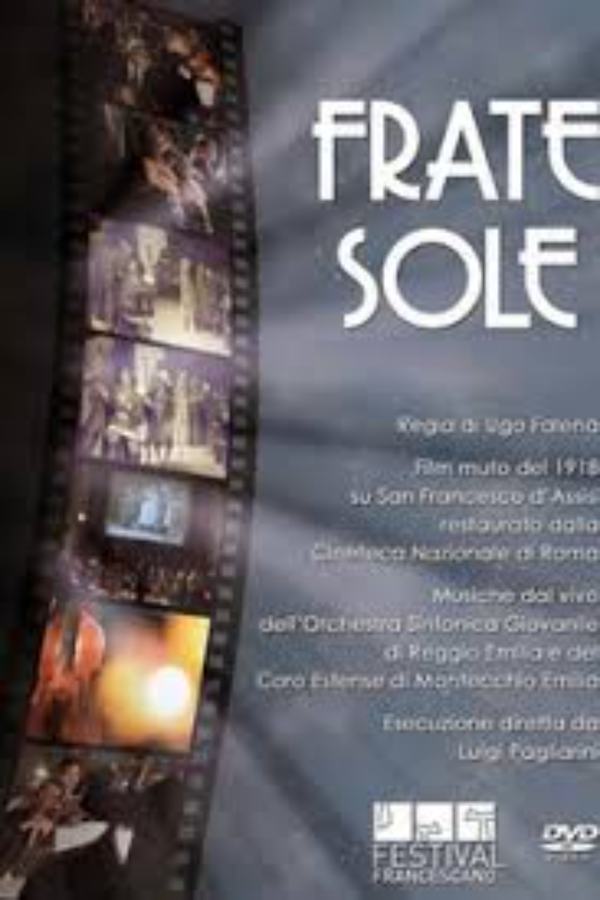
A definitive 6/10 rating for a film that redefined the boundaries of cult cinema. Frate sole remains a cornerstone of transgressive art.
Umberto Palmarini’s gaunt frame flickers like a candlewick half-consumed by its own halo; the camera cannot decide whether to worship or autopsy him. In the opening cloth-shop sequence, director Giuseppe Guarino layers loom-clatter with ecclesiastical chants on the intertitles, so every bolt of fabric seems to unfurl into priestly incense. The result is a tactile paradox: cinema that smells of sheep-dip and cathedral stone even though we never leave the two-dimensional plane.
Watch how the episode titles themselves perform penance: chapter cards hand-lettered on gnarled parchment, edges singed as though the film stock feared the stake. Compare this to the didactic clarity of The Majesty of the Law or the suffragist didacticism of Your Girl and Mine; Frate Sole refuses exposition, preferring mystic ellipsis. When Francesco renounces his inheritance, Guarino cuts from the bishop’s marble hand to a close-up of Palmarini’s eyes—two bruised figs—then to the empty sky. The narrative leap forces the viewer to inhabit the same vertiginous absence of safety nets that the saint courts.
Color-tinted prints survive in Turin’s National Museum: cobalt night for the leper kiss, sulfur-yellow for the fire visions, viridian for the forest sermons. These chromatic choices weaponize monochrome, turning financial poverty into chromatic wealth. Guarino’s palate sneers at the gilded excesses of Treasure Island contemporaries; here gold equals damnation, hence the single amber frame when Francesco hurls the coin-purse—an ember that singes the screen before the tint bleaches to penitential grey.
Rina Calabria, as Clare, appears only thrice yet haunts every reel. Her first entrance is a reverse Pietà: she cradles a hen that has been stoned by street boys, the bird’s blood freckling her veil like pomegranate seeds. Clare never speaks; Guarino grants her the silence men reserve for the divine, positioning her as the negative space of the friar’s audible ecstasies. In the convent cloister scene, the camera tracks backward as Clare advances, so the architecture itself bows, acknowledging that renunciation is gendered differently when the body is already socially destitute.
Act two’s hermitage sequence invents what we now call ‘environmental montage.’ Guarino intercuts Palmarini stacking roof beams with star-fields shot on a mirrored drum—each hammer blow catapults splinters into constellations. The effect predates Vertov’s cosmic overlays by six years and trounces the staid tableau of Des Goldes Fluch. Time dilates; sanctity becomes astrophysics. A wolf trots across the rubble, glances at the lens, and exits. No narrative payoff—just the world admitting that wildness co-authors every scripture.
Sound historians will note the absence of a synchronized score in original exhibitions. The silence is not lack but dialogue: audiences reportedly filled the pauses with murmured Latin, turning the cinema into lay-clergy hybrid space. Try imagining Jim Bludso invoking that communal liturgy—impossible; only a film that mistrusts capital can trust its spectators to compose the chorus.
Side-note on special effects: Palmarini’s stigmata appear via double-exposure rather than crimson pigment. First the wound site is printed dark, then the same frame is flashed with candle smoke, so the flesh seems to bruise into light. Because 1918 nitrate shrinks unpredictably, the scars jitter between corporeal wound and halo, embodying the ontological waver that defines sainthood—are you broken or transfigured? Both, the film answers, and the answer flickers like nitrate on the brink of combustion.
Contrast this with the moral absolutes of The Reclamation where sin stains like indelible ink; Guarino insists grace is a chemical unstable as silver halide. When the final intertitle reads ‘Finis—yet the song continues,’ the letters quiver, superimposed over Palmarini’s death mask, but the mask smiles—stock footage of eternity mocking narrative closure.
Production trivia: the entire picture cost 57 000 lire, less than the wardrobe budget of Mr Barnes of New York shot the same year. Guarino paid extras with sacks of chestnuts; several friars you see are actual Capuchin novices who later professed vows. The film’s fiscal anemia bleeds into form: jump-cuts disguise missing footage, and the repeated shot of Assisi’s walls serves for Rome, Perugia, and the Holy Land. Yet the economy becomes theology—every splice is a vow of poverty, every ellipse an admission that the world’s surplus is illusion.
Which circles back to Palmarini’s performance: he fasted throughout the shoot, and by the fourth week crew members claimed they could see through his silhouette on the ground glass. Whether legend or calorie deficit, the emaciation authenticates the role in a way CGI mortification in later religious epics never matches. When his sternum protrudes like a church key under the rough homespun, the image indicts any costume drama that relies on prosthetic gauntness.
Released months after Caporetto, the film’s pacifist barefoot wanderer felt like an open wound to nationalist press. Il Giornale d’Italia accused Guarino of ‘defeatist sanctimony.’ Government censors demanded an appended intertitle exalting the Church’s blessing of troops; Guarino inserted it but printed it upside-down. Projections flipped the card, but the frame remained inverted—an act of passive resistance that predates the overt anti-war stance of Ranson’s Folly by two years.
Viewers today will detect pre-echoes of fascist body politics: the adoration of physical ordeal, the crowd choreography at the Porziuncola. Yet the film sabotages its own potential propaganda by refusing triumph. Francesco’s final gesture is not conquest but disappearance; the camera cranes up from the grave to reveal modern tram-lines in the distance, suggesting sanctity is a traffic hazard history detours around.
Returning to Clare: her fleeting presence exposes the friars’ fraternity as homosocial theater. In the one two-shot she shares with Francesco, Guarino positions her slightly closer to camera, so Palmarini must tilt his gaze upward, reversing courtly convention. The power inversion lasts four seconds, but it fractures the entire hagiography: sanctity is not male transmission but a negotiation women permit. Compare that subversive brevity to the suffragist clarity of Your Girl and Mine or the matriarchal moralism of A Daughter of the Poor; Guarino opts for laconic rupture rather than manifesto.
Silvia Malinverni, playing the unnamed leper girl, receives even less screen time yet catalyzes the narrative. Guarino shoots her unbandaged face only once, in chiaroscuro so severe that the lesions appear as constellations. The moment lasts 18 frames—less than a second—but it brands the viewer with ethical smallpox. You cannot long for medieval purity after seeing syphilitic flesh lit like a cathedral rose window.
Only one 35mm incomplete print survived the 1943 Allied bombing of Turifilm labs; reels 2 and 4 were scavenged from a convent chimney where a nun used them to block drafts. In 2018 Bologna’s L’Immagine Ritrovata scanned the 967m remnant at 4K, stabilizing the warped emulsion digitally. The tints referenced earlier are speculative reconstructions based on a 1922 censorship certificate that catalogued each dye. Streaming platforms currently host a 2K downscale, but the HDR gamma restores the candlelit blacks to obsidian, letting Palmarini’s eye-whites hover like Marian stars.
Serious cinephiles should chase the Blu-ray from Il Cinema Ritrovato: it pairs Frate Sole with The Moth and includes an essay by Angela Dalle Vacche arguing the film invents ‘mystic neorealism’ two decades before Rossellini. The disc also presents an optional score by Cecilia Vacanti for solo viola da gamba; the bowed drones replicate the chestnut-fed extras’ hunger growls, turning the soundtrack into an edible absence.
What lingers is not the miracles but the off-screen clatter: the knowledge that cinema can choose destitution, can rip its own sprockets and still preach. In an age when algorithmic spectacle costs the GDP of small nations, Frate Sole’s threadbare majesty feels like contraband. Watch it at 3 a.m. with blackout curtains; let the projector fan imitate the Umbrian wind, and when Palmarini’s hollowed gaze turns to camera, you’ll understand that holiness, like nitrate, is always one spontaneous combustion away from transfiguration—yet for 74 trembling minutes it shines brighter than any CGI sun.
Runtime: 74 min | Year: 1918 | Director: Giuseppe Guarino | Cast: Umberto Palmarini, Rina Calabria, Silvia Malinverni | Format: Silent, B&W (tinted), intertitles in Italian with English subs

IMDb 2.8
1934
Community
Log in to comment.