DbcultAccessing Vault...
7.3/10
Senior Film Conservator
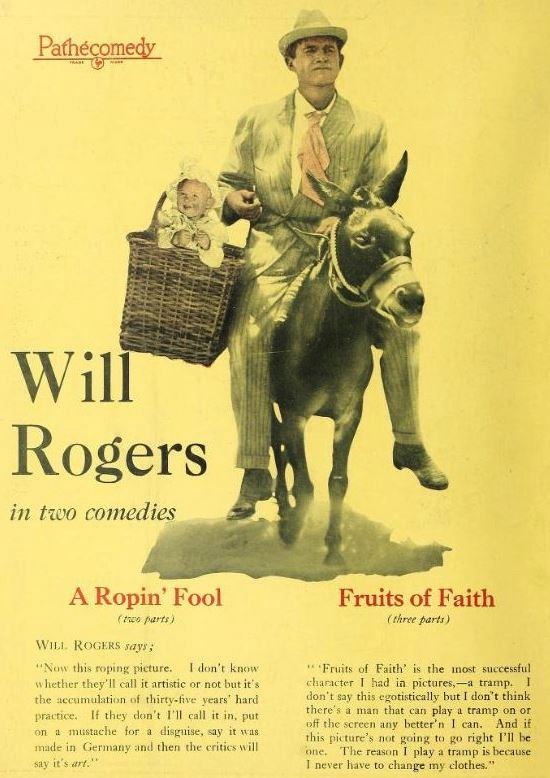
A definitive 7.3/10 rating for a film that redefined the boundaries of cult cinema. The Ropin' Fool remains a cornerstone of transgressive art.
A lariat is only hemp until Will Rogers convinces it to dream.
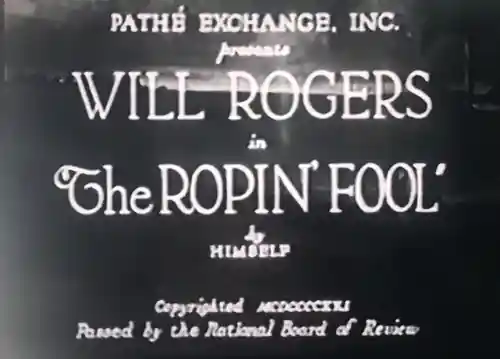
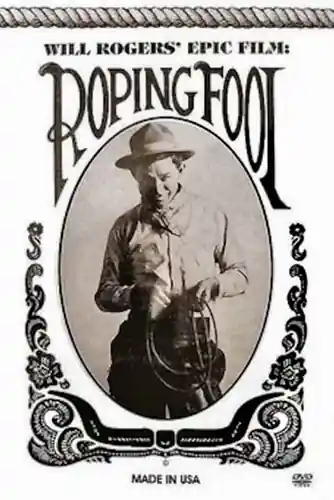
In the yawning hush of 1924, when Calvin Coolidge’s silence filled newspapers more cheaply than newsprint, a six-minute whisper called The Ropin’ Fool slipped into projection booths and vanished just as quickly—yet its afterimage lingers like heat lightning behind the retinas of anyone lucky enough to witness the stunt. The film is less a narrative than a conjuring: Rogers, already a Broadway darling thanks to Ziegfeld’s Follies, consents to repeat for the camera the tricks that made sophisticates drop their cigarette holders into champagne flutes. The result is a pocket-sized epic, a haiku of horsepower and hemp, a single reel that distills the entire mythology of the American West into spirals and whiplash.
There is no plot, only procession: man, rope, horse, dust. Yet within that quartet lies enough kinetic philosophy to shame most three-act melodramas of the era.
Imagine the barn interior painted in chiaroscuro: tar-black rafters, hay bales glowing like ingots, a rectangle of white sand where hooves will drum. Into this arena saunters Rogers—flat-brim Stetson, cigarette probably tucked behind one ear even if we can’t see it—carrying a rope so fiercely whitewashed it seems phosphorescent. The camera, stationed at fetlock height, renders Dopey a titan, nostrils flaring like forge bellows. When Rogers swings the loop, the contrast ratio turns the rope into a comet tail scrawled across obsidian. Every frame feels subtracted rather than added, as though someone carved away the world until only velocity remained.
Most silent westerns of the period—say, Captain Starlight, or Gentleman of the Road—trafficked in bandoliers and mustache-twirling. The Ropin’ Fool strips away the iconography until nothing remains but muscle memory. The rope becomes text; Rogers’ wrist becomes font. When he flips the honda over his own torso and hops back through the moving hoop, he stages a secular transubstantiation: flesh to rumor, then rumor back to flesh before the loop collapses into a coil at his feet. The trick lasts maybe four seconds, yet the geometry is so immaculate you half-expect Euclid to materialize and applaud.
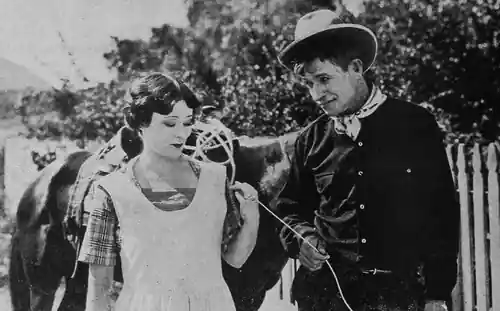
No stunt double, no under-cranking, no optical printer—just one Oklahoma arm and a lifetime of ranch calculus.
Compare that to the Russian children-in-peril saga Deti – tsvety zhizni, where montage does the heavy lifting, or the Hungarian crime serial Söhne der Nacht, 1. Teil: Die Verbrecher-GmbH, which weaponizes shadow. Here, the only special effect is human precision filmed at life speed. The austerity feels almost monastic.
Sound, of course, is absent, yet the mind supplies a synesthetic score: the mosquito whine of hemp slicing air, the bass drum of hoofbeats, the whipcrack report when the loop cinches a pair of legs and the horse jackknifes to a reluctant halt. Contemporary reviewers complained the short was “too repetitive.” Nonsense. Repetition is the very crucible of myth: Icarus always falls, Sisyphus always pushes, Rogers always ropes. The delight lies in microscopic variation—the fractional widening of the loop, the nanosecond delay in release, the dust plume that blooms a shade differently each take.
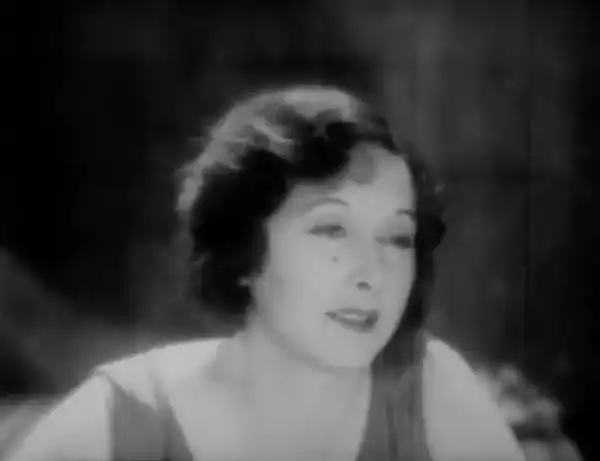
Georgia Sherart, Irene Rich, and the other credited names serve mainly as spectators, but their presence matters: they embody civilization, the plush velvet audience without which virtuosity would be mere labor.
Technically, the film is a masterclass in exposure. Early 1920s orthochromatic stock notoriously swallowed red and yellow, turning skies white and faces sooty. Cinematographer (uncredited, as was custom) solves this by bathing the arena with arc lamps, turning the rope into a white-hot sigil that sears itself onto the emulsion. The result is a negative-space ballet: black horse, black hat, black rafters, while the rope writes cursive against nothingness. If Within Our Gates used high-contrast to indict racial terror, Rogers weaponizes it for joy.
But let’s not mistake joy for innocence. Beneath the grin lurks a Darwinian memo: the West was won not by six-guns but by logistics—by the ability to immobilize half-ton animals with nothing more than braided grass. The lariat is the original smart weapon, and Rogers its virtuoso operator. Every time he tosses a figure-eight around Dopey’s cannon bones, he restages Manifest Destiny in miniature, a reminder that empire is first and foremost a matter of leverage.
Yet the film is too fleet to drown in ideology; it pirouettes away before you can fasten meaning to its collar.
At a scant six minutes, The Ropin’ Fool risks being eclipsed by weightier siblings—say, The Wife He Bought, a five-reel melodrama about transactional marriage, or On Dangerous Ground, whose noir shadows stretch clear to the 1950s. But brevity here is strategy, not limitation. The reel ends before the eye can sate, leaving behind an ache akin to the phantom pain of an amputated limb. You keep waiting for the loop to resume, for the horse to gallop again, for the cosmos to realign inside that perfect circle.
Restorationists, take note: only one 35mm print is known to survive, held by the Library of Congress, nitrate成分 still flammable enough to roast a small county.
Which brings us to legacy. Will Rogers Jr. appears in the periphery—barely a teenager—watching Dad sculpt air. The poignancy is retrospective: we know the elder Rogers will die in an Alaskan plane crash eleven years later, his wit silenced mid-sentence. Watching him now, eternally mid-twirl, is to witness a fragment of secular sainthood, a loop in time as unbreakable as the one he spins. The rope becomes ouroboros; the reel, a rosary.
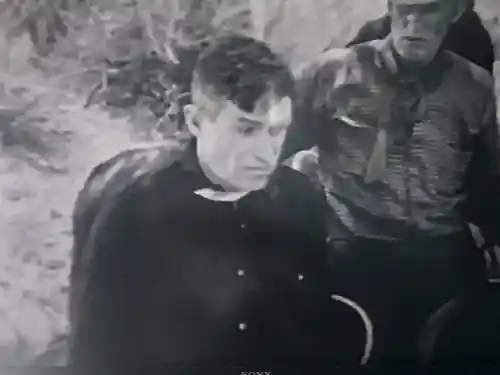
Contemporary vaudeville obsessives might compare The Ropin’ Fool to Daring and Dynamite, another catalogue of feats, but the comparison limps. Where Daring relies on pyrotechnics, Rogers banks on biomechanics—tendons, torque, timing. The difference between fireworks and physics.
Feminist critics could counter that the lone woman shown clapping in medium shot is reduced to adornment, yet I’d argue her gaze is the film’s necessary counterweight. Without an audience, virtuosity folds in on itself, solipsistic as a tree falling unheard. Irene Rich’s smile authenticates the miracle, stamps it into cultural currency.
Rogers never breaks the fourth wall, but the rope does—whistling past the lens like a Dadaist manifesto, reminding us that cinema is nothing more than matter hurled at 24 frames per second.
In an age when algorithms generate digital lassos in superhero third acts, there is something almost indecent about the analog purity on display. No wires, no CGI, no post-production retime. Just a man who practiced calf-roping before breakfast and wound up entertaining kings. The film’s final image—rope coiled at his boots, Dopey breathing steam into the lens—feels like a full-stop at the end of a telegram from a vanished republic.
Should you track down a 4K scan (still unreleased, though whispered about at Bologna’s Il Cinema Ritrovato), watch it on the largest screen possible. Let the white loop hover over your couch like a halo. Listen to the phantom soundtrack your brain composes—Spaghetti-Western twang, maybe, or the minimalist pluck of a Steve Reich phase piece. Notice how the film infects your proprioception: afterward, you’ll find your own wrist twitching, tempted to spin keys, lanyards, phone-charge cords into pathetic approximations of Rogers’ cosmic helix.
Critics of the time dismissed it as a novelty; critics today might call it a TikTok avant la lettre. Both miss the mark. The Ropin’ Fool is a koan about circularity—how every beginning is knotted to its end, how every empire started with someone snaring something wild.
So here’s my heretical proposal: pair the film with An Eye for Figures, a forgotten comedy about accounting fraud. The double bill will yank your brain from the sublime to the ridiculous, reminding you that cinema’s true subject is measurement—how we quantify risk, return, time, heartbreak, dust. One film measures cattle; the other measures zeros. Both leave you rope-burned.
Until some brave streaming service curates a dedicated Will Rogers channel, the best most of us can do is haunt archive.org, beg a librarian, or splice together YouTube fragments digitized from VHS off-air recordings made in 1987. The quest itself becomes part of the experience, a meta-rope that lassos nostalgia and yanks it into the present tense.
Verdict: essential viewing for anyone who believes that art is what happens when muscle memory meets eternity.
Rating: four coils out of four—tied, tightened, and branded onto the hide of history.
IMDb 4.9
1936
Community
Log in to comment.