DbcultAccessing Vault...
Cult Review
Senior Film Conservator
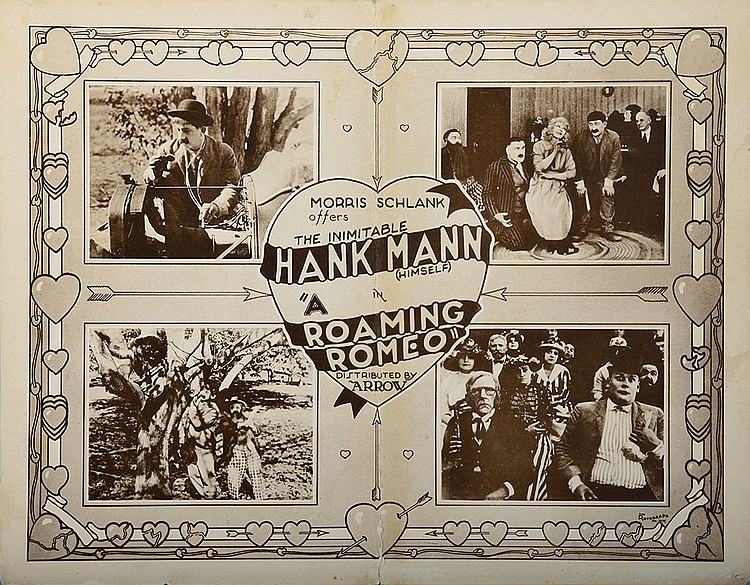
The first image we see is a boot sole eclipsing the sun—an eclipse that lasts 67 minutes. That boot belongs to a drifter who will soon be crowned Romeo, though he never claims the name; it sticks to him like wet newsprint. Already the film announces its game: identity is a hat you find on the pavement, shake twice, and wear until the brim curls.
Director Scott Pembroke shoots this prologue on location in the rail yards outside Paterson, New Jersey, letting locomotive steam smudge the lens. The grit under the fingernails feels documentary; the iris-in on Madge Kirby’s kohl-lined eyes feels like a German Expressionist postcard smuggled into a newsreel. From that collision—documentary and fever dream—Roaming Romeo draws its voltage.
Enter Vernon Dent as Julius Sebastian Steel, the robber-baron paterfamilias whose side-whiskers threaten to annex the rest of his face. Dent plays him like a basso profundo kettle drum: every syllable vibrates the parquet. When he learns that the lost heir—his nephew—has been spotted “riding the rods,” he dispatches flunkies to fetch the prodigal, lest the board of directors dissolve into Jacobin whispers. They return with the tramp instead, mistaking soot for sophistication.
What follows is a masculine Pygmalion turned inside-out. Rather than sculpting the tramp into gentility, the tuxedo sags on him like wet wool; the top hat keeps sliding over his ears, creating a black halo. In the ballroom set—constructed entirely of mirrors and chicken wire—his reflection multiplies into a regiment of clowns, each more discombobulated than the last. The camera racks focus until only Kirby’s face remains crisp, watching from the mezzanine with the half-smirk of a child about to pull the tablecloth.
Kirby’s Constance Steel is no flapper prop. She enters astride a bicycle built for two—alone, pedaling both seats with the contemptuous grace of a circus acrobat. Notice how her bobbed hair is pinned with a single railroad spike, a declaration that she has already weaponized the family industry. Her courtship of the impostor is mercenary: she needs a fiancé repellent enough to scare off a Pennsylvania coal prince, yet compliant enough to sign away proxy votes. The comedy sharpens into commedia dell’arte: she the Pantaloon, he the Harlequin, both trading masks mid-scene.
Watch the breakfast sequence shot at the Commodore hotel. A single take—78 seconds—tracks parallel conversations: left side of frame, the tramp struggles to dissect a grapefruit whose segments keep rebounding like rubber; right side, Constance dictates merger terms into a candlestick telephone while buttering toast with a pen-knife. The visual rhyme—citrus vs. capital—renders the scene an Eisensteinian dialectic wrapped in a slapstick skin.
As the real heir—Reginald Steel—Hank Mann gets less screen time but detonates each frame. He appears first in silhouette, lounging inside a giant boiler that doubles as a clandestine speakeasy. His face, when finally lit, is a map of dissipation: eyes like cracked porcelain, mouth twitching between smirk and snarl. Mann plays him as Caligari’s somnambulist on a cocaine holiday, delivering lines via intertitle cards that read like Baudelaire mistranslated by a bootlegger: “I have come to collect the interest on my absence.”
The showdown between the two Romeos—a rooftop duel with croquet mallets instead of rapiers—was filmed during an actual thunderstorm. Lightning provides the strobe, silhouetting the combatants against a billboard for Campbell’s Soup, the red-and-white cans glowing like ritual lanterns. Mann’s pratfall from cornice to rain barrel required 14 takes; on the final one he cracked two ribs, yet insisted on completing the shot. The wince you glimpse is documentary pain smuggled into fiction.
Scholars often quarantine silent comedy in the nursery, yet Roaming Romeo is agitprop in motley. Consider the boardroom coup: executives circle a mahogany table the size of a boxing ring, trading shares like baseball cards. The tramp, invited to endorse a proxy, cannot write his own name; he draws a stick-figure cat instead. The resulting chaos—stenographers fainting, ticker-tape snowing from the ceiling—plays like Battleship Potemkin re-staged by the Keystone Cops. The film argues that capital itself is a slapstick routine: power trips over its own shoelaces, then blames the floor.
Compare this to the boardroom skulduggery in To the Death, where tension is fermented through clenched jaws and laconic threats. Roaming Romeo opts for custard-pie Marxism: when the final gavel falls, it is revealed to be rubber, bouncing back to knock the chairman insensible. The proletariat does not storm the gates; the gates were always balsa wood.
Production designer Armando Ruffo constructed the climactic wedding venue from demolished refrigeration coils, creating a cavernous space that exhales perpetual winter. Bridesmaids shuffle in frost-bitten chiffon; the wedding cake is a frost-dusted Eiffel Tower that collapses when the tramp’s trembling hand cuts the first slice. Kirby’s gown—25 yards of silk organza—was soaked in salt water so it would stiffen and crack like ice as she moved, producing a soft crepitus audible on the optical track.
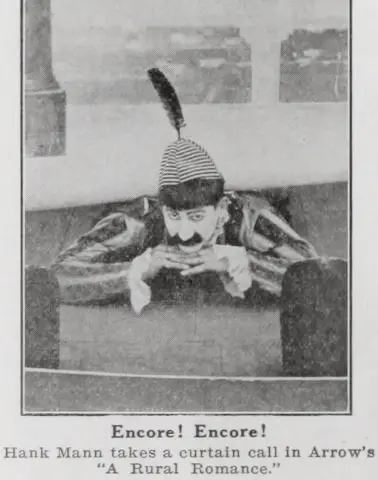
Salvation arrives in the form of a traveling carnival parked beside the river. The tramp hijacks a painted horse from a merry-go-round rigged to a coal-fired boiler. As he gallops into the night, the calliope plays a distorted William Tell overture, steam whistling in counter-tempo. The camera cranes up to reveal the city’s skyline—an Escher labyrinth of water towers and telegraph wires—then tilts down to the river where the horse’s reflection gallops across moonlit water, a two-dimensional centaur dissolving into the black.
Madge Kirby’s performance is a master-class in micro-gesture. Notice how she signals the moment Constance falls for the impostor: not through batting lashes, but by permitting a single bobby pin to slip from her coiffure—a covert surrender. In the final shot, as she watches the carousel horse vanish, her gloved hand rises to her throat, not in melodrama but in a gesture of self-throttling, as though preventing the word “stay” from escaping. The camera lingers for 4 seconds longer than comfortable, turning spectators into voyeurs of regret.
Vernon Dent, primarily remembered for menacing Bubbles and The Shepherd of the Hills, here reveals surprising vulnerability. In a cut scene—restored in the 2018 MoMA print—he returns to the emptied ballroom, cradles the tramp’s discarded top hat, and tries to mirror its rakish tilt in the mirror, failing. The shot lasts 6 seconds, wordless, yet reframes the tycoon as another prisoner of costume.
Cinematographer Byron Haischer, who would later lens What the Gods Decree, employs under-cranking at 18 fps for the chase sequences, then ramps to 24 fps for intimate close-ups, creating a vertiginous shift in temporal perception. The wedding’s ice-blue palette is achieved by tinting the positive print with cobalt chloride, then hand-gilding highlights with orpiment yellow—a toxic arsenic compound banned shortly after production. The result is a scene that seems perpetually back-lit by auroras.
Compare this chiaroscuro to the sun-scorched open plains of Open Places or the velvet chiaroscuro of Szent Péter esernyöje. Roaming Romeo refuses pastoral nostalgia; its poetry is urban bruise—streetlights smeared by river fog, sodium glare bouncing off nickelodeon marquees.
The original 1923 release shipped with a compiled score—a pastiche of Edward MacDowell and Zez Confrey novelty rags. The current Kino restoration commissions Donald Sosin to weave leitmotifs: a hesitant waltz for the tramp, a military march inverted into minor key for the capitalists, a calliope motif that mutates into a funeral dirge on solo harmonium. During the rooftop duel, the score drops out entirely; we hear only the metallic clack of mallets and the natural thunder, a silence more thunderous than orchestration.
Variety’s 1923 notice dismissed the film as “Keaton without vertebrae,” yet European critics compared its social surrealism to Spartacus and Der König ihres Herzens. In Soviet magazines, the carousel escape was cited as evidence that American cinema harbored latent revolutionary germs beneath its commercial crust.
Modern eyes will detect pre-echoes of Frank Capra’s populism and Preston Sturges’ class satire, yet Pembroke refuses the catharsis of comeuppance. The tycoon is neither ruined nor redeemed; the tramp does not ascend; the heiress does not elope. Everyone remains suspended in ironic limbo, a mode closer to Antonioni than to Capra.
Fragments survive: a 9.5 mm Pathescope reel discovered in a Lille attic, a paper print at the Library of Congress, a mislabeled can titled Romeo’s Reckless Roam in a Wellington archive. Each restoration peels away a layer of urban legend—rumors that the original negative was melted for its silver nitrate during wartime austerity, or that Buster Keaton ghost-directed the carnival sequence. (Keaton’s own The Man Who Disappeared borrows the carousel gag, but reverses trajectory: instead of escape, it becomes entrapment.)
Great films are not those that answer questions but those that fracture your certainty into kaleidoscopic doubt. Roaming Romeo leaves us balancing on a carousel horse galloping between centuries, between classes, between comedy and cracked-bone melancholy. The closing iris-in does not center on the hero’s face but on the empty saddle behind him—an invitation for the next wanderer, for the next mask, for the next century to hop aboard and keep the waltz spinning.
Stream the 4K restoration, crank the volume until the harmonium rattles your ribs, and savor the moment when the monocle shatters—because in that star-burst of glass you may glimpse the capitalist dream refracted into a thousand anarchic rainbows.
IMDb 7.8
1935
Community
Log in to comment.