DbcultAccessing Vault...
Cult Review
Senior Film Conservator
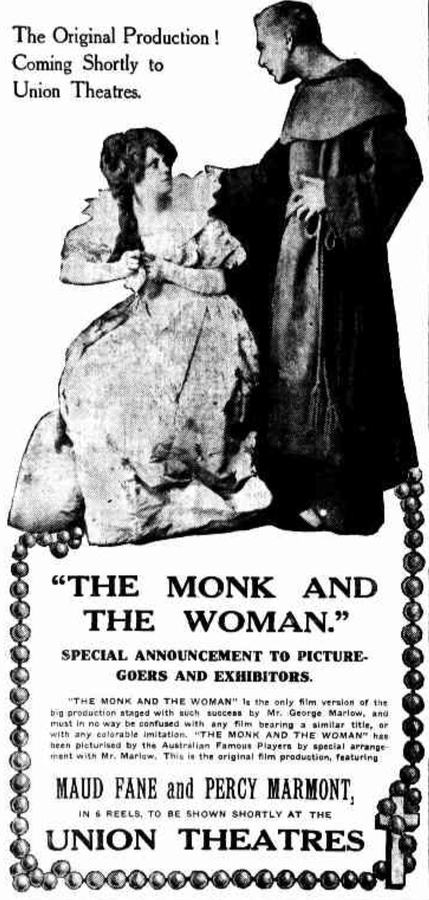
Stepping back into the hallowed halls of early Australian cinema, one unearths a true cinematic artifact, a film that, despite the passage of a century, still resonates with a profound, almost primal, emotionality. Franklyn Barrett’s The Monk and the Woman (1917) is not merely a relic; it is a vibrant, beating heart of a narrative, a testament to the enduring power of silent storytelling when wielded by visionary hands. To discuss this film is to engage with a masterclass in visual poetry, a delicate ballet of human emotion played out against the stark backdrop of societal expectation and spiritual conviction. It’s a work that demands not just viewing, but visceral experience, an immersion into a world where longing speaks louder than words and a glance can convey an entire universe of unspoken desires.
From its evocative title, one anticipates a narrative steeped in the eternal conflict between the sacred and the profane, the spiritual and the carnal. And indeed, Barrett, alongside his co-writers Frederick Melville and D.H. Souter, delivers a story that unflinchingly confronts these colossal themes. At its core, we meet Brother Michael, portrayed with a mesmerizing blend of stoicism and burgeoning vulnerability by Monte Luke. Luke’s performance is a marvel of silent acting, his eyes a window to a soul grappling with a seismic internal shift. His Michael is not a caricature of piety, but a man deeply committed to his vows, his life a carefully constructed edifice of devotion. Yet, even the most formidable structures can be swayed by an unexpected force, and that force arrives in the form of Eleanor, brought to vivid, compelling life by Maud Fane.
Fane’s Eleanor is a revelation: spirited, intelligent, and possessing an artistic sensibility that sets her apart from the constrained world around her. She is a woman unburdened by convention, seeking truth and beauty in a world often content with superficiality. When fate, or perhaps divine intervention, brings her into the orbit of Brother Michael's secluded monastery, the stage is set for a drama of monumental proportions. Their initial encounters are steeped in a delicate tension, a silent acknowledgment of two extraordinary souls recognizing a kindred spirit. It's a connection that transcends the spoken word, communicated through subtle gestures, lingering gazes, and a palpable intellectual spark. This burgeoning, unspoken bond, however, is a direct affront to Michael's sacred vows, a challenge to the very foundation of his being. The film excels in portraying this internal torment, allowing Luke’s expressive face to convey the agonizing struggle between his spiritual commitment and the undeniable pull of human affection. It’s a dance on the precipice, a constant negotiation between duty and desire.
The screenplay, a collaborative effort, demonstrates an astute understanding of human psychology, refusing to simplify the complex motivations of its characters. Eleanor is not merely a temptress; she is a woman of depth, seeking understanding and connection, perhaps even a spiritual anchor that she finds, paradoxically, in a man forbidden to offer it. Her fascination with Michael is born not of malice, but of a genuine appreciation for his quiet strength and purity, a stark contrast to the often-superficial world she inhabits. This nuanced portrayal elevates the film beyond a mere melodrama, transforming it into a profound meditation on the nature of love itself – whether it can truly be categorized, contained, or denied. One might draw thematic parallels to the internal moral struggles seen in films like The Man Inside, where characters are similarly trapped by their own convictions and external pressures, but The Monk and the Woman delves even deeper into the spiritual dimension of such a conflict.
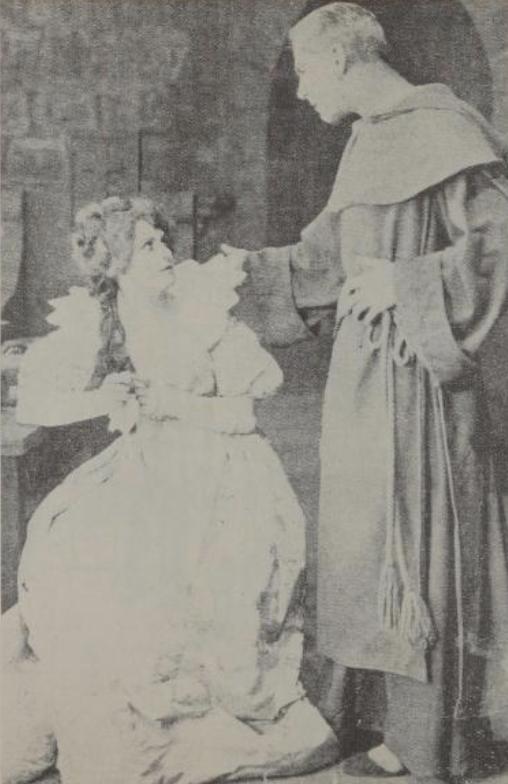
Franklyn Barrett's direction is nothing short of masterful. He understands the power of the visual medium, employing evocative cinematography to convey the emotional landscape of the narrative. The stark beauty of the monastery, with its rigid lines and somber shadows, perfectly contrasts with the natural, untamed landscapes that Eleanor often inhabits, symbolic of the two worlds colliding within Michael's soul. Close-ups are utilized with precision, allowing the audience to intimately witness the subtle shifts in character expression, the fleeting moments of doubt, longing, and despair. There's a particular scene, exquisitely framed, where Michael and Eleanor are separated by a wrought-iron gate, a physical manifestation of the invisible barriers between them, yet their gazes meet with an intensity that transcends the barrier. It's moments like these that elevate silent cinema from mere pantomime to a sophisticated art form.
The supporting cast, while perhaps not given the same depth of character development, provides crucial texture to the narrative. Percy Marmont, as a jealous or suspicious Brother Francis, embodies the judgmental gaze of the monastic community, serving as an external antagonist to Michael’s internal struggle. His presence is a constant reminder of the rigid doctrines and the watchful eyes that threaten to expose the forbidden connection. Harry Plimmer, as the stern Abbot, represents the unyielding authority of the church, his pronouncements carrying the weight of centuries of tradition. Their performances, though often understated, contribute significantly to the film's pervasive atmosphere of tension and impending consequence. The film, in its depiction of societal judgment and the struggle against rigid institutions, echoes the themes of ostracism and defiance found in films like A Maid of Belgium, though here the conflict is deeply rooted in spiritual doctrine rather than wartime morality.
What makes The Monk and the Woman particularly compelling is its refusal to offer simplistic answers. There are no clear villains or heroes in the conventional sense, only individuals caught in the inexorable currents of fate, faith, and human desire. The film delves into the hypocrisy that can sometimes fester within rigid institutions, where outward piety can mask inner turmoil or even cruelty. It questions whether true devotion can only exist in isolation, or if it can be found, paradoxically, in the very human connections that are deemed forbidden. This nuanced exploration of morality and faith is a hallmark of truly great storytelling, inviting the audience to ponder these profound questions long after the final frame.
The climax of the film is a masterstroke of emotional devastation. Without revealing the precise denouement, suffice it to say that the resolution is neither simple nor wholly satisfying in the conventional sense, but rather deeply resonant and tragically inevitable. It forces Michael to make an impossible choice, one that will forever alter the course of his life and Eleanor's. The echoes of this sacrifice reverberate with a profound sadness, a testament to the power of love that, even when denied or constrained, leaves an indelible mark. It’s a conclusion that aligns more with the poignant, often heartbreaking narratives of silent era tragedies like Triste crepúsculo, where human longing often collides with insurmountable obstacles.
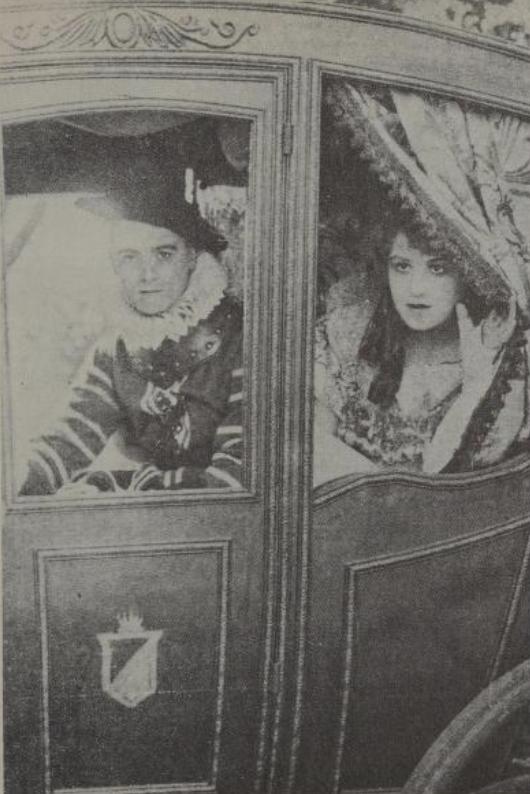
Barrett's decision to allow the emotional weight to carry the narrative, rather than relying on heavy-handed exposition, is a testament to his confidence in the visual language of cinema. The film’s pacing is deliberate, allowing moments of quiet contemplation to breathe, building a palpable sense of anticipation and dread. The use of natural light, the carefully composed frames, and the subtle yet impactful set design all contribute to a visual richness that belies the film's age. It's a reminder that true artistry transcends technological limitations, finding expression through ingenuity and a deep understanding of storytelling fundamentals.
Beyond the central romance, the film also offers a fascinating glimpse into early 20th-century Australian society, particularly its attitudes towards women and religious institutions. Eleanor’s independence, while compelling, likely challenged contemporary societal norms, making her character even more revolutionary for her time. The monastery, as a bastion of tradition and authority, reflects the powerful influence of the church in that era. The societal pressures that bear down on both Michael and Eleanor are not just plot devices; they are reflections of the prevailing cultural anxieties and moral codes of the period. In this sense, The Monk and the Woman serves as a valuable historical document, offering insights into a bygone era while simultaneously exploring timeless human dilemmas.
The performances by Maud Fane and Monte Luke are particularly noteworthy for their ability to convey such profound emotional depth without spoken dialogue. Fane’s expressive face and graceful movements allow Eleanor’s inner world—her intelligence, her yearning, her eventual heartbreak—to shine through with remarkable clarity. Luke, on the other hand, masters the art of restrained emotion, his internal battle conveyed through subtle shifts in posture, the tightening of a jaw, or the profound sadness that occasionally breaks through his serene facade. Their chemistry is undeniable, a silent force that drives the narrative forward with an almost unbearable intensity. One can almost feel the unspoken words, the unfulfilled embraces, the profound connection that fate, or perhaps their own choices, conspire to deny them.
In a landscape of silent films, where many narratives relied on broad gestures and melodramatic theatrics, The Monk and the Woman stands out for its psychological realism and its nuanced characterizations. It avoids easy answers, instead opting for a portrayal of human experience that is complex, often contradictory, and ultimately, deeply moving. It asks profound questions about the nature of faith, the limits of human endurance, and the transformative power of love, even when that love is forbidden. The film's enduring legacy lies in its bold exploration of these universal themes, presented with an artistry and sensitivity that transcends its era.
For anyone interested in the rich history of cinema, particularly the foundational works of Australian film, The Monk and the Woman is an essential viewing. It’s a film that reminds us of the power of visual storytelling, the eloquence of silence, and the timeless nature of human emotion. It's a poignant, beautifully crafted piece that, despite its age, feels remarkably contemporary in its exploration of themes that continue to resonate today. The film doesn't just tell a story; it evokes a feeling, a deep sense of empathy for its characters caught in an impossible situation. It is a cinematic experience that stays with you, prompting reflection on the choices we make, the paths we choose, and the profound, often tragic, beauty of the human heart. Franklyn Barrett's vision, brought to life by a talented cast and crew, ensures that this silent masterpiece continues to speak volumes across the decades.
The film also serves as a poignant reminder of the fragility of cinematic heritage. Many films from this era are lost, but those that survive, like The Monk and the Woman, offer invaluable insights into the artistic and cultural landscape of their time. It’s a testament to the dedication of archivists and enthusiasts that such a profound work can still be appreciated and studied today. Its influence, though perhaps subtle, can be seen in later narratives that explore similar themes of forbidden love and spiritual conflict, proving that some stories are truly eternal. If you ever have the chance to experience this cinematic gem, do so without hesitation. It’s an unforgettable journey into the depths of the human spirit, a silent symphony of longing and devotion that will resonate deeply within your soul.
IMDb —
1919
Community
Log in to comment.