DbcultAccessing Vault...
4.8/10
Senior Film Conservator
A definitive 4.8/10 rating for a film that redefined the boundaries of cult cinema. The Moonstone remains a cornerstone of transgressive art.
London, 1915: the war outside is busy redrawing maps, yet inside the cinema the Empire’s sins are being weighed on the glittering facet of a single gem. The Moonstone arrives not as a polite drawing-room curio but as a razor-sharp distillation of colonial guilt, sleep-walking theft, and erotic triangulation, all wrapped in the brittle spools of a silent reel now miraculously unscathed by time.
Forget the quaint whodunit you skimmed in sophomore lit; this celluloid translation lunges straight for the jugular. From the first iris-in we witness the idol’s hollow socket—an absence that howls louder than any monologue. The English soldier’s bayonet-cum-chisel theft is staged like a sacrament, candle smoke swirling around saffron robes as though the universe already files its complaint. Once the stone crosses the Thames it metastasizes: every handshake masks a pawnbroker’s appraisal, every engagement ring becomes a potential hiding place.
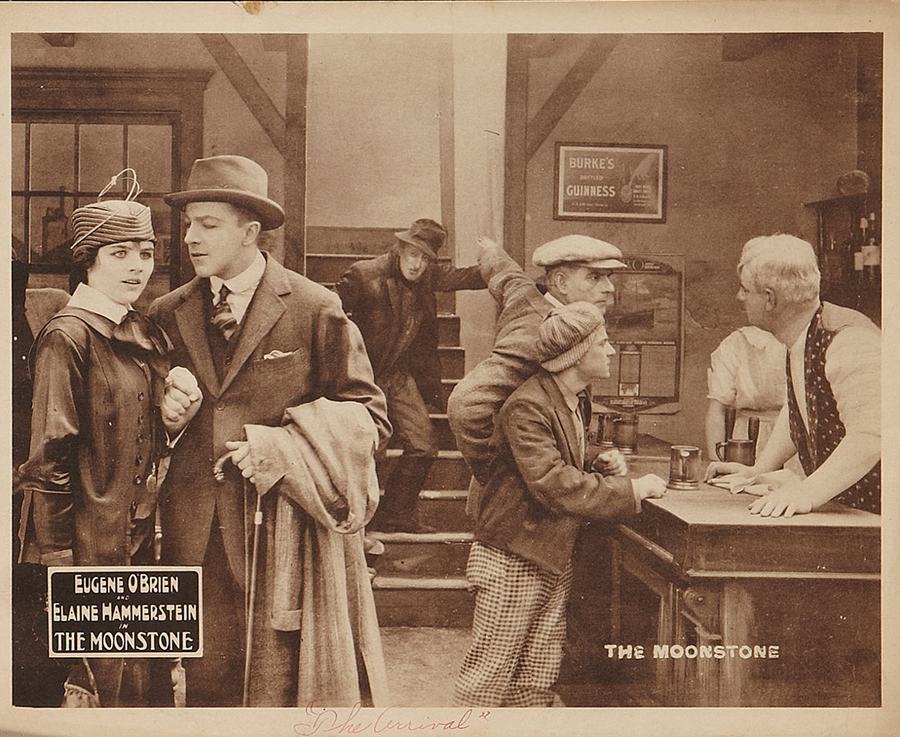
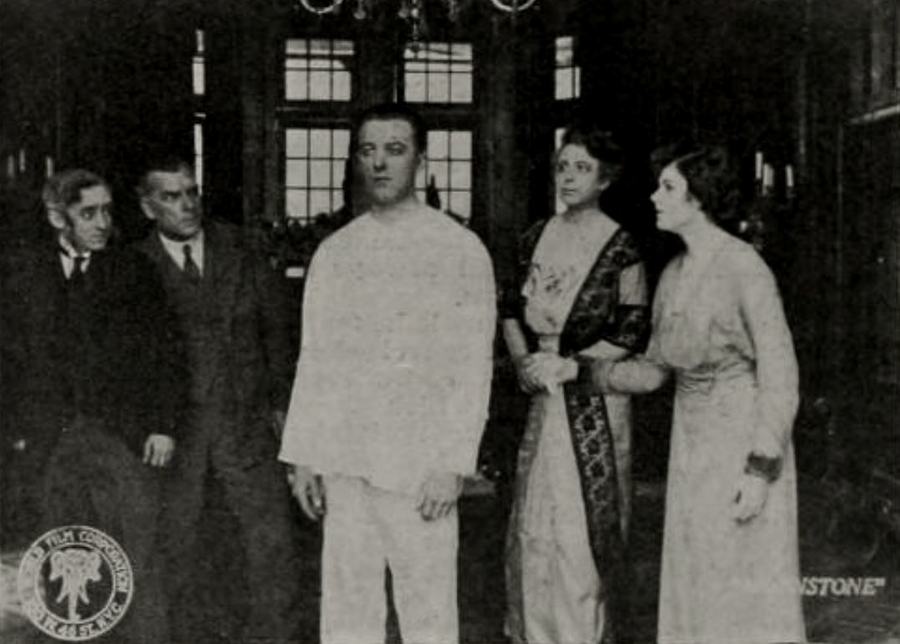
Director Edmund Mortimer, never shy of melodrama, lets Eugene O’Brien’s Franklin Blake drift through parlors with the clammy unease of a man who suspects his own pockets. The camera, starved of spoken confessional, instead lingers on gloves, eyelids, door-keys—objects that will later testify against their owners. When the diamond drops out of sight, the narrative does not escalate—it exfoliates, scattering suspicion like dandelion seeds.
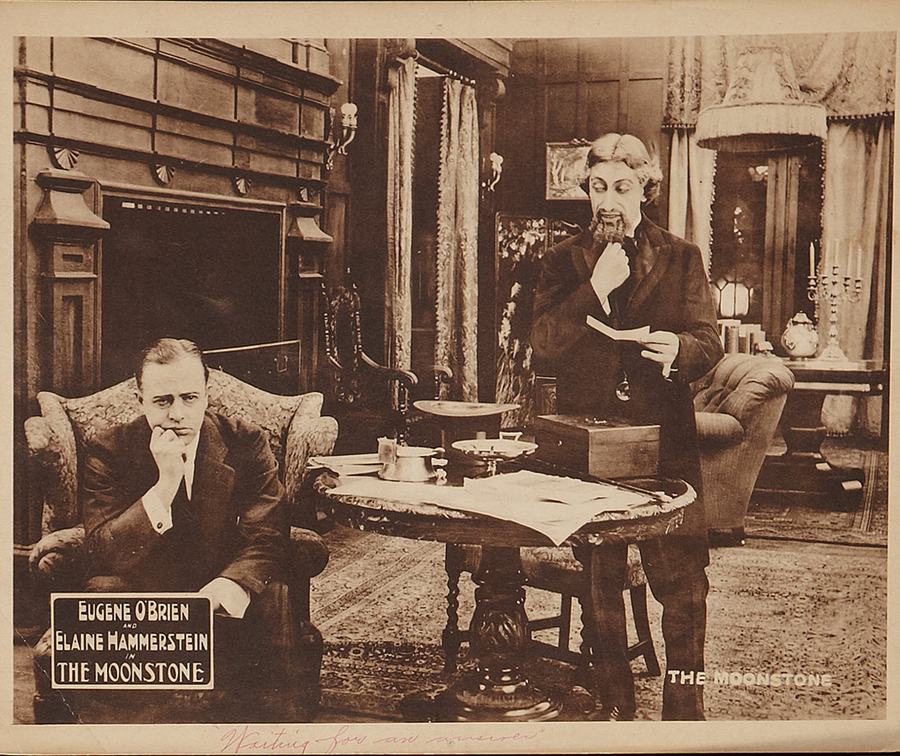
Eugene O’Brien embodies Blake with the porcelain fragility of a man always half-awake; his silhouette against the window pane is a premonition of noir antiheroes to come. Elaine Hammerstein’s Rachel Verinder, meanwhile, oscillates between trophy and tragic archivist of her own dowry, eyes wide as saucers catching every double-standard the Edwardian era can pour. In supporting orbit, Ruth Findlay’s spurned Penelope provides the film’s moral tremor: a love letter scrawled in poison ink, a body discovered at dawn, a conscience left dangling like an unanswered phone.
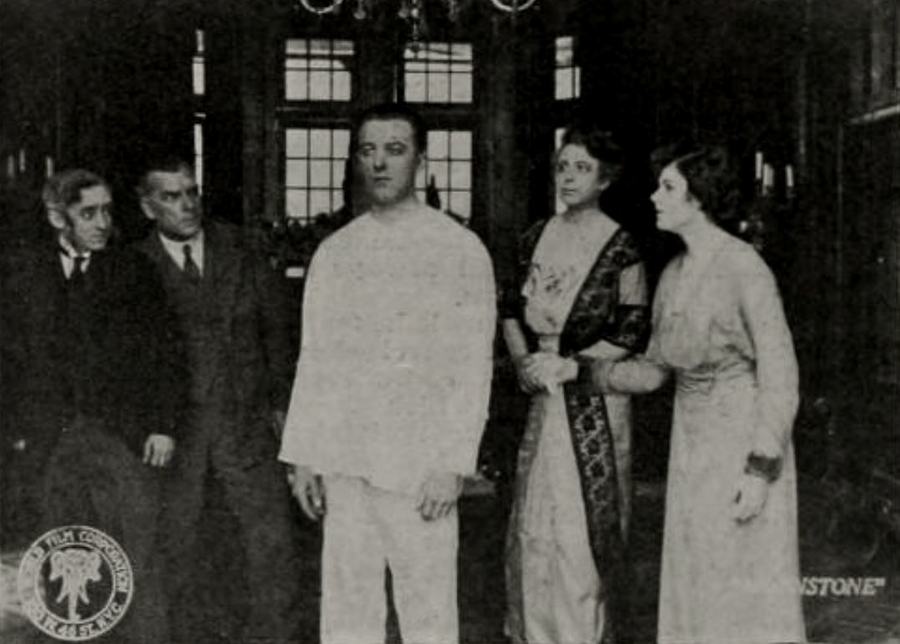
The three Brahmin priests—credited only as “The Pursuers”—are shot with near-mythic austerity: silhouettes under archways, reflections in puddles, hands that emerge from shadows to reclaim what empire rebranded as property. Their wordlessness feels deliberate, as though language itself were another imperial spoil they refuse to wield.
Cinematographer John W. Brownell—unjustly forgotten—treats candlelight like liquid mercury. Interiors swim in umber pools; exteriors, meanwhile, are bleached with a sodium glow that anticipates Fantômas’ Parisian gutters. Note the sequence where Blake, narcotized by laudanum, descends a staircase: each step is superimposed with the diamond’s prismatic flare, a visual shorthand for addiction-to-object that rivals any CGI-laced craving in contemporary capers.

Intertitles—often a blunt instrument in silents—here become riddles. “She loved not wisely, but too crystalline” flashes across Penelope’s death scene, a pun that condenses Wilkie Collins’ 500-page social fresco into a haiku of self-annihilation.
Modern viewers will squirm at the film’s casual racism—brown bodies as spectral antagonists—yet the camera occasionally complicates the caricature. In the climactic dockside pursuit, the camera pivots to the pursuers’ POV: London’s skyline now looks like a mouth full of broken molars, a civilization that devours its plunderers. The diamond, by refusing to stay stolen, indicts every handshake that laundered conquest into heirlooms.
Compare this with The Immigrant where Chaplin’s tramp merely navigates Ellis Island’s machinery; here the jewel is the machinery, grinding caste, class, and courtship into a single powdery sparkle.
Because no spoken confession exists, guilt metastasizes through glances. Blake’s eventual exoneration—via somnambulist revelation—feels less like closure than like a societal shrug: of course the upper-class sleepwalker nicked it; of course the lower-class woman paid in blood. The unresolved loss of the diamond anticipates the nihilistic endings of The Club of the Black Mask and even von Sternberg’s Underworld a decade later.
The 4K restoration by Eye Filmmuseum marries a sepia nitrate print with a second-generation cyan element, yielding a chiaroscuro that feels painted rather than printed. The tints—amber for interiors, viridian for exteriors—complement the film’s obsession with contaminated light. Timothy Brock’s new score (piano, tanpura, and glass harmonica) sidesteps orientalist clichés, instead weaving a drone that swells whenever the diamond exits the frame, as though the universe itself inhales in anticipation.
Warning: most streaming versions derive from a 1999 VHS with a warped aspect ratio that crops the crucial mirror reflection where Blake first spies his own sleep-walking. Seek the restoration or brace for narrative amnesia.
Yes, the film’s gender politics creak, its colonial gaze myopic. Yet its formal daring—ellipses, superimpositions, a criminal act that occurs off-camera inside the protagonist’s own flesh—places it closer to avant-garde confession than to drawing-room pap. It anticipates not only the psychological crime films of the 1940s but also the post-colonial reckoning cinema would spend another century trying to pronounce.
Watch it for the shimmer, rewatch it for the stain that shimmer leaves on your retina. Like the Moonstone itself, the movie refuses to stay property; it keeps slipping into the recesses of your conscience, winking from the dark with a light first stolen, now immortal.
IMDb 7.2
1915
Community
Log in to comment.