DbcultAccessing Vault...
Cult Review
Senior Film Conservator
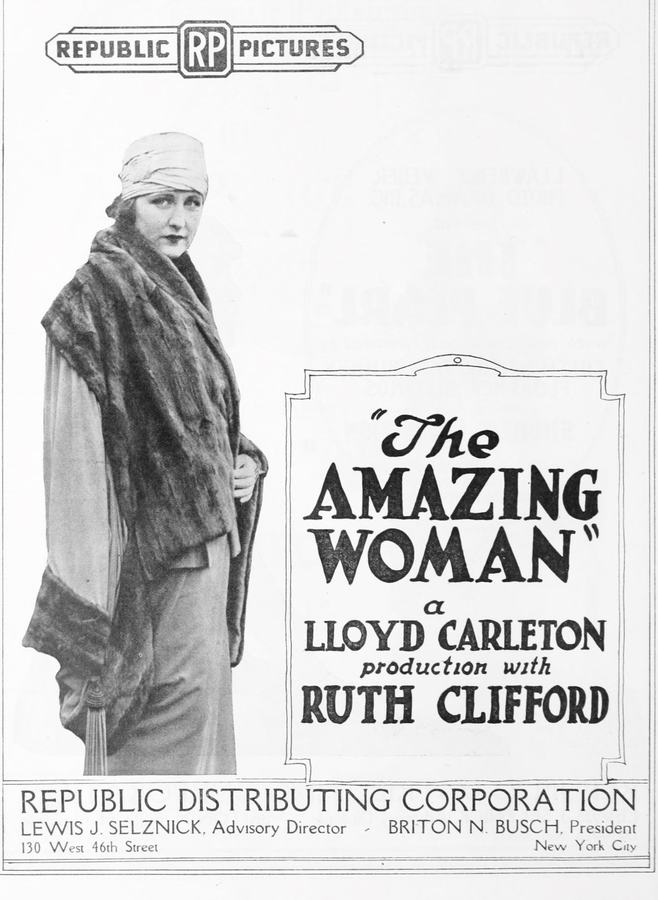
The Amazing Woman unfurls like a tapestry woven from threads of ambition, sacrifice, and redemption. Rupert Julian’s screenplay, co‑crafted with Henry Christeen Warnack, eschews linear simplicity; instead, it oscillates between the pastoral tranquility of a hunting lodge and the frenetic pulse of an urban underworld. This dichotomy mirrors Ralph Strong’s internal conflict: the healer torn between battlefield duty and personal longing. Anitra Frane, portrayed with luminous poise by Ruth Clifford, operates as both catalyst and mirror, reflecting the era’s gendered expectations while subverting them through the guise of "The Flame."
The film’s temporal jumps—vacation interlude, war mobilization, city decadence—are stitched together by a recurring motif: the sound of a distant choir, an auditory echo that, though silent on screen, reverberates through the intertitles, reminding viewers of Anitra’s unfulfilled vocal promise. This motif becomes a leitmotif for hope, underscoring each character’s yearning for transcendence beyond their socioeconomic shackles.
Richard Morris, embodying Ralph Strong, delivers a performance that balances stoic resolve with a palpable undercurrent of vulnerability. His eyes, often fixed on the horizon, convey a yearning that words cannot capture, a technique reminiscent of the restrained intensity found in Kilmeny. Andrew Robson’s John Strong oscillates between paternal affection and predatory manipulation; his transition from benefactor to tragic figure is rendered with a gravitas that anchors the film’s moral axis.
Madge Orlamond, as the duplicitous Gaston Duval’s confidante, injects a fleeting yet potent dose of melodramatic flair, while Edward Coxen’s portrayal of the tormented Gaston himself is a study in self‑destruction, culminating in a suicide that feels both inevitable and shocking. Ruth Clifford’s Anitra is the film’s beating heart; her transformation from innocent lodge guest to the enigmatic "Flame" is executed with a seamless gradation of poise, sensuality, and altruistic fervor. Clifford’s expressive eyes, framed by delicate makeup, communicate volumes in the absence of audible song, a testament to her mastery of silent‑era emoting.
Cinematographer Edward A. Kull employs chiaroscuro lighting to accentuate the moral chiaroscuro that pervades the narrative. The lodge scenes are bathed in soft, natural illumination, evoking pastoral innocence, while the city sequences plunge into stark shadows, punctuated by the occasional flare of neon signage—a visual metaphor for the seductive allure of wealth that Anitra exploits. The use of deep focus during the climactic clinic inauguration allows the audience to simultaneously absorb the bustling crowd and the solemn faces of the children receiving care, reinforcing the film’s humanitarian theme.
Camera movements are deliberately measured; lingering close‑ups on Anitra’s hand as she signs a check for the clinic reveal the tactile intimacy of her philanthropy, whereas sweeping crane shots over the cityscape underscore Ralph’s newfound political dominion. The editing rhythm mirrors the protagonist’s emotional cadence: rapid cross‑cuts during the war’s chaotic interludes, then languid dissolves during moments of introspection.
At its core, The Amazing Woman interrogates the intersection of gendered agency and capitalist exploitation. Anitra’s decision to become John’s mistress is not merely a plot device; it is a calculated subversion of patriarchal constraints, allowing her to amass resources for a cause larger than herself. This dynamic echoes the thematic preoccupations of The Winged Mystery, where female protagonists navigate societal expectations through covert empowerment.
Ralph’s evolution from vengeful lover to civic reformer illustrates the film’s advocacy for collective responsibility over personal vendetta. His political ascension, facilitated by Anitra’s counsel, underscores the narrative’s belief that true change emanates from institutional avenues rather than isolated acts of retribution.
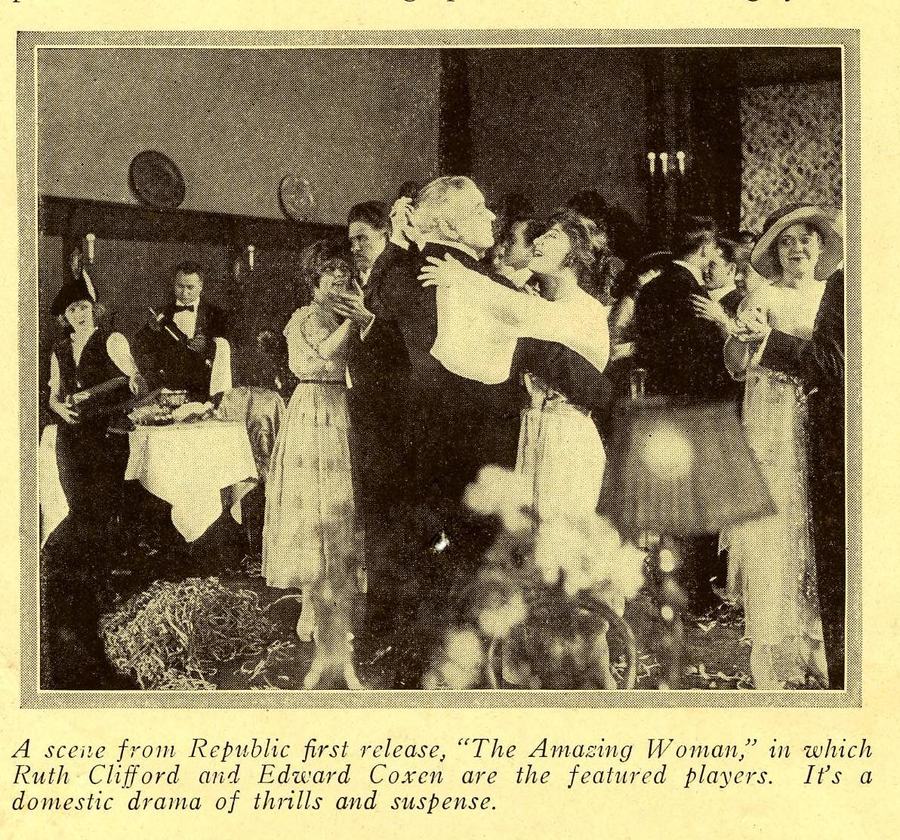
When positioned alongside contemporaneous works such as Captain Courtesy and Sealed Lips, The Amazing Woman distinguishes itself through its intricate interplay of personal melodrama and sociopolitical commentary. While many silent dramas of the 1920s leaned heavily on romantic tropes, this film weaves a tapestry that incorporates public health advocacy—a forward‑looking concern that predates later cinematic explorations of social medicine.
The film’s narrative ambition also aligns it with the epic scope of Don Quixote, albeit on a more intimate scale. Both protagonists embark on quixotic quests that challenge entrenched power structures, though The Amazing Woman grounds its idealism in tangible community service, rendering its resolution both hopeful and pragmatically attainable.
Ironically, a film centered on a singer’s unfulfilled vocal aspirations relies entirely on visual silence. The director compensates through intertitles that echo lyrical phrasing, and through visual symbolism: a recurring image of a cracked violin, a bird perched on a windowsill, and a solitary candle flickering in a dim clinic room. These motifs collectively conjure the sensation of an unheard aria, inviting the audience to imagine Anitra’s voice as a haunting, ever‑present undercurrent.
The absence of diegetic sound also amplifies the emotional weight of scenes where Anitra distributes funds to the impoverished. The silence forces viewers to focus on the tactile exchange of money, the grateful smiles of children, and the subtle shift in Anitra’s posture—from poised seductress to compassionate benefactor.
Ralph’s mayoral campaign, spurred by Anitra’s counsel, is portrayed with a blend of idealism and realism. The campaign speeches, rendered through intertitles, reference contemporary reform movements—public sanitation, child welfare, and anti‑corruption measures—mirroring real‑world Progressive Era initiatives. This alignment grants the film a historical resonance that extends beyond its fictional universe, positioning it as a cultural artifact reflective of its time.
The film does not shy away from depicting the moral ambiguity of power. John Strong’s death, precipitated by a heart attack during a moment of revelation, serves as a cautionary tableau: the pursuit of wealth without ethical grounding inevitably culminates in personal collapse. Anitra’s confession of being "The Flame" in his final moments underscores the narrative’s insistence that truth, however painful, is indispensable for societal regeneration.
Upon its release, The Amazing Woman garnered mixed reviews—praise for its ambitious storytelling and criticism for its melodramatic excesses. Contemporary scholars have revisited the film, lauding its progressive portrayal of a woman who leverages her sexuality not for exploitation but for altruistic ends, a nuance rarely afforded to female characters of the silent era.
Modern audiences, accustomed to sound and color, may find the pacing deliberate, yet the film rewards patience with its layered character arcs and socio‑ethical commentary. Its influence can be traced in later works that blend personal drama with public advocacy, such as the 1930s melodrama Azra, where a heroine similarly navigates societal constraints to champion communal welfare.
The Amazing Woman stands as a testament to the silent era’s capacity for narrative complexity. Its interweaving of romance, war, social reform, and gender politics creates a mosaic that feels both historically anchored and timelessly resonant. While the film’s visual style adheres to period conventions, its thematic daring propels it into the realm of cinematic milestones. For cinephiles seeking a work that challenges conventional heroism and foregrounds a woman’s agency within a patriarchal framework, this film offers an enriching, thought‑provoking experience.
IMDb —
1916
Community
Log in to comment.