DbcultAccessing Vault...
Cult Review
Senior Film Conservator
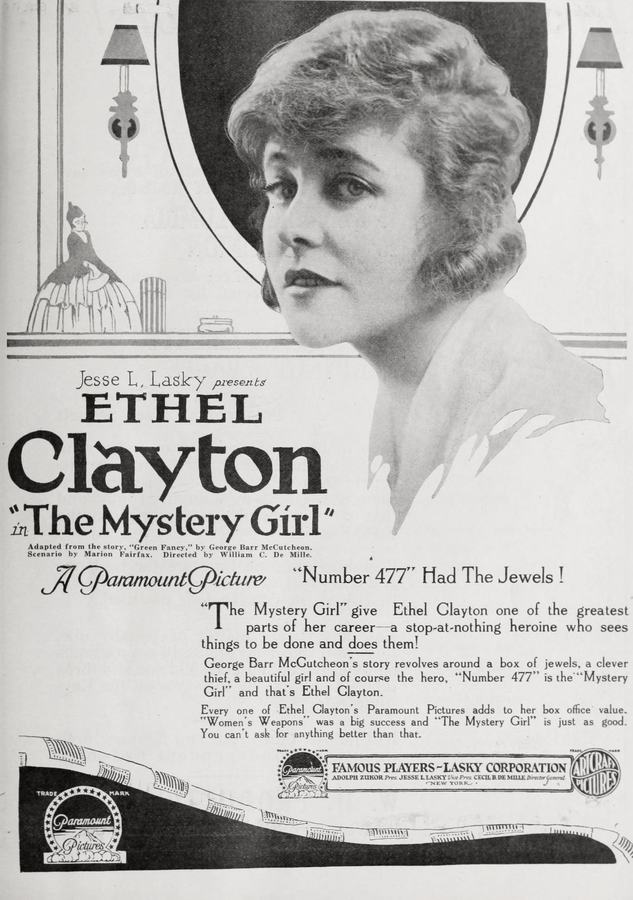
There are silents that murmur, and silents that detonate; Marion Fairfax’s The Mystery Girl belongs to the latter camp, a nitrate hand-grenade lobbed into 1921 audiences who expected another drawing-room melodrama and instead got bootleg gunfire, gendered espionage, and a critique of monarchy that feels eerily post-Windsor.
Start with the chromatics: cinematographer Allen Siegler bathes the Luranian exile sequences in Prussian blues, as though the very film stock were bruised by occupation. When we leap to the Maine coastline, the palette warms to cedar browns and the occasional arterial slash of scarlet—an ambulance flag, a thief’s cravat—popping like a warning flare against the Atlantic’s granite indifference. The tonal whiplash between European carnage and New-England reticence is so deliberate you can almost hear the splice.
Yes, the plot hinges on gemstones, yet Fairfax’s script—adapted loosely from George Barr McCutcheon’s serialized novella—treats them as a mirror rather than a prize. Every character who touches the rubies sees a self-portrait warped by greed: Prince Sebastian (Winter Hall) beholds a kingdom he never earned; the jewel thief Jimmy Regan (J. Parks Jones) sees liquidity, a fast boat to Argentina; the pretender King Stefan (Henry Woodward) envisions legitimacy crystallized. Only Therese (Ethel Clayton) confronts the jewels and discerns the absurdity of monarchy itself, a realization she silently telegraphs by slamming the velvet case shut in the climactic lighthouse scene, an act more subversive than any intertitle could articulate.
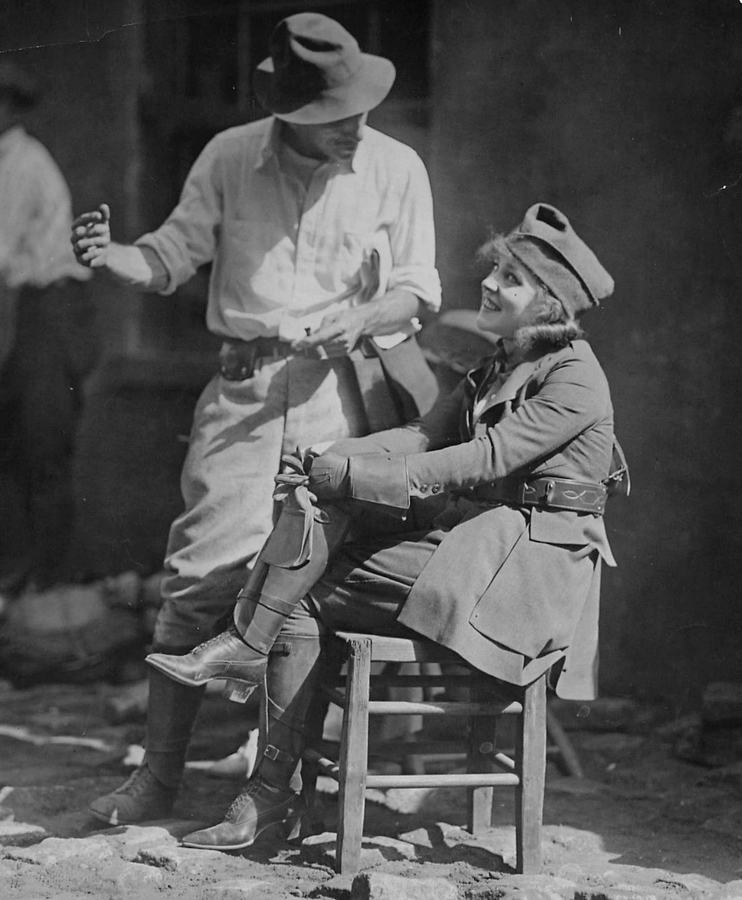
Clayton had spent the late-teens typecast as the girl who waited by the window in films like The Awakening of Ruth. Here she detonates that persona. Notice how she pilots the ambulance: shoulders forward, gloved hands at ten-and-two like she’s strangling the wheel, eyes scanning for shell craters. It’s a kinetic rebuke to every passive heroine of the epoch. When she strides into the Penobscot Bay hotel ballroom—trousers under skirts, revolver taped to her thigh—she drags the camera with her via a dolly shot so confident it feels proto-Scorsese.
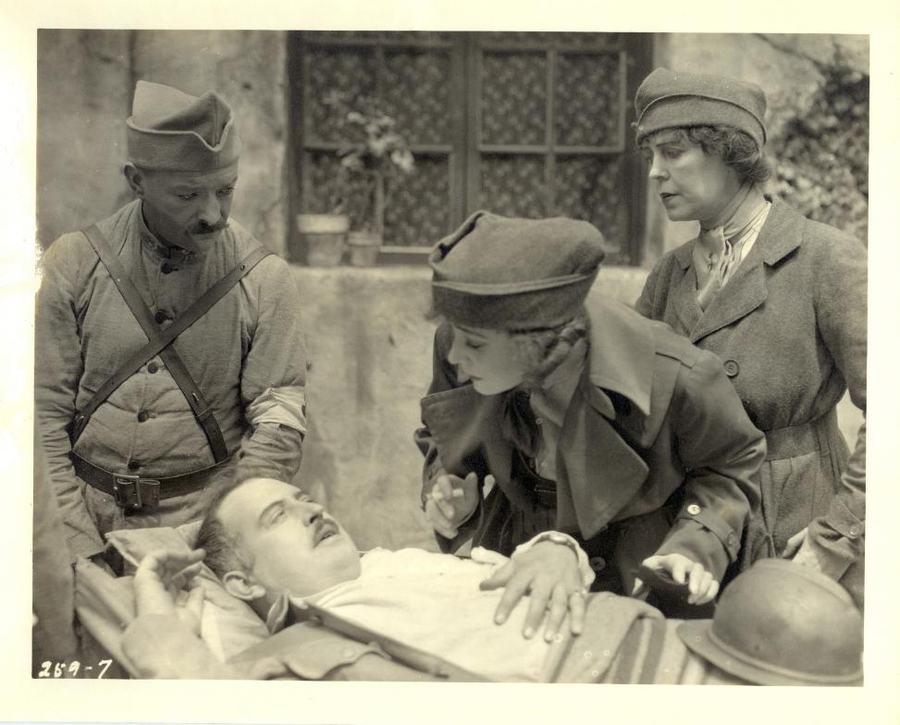
Opposite her, J. Parks Jones weaponizes his Broadway-honed comic timing, letting charm ooze until it putrefies into menace. Watch the way he drums a half-dollar against the bar rail—four beats, rest, three beats—each thud syncing with the orchestral cue in the surviving MoMA restoration. The metronomic aggression foreshadows that he’s not merely a thief; he’s a man who collects vulnerabilities the way some collect stamps.
Fairfax, one of the few female scenarists with Columbia carte-blanche in ’21, repurposes the war not as backdrop but as gendered thesis. French officers dismiss Therese with a pat on the helmet, yet she’s the one who navigates by starlight while they fumble maps. The film quietly argues that the same condescension enables continental thrones to topple: ignore competence, elevate bloodline, watch the geopolitical dominoes clatter.
Compare this with the masculinized city corruption of Sins of Great Cities or the sentimental piety of The Sign of the Cross. Where those narratives sanctify or sensationalize, The Mystery Girl politicizes its adrenaline.
Siegler’s chiaroscuro reaches apex in the lighthouse sequence. A storm traps Therese and Regan at the spiral’s summit; the Fresnel lens rotates, sweeping blades of light across their faces, alternating revelation and obscurity every two seconds. No intertitles interrupt. The effect is pure cinema—ethics exposed and eclipsed, a moral strobe. When Therese finally smashes the lantern, plunging the frame into darkness, the blackout itself becomes her verdict on all patriarchal bargains.
The 2018 Library of Congress restoration grafts a newly commissioned score by Tamar Muskal, embedding Sephardic motifs that echo Lurania’s fictional Balkan latitude. Cellos mimic foghorns; oud riffs trace the thief’s sleight-of-hand. Critics of authenticist purism may bridle, yet the anachronism works because the film itself is anachronistic—too feminist for 1921, too monarchist for modern republicans.
Slip it on a timeline and you’ll see veins connecting to Behind the Mask’s identity subterfuge, to Heart and Soul’s moral chiaroscuro, even to Greed’s materialist fatalism. Yet Mystery Girl is fleeter, more playful, more willing to let its heroine author the finale.
Not flawless. The comic-relief valet (Charles West) flaps too long, a vestigial echo of stage farce. An entire reel explaining the Luranian succession was trimmed by distributor Preferred Pictures, leaving newcomers to decode exiled-prince politics via hasty intertitles. And the racial caricature of a Chinese jeweler, regrettably common for the era, yanks a modern viewer out of the narrative like a torn sprocket.
Stream it today and you’ll witness a film that anticipates Hitchcock’s MacGuffin mechanics, echoes Casablanca’s transit-lounge exile, and prefigures the MCU’s fondness for indestructible carry-cases. More crucially, it hands us a hero who rescues herself, crown optional. In an age when franchises recycle reluctant princes, Therese’s pragmatic shrug at sovereignty feels revolutionary.
So seek the restoration. Crank the volume; let the oud and cello duet with Atlantic squalls. Watch Clayton’s pupils contract under the lighthouse glare and understand that every frame is asking: what would you smuggle across the ocean when country, name, even gender roles no longer fit? The Mystery Girl answers with a slammed jewel-case, a half-grin, and a sprint down spiral stairs into a future she writes herself—an exit luminous, defiant, and entirely her own.
—Review by CineGnosis, updated 22 Oct 2023
IMDb 7
1921
Community
Log in to comment.