DbcultAccessing Vault...
Cult Review
Senior Film Conservator
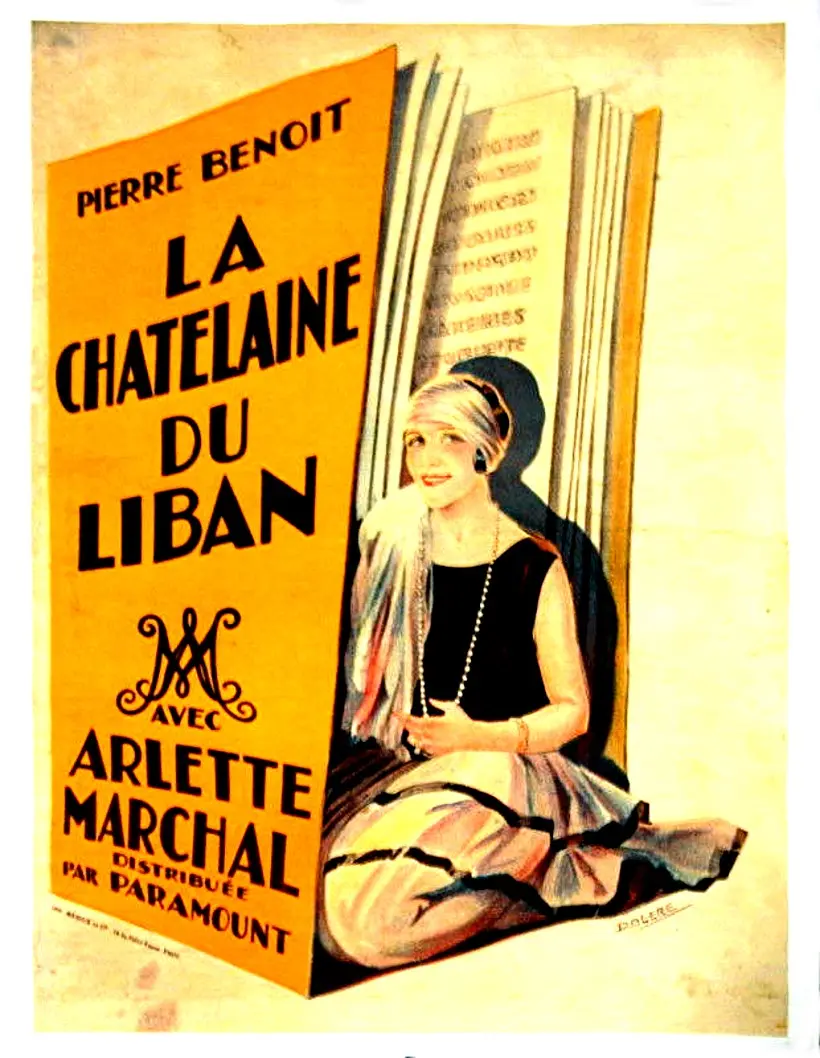
Is La châtelaine du Liban worth your time in an age of hyper-realistic CGI and instant gratification? Short answer: yes, but with significant caveats. This 1920s silent epic is an experience best suited for the dedicated cinephile, the history buff, or anyone with a keen interest in the foundational narratives of exotic romance and political intrigue in early cinema.
It is emphatically not for those seeking fast-paced action, nuanced character development by modern standards, or a straightforward genre piece. It demands patience and a willingness to engage with filmmaking from a different era.
Early cinema often feels like a foreign language, but some films manage to transcend their temporal limitations. La châtelaine du Liban is one such curious artifact, a sprawling melodrama that, despite its age, still manages to captivate with its ambition and setting. It’s a film that asks its audience to meet it halfway, to appreciate its grandeur and its flaws with equal measure.
This film works because: It leverages its spectacular locations and the potent allure of a femme fatale to create an atmosphere of dangerous romance and compelling intrigue that was groundbreaking for its time.
This film fails because: Its narrative often prioritizes sweeping melodrama and visual spectacle over consistent character motivation and a tightly woven plot, leading to moments of genuine confusion and sluggish pacing.
You should watch it if: You are fascinated by the origins of the espionage thriller, the 'Orientalist' aesthetic in film, or the work of early French directors like Marco de Gastyne, and can appreciate a film for its historical significance as much as its entertainment value.
Marco de Gastyne’s La châtelaine du Liban, a cinematic interpretation of Pierre Benoît’s popular novel, plunges viewers into a world where duty clashes violently with desire amidst the shifting sands of geopolitical power. The story, at its core, is a classic tale of a man undone by a woman, set against a backdrop rarely seen on screen with such scope in its era.
We are introduced to a young, upright captain within the French Camel Corps, a symbol of colonial order in the vast, untamed Syrian Desert. His world of military discipline and patriotic commitment is shattered by the enigmatic presence of the 'châtelaine' herself — an enchantress whose beauty conceals a web of international espionage. This isn’t merely a love story; it’s a psychological descent.
The film meticulously, if sometimes ponderously, charts the captain’s spiraling obsession. His initial infatuation curdles into a desperate madness, driving him to the precipice of betraying state secrets, all for the fleeting promise of this woman’s affection. The stakes are immense, not just for his personal honor, but for the very security of the nation he serves.
What makes this narrative particularly compelling, even today, is its willingness to explore the darker impulses of human nature. The captain’s journey is less about heroic love and more about the destructive power of unchecked passion and the moral compromises it demands. It’s a bold statement for a film of its time, refusing simple romanticism.
The climax, however, takes an unexpected turn, swerving away from the intimate drama of espionage to a grand, almost primal, confrontation. The captain’s return to his corps and the ensuing battle with Bedouins feels like a desperate attempt to reclaim his lost honor through physical combat, a stark contrast to the cerebral, seductive battles of wills that precede it.
The performances in La châtelaine du Liban are, by necessity, broad and expressive, typical of the silent film era. Yet, within these constraints, certain actors manage to convey genuine emotional depth, making the central conflict resonate. The film largely hinges on the magnetic presence of Arlette Marchal as the titular enchantress and the tormented portrayal by Georges Paulais as the captain.
Arlette Marchal, as the mysterious 'châtelaine,' embodies the classic femme fatale archetype with a captivating, almost ethereal quality. Her movements are deliberate, her gaze often holds a secret, and her interactions are laced with a calculated charm that makes her a believable puppet master. She doesn't just play the role; she is the object of dangerous obsession.
Consider the scene where she first encounters the captain in Beirut; her subtle smile and the slight tilt of her head speak volumes, drawing him in without a single spoken word. It’s a masterclass in silent allure, reminiscent of Pola Negri’s captivating presence in films like The Sultana, where exotic beauty masks a complex inner world.
Georges Paulais, as the captain, carries the film’s emotional weight. His descent into madness is portrayed through increasingly frantic gestures, wild-eyed stares, and a palpable sense of internal struggle. While some might find his histrionics overwrought by modern standards, they were essential tools for conveying extreme psychological states in a medium without dialogue.
There's a particularly poignant sequence where Paulais's character grapples with the military secrets, his face contorted in a silent scream of moral agony. It's a moment that, despite its theatricality, communicates the profound internal conflict tearing him apart. The supporting cast, including Maurice Salvany and Gaston Modot, provide solid, if less flamboyant, contributions, grounding the more extravagant central performances.
Marco de Gastyne’s direction in La châtelaine du Liban is ambitious, particularly in its breathtaking use of authentic locations. This isn't a film confined to studio backlots; it ventures into the real Beirut, the ancient ruins of Palmyra, and the sweeping, desolate Syrian Desert. This commitment to verisimilitude elevates the film beyond mere melodrama, imbuing it with an epic scope.
The cinematography, while lacking the sophisticated camera movements of later eras, excels in establishing mood and scale. Wide shots of the Camel Corps traversing endless dunes against vast horizons are not just beautiful; they emphasize the isolation and the immense challenges faced by the characters. The desert itself becomes a character, mirroring the captain’s internal desolation.
The contrast between the bustling, intrigue-filled streets of Beirut and the stark, moral clarity of the desert is handled with a keen visual eye. Beirut is presented as a labyrinth of shadows and secrets, a fitting backdrop for the 'enchantress's' mysterious activities. Palmyra’s ancient grandeur adds a layer of timelessness and exoticism, suggesting a world where old powers and new conflicts intertwine.
De Gastyne understands the power of the visual metaphor. The captain's journey into the desert, both literally and figuratively, is a cleansing. The final Bedouin fight, while perhaps abrupt in its arrival, is filmed with a raw energy that signifies a return to a more primitive, honorable form of combat, a stark contrast to the psychological warfare of the city. This sequence feels almost like a spiritual purging.
The pacing of La châtelaine du Liban is decidedly deliberate, a characteristic common to many silent films that relied on visual storytelling and intertitles to advance the plot. Modern audiences, accustomed to rapid-fire editing, might find its initial rhythm a test of endurance. However, this slow burn allows for a gradual immersion into its intricate world of political and amorous intrigue.
The film takes its time to establish the characters, their motivations, and the complex geopolitical landscape. This methodical approach builds a simmering tension, particularly in the scenes involving the exchange of secrets and the captain’s moral descent. The tone oscillates between romantic melodrama, spy thriller, and ultimately, a rugged adventure film.
The shift towards the action-packed climax in the desert, with the Bedouin skirmish, can feel somewhat jarring. It’s almost as if the film decides, rather abruptly, to shed its intellectual and romantic skin for a more primal, visceral conclusion. While dramatically effective in isolation, it doesn’t always feel organically connected to the preceding narrative of espionage and seduction.
However, this tonal shift also highlights the film's ambition to be more than just one thing. It attempts to encompass a grand adventure, a psychological drama, and a political thriller, a daring feat for any film, let alone one from the silent era. It works. But it’s flawed. The fight itself is well-staged, providing a dramatic release after much emotional tension.
Yes, La châtelaine du Liban holds significant value for contemporary viewers, but primarily those with specific interests.
It offers a rare glimpse into early 20th-century French cinema’s approach to exotic locales and complex narratives.
The film’s historical and cultural significance as an adaptation of a popular novel is undeniable.
Its stunning location photography remains impressive, showcasing grand vistas largely absent from modern studio productions.
For students of film history, it's an essential document of silent era storytelling techniques and acting styles.
La châtelaine du Liban, despite its age, grapples with themes that remain remarkably potent: the corrupting influence of power and desire, the blurred lines between patriotism and personal weakness, and the destructive nature of obsession. The captain’s journey from a man of honor to one contemplating treason is a timeless cautionary tale.
The portrayal of the Middle East, while undoubtedly colored by the 'Orientalist' gaze prevalent in European art of the period, is also surprisingly nuanced in its depiction of the desert as both a place of danger and spiritual clarity. It avoids simple villainy, presenting a complex tapestry of cultures and conflicts.
One unconventional observation is how the film subtly critiques the very notion of colonial 'civilizing missions.' The French captain, ostensibly a figure of order, is shown to be just as susceptible to chaos and moral decay as any local, if not more so, when confronted with personal temptation. His supposed strength crumbles under the weight of an individual woman’s charm, not a geopolitical adversary.
I would argue that the film’s greatest strength lies not in its plot, which can be convoluted, but in its audacious visual ambition and its willingness to delve into psychological torment without the aid of dialogue. It trusts its audience to interpret the emotional landscape through performance and setting alone, a testament to the power of pure cinema.
However, it’s also fair to say that some of its depictions of gender roles and cultural stereotypes feel distinctly dated. The 'enchantress' character, while compelling, is a product of a time when female power was often depicted as manipulative and dangerous rather than inherently strong or autonomous. This perspective is a significant flaw in its overall progressive potential, anchoring it firmly in its era.
La châtelaine du Liban is a fascinating, if imperfect, window into a specific moment in cinematic history. It’s a film that bravely tackles grand themes against an equally grand backdrop, showcasing the ambition of early French filmmaking. While its narrative quirks and pacing might challenge modern sensibilities, its visual splendor and the raw power of its central performances offer ample reward for the discerning viewer. It’s not for everyone, but for those willing to engage with its particular charms, it offers a rich and often compelling experience. Seek it out if you dare to delve into the intoxicating allure of a bygone era.
IMDb —
1918
Community
Log in to comment.