DbcultAccessing Vault...
Cult Review
Senior Film Conservator
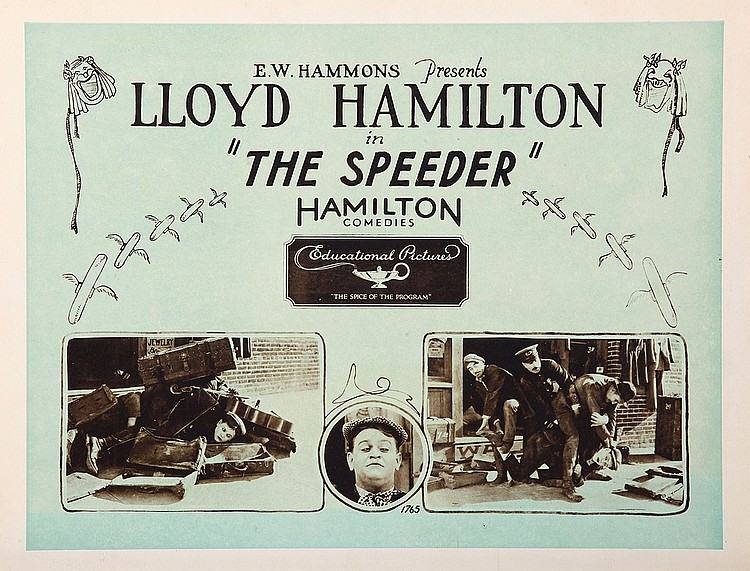
Cinema, in its infancy, was often a mirror to the frantic vibrations of a world suddenly equipped with internal combustion engines and the promise of boundless velocity.
In the pantheon of silent comedy, Lloyd Hamilton occupies a space of peculiar, elongated grace. While Chaplin had his pathos and Keaton his stoic geometry, Hamilton possessed a sort of gangly, suburban bewilderment that felt intimately relatable to the post-war American male. In The Speeder (1922), directed with a keen eye for kinetic escalation by Archie Mayo, we witness the culmination of this persona. The premise is deceptively pedestrian: Lloyd has liquidated his meager savings to acquire a flivver. However, in the hands of this creative collective, the car is not a vehicle but a catalyst for existential slapstick.
The film opens with a palpable sense of anticipation. We see Lloyd, a man whose very gait suggests a struggle against the laws of physics, approaching his new acquisition. The 'flivver'—a colloquialism for the ubiquitous Ford Model T—was the great democratizer of the 1920s, yet here it serves as a fickle deity demanding constant propitiation. Unlike the high-stakes drama found in contemporary works like Sacred Silence, The Speeder finds its tension in the mundane. Every turn of the crank is a gamble; every puff of exhaust is a dialogue.
Archie Mayo, who would later find fame directing prestige dramas at Warner Bros., demonstrates an early mastery of the 'long-shot' gag. In The Speeder, the comedy is rarely derived from facial contortions. Instead, it is found in the relationship between Hamilton’s spindly frame and the boxy rigidity of the car. There is a sequence involving the starting of the engine that rivals the best work in Hold Your Breath for sheer physical endurance. Hamilton’s movements are a series of recursive failures, a ballet of wasted energy that highlights the absurdity of the machine age.
The supporting cast, featuring the reliable Tom Kennedy and the luminous Ruth Hiatt, provides the necessary friction. Kennedy, often the heavy in these shorts, acts as the immovable object to Hamilton’s irresistible, if clumsy, force. Their interactions are timed with a precision that suggests weeks of rehearsal, yet they retain a spontaneous, improvisational air. When we compare this to the more rigid narrative structures of Yankee Pluck, the fluidity of The Speeder becomes even more apparent.
One cannot overlook the economic desperation underlying the humor. Lloyd has spent his *entire* life savings. This detail elevates the stakes from mere inconvenience to potential ruin. In the 1920s, the car was the ultimate symbol of having 'arrived,' but for Lloyd, it is a millstone. This thematic thread of the 'unreliable investment' echoes through other films of the period, such as The Golden Fleece, where the pursuit of wealth often leads to a comedic or tragic unraveling of the self.
The writing by Archie Mayo is surprisingly dense with social commentary. While The Speeder is ostensibly about a man and his car, it’s actually about the fragility of the middle class. Lloyd is trying to perform a version of masculinity that requires mechanical competence and financial stability—two things he conspicuously lacks. This performance of 'normalcy' is what makes the character so endearing. He is the spiritual cousin to the protagonist in All Wrong, a man perpetually out of sync with his environment.
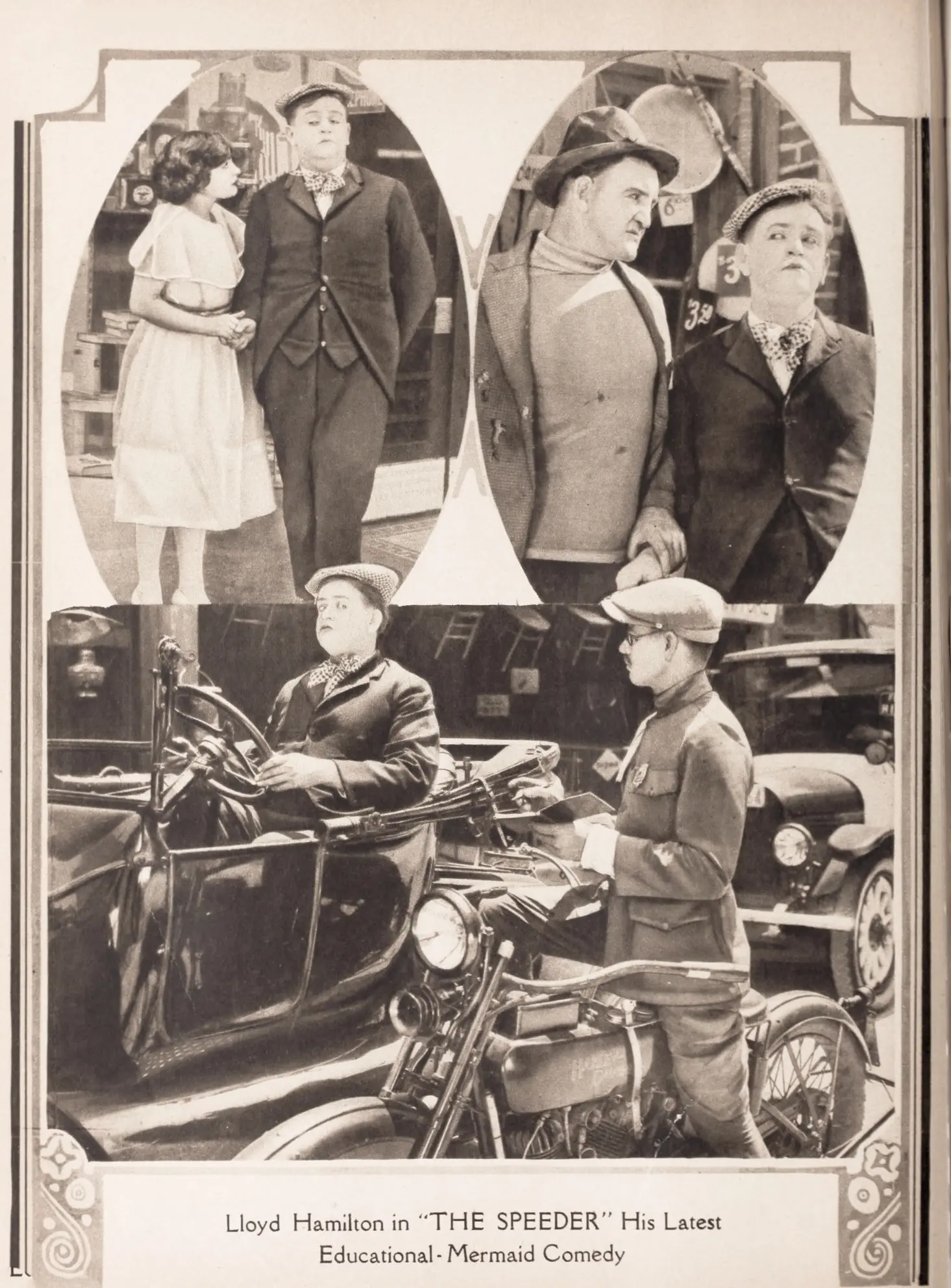
Technically, The Speeder utilizes the burgeoning language of the chase scene with remarkable sophistication. The use of under-cranking to simulate high speeds creates a surreal, dreamlike quality that fits Hamilton’s persona perfectly. The camera is often mounted on moving vehicles, providing a POV that would have been exhilarating for 1922 audiences. It lacks the static, stage-bound feel of Little Red Riding Hood, opting instead for a gritty, dusty realism that captures the unpaved chaos of early Los Angeles.
The editing, too, is sharp. Mayo understands that the 'punchline' of a visual gag is often the reaction, and he lingers just long enough on Hamilton’s face—a mask of weary resignation—to drive the point home. This is a far cry from the more theatrical pacing of O aniforos tou Golgotha. Here, the rhythm is dictated by the heartbeat of the engine and the frantic ticking of the clock.
As we watch Lloyd struggle with his 'new' car, we are reminded of the cyclical nature of technology. Today’s software glitch is yesterday’s flooded carburetor. The Speeder remains relevant because it taps into the universal frustration of being betrayed by the tools we rely on for our freedom. It shares this DNA with The Quack Doctor, where institutional and mechanical failures are the primary source of conflict.
Hamilton’s performance is a masterclass in 'underplaying.' Even when the car is literally falling apart around him, he maintains a certain dapper, if frayed, dignity. It’s this refusal to descend into pure caricature that sets him apart from many of his contemporaries. He isn't a cartoon; he is a man having a very bad day. This sense of grounded reality is something often missing in films like Mohini Bhasmasur, which lean heavily into the mythological and the stylized.
When placed alongside The Volunteer, the contrast in Hamilton's characterizations becomes fascinating. While The Volunteer deals with themes of duty and societal expectation, The Speeder is an internal struggle—a man vs. his own choices. It is a more intimate, and perhaps more honest, look at the human condition. Even the romantic subplots, handled with a light touch by Hiatt, feel more like a reward for Lloyd’s persistence rather than a structural necessity.
The film’s resolution is as chaotic as its beginning, refusing to offer a tidy 'happily ever after.' Instead, it leaves us with the sense that Lloyd’s battle with the flivver is merely the first round in a lifelong heavyweight bout with the 20th century. In this regard, it shares a certain cynicism with Mr. Grex of Monte Carlo, though filtered through the lens of proletarian comedy rather than high-stakes espionage.
Ultimately, The Speeder is a triumphant testament to the era of silent shorts. It captures a moment in time when the world was changing faster than Lloyd Hamilton could crank his engine, and in doing so, it created a timeless portrait of the beautiful, hilarious struggle to keep up. It is as essential as Their Compact or Little, But Oh My! for anyone seeking to understand the DNA of modern humor.
IMDb 5.8
1933
Community
Log in to comment.